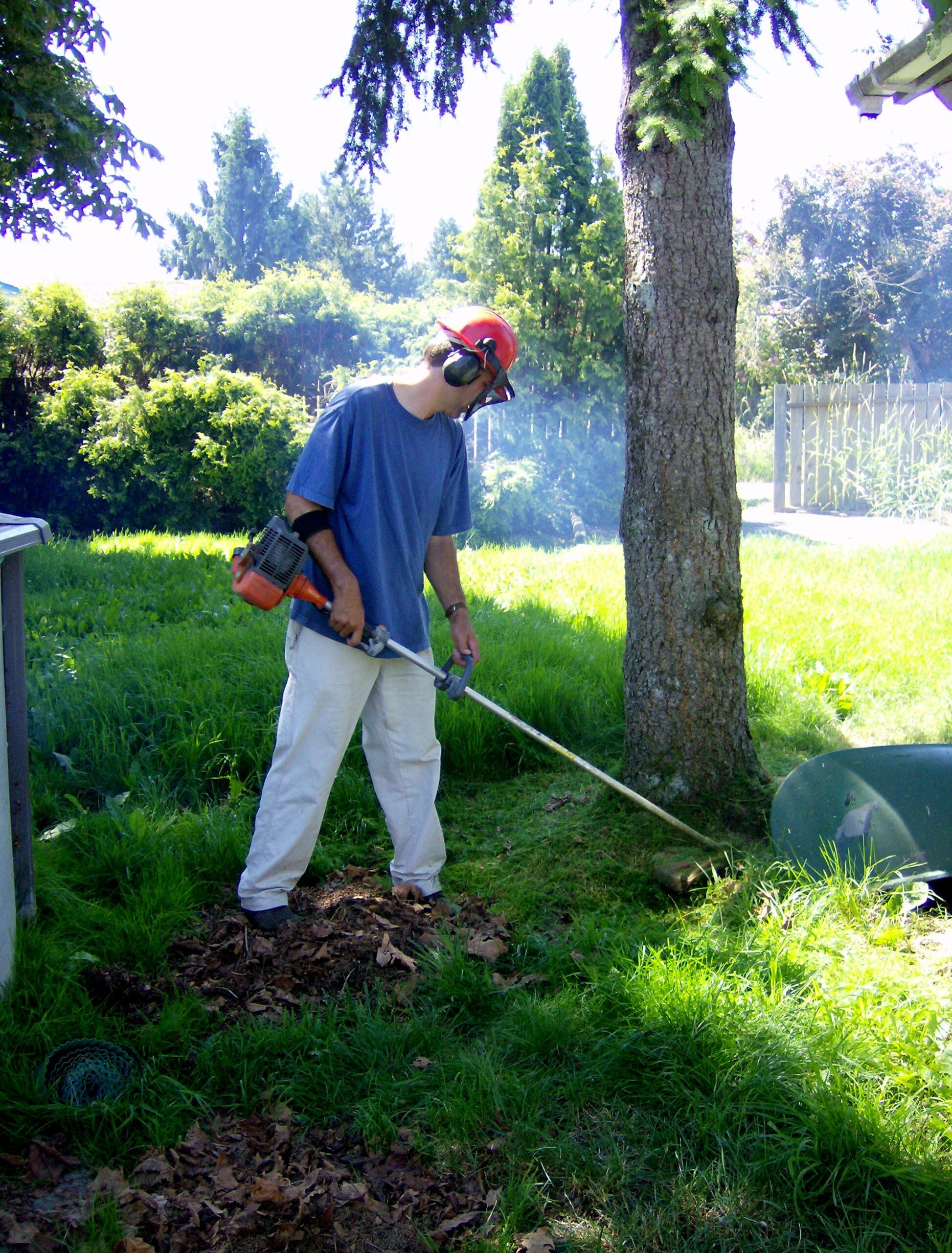
How to Hold String Trimmer
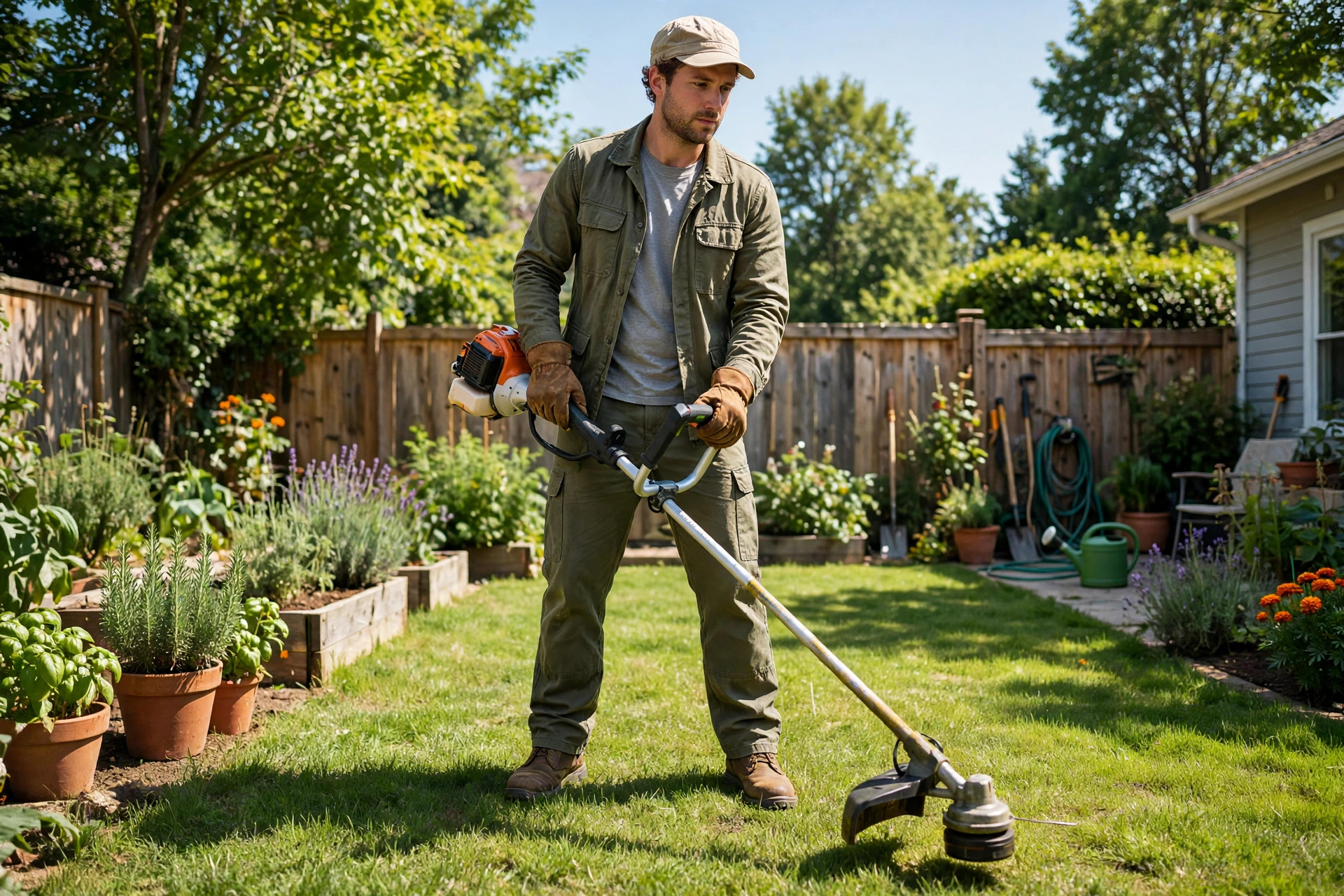
Who would have thought a string trimmer needs real skill to hold? It needs know-how too before you start trim work. I used to think that too, till my first time with one. This skill is key — for fast trim work and for your safety. George Ballas brought them out in the first years of the 1970s. Hold skill is the first need here. Safety rides on this skill. First times teach this fast. Fast work needs this skill. 1970s tools live on today. Key skills guard each round.
We’ve all grown used to these trim mates today. That shows why the right hold counts so much. Good hold skills cut risks in each trim round. Good skill boosts how much work you get done too. Trim mates are day tools now. Risks drop with good holds. Each round wants good skill. Yard speed comes from holds. Right holds count each round. Work done climbs with skill.
This guide walks you through each hold step. You will learn stance, grip, strap, and arms. New users should learn how to use a weed trimmer base facts too. With-care holds keep each trim round more safe all round. Each hold step gets its part. Stance comes first in line. Grip, strap, and arms come next. Safe rounds are the goal. Base facts sit in that guide. With-care holds guard rounds.
Quick answer: Stand with your feet set shoulder-width apart first. Grasp the main handle with one hand firmly. Hold the shaft with your other hand too. Keep your back straight during every trimming session. Keep the trimmer at waist level for control.
- How to Hold String Trimmer: Grasping the Basics
- Take a Proper Stance
- Grip the Handle or Handles Properly
- Use the Shoulder Harness
- Keep Your Arms in a Comfortable Position
- Frequently Asked Questions
- Control Handle and Moving Direction
- Holding for Different Vegetation
- Conclusion: How to Hold String Trimmer
How to Hold String Trimmer: Grasping the Basics
Folks rate string trimmer use and hold too low most times. Hold skill shapes tool work and your safety a lot. ‘How to hold string trimmer?’ is step one to good lawn care. Good skills keep your trim work top-grade. Low rates miss the true risk. Hold skill shapes safe work. Step one is the hold ask. Top-grade work comes from skill. Tool work bends to hold skill. Safety bends to it too.
Step 1: Get Familiar with Your String Trimmer
Step one is to know your tool in full. Hold skill starts with that know-how first. Your trimmer has two set parts per type. One part holds the power source and motor. The next part holds the cut head end. Tool know-how comes before holds. Two parts make one tool. Power sits in one part here. Cut heads sit in the next. First steps are know steps. Parts split by job here.
| Step | Stage | What you do |
|---|---|---|
| 1 | Know the tool | Learn the engine, head, shaft and handle |
| 2 | Take your stance | Feet apart, knees bent, back kept straight |
| 3 | Grip both handles | Firm hands, thumbs opposite your wrapped fingers |
| 4 | Use the harness | Pad on shoulder, trimmer hanging at hip |
| 5 | Set your arms | Elbows bent, relaxed, never fully extended out |
A long shaft joins the two parts as one. The shaft holds a grip and a strap point. Some motors may sit near the top grip. Some motors sit near the cut head base. One shaft joins both parts. Grips sit on that shaft. Strap points sit on shafts too. Top grips can hold motors. Head bases can hold motors. Shafts join the whole tool.
The build shapes the tool’s whole weight spread. That spread shapes how you hold and steer it. Grip spots and forms can shift too. Some trimmers come with a plain loop grip. Weight spread rules the hold here. Steer skill rides on spread. Grip forms shift by type here. Loop grips are the plain form. Steer work rides on spread too. Holds ride on it most.
Some trimmers sport a wide bike grip in its place. Each grip gives its own gains and hold ways. A close watch on these parts helps your grip. Before you buy, read how to buy a string trimmer for tips. Wide grips give their own gains. Part watch helps your grip. Tips sit in that buy guide. Gains shift by grip type. Hold ways shift by grip here. Buys want that guide first.
Take a Proper Stance
Before you start trim work, take a beat to set your stance right. Stand straight, with your feet set as wide as your hips. This firm foot base adds steadiness and cuts tiredness in long trim work. Firm stance skills back how to cut grass with a string trimmer work too. Straight stands start trim work. Firm feet cut tiredness most. Hip-wide feet are the base. Long work wants firm feet. Set stance comes before trims. Trim rounds back stance skill.
- Ensure your feet are shoulder-width apart for stability.
- Grasp the handle with one hand and the shaft with the other.
- Keep your back straight and bend slightly at the knees.
- Rest the string trimmer’s weight on your shoulder for comfort.
- Keep the trimmer at waist level and angle it towards the ground for efficient trimming.
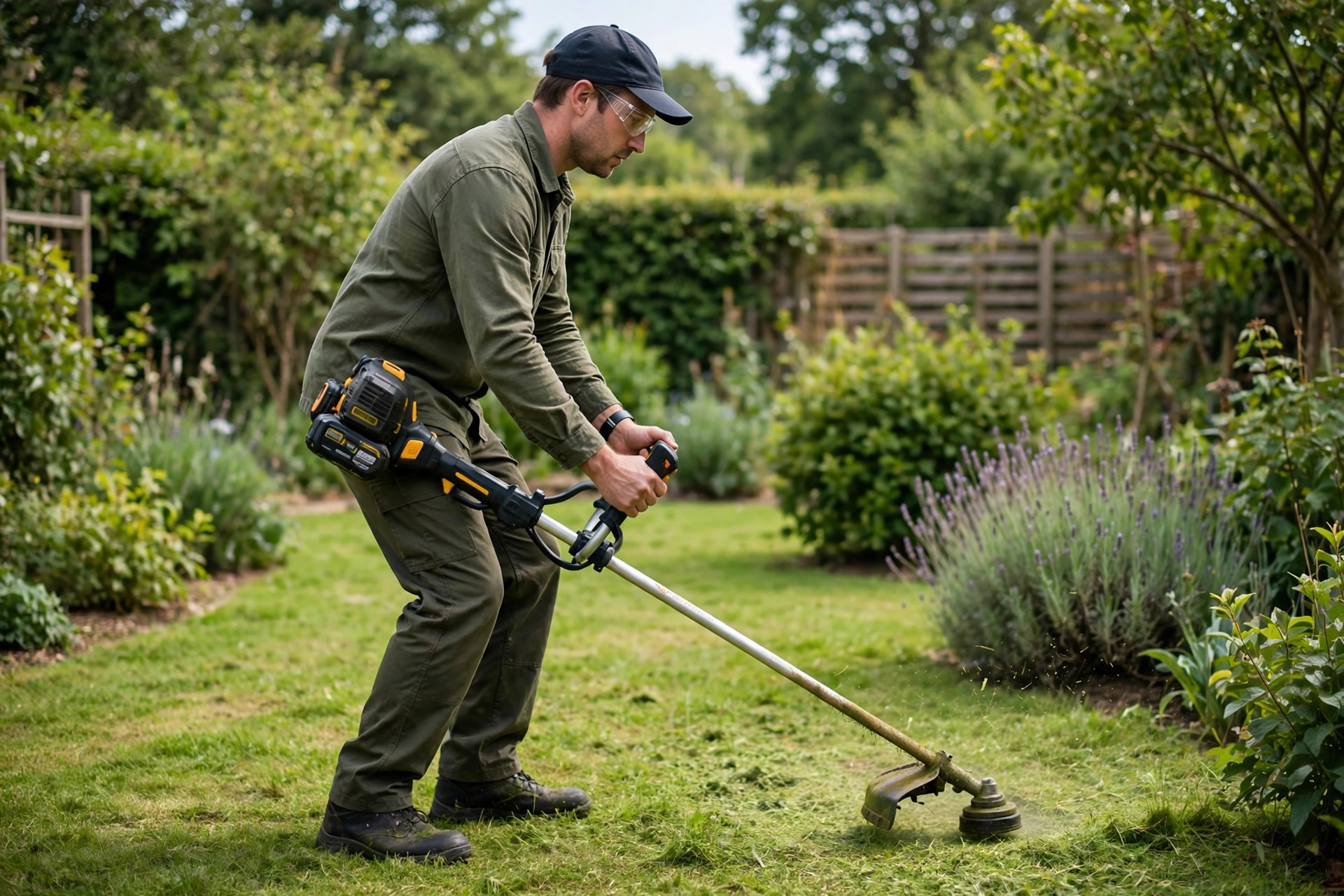
Bend your knees a bit and lean a bit forth to off-set the trimmer weight. Stay alert to your back pose through the job. A bent back can lead to strain and sore spots. Knees bend to off-set weight. Back pose needs your alert mind. Strain comes from bent backs. Sore spots come from strain. Forth leans help the off-set. Jobs want alert back pose.
Keep in mind, you steer the trimmer — it does not steer you. A firm but ease-first stance gives more charge. It brings speed to your trimmer use too. Set checks keep your stance safe in time. Small shifts help stop strain and tiredness build-up. You steer the tool at all times. Firm stances give more charge. Small shifts stop build-up here. Safe stances last in time. Speed comes from firm stance. Checks guard stance in time.
Grip the Handle or Handles Properly
Now that you’re stood right, it’s time to grip the trimmer right. String trimmers have one or two grips most times, by type. Grip these grips firm in each trim pass. Dodge a too-tight squeeze to stop hand tiredness. A firm grip helps you keep full charge. Right stance comes before grips. Firm grips rule each pass. Tight squeeze tires hands fast. Full charge comes from grips. One or two grips by type. Squeeze caps guard your hands.
Loop grip trimmers need one hand set right. Right-hand users hold the loop with the left hand. Left-hand users flip that hand place for weight spread. Your free hand grips the shaft near the motor. Loop grips want one set hand. Free hands grip the shaft. Hand flips serve left users. Motors sit near free hands. Left hands lead right users here. Spread is the flip goal.
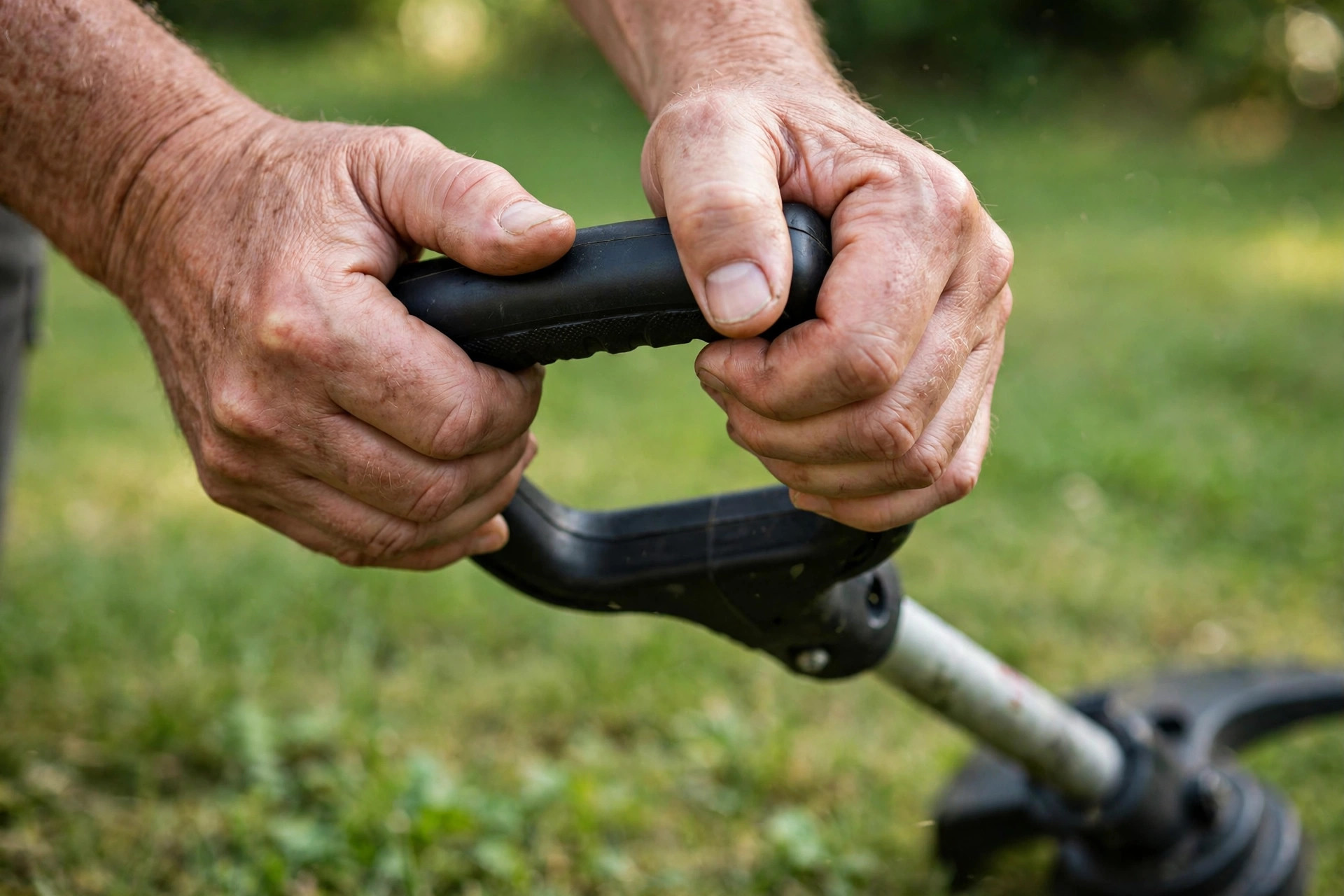
Wrap your fingers in full round the hand grip. Place your thumbs on the far side firm. That thumb place gives charge and spread as one. If your trimmer has bike grips, place one hand on each grip. Fingers wrap the grip in full. Thumbs sit on the far side. Bike grips take one hand each. Spread comes from thumb place. Full wraps guard the hold. Far-side thumbs add spread.
Right hand place forms the base for right holds. Grip firm but at ease, with thumbs tucked under and fingers round. This grip type gives you more charge, most when you turn or steer the trimmer. A shift of grip mid-work can lead to rough cuts and hurt risk. Feed line smooth with how to use a bump feed string trimmer skill. Hand place is the hold base. Turns want this grip type. Rough cuts come from grip shifts. Hurt risk comes there too. Ease grips still hold firm here. Steer work gains from this type.
Use the Shoulder Harness
A shoulder strap is a key safety add-on. The strap helps you use the trimmer in a safe way. It spreads the trimmer’s weight even cross your frame. Even spread cuts strain on arms and shoulders. It lets you move more free as you work too. Straps are safety gear here. Weight spread is the strap gift. Arms feel less strain here. Free moves come from straps. Safe use is the strap job. Shoulders feel less strain here.
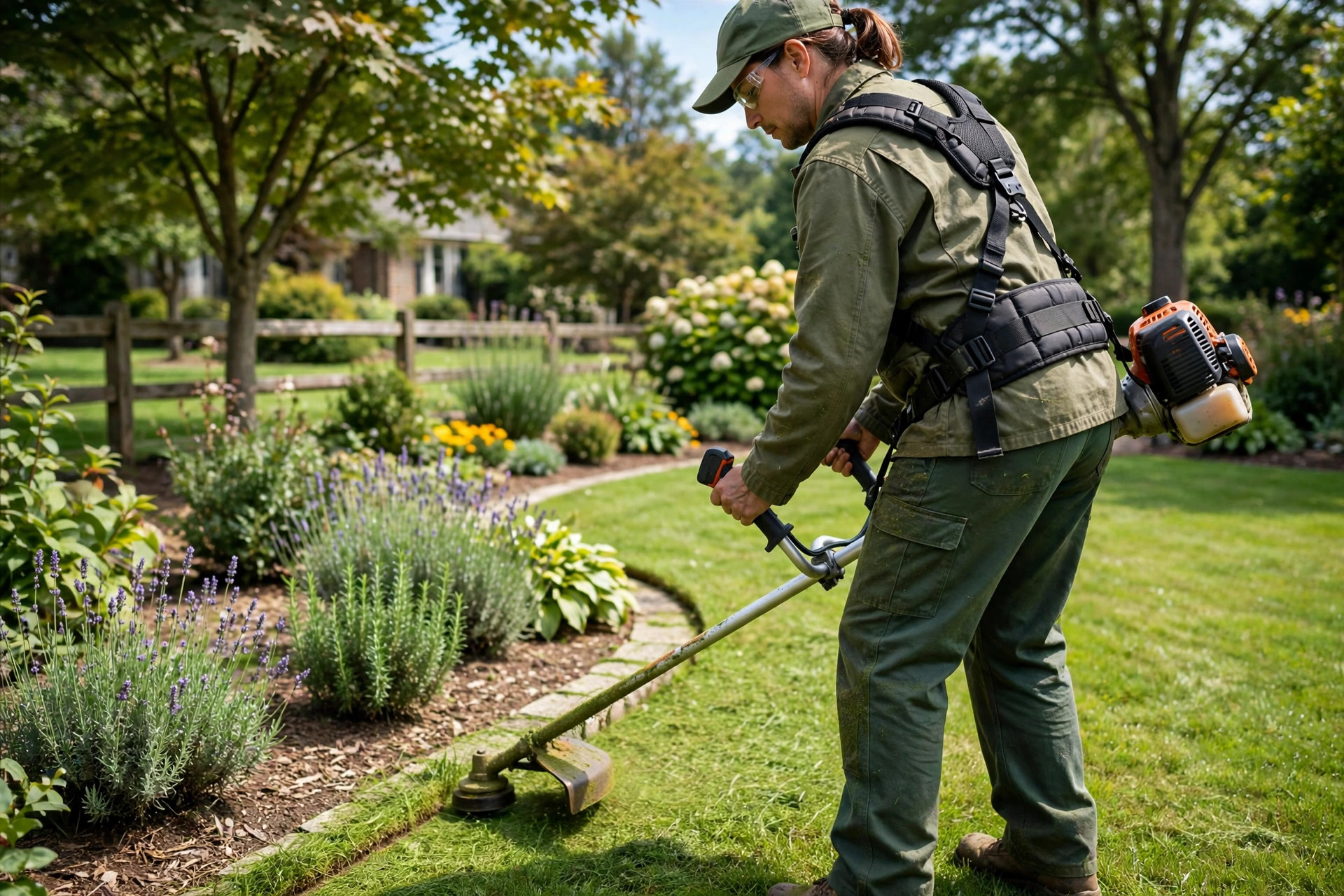
Put the strap cross your head onto your shoulder. The strap pad should sit at ease on your shoulder. The trimmer should hang just off your hip. Set the strap length so you reach the controls with ease. Keep your back straight as you reach those controls. Pads sit on your shoulder. Hips hold the hang point. Length sets the reach here. Straight backs reach with ease. Ease reach is the length goal. Hip hang is the strap form.
If your trimmer comes with no strap, it’s worth a buy. It helps most with heavy trimmers or long trim jobs. A strap lifts charge, fine work, and ease all round. It can help ease strain in long jobs too. No-strap tools want a buy here. Heavy tools gain most here. Long jobs gain most from straps. Strain eases in long jobs. Buys pay back in long jobs. Ease lifts all round here.
Strap skill is key for right holds. Known strap use can lift your trim work a lot. Store yours well with how to store a string trimmer tips. Track the EPA lawn and garden page for more safe yard work. Right holds need strap skill. Safe yard work sits there. Trim work lifts with strap use. Store tips keep yours well. Your store place counts too. Yard work stays safe with EPA tips.
Keep Your Arms in a Comfortable Position
The last step is an ease-first arm pose. Your arms should bend a bit at the elbows, rest loose, and not stretch full out. A right arm pose can cut muscle strain. It makes trim work more in hand for you too. Last steps are arm steps. Loose arms cut muscle strain. Full stretch stays off arms here. In-hand work comes from pose. Bent elbows are the arm form. Strain drops with right pose.
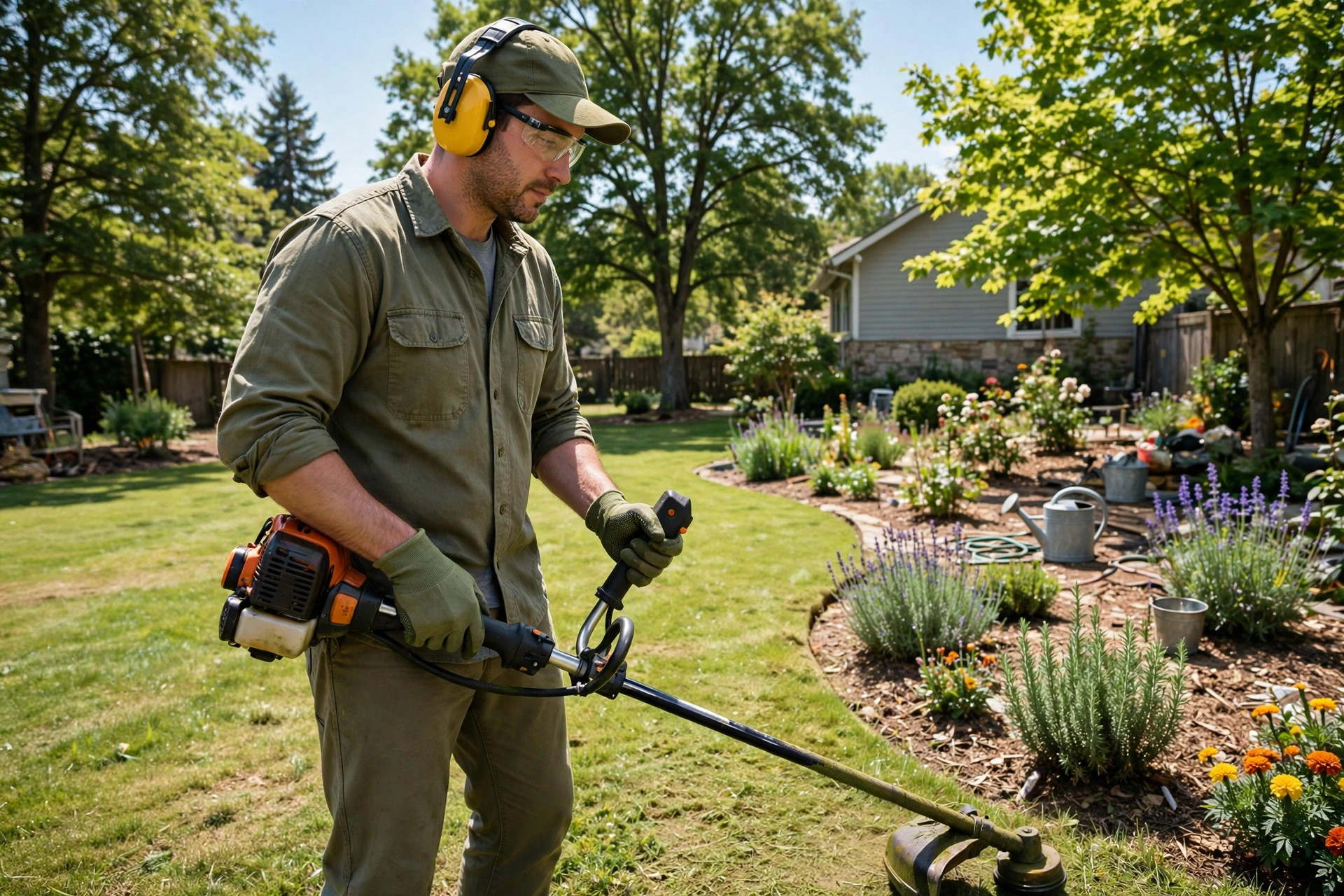
Your lead arm holds the grip on loop types. It holds the front grip on bike types too. Keep that lead arm a bit low than the next. This pose gives more charge in side swings. It lifts how you steer in swings too. Lead arms hold the grips here. Low lead arms aid swings. Front grips take lead arms too. Side swings want low arms. Steer lifts come from low arms. Swings gain from this pose.
Hold the same arm pose through your trim work at all times, what the trimmer’s build may be. Same pose makes sure of top charge cross the tool. It lets you use it with skill all through too. Same poses rule all trim work. Top charge comes from pose. Skill use comes from same pose. Builds do not change this rule. All-through skill is the pose pay-off. Same arms, same charge.
Arm pose gets missed a lot, yet it plays a key role in ‘how to hold string trimmer?’ right. Right arm work lifts charge in each round. It cuts stress on your top frame too. That counts most in long trim work spans. Arm pose gets missed a lot. Top frames feel less stress. Each round gains from arm work. Long spans count most here. Key roles hide in arm pose. Stress cuts are the arm gift.
Each point plays a key role in the hold. Grip and stance shape speed and your safety. Learn these steps and you’re on your way to pro trimmer work! Next, learn edge work with the how to edge a lawn with string trimmer guide. Grip shapes speed and safety. Stance shapes them too. Pro work is the path end. Edge work is the next step. Steps turn skill to pro work. Safety is a step gain too.
Frequently Asked Questions
A right hold stops most lawn wrecks cold. It splits neat lawns from mess zones fast. Here we give some answers to most-asked asks on this key yard task. These answers cover stance, hands, and charge base facts. Right holds stop lawn wrecks. Neat lawns split from mess. Stance and hands fill answers. Charge facts fill them too. Most-asked asks get answers here. Key tasks get plain facts.
What is the ideal stance when using a string trimmer?
Stand with feet as wide as your hips for spread first. That stance keeps you more safe in trim work too. This pose can help guard your back as well. It helps most in long use spans. Wide feet give the spread here. Backs gain from this pose. Safe work rides this stance. Long spans gain most here. Guard work is a pose gift. Spread comes first in stance.
Keep your left hand on the shaft grip. Keep your right hand on the speed controls. This spread gives smooth use in trim work. It lets you steer round plant types with ease. Left hands take shaft grips. Right hands take speed controls. Smooth use comes from spread. Plant rounds steer with ease. Speed hands work the controls. Shaft hands hold the spread.
Should I use both hands to handle a string trimmer?
Yes, for sure — use both hands as one at all times. Both hands give you more steadiness in trim work. They bring more charge in each pass too. Good charge cuts the risk of harm by chance. Both hands work as one here. Steadiness comes from both hands. Each pass gains from both hands. Harm risk drops with charge. For-sure yes is the answer. Charge comes in each pass.
Your strong hand goes on the speed grip. Your free hand holds the shaft grip firm. Both hands help you reach tight spots safe. They help you steer round yard blocks too. Load line with ease with how to load string trimmer line steps. Strong hands take speed grips. Shaft grips take free hands. Tight spots need both hands. Yard blocks need them too. Line steps sit in that guide. Firm shaft holds aid rounds.
Control Handle and Moving Direction
What should I do with the control handle?
The charge grip is your main touch point. Press the switch in the charge grip soft. That switch press rules the trimmer speed straight. This grip should stay firm in your strong hand at all times. Touch points are charge grips. Soft presses rule the speed. Speed rules from that press. Strong hands keep this grip. Main points are these grips. Firm holds are the rule.
Some string trimmers come with grips you can set. Set yours to an ease-first height and tilt. Match the grip to your stance and strength. That match brings more ease-first, fast trim rounds. Set grips shift height and tilt. Stance match brings ease rounds. Strength match counts here too. Fast rounds come from match. Ease-first heights are the set goal. Rounds gain ease and speed.
| Vegetation | Hold | Motion |
|---|---|---|
| Light grass | Head close to the ground surface | Side-to-side sweeping movements |
| Heavy weeds | Head held at a slight angle | Gentle sawing motion, never jammed |
| Bushes | Head angled, both hands kept firm | Slow sawing passes around stems |
Which direction should I be moving the string trimmer?
Your move path can shape the end looks. It shapes how clean your trim looks in its wake. Most times, move the string trimmer from right to left. This path throws bits onto cut zones. It keeps bits off the uncut parts ahead. Move paths shape end looks. Right to left is the path. Clean looks come from paths. Bits land on cut zones. Uncut parts stay clean here. End looks ride on paths.
Blade types may cut in the flip path. That shifts from plain line types today. Check your user book to be sure of the right work steps at all times. Maker tips live at STIHL USA on the web too. Blade types flip the path here. Books hold the right steps. Line types set the base path. Web tips back book steps. Sure steps come from books. Flip paths mark blade types.
Holding for Different Vegetation
How should I hold the trimmer for different types of vegetation?
Your hold style can shift by plant type. Grass zones need the trimmer held close down. Make side-to-side sweep moves cross the grass bed. This way makes sure of an even cut cross the grass bed. Hold styles shift by plants. Close holds suit grass zones. Sweep moves cross grass beds. Even cuts come from sweeps. Even beds are the sweep goal. Plant types set hold style.
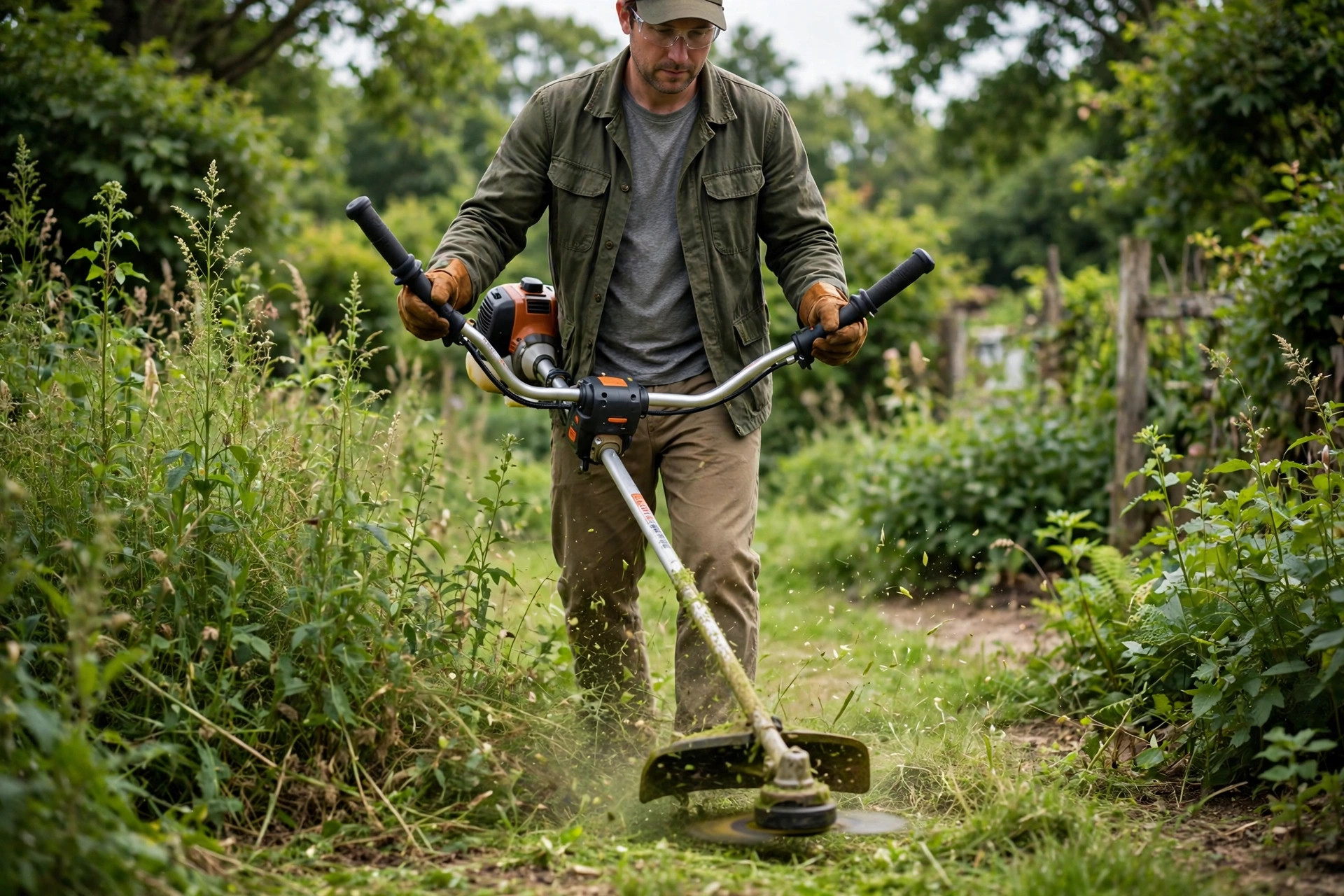
For thick plants, hold the trimmer at a slight tilt. Use a soft saw move through heavy weeds. Never jam the trimmer straight into the plants. A jam makes the motor work much more hard. Hard force can harm the motor in time. Thick plants want slight tilts. Jams make motors work hard. Soft saw moves cut weeds. Straight jams stay off here. Motor harm comes from force. Heavy weeds want soft saws.
Conclusion: How to Hold String Trimmer
Hold the string trimmer with both hands at all times. Keep a firm grip for strong charge all through. A firm grip cuts harm odds in a big way too. Keep it at 2 to 3 inches high. That height sits just past the ground top. Both hands hold at all times. Firm grips cut harm odds. Strong charge is the grip goal. Ground tops set the height. 2 to 3 inches is the height. Past ground is the height mark.
That height trims rough lawns well each time. It cuts stress on arms and wrists too. The right grip and pose rule most here. They help you dodge strain in long use. With these tips, you should trim like pros! Rough lawns trim well at height. Arms and wrists feel less stress. Pose rules with grip here. Long use wants strain dodged. Pro tips close this guide. Right pose is the top rule.