
How to Use an Electric String Trimmer
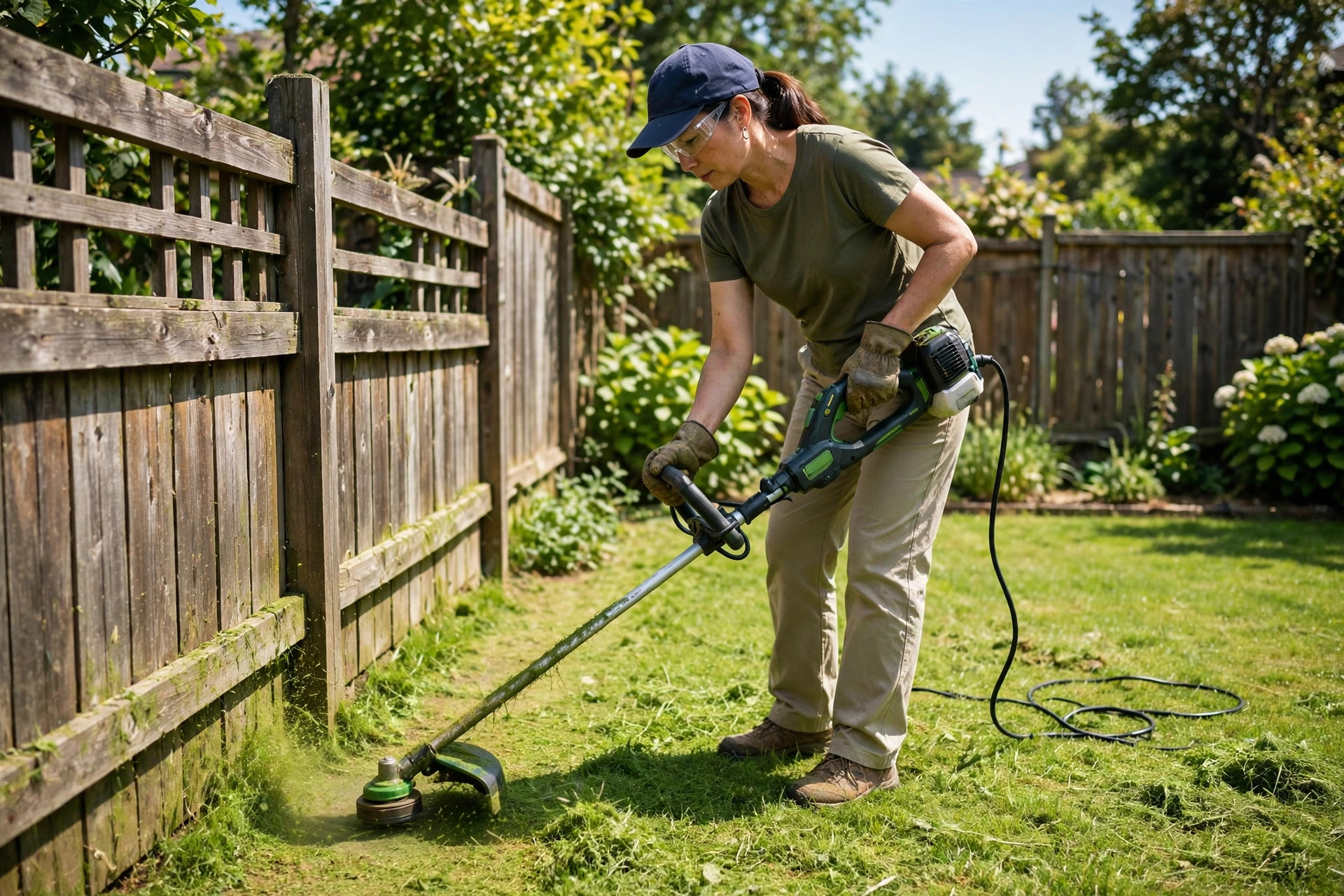
Throughout the blooming season, unruly patches of tall grass often invade our yards. They call for a good string trimmer to tame them fast. Have you ever wondered how to use an electric string trimmer well? It is not just about grooming your lawn with care.
I remember when my father showed me our first electric string trimmer. That handy tool changed how we groomed our whole yard. It made yard work feel light and easy for us. Since then, I reach for it each spring with care.
This guide shows how to use an electric string trimmer step by step. You will learn each move before you switch the tool on. Follow the steps in order for a neat, safe trim.
- Firstly, plug in the trimmer, ensuring that the outlet has a Ground Fault Circuit Interrupter for safety.
- Next, hold the trimmer with both hands with its motor on your right side.
- Press the safety trigger and the power trigger.
- Trim grass and weeds from right to left.
- Lastly, release the trigger to stop the trimmer.
Quick answer: Plug the trimmer into a GFCI outlet and hold it with both hands. Press the safety trigger and the power trigger together. Trim from right to left at a steady pace. Release the trigger to stop the tool when you finish.
How to Use an Electric String Trimmer: Step-by-Step Guide
If you love a well-groomed lawn, learn how to use an electric string trimmer well. Many homeowners still struggle to use it well. This guide walks you through each step to trim like a pro. Be prepared to create a yard that’s the envy of your neighborhood. You can also read our how to use a trimmer guide for the basics.
| Step | What you do | Key tip |
|---|---|---|
| 1 | Learn the parts | Read the manual |
| 2 | Gear up | Gloves, glasses, shoes |
| 3 | Clear the lawn | Move toys and rocks |
| 4 | Trim right to left | Keep the head level |
| 5 | Clean and store | Check the line |
Step 1: Understand Your Electric String Trimmer
Before you begin using your electric string trimmer, learn its parts well. Take time to know how each part works. Every string trimmer comes with a manual that details its specific features and operation. Spare a few moments to read through this manual.
Also, acquaint yourself with the different parts of your tool. Typically, an electric string trimmer has a long handle and a rotating trimmer head. It also has a protective shield and the electric motor. Knowing these parts helps your trimmer run smoothly and last longer.
If your manual says so, run a safety check first. Do this before you use the electric string trimmer. Ensure the trimming wire is not tangled or damaged, and the guard is securely attached. Verify that the electric motor and power cord are in good condition.
To ease the function, adjust the handle of your trimmer to match your height. You also might want to test the trigger on your trimmer. The switch controls how the trimming head spins. Make sure the trigger moves freely and feels smooth.
Put On Your Safety Gear Before You Start
Step 2: Put on Your Safety Gear
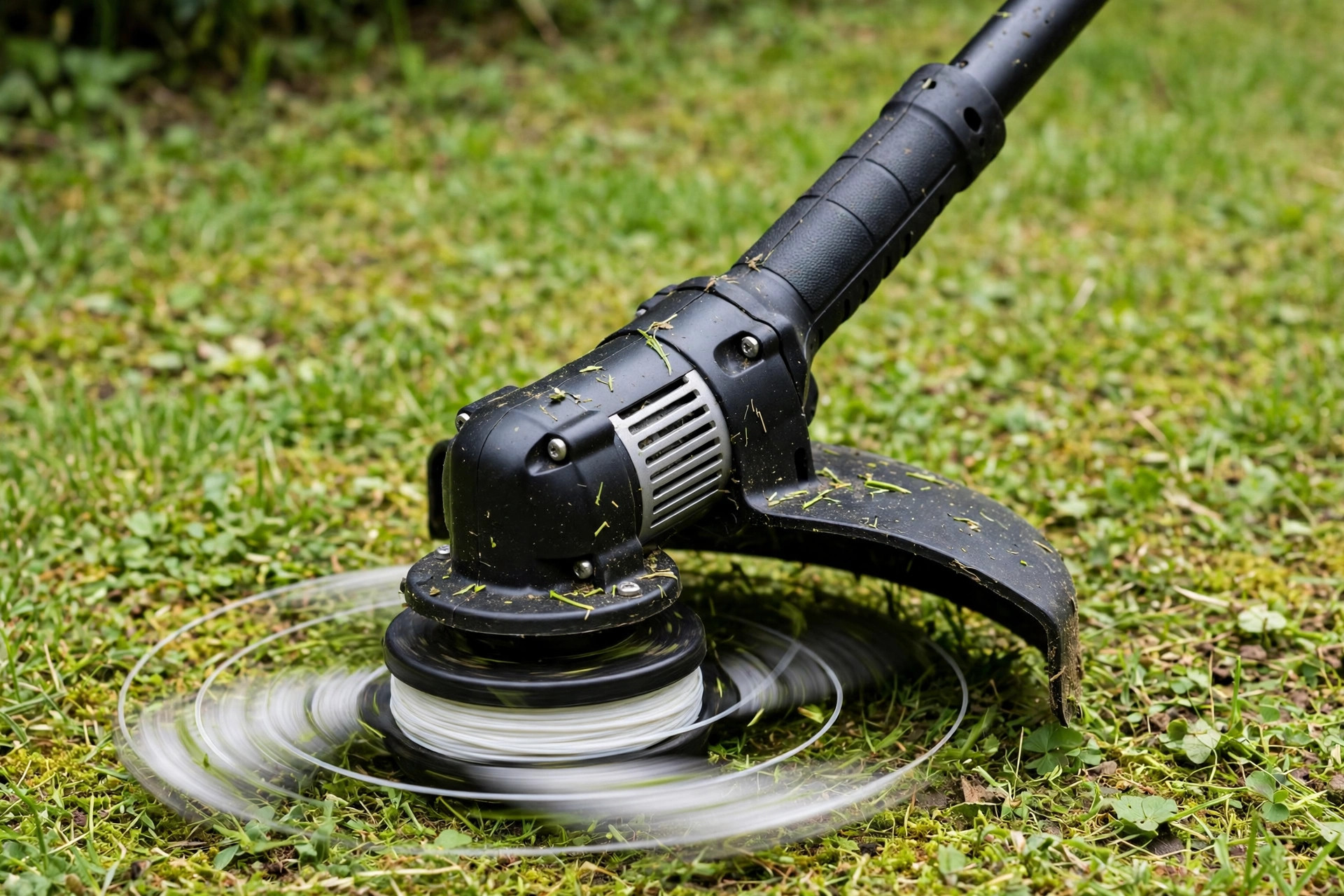
Safety should always come first with power tools. That rule covers your electric string trimmer too. Before you start, make sure you have all necessary protective equipment on hand. Wear sturdy gloves to protect your hands from debris. Gloves also improve your grip on the machine.
If your model has no debris shield, wear long, thick pants and closed shoes. They guard your legs and feet from flying grass and debris. Eye protection is also essential for safe trimming. Glasses or goggles guard your eyes from grass and stones. Other debris can fly around during the trimming process too.
Remember to keep bystanders, especially children and pets, away from your working area. Our how to use a weed trimmer guide covers safe habits in full. If your trimmer makes a lot of noise, wear ear protection.
So ear protection is less needed with this tool. Still, wear it if you trim for long stretches at a time. Gas models make more noise than electric ones do.

Prepare Your Lawn First
Step 3: Prepare Your Lawn
Check your lawn first so it is ready to trim. A quick look now saves trouble later on. Begin by clearing loose debris and clutter from the yard. Pick up fallen branches, toys, and rocks first. The string trimmer can launch these objects at high speed, potentially causing injury or damage.
Make a plan for your trimming session first. Identify the areas that need trimming, particularly places where your lawnmower cannot reach. Spots near fences, walls, trees, or flowerbeds need it most. Your mower cannot reach those tight spots well.
Smaller lawns may allow for a basic plan. Larger lawns may need the yard split into sections. That keeps your trimming neat and systematic. Trim the hard areas first while you are fresh. That habit can cut the risk of slips and harm.
Check that your power cord can reach each planned area. A short cord will leave some spots out of reach. Longer cords may require the use of extension cables. Cordless models need a fully charged battery before you start. Learn how to store a string trimmer right after each job.
Start Trimming with Care
Step 4: Start Trimming
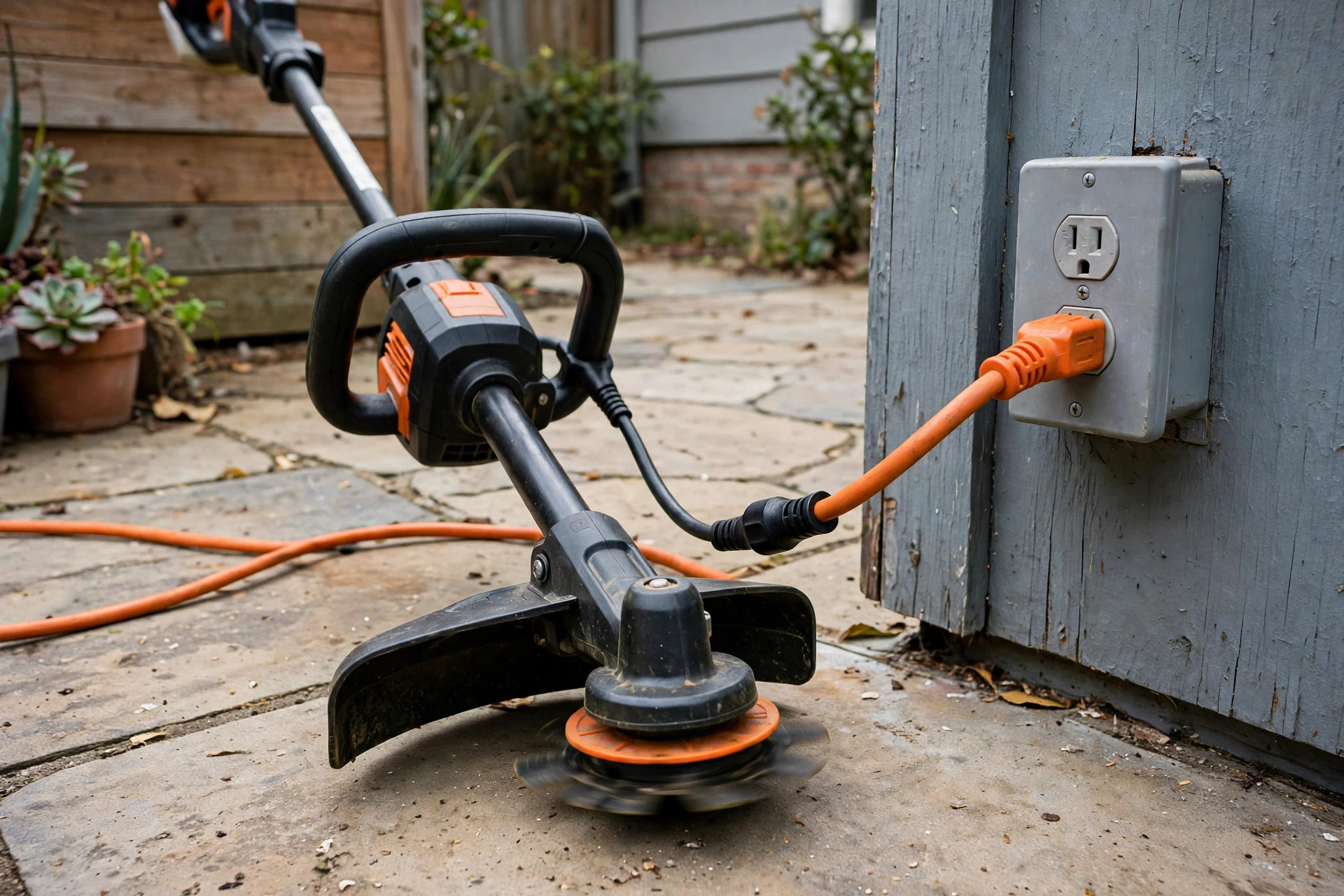
Plug your device into a power outlet or insert the battery, depending on your model. Hold the trimmer in a way that it feels balanced in your hands. Keep one hand on the throttle control at all times. Use your other hand to support the trimmer. Avoid bending your back over; instead, swing the trimmer using your arms.
Hold the trimmer head a few inches above the lawn. Always cut from right to left as you move. Most trimmers spin counterclockwise, so work from right to left. That sends cut grass onto the lawn, not paths or beds. You can also use the same tool to edge with a string trimmer neatly.
Move at a steady pace through the yard. Fast movements may result in an uneven cut, while slow progress can overcut an area. Keep a consistent length for the trimming line to achieve a neat cut. If you’re tall, avoid tilting the trimmer as it creates inconsistent cutting heights.
Do not let the line scatter clippings into the wind. It can leave a messy lawn and raise the risk of eye injuries. Release the throttle to stop the line from spinning when you finish a section. Then move on to the next part of the lawn. The EPA lawn and garden page lists safe yard work tips.

Clean and Store Your Trimmer
Step 5: Cleaning and Maintenance
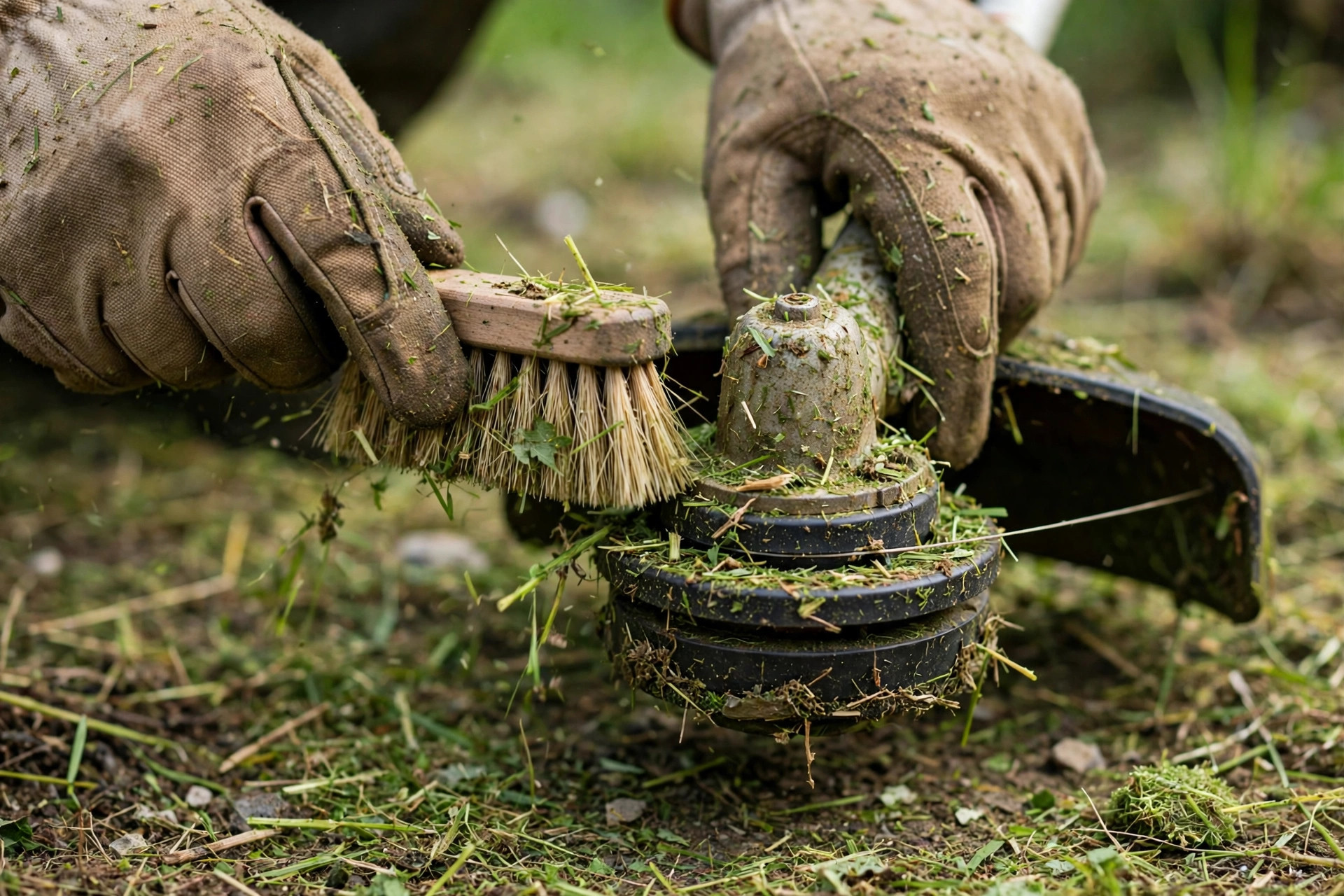
After you conclude your trimming session, ensure a thorough clean-up of your trimmer. Remove grass from the device, the vents, and the cooling fins. Built-up grass can block air and heat the motor. Built-up grass can cause the motor to overheat, deteriorating its performance and lifespan.
Check the trimmer line after every use. If it’s excessively short or looks worn out, replace it for the next use. A worn-out cord can hurt your device and strain the motor. That extra load can damage the motor over time. Our how to restring a lawn trimmer guide shows the swap in full.
Store your electric string trimmer in a clean, dry place, away from children’s reach. Keep it far from flammable items at home. A dry spot keeps the motor safe from rust.
Finally, remember to inspect your electric string trimmer regularly even during the off-season. Regular checks can catch power cord defects or motor problems early. That keeps your trimmer ready when you need it next.
Electric string trimmers are a fantastic tool for maintaining a beautiful lawn. A neat lawn adds beauty to your home and pride to your work. It also brings a sense of pride each time you step outside.
More than just knowing how to use an electric string trimmer, safe habits matter most. Good practice brings the results you want from each trim. You’re now equipped with the knowledge you need for your next lawn trimming adventure.
| Task | When | Why it matters |
|---|---|---|
| Clean the trimmer | After every use | Stops clogs and motor heat |
| Check the line | After every use | Keeps cuts clean |
| Inspect the cord | Each month | Spots wear early |
| Store it dry | After every job | Guards against damp and rust |
Frequently Asked Questions
For those eager to keep a neat lawn, this tool can be a game-changer. Learning how to use an electric string trimmer helps you trim with care. The questions below aim to demystify its use and care. They cover safety and upkeep for this handy tool.
What safety precautions should I consider when using an electric string trimmer?
Wear sturdy closed-toe shoes, long pants, and safety glasses. That gear keeps you safe while you trim. These will protect you well from flying debris. Avoid using the trimmer in wet conditions. Wet grass can raise the risk of electric shock.
Many electric string trimmers come with a guard. Make sure this is securely in place before you start trimming. Keep the power cord far from the cutting area. That stops the line from cutting the cord by chance.
How can I achieve an even cut with my electric string trimmer?
To get an even cut, hold the trimmer at a constant height. Keep that height steady above the ground as you move. This will help ensure consistency in the height of the cut grass. Cut with the tip of the string, not the entire line. That keeps the line clear of the housing and makes it last.
You can also angle the cutting head for precision. Adjust the head so it sits parallel to the ground when edging. Turn it perpendicular for regular trimming instead. This gives you a neat and even finish.
Maintenance and Grass Types
How do I maintain my electric string trimmer for optimal performance?
Clean your electric string trimmer often to keep it at peak performance. Regular cleaning keeps this tool in top shape. After every job, clean the body to remove grass and debris. Pay care to the vents and the cooling fins too. Avoid water, and use a brush or compressed air instead.
Another critical aspect of maintenance is checking and replacing the trimmer line as needed. If the line gets short due to usage, replace it with a new one. See how to change string on weedeater trimmer for the full steps. Unplug and store the trimmer well when you are done. Good storage can add years to its life.
Can the electric string trimmer be used on all types of grass and weeds?
Generally, electric string trimmers can handle most types of grass and weeds. They are powerful enough to cut through tough, thick weeds comfortably. Still, toughness can vary from model to model. Some heavy tasks may need a gas-powered trimmer instead.
For tough or thick plants, make more than one pass. Do not try to cut it all in one go. This keeps the motor cool and guards the line from wear. That care helps your trimmer last much longer.
Skills You Need
Do I need any special skills to use an electric string trimmer?
Not at all, and that is good news. The beauty of an electric string trimmer lies in its simplicity and ease of use. There’s no need for complicated assembly or mechanical prowess. The main skill is holding and steering the trimmer well. With frequent use, you will get the hang of it fast.
Still, it’s crucial to read and understand the user manual provided with the trimmer. The manual will guide you on how to use it safely and correctly. Compare models in our best electric string trimmer roundup first. In short, no special skills are needed to use this tool. Still, know the tool well and follow basic safety rules.
Conclusion: How to Use an Electric String Trimmer
When you use an electric string trimmer, remember the basics first. Always charge it fully or plug it in before you start. Clear debris from the area and aim away from windows. Wear safety glasses and sturdy shoes while you trim.
Clean grass and debris from the trimmer after each use. If your trimmer uses a cord, take care not to cut it. With these tips, trimming stays easy and safe for you. Your lawn will look neat and tidy all season long.
