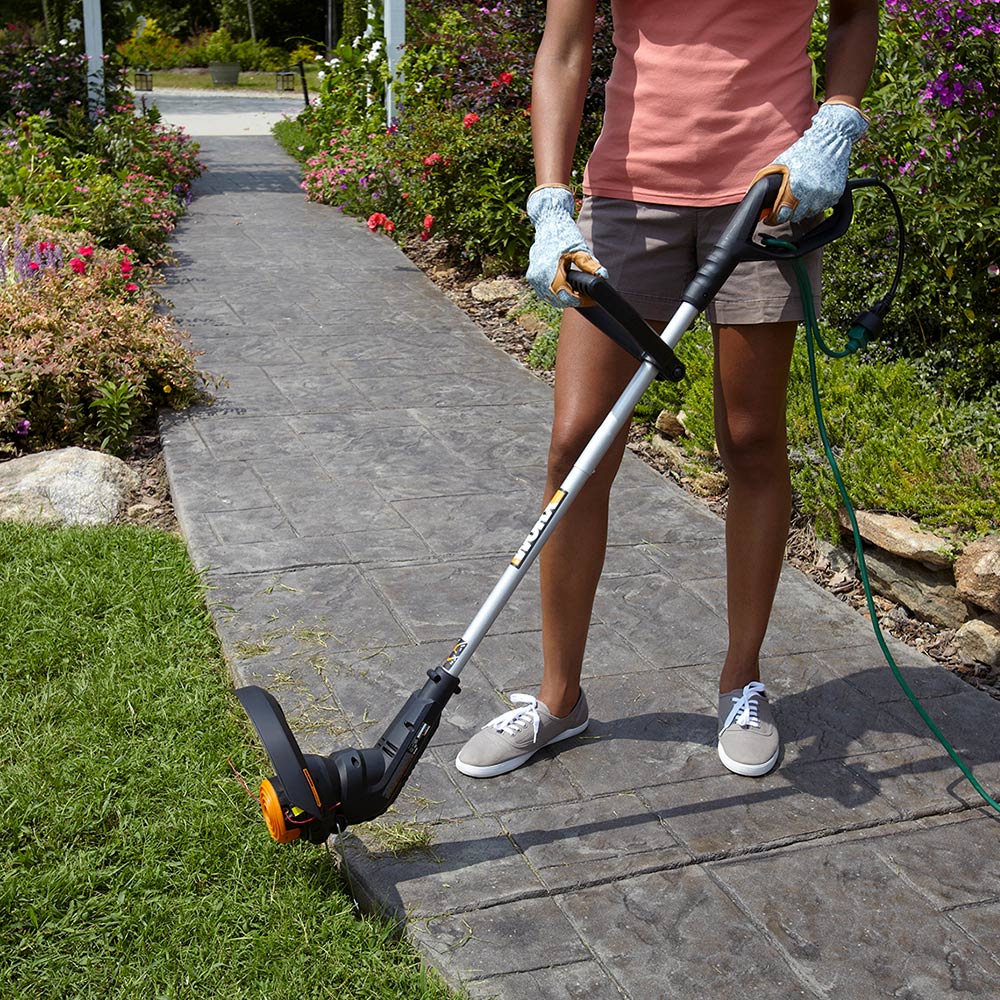
How Do You Use a Grass Trimmer?
A grass trimmer keeps lawn edges neat and tidy. Learning how do you use a grass trimmer starts with its parts. The head, string, handle and shield all matter. Each part plays a role in safe trimming. This guide walks through every step clearly.
Gas, electric and battery trimmers all work differently. Gas models suit large yards and heavy weeds. Electric models stay light and easy to handle. Battery models give freedom without a cord. Choose the type that fits your yard.
Later sections explain safety, setup and technique. Maintenance, types and troubleshooting follow after them. Short answers close the guide at the end. Careful work keeps lawns neat for years. Small routines deliver clean edges every time.
Quick answer: Read the manual and wear gloves, goggles and sturdy shoes. Check the string length and fuel or battery first. Hold the trimmer level and sweep side to side. Angle it slightly for crisp edges along paths. Clean it after use and store it dry.
- How Do You Use a Grass Trimmer? Five Steps at a Glance
- Step 2: Safety Precautions
- Step 3: Trimmer Setup
- Step 4: Trimming Techniques for a Neat Lawn
- Step 5: After-Use Maintenance
- Different Types of Grass Trimmers
- Common Grass Trimmer Problems and Troubleshooting
- Tips and Tricks for Efficient Use
- Frequently Asked Questions
- Conclusion: How Do You Use a Grass Trimmer?
How Do You Use a Grass Trimmer? Five Steps at a Glance
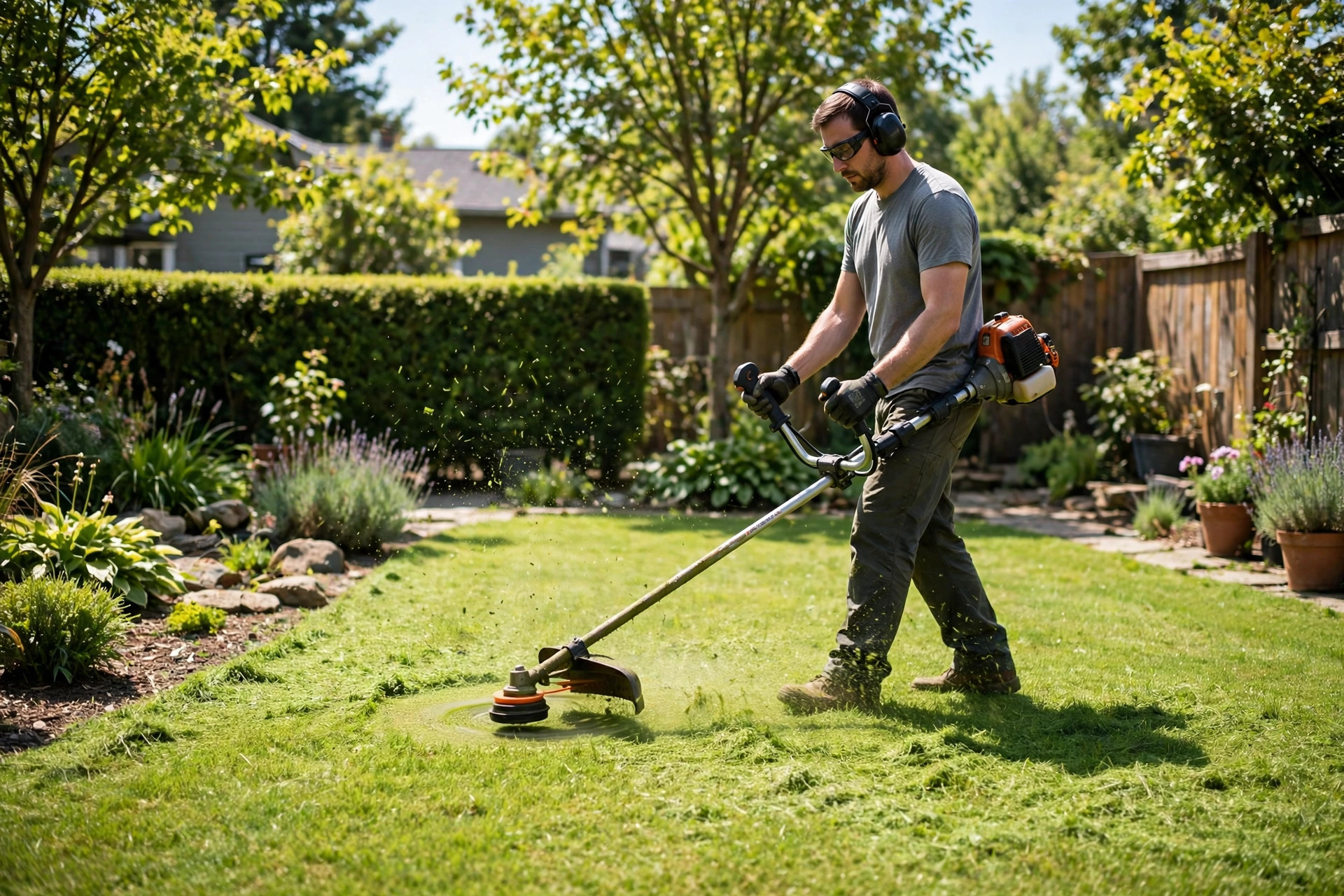
Five steps cover parts, safety, setup, technique and care. Work through them slowly in order shown. Later sections explain each stage more fully. Rushing invites uneven cuts and loose parts later.
| Step | What to Do |
|---|---|
| 1. Understand your tool | Read the manual and learn each part |
| 2. Stay safe | Wear gloves, goggles and sturdy shoes |
| 3. Set up | Check string, fuel or battery, adjust handle |
| 4. Trim | Sweep level, edge vertical, take passes |
| 5. Maintain | Clean, inspect and store dry |
Step 2: Safety Precautions
Always wear gloves, safety goggles and sturdy shoes. Snug clothing keeps fabric away from the line. Ear protection helps with loud gas-powered models. Check for damage or loose parts before use. Keep people and pets at a safe distance.

Trim only in good weather and dry conditions. Wet grass turns slippery and hard to control. Clear rocks, sticks and toys from the area. Flying debris can injure people standing nearby. Hold the trimmer firmly with both hands.
Step 3: Trimmer Setup
Assemble the parts following the manual closely. Secure the handle and fit the safety shield. Gas models need the right fuel mixture. Electric models need charging or a power outlet. Check that every part fits tightly first.
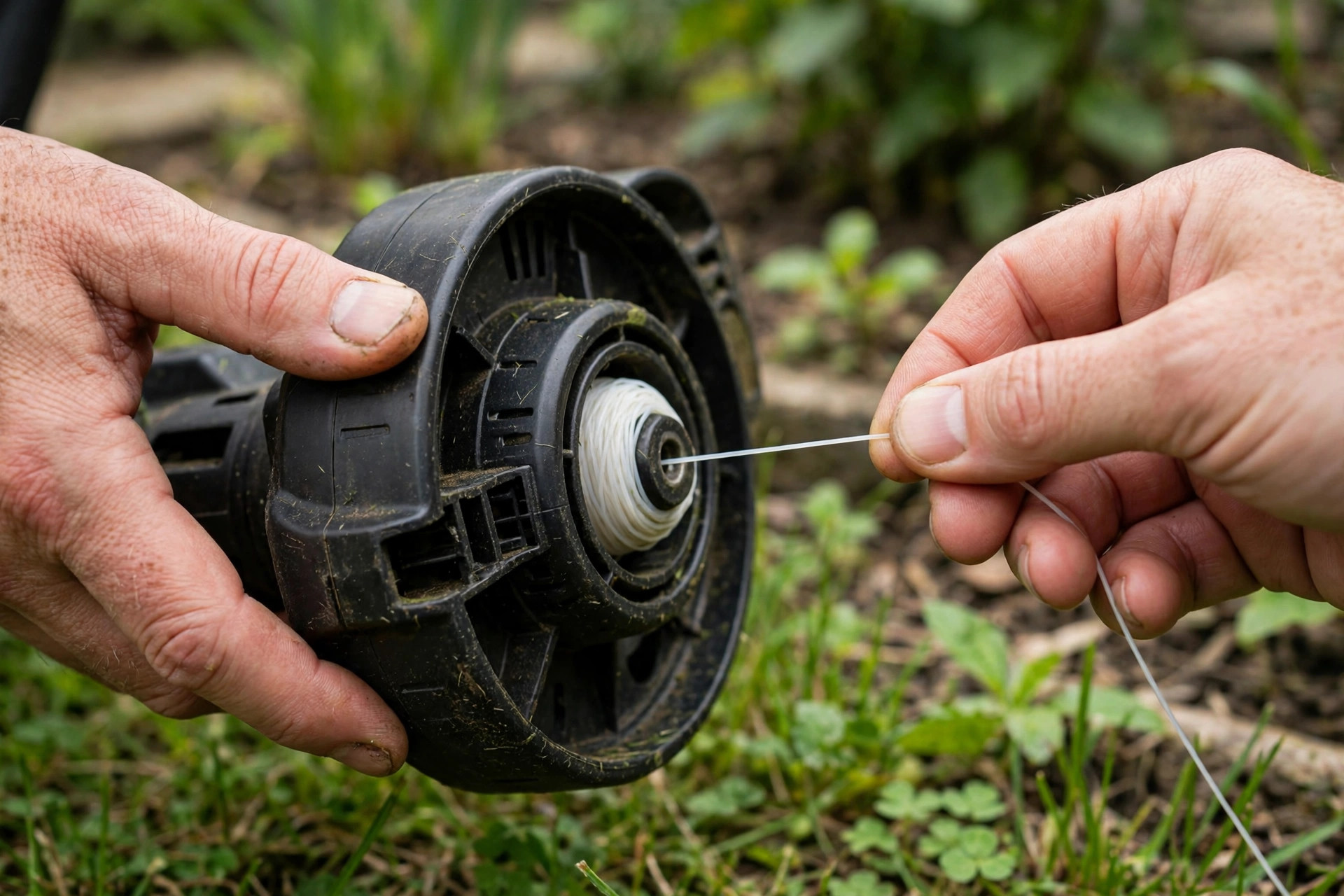
Check the string type and length for your model. Measure and cut the line to the right length. Feed it through the head exactly as directed. Wrong line size causes poor cuts and tangles. Our string size guide explains the right choice for your model.
Adjust the handle and strap for your height. A balanced trimmer feels easier to control. Turn it on and listen for strange sounds. Unusual vibration means something needs checking first. Fix small issues before starting the job.
Step 4: Trimming Techniques for a Neat Lawn
Hold the trimmer level with the ground always. Sweep it side to side in smooth motions. This covers more area and keeps cuts even. Tilt it slightly near flower beds and trees. Light touches protect nearby plants from damage.
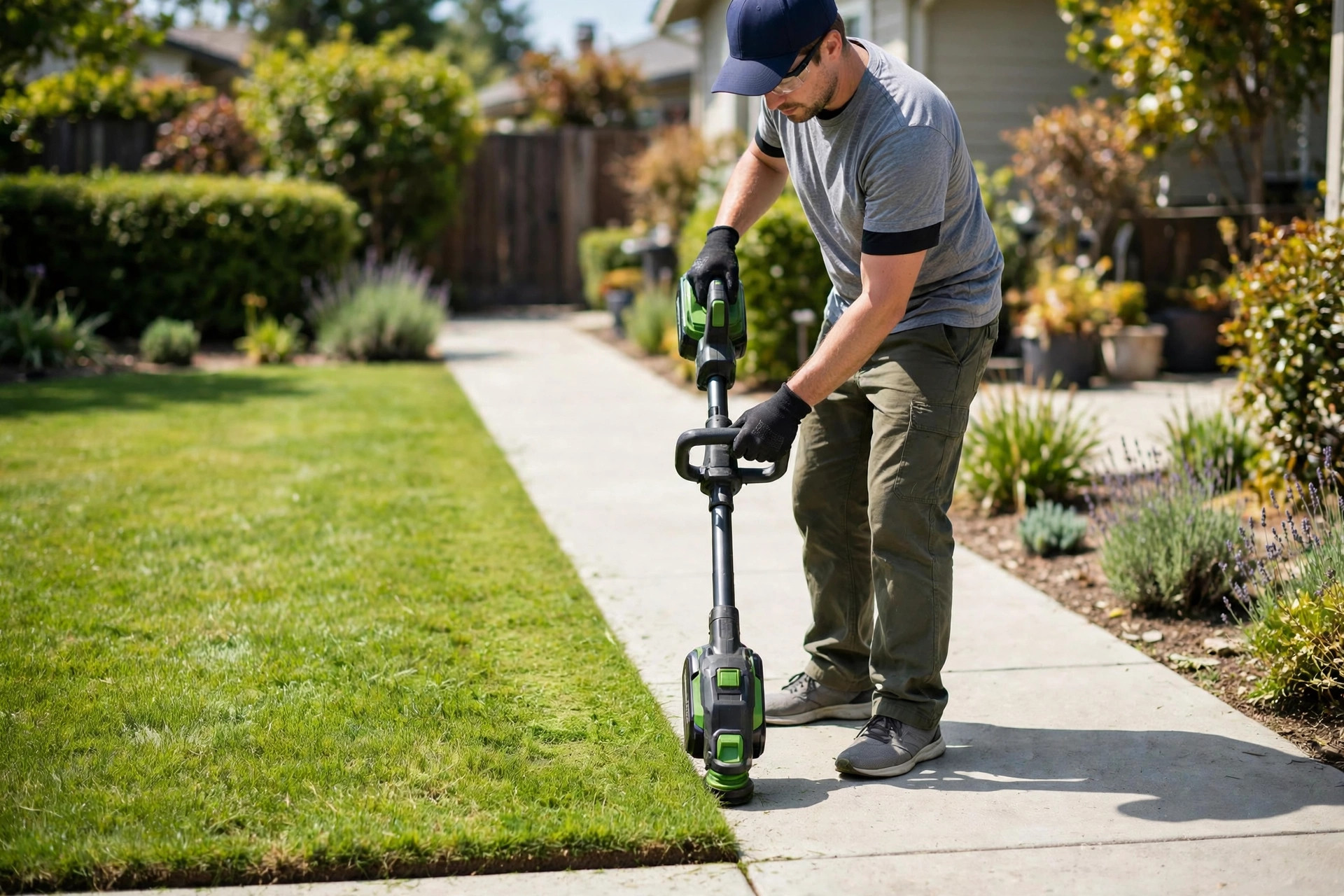
Turn the trimmer vertical for crisp path edges. This creates clean lines along walks and driveways. Tall grass needs several passes, not force. Start high, then lower the head gradually. Forcing it through thick weeds clogs the head.
Slopes need slow, short and controlled motions. Adjust your grip and footing for balance. Short bursts keep you steady on uneven ground. Watch the line length as you work. Stop and readjust it when it shortens.
Step 5: After-Use Maintenance
Clean the trimmer after every single use. Wipe the body and head with a damp cloth. Remove grass clippings that clog the head. Check the line and replace it when worn. Tighten loose screws and inspect for damage.
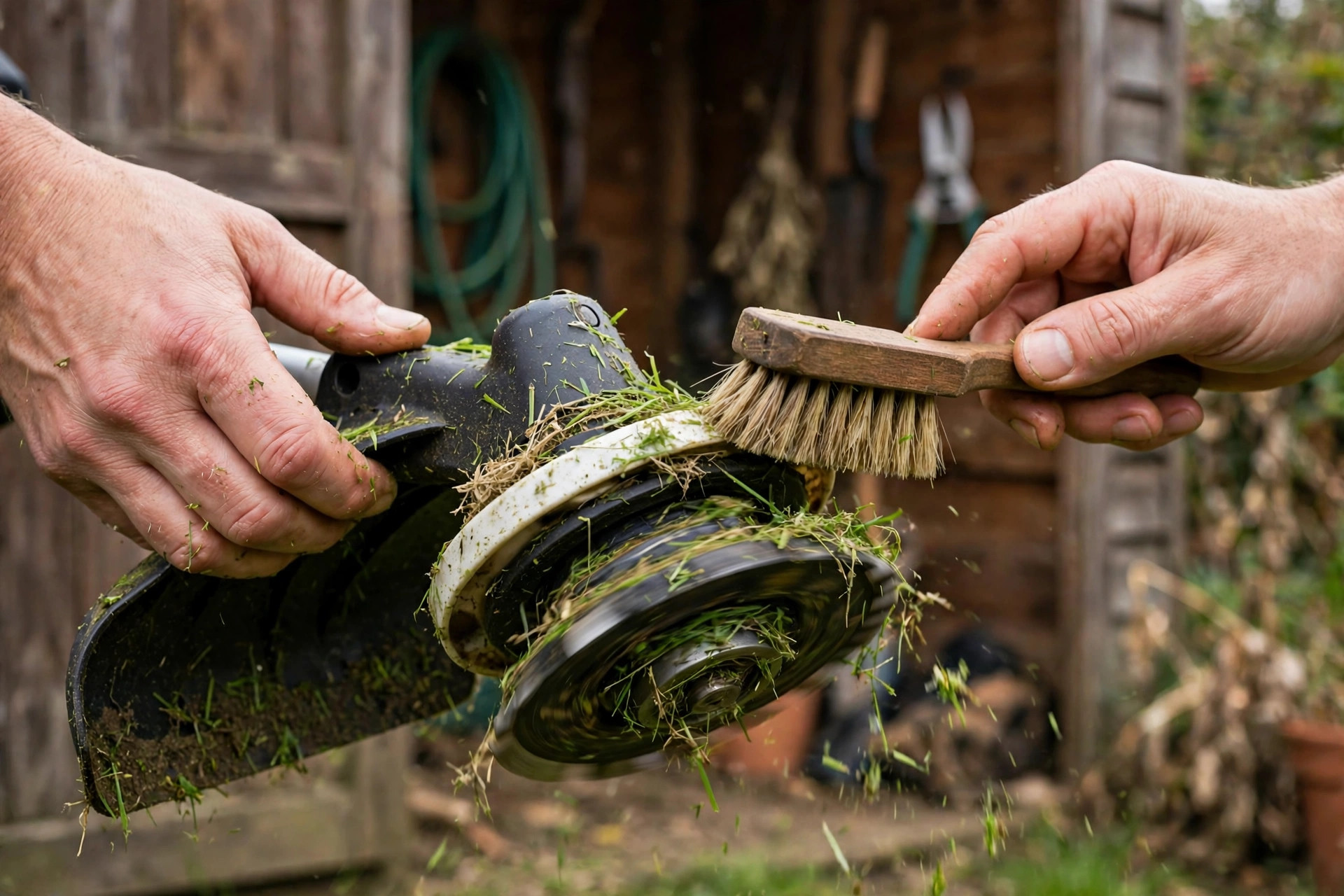
Gas models need the fuel tank emptied first. Old fuel degrades and can damage the engine. Disconnect the spark plug for added safety. Battery models need the battery removed after use. Store the trimmer dry, cool and out of sunlight.
Schedule regular checks for lasting performance every month. Lubricate moving parts to reduce friction and wear. Replace the air filter and spark plug periodically. Our oiling guide explains blade lubrication fully.
Different Types of Grass Trimmers
Electric trimmers suit small to medium yards well. They stay light, quiet and easy to handle. Corded models give steady power but limit movement. Battery models move freely yet need recharging. Gas models suit large yards and heavy work.
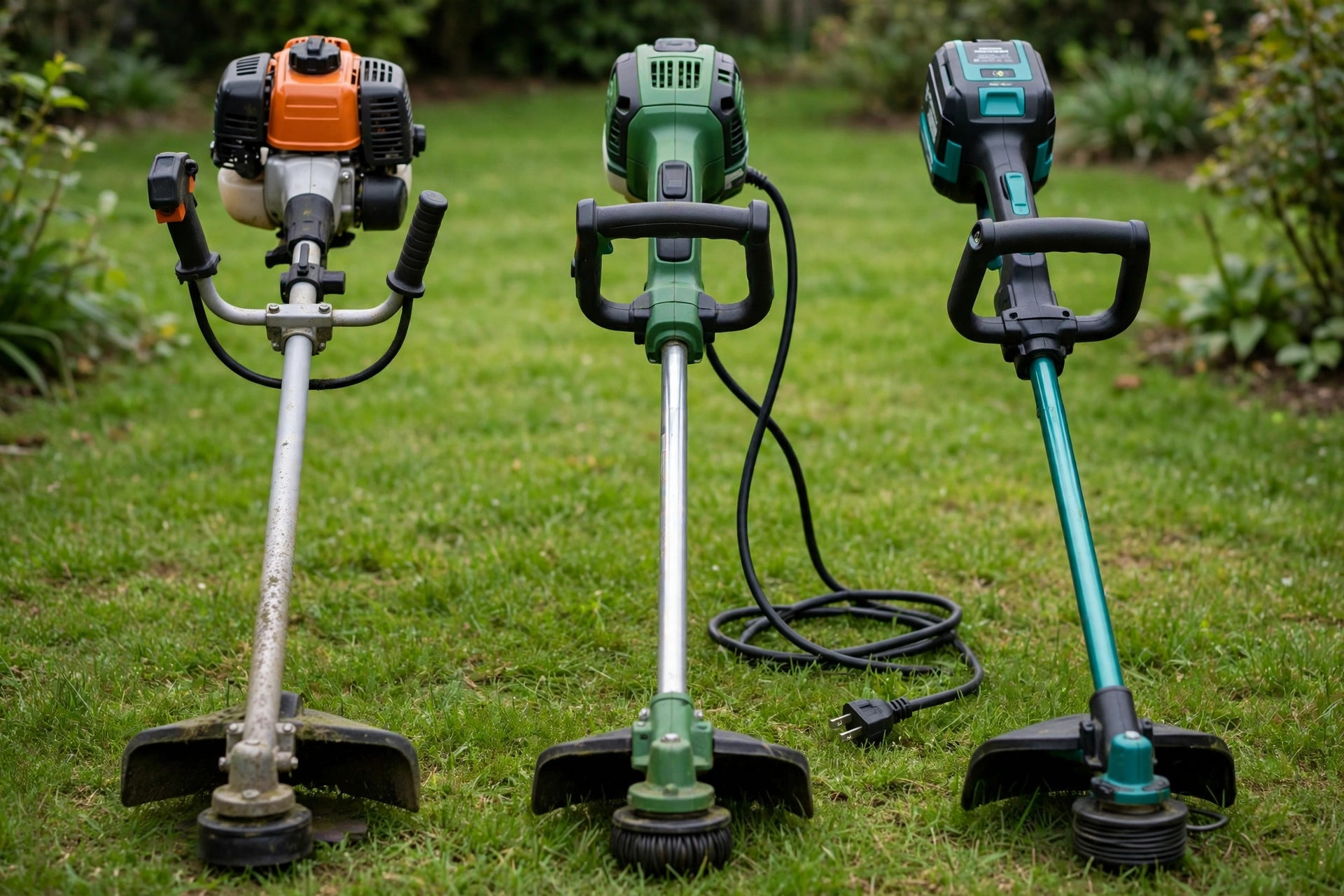
Gas trimmers bring power but add weight and noise. Their engines need regular maintenance and fuel. Curved shafts maneuver well around standard lawns. Straight shafts reach under shrubs and fences. Choose the type that fits your garden size.
| Type | Ideal For | Pros | Cons |
|---|---|---|---|
| Electric | Small to medium yards | Lightweight, easy to use | Corded models limit mobility |
| Battery-Operated | Medium yards | Mobile, less noise | Needs regular recharging |
| Gas-Powered | Large yards, heavy-duty tasks | Powerful, reliable | Heavy, noisy, needs maintenance |
Some models add edging and adjustable cutting angles. Extra features turn one tool into many. Our lifespan guide explains how long trimmers last.
Common Grass Trimmer Problems and Troubleshooting
A trimmer that will not start needs checks first. Gas models may lack fuel or a clean plug. Electric models may have a faulty cord or battery. Check power, fuel and plugs before worrying. Most starting faults clear with simple checks.
Line that breaks often usually hits hard surfaces. Wrong line type also causes frequent breaks. Thicker line helps with tough weeds and edges. Trim at the right angle to avoid sidewalks. Inspect the line often for wear and tear.
Uneven cuts often mean a tangled trimmer head. Clean the head and re-spool the line correctly. Overheating comes from long use or blocked vents. Rest the trimmer and clear debris from vents. Our repair guide covers faults beyond simple assembly.
Vibrations usually point to loose parts or uneven line. Tighten screws and spread the line evenly. Regular checks keep control and comfort high. Our head changing guide shows correct fitting order too.
Tips and Tricks for Efficient Use
Start with a full tank or charged battery. Consistent power keeps every cut even and neat. Use the right line type for your model. Check the manual before choosing any line. Correct line choice prevents breaks and clogs.
Trim in dry weather on clear ground. Clear debris from the area before starting the engine. Take short breaks to prevent overheating issues. Clean the head and replace worn parts often. Our cleaning guide covers careful cleaning routines.
Adjust the handle and straps for comfort. A well-balanced trimmer gives better control always. Store it dry and hang it up safely. Proper storage keeps it ready for next time. Our sharpening guide explains safe edge restoration fully.
Frequently Asked Questions
These answers repeat this guide’s own points only. They follow the same steps explained above closely. Short answers close the guide at the end. Maker pages like STIHL publish official trimmer guidance.
What safety gear should I wear when using a grass trimmer?
Wear safety goggles and gloves for every job. Goggles shield eyes from flying debris always. Gloves protect hands and improve grip too. Add ear protection for loud gas-powered models. Sturdy shoes and long pants protect legs and feet.
How do I choose the right trimmer line?
Match the line to your trimmer model first. Thicker lines cut tough weeds but need more power. Thinner lines suit light grass and edging. Check your manual for recommended thickness and type. The right line improves efficiency and lifespan greatly.
What maintenance does a grass trimmer need?
Clean the head after every trimming session. Remove dirt and debris from the cutting head. Check the air filter on gas-powered models. Inspect the spark plug and replace it when worn. Charge batteries properly and store them cool.
Can I use my grass trimmer on wet grass?
No, avoid trimming wet grass whenever possible. Wet grass turns slippery and hard to control. Slips can cause uneven cuts or injuries. Moisture also clogs the cutting head quickly. Wait until the ground dries before trimming.
How do I prevent my string from breaking so often?
If your string breaks often, check the spool loading first. Hitting hard objects like concrete also breaks string quickly. Use a thicker line for tough jobs and keep speed steady. Trim at the right angle to avoid hard surfaces. Regular inspection keeps breakage low over time.
Conclusion: How Do You Use a Grass Trimmer?
So, how do you use a grass trimmer with confidence? Learn the parts, stay safe and set up carefully. Sweep level, edge vertical and take slow passes. Clean, inspect and store the trimmer after use. Correct technique prevents most problems before starting.
Regular care keeps cutting sharp and safe always. Clean, oil and check parts on schedule. Store the trimmer dry and replace worn parts. Your trimmer then serves reliably for seasons. Simple habits deliver smooth trimming every time.

I’m Patricia D. Johnson, an affiliate marketer and blogger specializing in trimmers and grooming tools. I create honest reviews, buying guides, and practical tips to help readers choose the right trimmer for their needs. With a focus on quality, performance, and value, I simplify the decision-making process so consumers can make confident purchases.