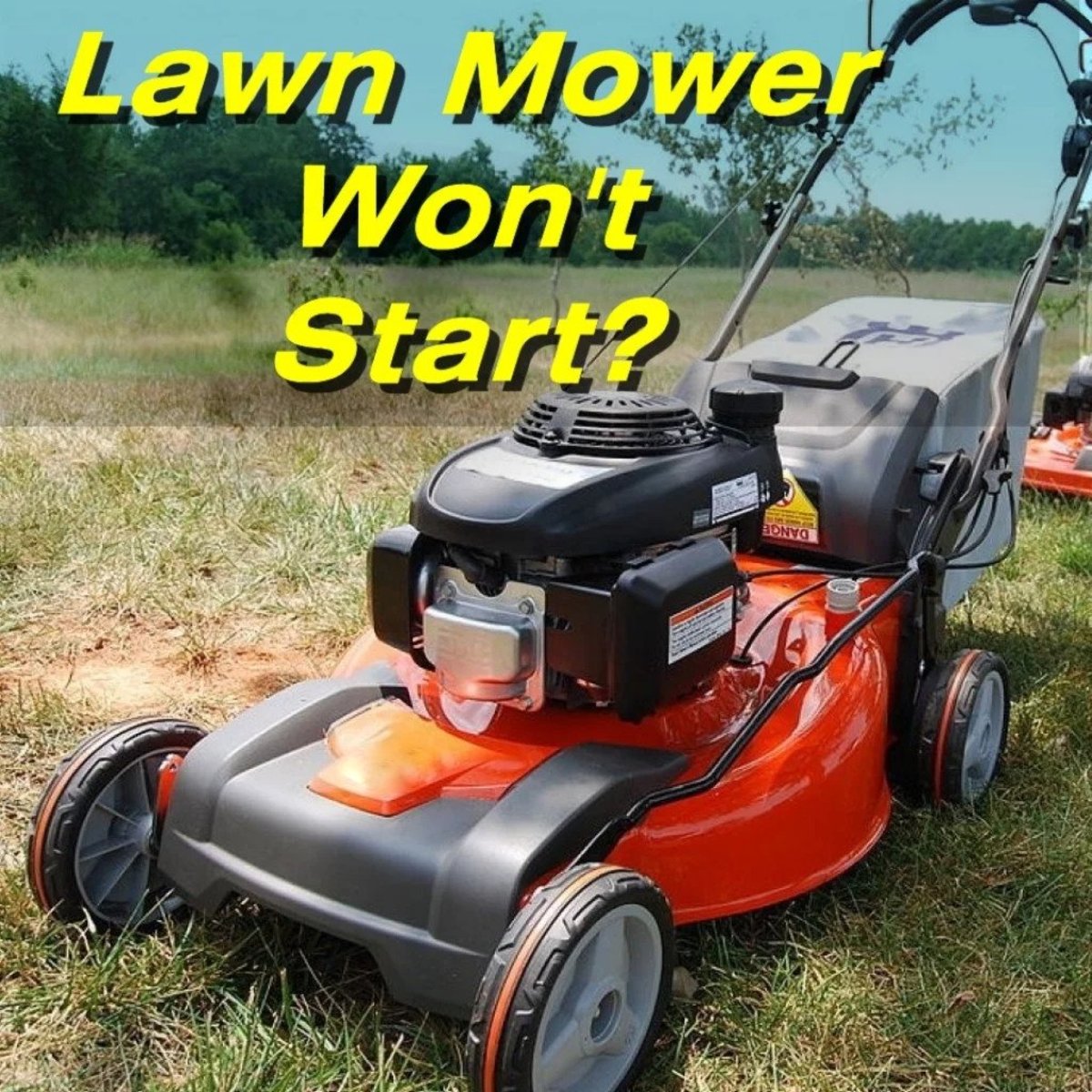
Why Won’t My Trimmer Start? Checks That Help
A silent trimmer stalls your whole yard plan. You may ask, why won’t my trimmer start? Clogged filters and stale fuel cause most failures. A broken recoil spring also stops starting completely.
Dirty air filters restrict airflow into the engine. Faulty spark plugs fail to ignite the fuel. Clogged carburetors disrupt fuel flow toward the engine. Old fuel quietly ruins engines during long storage. Each fault leaves signs you can check yourself.
This guide orders the checks from simplest first. Fuel checks come before ignition and engine checks. Most fixes need basic tools and patience only. Regular maintenance prevents most starting problems from returning.
Quick answer: Check the fuel, filters, and spark plug first. Stale fuel and clogged filters cause most failures. A faulty plug or carburetor also blocks starting. Clean or replace each faulty part you find. Fresh fuel and regular upkeep prevent most repeats.
Why Won’t My Trimmer Start? The Short Answer
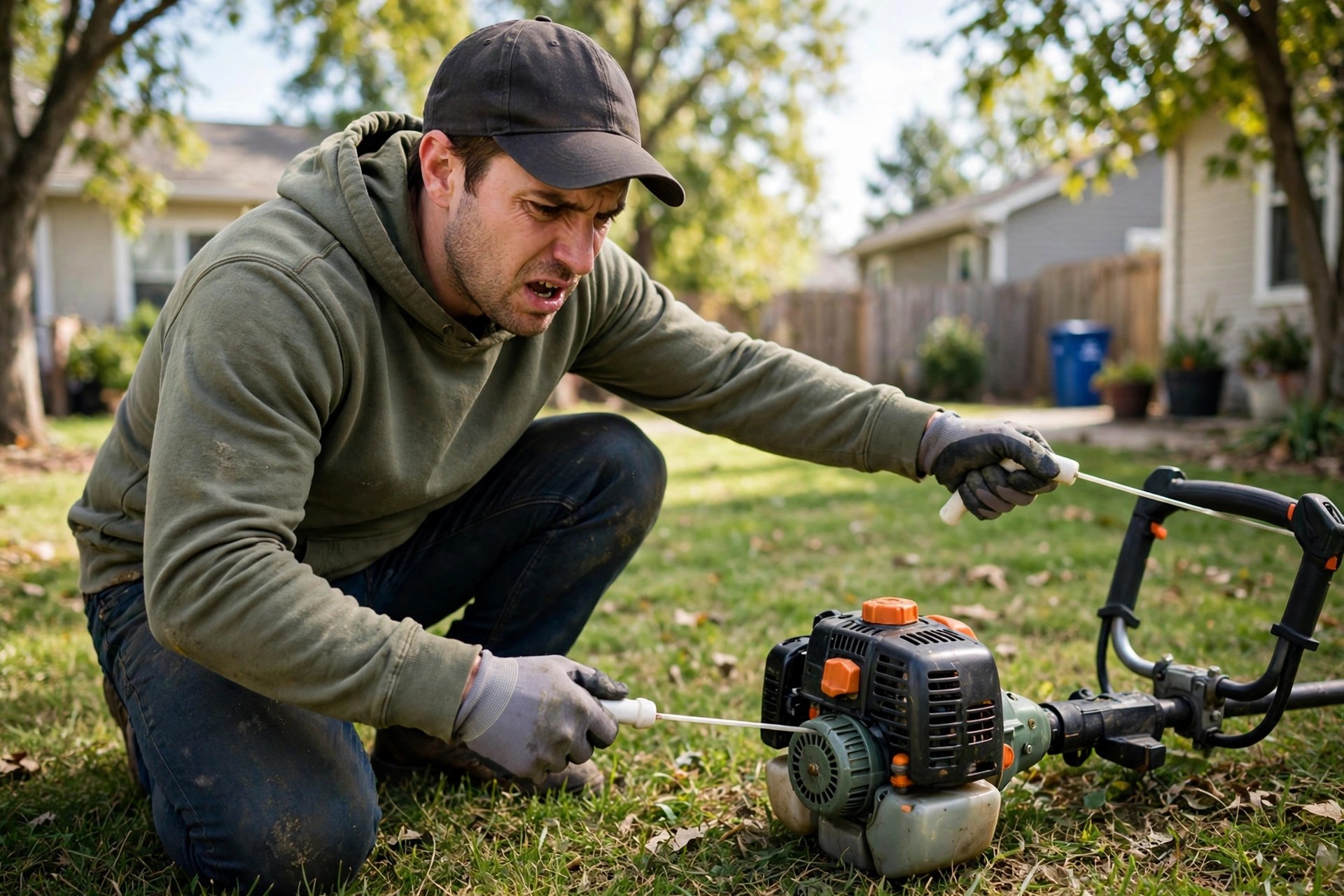
Three faulty parts headline the opening answer here. Check the spark plug before anything else first. A dirty plug prevents the trimmer from starting. Clean it or replace it if necessary today. Our string trimmer basics guide explains the tool itself.
| First Check | What to Do |
|---|---|
| Spark plug | Clean it or replace it if faulty |
| Air filter | Clean or replace it for proper airflow |
| Fuel filter | Clean or replace it for proper fuel flow |
| Recoil spring | Check for breakage in the starter assembly |
A dirty air filter restricts airflow and performance. A clogged fuel filter starves the engine quietly. Each part sits in the checklist table above.
Fuel Problems: Stale Fuel, Lines, Carburetor
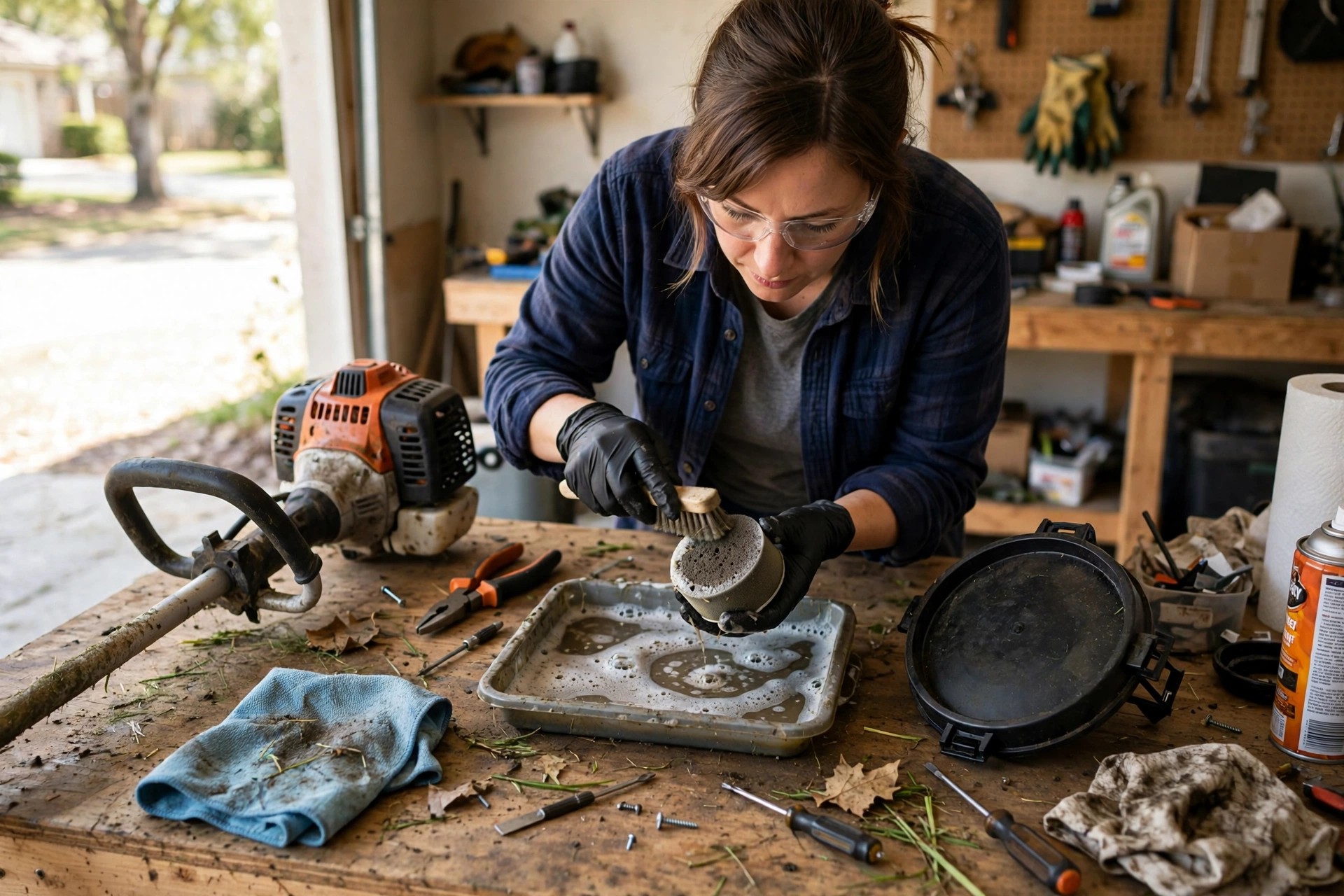
Empty or stale fuel tops the fuel problems. Fuel sitting idle grows stale over time quickly. Check the level and replace any stale fuel. The Wikipedia carburetor page explains fuel mixing parts.
Blocked Lines and a Clogged Carburetor
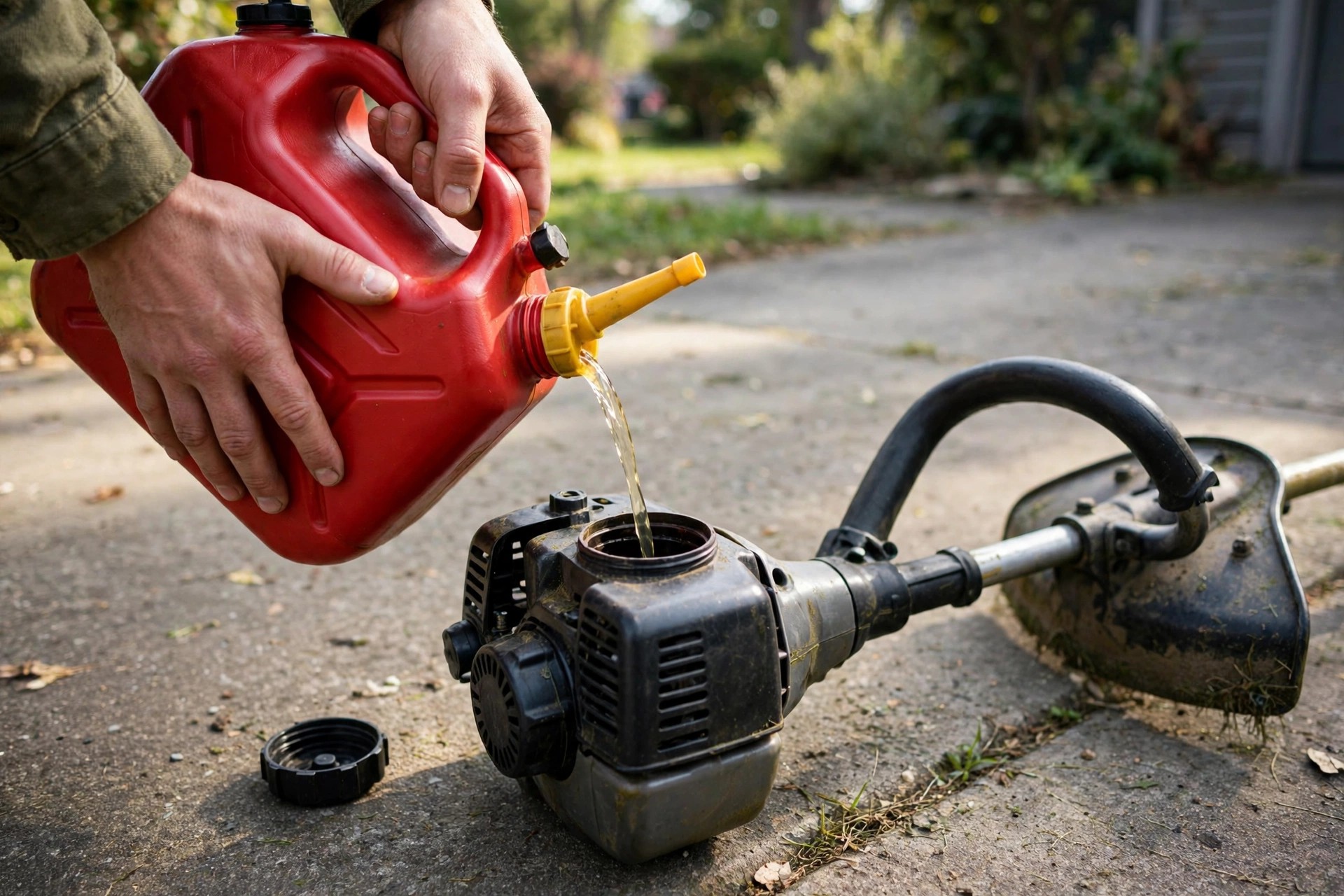
Fuel lines clog with debris or dirt slowly. That blockage stops fuel reaching the engine properly. Inspect the line and clean or replace it. Our restringing guide covers the other common job.
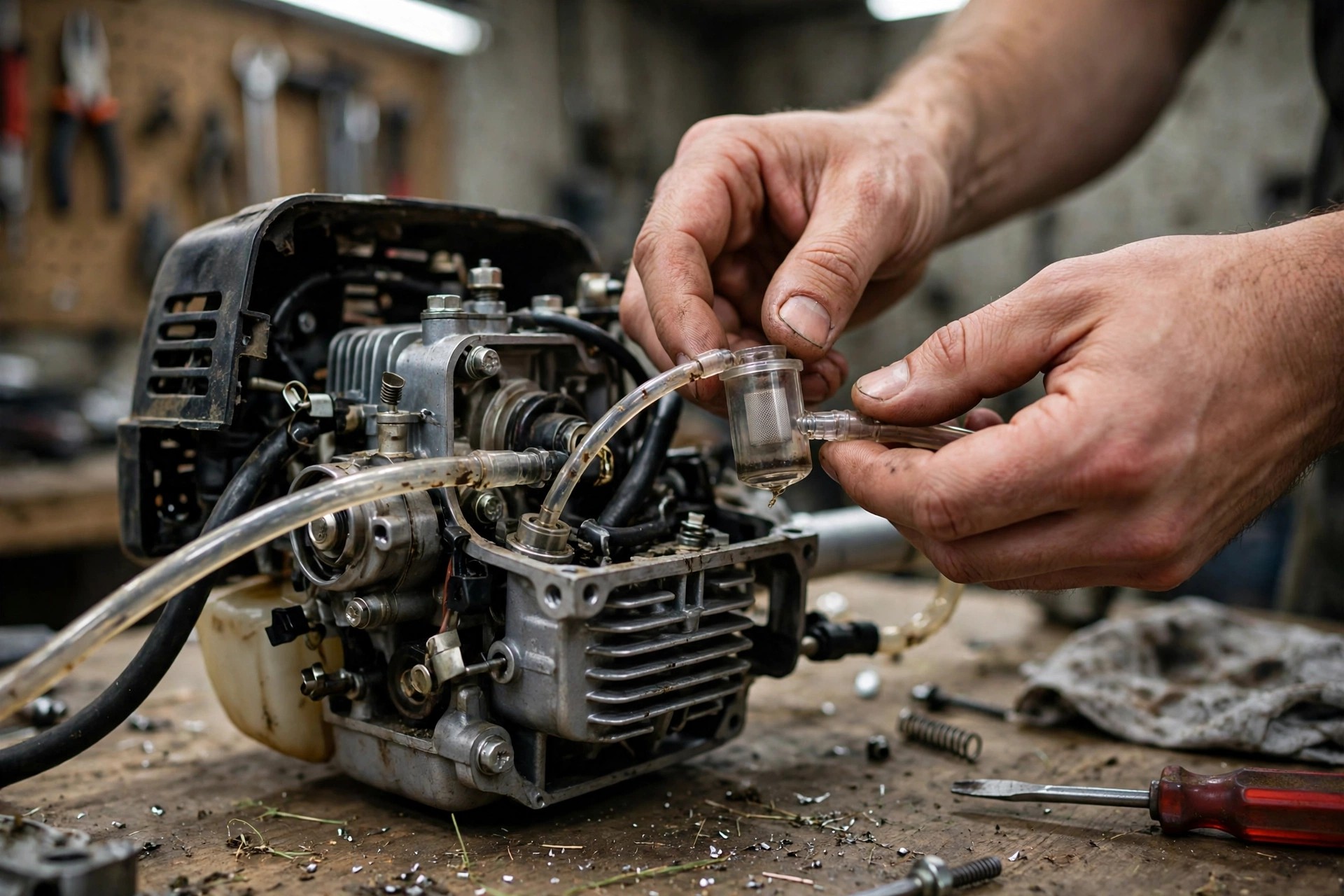
The carburetor mixes fuel and air for combustion. Dirt or residue clogs it and disrupts flow. Cleaning or rebuilding the carburetor solves this issue. Follow manufacturer instructions and safety precautions when working.
Ignition Problems: Plug, Coil, and Switch
The spark plug creates the ignition spark itself. Over time it grows worn, dirty, or corroded. That leads to a weak or missing spark. The Wikipedia spark plug page explains how plugs fire.
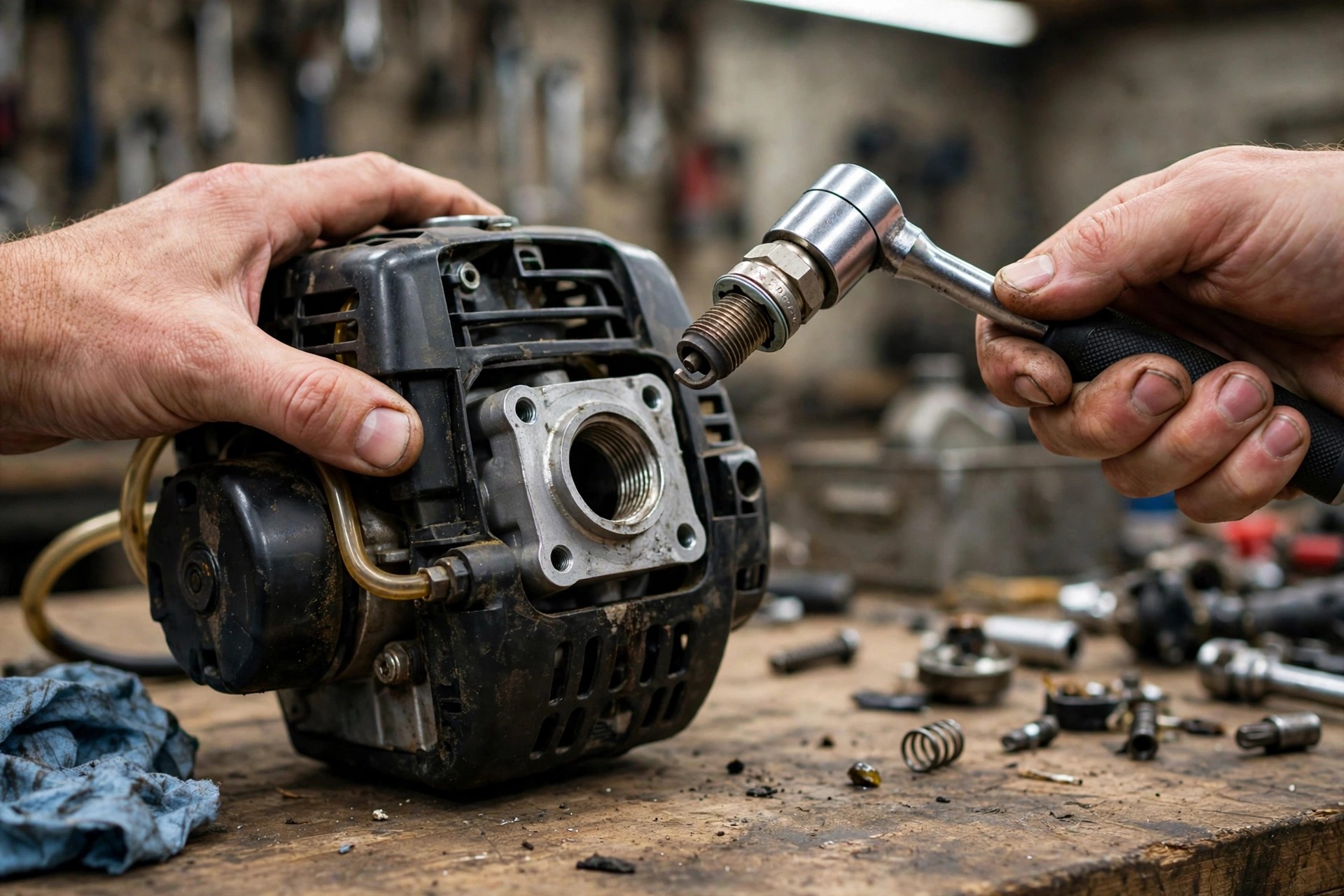
Check manufacturer recommendations for the correct replacement plug. A malfunctioning ignition coil also blocks starting completely. The coil produces the high voltage for sparks. Replace a faulty coil using manufacturer guidelines carefully.
The Ignition Switch Can Fail Too
A failed switch sends no signal to start. Clean the switch contacts or replace the switch. Disconnect the spark plug wire before working there. Our vibration troubleshooting guide covers shaking problems instead.
Engine Problems: Compression, Exhaust, Heat
Low compression makes starting difficult and weakens power. Worn piston rings often cause low compression problems. A damaged cylinder or leaking gasket also leaks. Fixing means replacing the rings, cylinder, or gasket.
| Engine Problem | Post Fixes |
|---|---|
| Low compression | Replace piston rings, cylinder, or head gasket |
| Blocked exhaust | Clean the port and muffler; replace the muffler |
| Overheating | Clean cooling fins and vents; check lubrication |
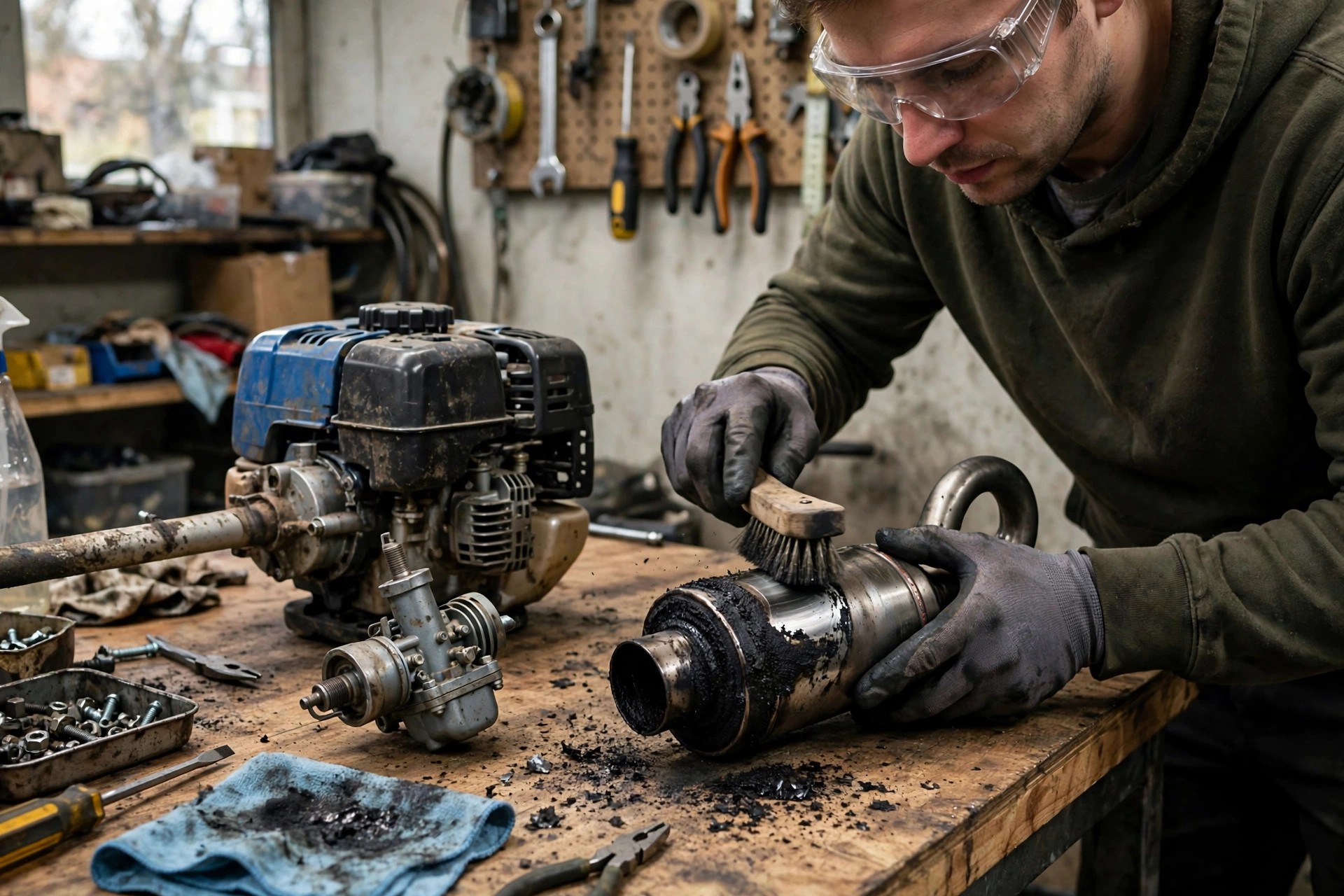
A blocked exhaust restricts the flow of gases. Back pressure then makes starting the engine hard. Clean carbon build-up from port and muffler first. Replace the muffler if the problem persists afterward.
Overheating can stall or refuse starting as well. Clean the cooling fins and air vents thoroughly. Use the correct fuel-to-oil ratio every time. Keep the engine properly lubricated during use too.
Maintenance Habits That Prevent No-Starts
Clean the trimmer regularly to keep it healthy. Remove dirt, debris, and grass clippings after use. Clippings clog the air and fuel filters slowly. Fresh fuel makes a significant difference in starting.
Store it in a dry and clean area. Protect it from extreme temperatures and humidity too. Replace the spark plug regularly during the season. Our garage storage guide covers storage in depth. Our trimmer lifespan guide explains long-term care habits.
Inspect fuel lines for cracks and leaks regularly. Replace damaged lines to ensure proper fuel flow. Faulty primer bulbs also cause starting issues sometimes. Our weed trimmer handling guide covers daily use basics. Our cutting problems guide handles weak cutting instead.
Frequently Asked Questions
Why is my string trimmer not starting?
A clogged fuel filter may block fuel flow. A dirty air filter may restrict airflow badly. A broken recoil spring may stop the starter. A faulty spark plug may fail to ignite. Clean or replace these parts as needed here.
Why is my grass cutter not starting?
Check the spark plug and fuel filter first. Check the recoil spring and air filter too. Clean or replace dirty parts as you go. Drain old gas and refill with fresh fuel.
Why does my trimmer die when I give it gas?
A lack of fuel flow likely causes it. Blocked air flow can cause the same problem. Check the fuel quality and flow first carefully. Clean or replace a dirty air filter afterward.
Why is my strimmer sparking but not starting?
A clogged spark arrestor may be the reason. Clean it with a wire brush quite carefully. Or replace it if cleaning fails to help.
Can a blocked exhaust stop my trimmer starting?
Yes, a blocked exhaust restricts exhaust gas flow. That creates back pressure inside the engine itself. Clean the exhaust port and muffler of carbon. Replace the muffler if the problem persists afterward.
Conclusion: Why Won’t My Trimmer Start
So, why won’t my trimmer start at all? Filters, stale fuel, and plugs explain most cases. Work from fuel checks toward engine checks calmly. Most repairs stay simple with basic home tools. Check each part and replace faulty ones promptly.
Fresh fuel and regular maintenance prevent future failures. Keep filters clean and fuel fresh all season. Store it dry and clean between uses always. A cared-for trimmer rewards you every season outside. Your trimmer should start smoothly again quite soon.
