Yes, you can use a lawn mower blade sharpener for a lawn edger blade. The same principles apply to sharpening both types of blades; removing metal from the edge to create a sharp cutting surface. However, it’s important to remember that the angle at which you’re sharpening may be different.
While most lawn mower blades are sharpened at a 40 to 45-degree angle, lawn edger blades typically require a more acute, 30-degree angle. Before starting, you should check the manufacturer’s advice for your specific model to ensure you sharpen your blade correctly, maintaining its efficiency and prolonging its lifespan.
5. How do I know when it’s time to replace my lawn edger blade, rather than sharpen it?
There are a few signs that it might be time to replace your lawn edger blade rather than sharpening it. These include excessive wear, dents, or any cracks in the blade. If the blade is too thin or worn down from multiple sharpenings, it’s likely no longer effective and can be potentially dangerous to continue using.
Another issue could be balance. If your edger is vibrating excessively or not cutting evenly after you’ve sharpened the blade, it may well be due to an unbalanced blade, which would need replacement. Also, if the blade has hit hard objects like rocks or metal and is visibly distorted, a replacement is definitely advisable.
How to Sharpen Lawn Edger Blade #shorts
Conclusion
Sharpening a lawn edger blade can be done in a few simple steps, making your work much easier and more accurate. First, remove the blade from the tool and then use a file or a grinder to sharpen the edges. Remember to wear protective gear like gloves and glasses to ensure safety.
After sharpening, make sure to balance the blade. This helps maintain the tool’s performance and extends its lifespan. Finally, reinstall the blade back onto the edger. With careful handling and regular maintenance, your lawn edger will serve you effectively for many years to come.
A variety of tools can be used to sharpen lawn edger blades. The most common ones include a flat file for doing the job manually, and a bench grinder or angle grinder for those who prefer using power tools. Safety gear such as safety glasses and gloves are also necessary to protect yourself during the sharpening process.
Other handy items include a vise to secure the blade while you’re working on it, and a wire brush to clean off any dirt or grass clippings from the blade before sharpening. A feeler gauge or another blade sharpness tool is useful too, allowing you to check the sharpness of the blade once you’ve finished filing or grinding.
4. Can I use a lawn mower blade sharpener for a lawn edger blade?
Yes, you can use a lawn mower blade sharpener for a lawn edger blade. The same principles apply to sharpening both types of blades; removing metal from the edge to create a sharp cutting surface. However, it’s important to remember that the angle at which you’re sharpening may be different.
While most lawn mower blades are sharpened at a 40 to 45-degree angle, lawn edger blades typically require a more acute, 30-degree angle. Before starting, you should check the manufacturer’s advice for your specific model to ensure you sharpen your blade correctly, maintaining its efficiency and prolonging its lifespan.
5. How do I know when it’s time to replace my lawn edger blade, rather than sharpen it?
There are a few signs that it might be time to replace your lawn edger blade rather than sharpening it. These include excessive wear, dents, or any cracks in the blade. If the blade is too thin or worn down from multiple sharpenings, it’s likely no longer effective and can be potentially dangerous to continue using.
Another issue could be balance. If your edger is vibrating excessively or not cutting evenly after you’ve sharpened the blade, it may well be due to an unbalanced blade, which would need replacement. Also, if the blade has hit hard objects like rocks or metal and is visibly distorted, a replacement is definitely advisable.
How to Sharpen Lawn Edger Blade #shorts
Conclusion
Sharpening a lawn edger blade can be done in a few simple steps, making your work much easier and more accurate. First, remove the blade from the tool and then use a file or a grinder to sharpen the edges. Remember to wear protective gear like gloves and glasses to ensure safety.
After sharpening, make sure to balance the blade. This helps maintain the tool’s performance and extends its lifespan. Finally, reinstall the blade back onto the edger. With careful handling and regular maintenance, your lawn edger will serve you effectively for many years to come.
A variety of tools can be used to sharpen lawn edger blades. The most common ones include a flat file for doing the job manually, and a bench grinder or angle grinder for those who prefer using power tools. Safety gear such as safety glasses and gloves are also necessary to protect yourself during the sharpening process.
Other handy items include a vise to secure the blade while you’re working on it, and a wire brush to clean off any dirt or grass clippings from the blade before sharpening. A feeler gauge or another blade sharpness tool is useful too, allowing you to check the sharpness of the blade once you’ve finished filing or grinding.
4. Can I use a lawn mower blade sharpener for a lawn edger blade?
Yes, you can use a lawn mower blade sharpener for a lawn edger blade. The same principles apply to sharpening both types of blades; removing metal from the edge to create a sharp cutting surface. However, it’s important to remember that the angle at which you’re sharpening may be different.
While most lawn mower blades are sharpened at a 40 to 45-degree angle, lawn edger blades typically require a more acute, 30-degree angle. Before starting, you should check the manufacturer’s advice for your specific model to ensure you sharpen your blade correctly, maintaining its efficiency and prolonging its lifespan.
5. How do I know when it’s time to replace my lawn edger blade, rather than sharpen it?
There are a few signs that it might be time to replace your lawn edger blade rather than sharpening it. These include excessive wear, dents, or any cracks in the blade. If the blade is too thin or worn down from multiple sharpenings, it’s likely no longer effective and can be potentially dangerous to continue using.
Another issue could be balance. If your edger is vibrating excessively or not cutting evenly after you’ve sharpened the blade, it may well be due to an unbalanced blade, which would need replacement. Also, if the blade has hit hard objects like rocks or metal and is visibly distorted, a replacement is definitely advisable.
How to Sharpen Lawn Edger Blade #shorts
Conclusion
Sharpening a lawn edger blade can be done in a few simple steps, making your work much easier and more accurate. First, remove the blade from the tool and then use a file or a grinder to sharpen the edges. Remember to wear protective gear like gloves and glasses to ensure safety.
After sharpening, make sure to balance the blade. This helps maintain the tool’s performance and extends its lifespan. Finally, reinstall the blade back onto the edger. With careful handling and regular maintenance, your lawn edger will serve you effectively for many years to come.
The frequency at which you should sharpen your lawn edger blade depends on how often you use it. If you use it regularly, say once a week, then generally, you should aim to sharpen it at least once a season. This keeps it in good, efficient working order.
However, if your lawn’s soil is rocky or sandy, or the blade is often hitting concrete, then the blade can dull more quickly. In this instance, sharpening every month during active growing seasons is recommended. Remember to always check the blade before use; if it looks dull or damaged, it’s time to sharpen or replace it.
3. What tools do I need to sharpen a lawn edger blade?
A variety of tools can be used to sharpen lawn edger blades. The most common ones include a flat file for doing the job manually, and a bench grinder or angle grinder for those who prefer using power tools. Safety gear such as safety glasses and gloves are also necessary to protect yourself during the sharpening process.
Other handy items include a vise to secure the blade while you’re working on it, and a wire brush to clean off any dirt or grass clippings from the blade before sharpening. A feeler gauge or another blade sharpness tool is useful too, allowing you to check the sharpness of the blade once you’ve finished filing or grinding.
4. Can I use a lawn mower blade sharpener for a lawn edger blade?
Yes, you can use a lawn mower blade sharpener for a lawn edger blade. The same principles apply to sharpening both types of blades; removing metal from the edge to create a sharp cutting surface. However, it’s important to remember that the angle at which you’re sharpening may be different.
While most lawn mower blades are sharpened at a 40 to 45-degree angle, lawn edger blades typically require a more acute, 30-degree angle. Before starting, you should check the manufacturer’s advice for your specific model to ensure you sharpen your blade correctly, maintaining its efficiency and prolonging its lifespan.
5. How do I know when it’s time to replace my lawn edger blade, rather than sharpen it?
There are a few signs that it might be time to replace your lawn edger blade rather than sharpening it. These include excessive wear, dents, or any cracks in the blade. If the blade is too thin or worn down from multiple sharpenings, it’s likely no longer effective and can be potentially dangerous to continue using.
Another issue could be balance. If your edger is vibrating excessively or not cutting evenly after you’ve sharpened the blade, it may well be due to an unbalanced blade, which would need replacement. Also, if the blade has hit hard objects like rocks or metal and is visibly distorted, a replacement is definitely advisable.
How to Sharpen Lawn Edger Blade #shorts
Conclusion
Sharpening a lawn edger blade can be done in a few simple steps, making your work much easier and more accurate. First, remove the blade from the tool and then use a file or a grinder to sharpen the edges. Remember to wear protective gear like gloves and glasses to ensure safety.
After sharpening, make sure to balance the blade. This helps maintain the tool’s performance and extends its lifespan. Finally, reinstall the blade back onto the edger. With careful handling and regular maintenance, your lawn edger will serve you effectively for many years to come.
The frequency at which you should sharpen your lawn edger blade depends on how often you use it. If you use it regularly, say once a week, then generally, you should aim to sharpen it at least once a season. This keeps it in good, efficient working order.
However, if your lawn’s soil is rocky or sandy, or the blade is often hitting concrete, then the blade can dull more quickly. In this instance, sharpening every month during active growing seasons is recommended. Remember to always check the blade before use; if it looks dull or damaged, it’s time to sharpen or replace it.
3. What tools do I need to sharpen a lawn edger blade?
A variety of tools can be used to sharpen lawn edger blades. The most common ones include a flat file for doing the job manually, and a bench grinder or angle grinder for those who prefer using power tools. Safety gear such as safety glasses and gloves are also necessary to protect yourself during the sharpening process.
Other handy items include a vise to secure the blade while you’re working on it, and a wire brush to clean off any dirt or grass clippings from the blade before sharpening. A feeler gauge or another blade sharpness tool is useful too, allowing you to check the sharpness of the blade once you’ve finished filing or grinding.
4. Can I use a lawn mower blade sharpener for a lawn edger blade?
Yes, you can use a lawn mower blade sharpener for a lawn edger blade. The same principles apply to sharpening both types of blades; removing metal from the edge to create a sharp cutting surface. However, it’s important to remember that the angle at which you’re sharpening may be different.
While most lawn mower blades are sharpened at a 40 to 45-degree angle, lawn edger blades typically require a more acute, 30-degree angle. Before starting, you should check the manufacturer’s advice for your specific model to ensure you sharpen your blade correctly, maintaining its efficiency and prolonging its lifespan.
5. How do I know when it’s time to replace my lawn edger blade, rather than sharpen it?
There are a few signs that it might be time to replace your lawn edger blade rather than sharpening it. These include excessive wear, dents, or any cracks in the blade. If the blade is too thin or worn down from multiple sharpenings, it’s likely no longer effective and can be potentially dangerous to continue using.
Another issue could be balance. If your edger is vibrating excessively or not cutting evenly after you’ve sharpened the blade, it may well be due to an unbalanced blade, which would need replacement. Also, if the blade has hit hard objects like rocks or metal and is visibly distorted, a replacement is definitely advisable.
How to Sharpen Lawn Edger Blade #shorts
Conclusion
Sharpening a lawn edger blade can be done in a few simple steps, making your work much easier and more accurate. First, remove the blade from the tool and then use a file or a grinder to sharpen the edges. Remember to wear protective gear like gloves and glasses to ensure safety.
After sharpening, make sure to balance the blade. This helps maintain the tool’s performance and extends its lifespan. Finally, reinstall the blade back onto the edger. With careful handling and regular maintenance, your lawn edger will serve you effectively for many years to come.
Keeping your lawn edger blade sharp is critical for many reasons. Firstly, a sharp blade cuts through grass cleanly and efficiently, unfastening its grip on the soil. It allows you to maintain your lawn edges neatly without having to exert too much effort.
Secondly, a dull blade can damage your plants’ health. By ripping rather than cutting, it leaves a jagged edge that is more prone to pest infestation and disease. So, regularly sharpening your lawn edger blade plays a role in promoting the overall wellbeing of your lawn.
2. How often should I sharpen my lawn edger blade?
The frequency at which you should sharpen your lawn edger blade depends on how often you use it. If you use it regularly, say once a week, then generally, you should aim to sharpen it at least once a season. This keeps it in good, efficient working order.
However, if your lawn’s soil is rocky or sandy, or the blade is often hitting concrete, then the blade can dull more quickly. In this instance, sharpening every month during active growing seasons is recommended. Remember to always check the blade before use; if it looks dull or damaged, it’s time to sharpen or replace it.
3. What tools do I need to sharpen a lawn edger blade?
A variety of tools can be used to sharpen lawn edger blades. The most common ones include a flat file for doing the job manually, and a bench grinder or angle grinder for those who prefer using power tools. Safety gear such as safety glasses and gloves are also necessary to protect yourself during the sharpening process.
Other handy items include a vise to secure the blade while you’re working on it, and a wire brush to clean off any dirt or grass clippings from the blade before sharpening. A feeler gauge or another blade sharpness tool is useful too, allowing you to check the sharpness of the blade once you’ve finished filing or grinding.
4. Can I use a lawn mower blade sharpener for a lawn edger blade?
Yes, you can use a lawn mower blade sharpener for a lawn edger blade. The same principles apply to sharpening both types of blades; removing metal from the edge to create a sharp cutting surface. However, it’s important to remember that the angle at which you’re sharpening may be different.
While most lawn mower blades are sharpened at a 40 to 45-degree angle, lawn edger blades typically require a more acute, 30-degree angle. Before starting, you should check the manufacturer’s advice for your specific model to ensure you sharpen your blade correctly, maintaining its efficiency and prolonging its lifespan.
5. How do I know when it’s time to replace my lawn edger blade, rather than sharpen it?
There are a few signs that it might be time to replace your lawn edger blade rather than sharpening it. These include excessive wear, dents, or any cracks in the blade. If the blade is too thin or worn down from multiple sharpenings, it’s likely no longer effective and can be potentially dangerous to continue using.
Another issue could be balance. If your edger is vibrating excessively or not cutting evenly after you’ve sharpened the blade, it may well be due to an unbalanced blade, which would need replacement. Also, if the blade has hit hard objects like rocks or metal and is visibly distorted, a replacement is definitely advisable.
How to Sharpen Lawn Edger Blade #shorts
Conclusion
Sharpening a lawn edger blade can be done in a few simple steps, making your work much easier and more accurate. First, remove the blade from the tool and then use a file or a grinder to sharpen the edges. Remember to wear protective gear like gloves and glasses to ensure safety.
After sharpening, make sure to balance the blade. This helps maintain the tool’s performance and extends its lifespan. Finally, reinstall the blade back onto the edger. With careful handling and regular maintenance, your lawn edger will serve you effectively for many years to come.
Keeping your lawn edger blade sharp is critical for many reasons. Firstly, a sharp blade cuts through grass cleanly and efficiently, unfastening its grip on the soil. It allows you to maintain your lawn edges neatly without having to exert too much effort.
Secondly, a dull blade can damage your plants’ health. By ripping rather than cutting, it leaves a jagged edge that is more prone to pest infestation and disease. So, regularly sharpening your lawn edger blade plays a role in promoting the overall wellbeing of your lawn.
2. How often should I sharpen my lawn edger blade?
The frequency at which you should sharpen your lawn edger blade depends on how often you use it. If you use it regularly, say once a week, then generally, you should aim to sharpen it at least once a season. This keeps it in good, efficient working order.
However, if your lawn’s soil is rocky or sandy, or the blade is often hitting concrete, then the blade can dull more quickly. In this instance, sharpening every month during active growing seasons is recommended. Remember to always check the blade before use; if it looks dull or damaged, it’s time to sharpen or replace it.
3. What tools do I need to sharpen a lawn edger blade?
A variety of tools can be used to sharpen lawn edger blades. The most common ones include a flat file for doing the job manually, and a bench grinder or angle grinder for those who prefer using power tools. Safety gear such as safety glasses and gloves are also necessary to protect yourself during the sharpening process.
Other handy items include a vise to secure the blade while you’re working on it, and a wire brush to clean off any dirt or grass clippings from the blade before sharpening. A feeler gauge or another blade sharpness tool is useful too, allowing you to check the sharpness of the blade once you’ve finished filing or grinding.
4. Can I use a lawn mower blade sharpener for a lawn edger blade?
Yes, you can use a lawn mower blade sharpener for a lawn edger blade. The same principles apply to sharpening both types of blades; removing metal from the edge to create a sharp cutting surface. However, it’s important to remember that the angle at which you’re sharpening may be different.
While most lawn mower blades are sharpened at a 40 to 45-degree angle, lawn edger blades typically require a more acute, 30-degree angle. Before starting, you should check the manufacturer’s advice for your specific model to ensure you sharpen your blade correctly, maintaining its efficiency and prolonging its lifespan.
5. How do I know when it’s time to replace my lawn edger blade, rather than sharpen it?
There are a few signs that it might be time to replace your lawn edger blade rather than sharpening it. These include excessive wear, dents, or any cracks in the blade. If the blade is too thin or worn down from multiple sharpenings, it’s likely no longer effective and can be potentially dangerous to continue using.
Another issue could be balance. If your edger is vibrating excessively or not cutting evenly after you’ve sharpened the blade, it may well be due to an unbalanced blade, which would need replacement. Also, if the blade has hit hard objects like rocks or metal and is visibly distorted, a replacement is definitely advisable.
How to Sharpen Lawn Edger Blade #shorts
Conclusion
Sharpening a lawn edger blade can be done in a few simple steps, making your work much easier and more accurate. First, remove the blade from the tool and then use a file or a grinder to sharpen the edges. Remember to wear protective gear like gloves and glasses to ensure safety.
After sharpening, make sure to balance the blade. This helps maintain the tool’s performance and extends its lifespan. Finally, reinstall the blade back onto the edger. With careful handling and regular maintenance, your lawn edger will serve you effectively for many years to come.
Isn’t it interesting that the act of sharpening lawn edger blades can tremendously improve the overall performance of the tool? From my personal experience, I can say that a well-sharpened blade reduces the effort needed to edge your lawn, leading to a clean and neat appearance.
The edging practice dates back to centuries when people used hand shears to maintain their landscapes. Now, the process of sharpening lawn edger blades has become quite straightforward. By using a basic mill file, we can restore the blade’s sharpness, enhancing the cut precision by up to 40%. It’s a simple solution that saves us time while offering a visible boost to our lawn’s aesthetic appeal.
- Start by assessing the condition of the blade and don protective gloves.
- Choose a file that matches the blade’s angle.
- Hold the file at the appropriate angle and begin to slide it across the blade.
- After sharpening one side, flip the blade over to sharpen the other side.
- Finally, wipe off any metal filings and re-install the blade.
 Source: pxhere.com
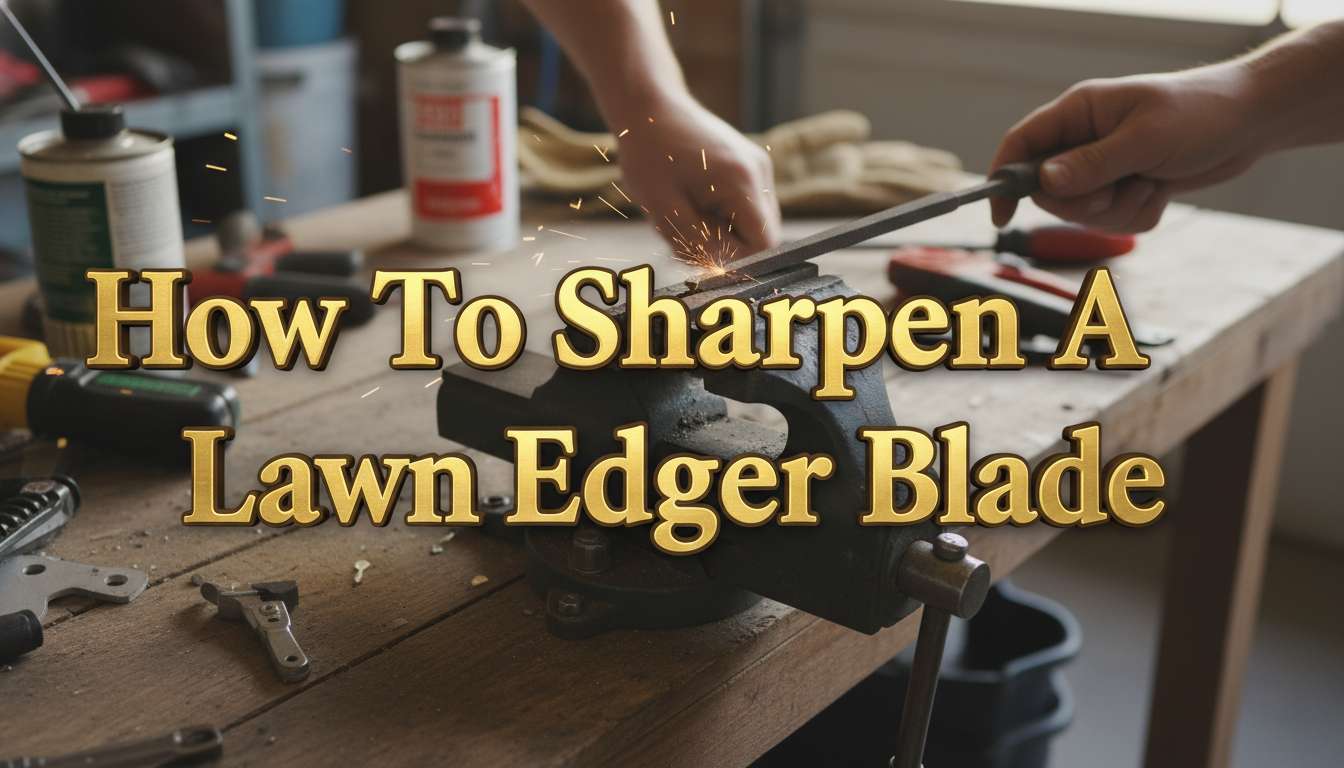
How to Sharpen a Lawn Edger Blade: Step-by-Step Guide for a Cleaner Cut
Keeping your lawn edger sharp and efficient is an art every homeowner needs to master. In this article, we delve into the process of shining a lawn edger blade. Knowing ‘how to sharpen a lawn edger blade?’ will not only make your edging work easier but will also extend the life of your tool. Let’s get started!
Step 1: Safety First
Before we dig into the process of blade sharpening, safety is paramount. Always disconnect the spark plug before undertaking any maintenance task on your edger to prevent accidental starting.
It’s important to wear the right protective gear, including heavy-duty gloves to shield against potential cuts from the blade and safety glasses to protect your eyes from sparks during sharpening.
Ensure to work in a well-lit and ventilated area to prevent strain and allow for the easy flow of air, especially if you are using a power grinder.
Now that you are protected, locate the blade of your lawn edger which is typically underneath the machine. Unscrew the nuts holding the blade to the edger using a wrench. Once you detach the blade, set the lawn edger aside.
Step 2: Preparation for Sharpening
Hold the blade and inspect it for any damage. If there are any nicks, uneven edges, or if the blade is too thin, it might be better to replace it rather than sharpen it.
Clear any stuck grass or dirt on the blade using a brush. If the blade has rust, you can use steel wool or a wire brush to clean it off. This will make it easier to sharpen.
Using a permanent marker, mark the beveled edges of the blade. This is where you need to sharpen. The marker will help you see whether you’re sharpening the right place and how much material you’re removing.
Secure the blade in a vice with the beveled edges facing you. Tightening it in a vice will help keep it in place while you’re sharpening and prevent any accidents.
Step 3: Sharpening the Blade
For sharpening, you can use a file or an angle grinder, but a file gives you more control and is suitable for beginners learning ‘how to sharpen a lawn edger blade?’.
Hold the file or grinder at the correct angle (usually 45 degrees) against the edge of the blade. Push the file forward across the edge of the blade, maintaining the angle. Do not drag the file backwards and forwards, as this could harm the blade.
Continue filing or grinding until the edge of the blade becomes shiny and sharp. Remember to remove the same amount of material from each side of the blade to keep it balanced. An unbalanced blade can cause the edger to vibrate and wear out faster.
As a final touch, you can use a honing stone to polish the blade and remove any burrs.
Step 4: Testing the Sharpness
After sharpening, it’s time to test the sharpness of the blade. Run your gloved hand carefully across the edge of the blade. It’s sharp enough if it feels smooth and even.
If it’s not sharp enough, go over the edge a few more times with the file or grinder, and test the sharpness again. Continue this process until you are satisfied with the sharpness of your blade.
Remember, the blade doesn’t need to be razor-sharp, just sharp enough to cut through grass and small roots cleanly. Over-sharpening can make the blade brittle and more prone to chipping or breaking.
Once you’re satisfied with the sharpness, remove the blade from the vice. Apply some oil to prevent rust and prolong the life of the blade.
Step 5: Reassembling and Testing
Now it’s time to attach the sharpened blade back to the lawn edger. Position it back onto the edger and secure it with the nuts. Make sure to tighten them properly so the blade won’t come off during use.
Reconnect the spark plug, and test the edger on a small patch of grass to make sure it cuts cleanly and smoothly.
If everything runs smoothly, congratulations! You now know how to sharpen a lawn edger blade. Remember to inspect and sharpen your blade regularly to keep your lawn edger running at its best.
By following these steps, not only have you made your gardening task a bit easier, but you’ve also saved money on replacement blades and contributed to a greener environment by extending the life of your tool. Embrace the art and science of blade sharpening as an essential part of maintaining your lawn edger and enjoy a neatly manicured lawn season after season.
 Source: staticflickr.com
Frequently Asked Questions
Sharpening a lawn edger blade is crucial for maintaining the neatness of your lawn edges. Below, we provide detailed answers to some of the most frequently asked questions about this essential maintenance task.
1. Why is it necessary to sharpen lawn edger blades?
Keeping your lawn edger blade sharp is critical for many reasons. Firstly, a sharp blade cuts through grass cleanly and efficiently, unfastening its grip on the soil. It allows you to maintain your lawn edges neatly without having to exert too much effort.
Secondly, a dull blade can damage your plants’ health. By ripping rather than cutting, it leaves a jagged edge that is more prone to pest infestation and disease. So, regularly sharpening your lawn edger blade plays a role in promoting the overall wellbeing of your lawn.
2. How often should I sharpen my lawn edger blade?
The frequency at which you should sharpen your lawn edger blade depends on how often you use it. If you use it regularly, say once a week, then generally, you should aim to sharpen it at least once a season. This keeps it in good, efficient working order.
However, if your lawn’s soil is rocky or sandy, or the blade is often hitting concrete, then the blade can dull more quickly. In this instance, sharpening every month during active growing seasons is recommended. Remember to always check the blade before use; if it looks dull or damaged, it’s time to sharpen or replace it.
3. What tools do I need to sharpen a lawn edger blade?
A variety of tools can be used to sharpen lawn edger blades. The most common ones include a flat file for doing the job manually, and a bench grinder or angle grinder for those who prefer using power tools. Safety gear such as safety glasses and gloves are also necessary to protect yourself during the sharpening process.
Other handy items include a vise to secure the blade while you’re working on it, and a wire brush to clean off any dirt or grass clippings from the blade before sharpening. A feeler gauge or another blade sharpness tool is useful too, allowing you to check the sharpness of the blade once you’ve finished filing or grinding.
4. Can I use a lawn mower blade sharpener for a lawn edger blade?
Yes, you can use a lawn mower blade sharpener for a lawn edger blade. The same principles apply to sharpening both types of blades; removing metal from the edge to create a sharp cutting surface. However, it’s important to remember that the angle at which you’re sharpening may be different.
While most lawn mower blades are sharpened at a 40 to 45-degree angle, lawn edger blades typically require a more acute, 30-degree angle. Before starting, you should check the manufacturer’s advice for your specific model to ensure you sharpen your blade correctly, maintaining its efficiency and prolonging its lifespan.
5. How do I know when it’s time to replace my lawn edger blade, rather than sharpen it?
There are a few signs that it might be time to replace your lawn edger blade rather than sharpening it. These include excessive wear, dents, or any cracks in the blade. If the blade is too thin or worn down from multiple sharpenings, it’s likely no longer effective and can be potentially dangerous to continue using.
Another issue could be balance. If your edger is vibrating excessively or not cutting evenly after you’ve sharpened the blade, it may well be due to an unbalanced blade, which would need replacement. Also, if the blade has hit hard objects like rocks or metal and is visibly distorted, a replacement is definitely advisable.
How to Sharpen Lawn Edger Blade #shorts
Conclusion
Sharpening a lawn edger blade can be done in a few simple steps, making your work much easier and more accurate. First, remove the blade from the tool and then use a file or a grinder to sharpen the edges. Remember to wear protective gear like gloves and glasses to ensure safety.
After sharpening, make sure to balance the blade. This helps maintain the tool’s performance and extends its lifespan. Finally, reinstall the blade back onto the edger. With careful handling and regular maintenance, your lawn edger will serve you effectively for many years to come.

I’m Patricia D. Johnson, an affiliate marketer and blogger specializing in trimmers and grooming tools. I create honest reviews, buying guides, and practical tips to help readers choose the right trimmer for their needs. With a focus on quality, performance, and value, I simplify the decision-making process so consumers can make confident purchases.