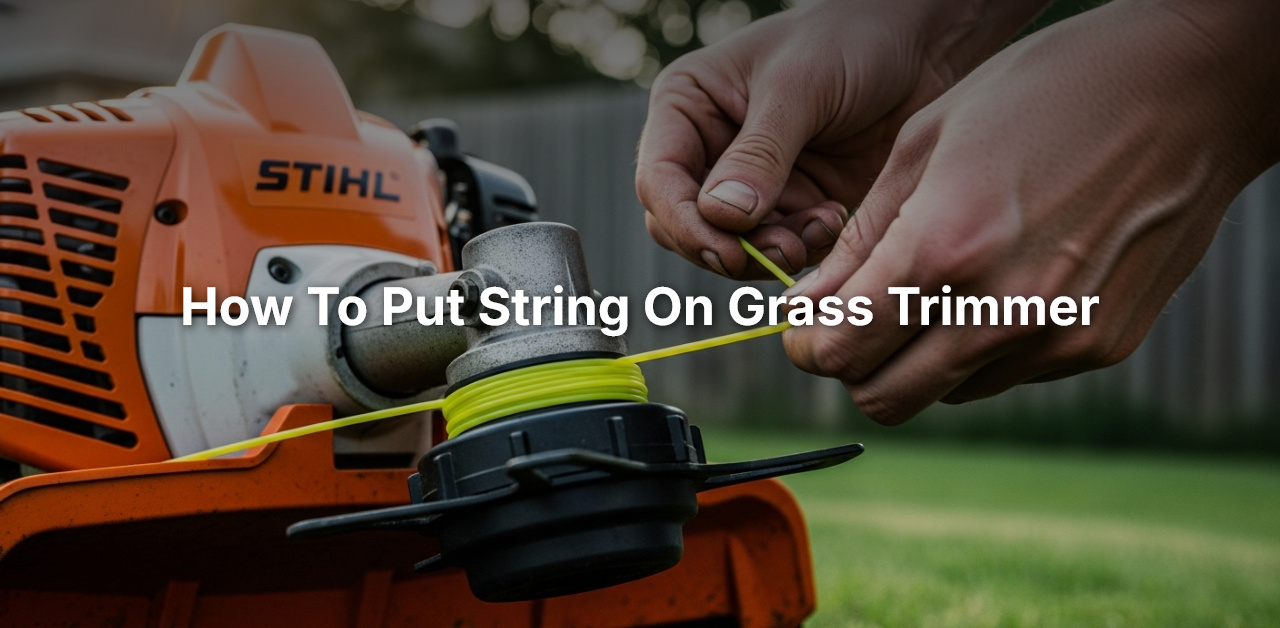
Imagine this, you are about to embark on a gardening session, but a worn-out string on your grass trimmer poses a challenge. I know it sounds complicated, but the process of stringing a grass trimmer is easier than you think. It’s not rocket science where you require advanced degrees to understand the workings. It’s just a small part of maintaining your lawn that can change your overall gardening experience.
In the late 1970’s, the invention of grass trimmers transformed the landscaping business, making it more efficient and powerful. Nowadays, it is reported that about 75% of households in the U.S own a grass trimmer. Now here’s an interesting fact, stringing the grass trimmer is an essential skill that can make a huge difference in making your lawn look flawlessly manicured. It sounds mundane, but it’s an essential job we need to master.
- Firstly, remove the head of your trimmer.
- Secondly, cut off approximately 25 feet of your preferred trimmer line.
- Then, find the center of the line and fold it.
- Next, position the ends of the line into the holes on the sides of the head and wind inwards.
- Finally, reattach the head to the trimmer.
How to Put String on a Grass Trimmer: Easy Step-by-Step Guide for Beginners
Restringing your grass trimmer is a necessary task that can seem daunting, especially if you’re new to gardening. But don’t fret, ‘how to put string on a grass trimmer’? is a routine duty for any lawn enthusiast. With the proper steps and techniques, you’ll be back to pruning your backyard in no time. Let’s dive into the step-by-step procedure of restringing your trimmer.
Step 1: Safety First
Before you start, it’s important to consider safety. Ensure the grass trimmer is switched off, unplugged or detached from its power source. If it’s a gas-powered model, make sure the engine is cooled. This precaution will prevent any accidental start-ups during the restringing process.
Step 2: Remove the Trimmer Head
Next, you will remove the trimmer head or spool. In most cases, you’ll find either a tap-on-the-ground style head or a bolt or button that needs to be depressed to release the head. Once you’ve successfully opened it, carefully set aside the spring located inside the trimmer head as you will need it later.
Step 3: Preparing the Trimmer Line
Now it’s time to prepare the trimmer line. Usually, trimmer lines come in a roll. It’s advisable to cut approximately 20 feet of line for standard trimmers. If your trimmer uses a dual-line, then cut two separate pieces of string. When cutting, use a sharp pair of scissors for a clean, straight cut which feeds better through the trimmer’s head.
Step 4: Loading the Trimmer Line
This step demands your attention as it’s the point where ‘how to put string on a grass trimmer?’ becomes a reality. Unwrap a few inches of the trimmer line around the spool using the direction of the arrows on the spool. If your model includes a notch, hook the string on it to start. For dual-line trimmers, each line is wound separately, usually in the same direction.
Step 5: Reassembling the Trimmer Head
Finally, once your trimmer line is loaded onto the spool, it’s time to replace the trimmer head. Fit the spring back into its place, then line the spool, ensuring the loose ends of the strings poke out of the holes or slots of the trimmer head. Now, replace the cap or snap the head back into place.
In conclusion, learning ‘how to put string on grass trimmer?’ expands your DIY abilities and keeps your garden tool functional. Following this guide, you can confidently ensure that your grass trimmer is well-strung and prepared for future landscaping tasks. With a little practice, this skill will become second nature, improving your overall gardening prowess and contributing to a well-maintained lawn.
EASIEST WAY TO STRING YOUR WEED EATER
Frequently Asked Questions
Here are some commonly asked queries about putting a string on a grass trimmer. Let’s delve into the subject matter with clear, concise answers to those questions.
What type of string should I choose for my grass trimmer?
The type of string you need depends on your specific trimmer and the kind of work you will be doing. For light work such as trimming grass along the edge of a yard, a standard round line would be ideal. This line is the most common and will work well on most types of grass and weeds.
If you will be cutting through heavy weeds or underbrush, you might need a heavier, more specialized line. These types of string are often shaped differently – they might be square, star-shaped, or even twisted, to cut through vegetation more effectively. You should consult the user manual or manufacturer’s website to find the best string for your particular trimmer model.
How long should the string be?
The length of the string you should use also depends on your grass trimmer model. Most trimmers are designed to use strings of particular lengths – if you use a string that’s too long, it could potentially damage the trimmer. In general, a good rule of thumb is to use a string that is around 18 to 25 feet long.
You can check your trimmer’s manual or consult the manufacturer’s website to find out what length of string is ideal for your model. Some trimmers have marks on their spool where you can measure and cut the string to the right length, making it easy to always have the correct length.
Can I use a different brand of string than my trimmer?
In most cases, yes, you can use a different brand of string than your trimmer. Trimmer string is a universal part and is typically compatible across different brands and models. However, it is crucial to ensure that you use the correct diameter of string, as using a string that is too thick or too thin for your specific trimmer can cause damage and reduce efficiency.
Using a different brand of string can be a cost-effective way to keep your trimmer working properly, but it’s always best to confirm by checking the owner’s manual or manufacturer’s recommendations on string compatibility to prevent any risk of damage.
How often should I replace the string?
The frequency at which you replace your grass trimmer string depends on how often and how extensively you use your trimmer. If you use your trimmer frequently or for heavy-duty jobs, you will need to replace the string more often than if you only use it occasionally for light trimming.
Generally, you should replace the string when it becomes worn or frayed or if it’s so short that it no longer reaches the grass you’re trying to cut. Regularly check your string for wear and tear and replace it as needed to ensure your trimmer is always working efficiently.
What safety measures should I keep in mind while replacing the string?
When replacing the string on your grass trimmer, it’s important to prioritize safety. Firstly, ensure that the trimmer is turned off and disconnected from any power source to avoid accidental startup. If your trimmer uses a battery, this should be removed before starting the string replacement process.
Wearing safety gloves during the process can protect your hands from any sharp edges on the trimmer. Also, make sure to wind the string in the direction instructed in the user manual. Winding in the wrong direction can cause the string to feed improperly or even potentially damage your trimmer. Lastly, ensure the cap or cover of the trimmer head is securely fastened after the replacement to prevent the string from flying out during use.
How to replace string trimmer edger line
Final Words
We’ve detailed out the process of setting up string in a grass trimmer. By deactivating the trimmer, removing its old head or spool, inserting and winding the new string correctly, and replacing the spool back on its head, we ensure a safe and efficient use of the trimmer. Remember, safety first!
It’s crucial to note that your model’s specifics can alter the steps we described. Make sure you refer to your user manual if in doubt – it will surely provide beneficial insights for your specific model. Now, with a fully loaded grass trimmer, you’re all set to maintain that lawn beautifully and effortlessly.