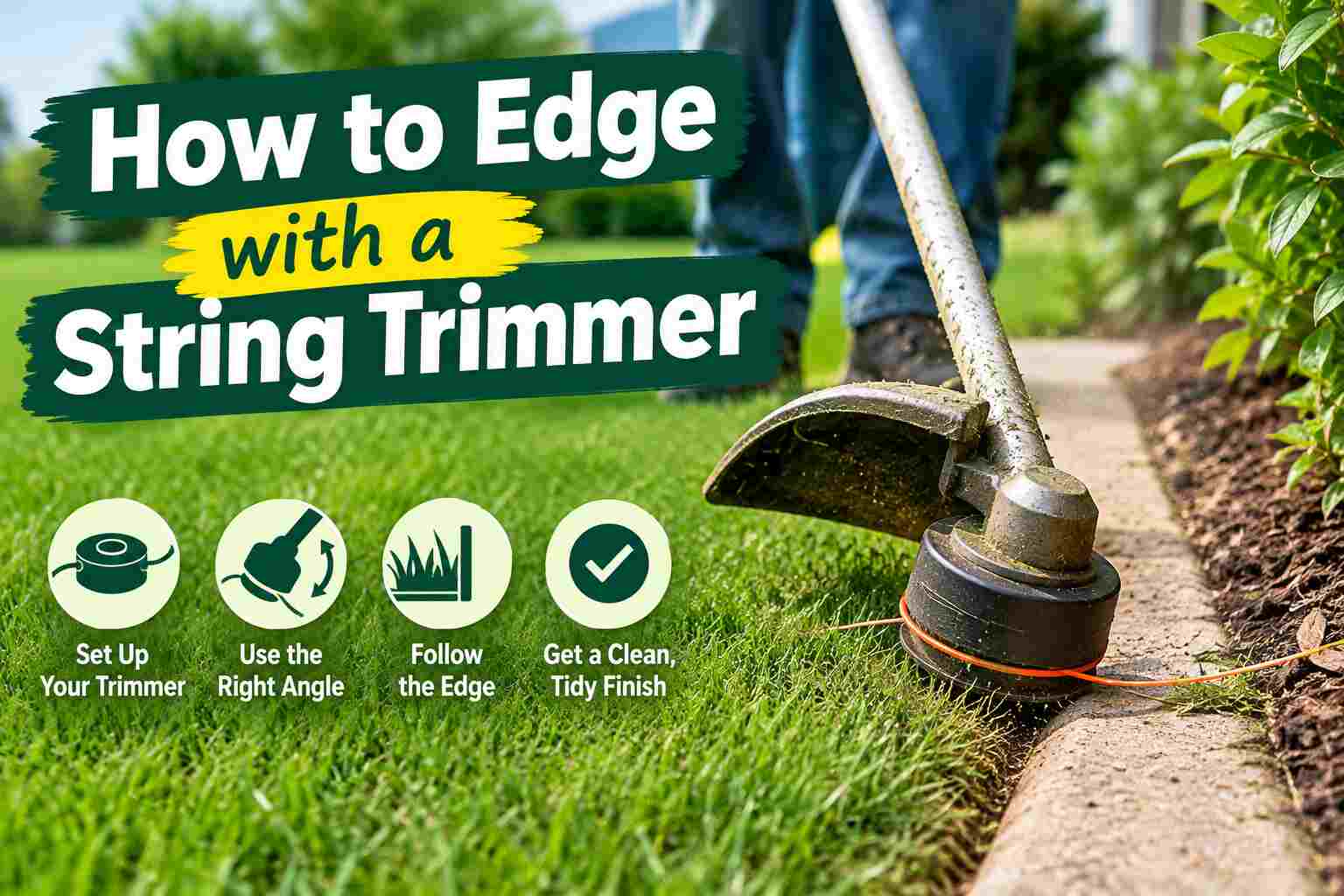

Welcome to your comprehensive guide on how to edge with a string trimmer! This guide will help you create sharp, clean lines around your lawn. A well-edged lawn looks neat and tidy. It makes your yard stand out. Edging with a string trimmer is a skill that takes practice, but it’s very rewarding. You can use your string trimmer, also called a weed wacker or weed eater, for more than just trimming grass in tough spots. It’s a great tool for making those crisp borders along driveways, sidewalks, and flower beds. This guide is for beginners, so we will explain everything clearly. We want you to feel confident and safe while you work.
Achieve Perfect Lawn Edges with Your String Trimmer
Before you start, it’s important to prepare yourself and your tools. This will help you get the best results and stay safe.
Essential Safety Gear
Your safety is the most important thing. String trimmers spin very fast. They can throw small objects like rocks, dirt, and grass.
- Safety Glasses: You must wear safety glasses. They protect your eyes from flying debris.
- Long Pants: Wear long pants to protect your legs from flying bits of grass and small stones.
- Closed-Toe Shoes: Sturdy, closed-toe shoes are a must. They protect your feet.
- Work Gloves (Optional but Recommended): Gloves can give you a better grip and protect your hands.
- Hearing Protection (Optional but Recommended): String trimmers can be noisy. Earplugs or earmuffs can protect your hearing.
Pro Tip: Never remove the guard from your string trimmer. It’s there to protect you from debris. If you can’t see, adjust your stance instead of taking off the guard.
Your String Trimmer and Its Line
Let’s make sure your string trimmer is ready to go.
- Check Fuel or Battery: If you have a gas trimmer, check the fuel level. Fill it up if it’s low. For electric trimmers, make sure the battery is charged.
- Inspect the Trimmer Line: The line is what does the cutting. Make sure it’s not too short or too long. A line that’s too short won’t cut well and can hurt your trimmer. A line that’s too long can wobble and give you uneven cuts. About 4-8 inches of line is usually good for edging.
- Types of Trimmer Line: Different lines are good for different jobs.
- Round Line: This is common for general trimming. It’s good for light to moderate grass.
- Twisted Line: This line is stronger and cuts cleaner. It also makes less noise.
- Square or Multi-sided Line: These lines have sharp edges. They cut through thicker grass and weeds better.
- Serrated Line: This line has saw-like edges for very tough weeds.
- Trimmer Line Thickness (Diameter):
- Light-duty (0.065-0.080 inches): Good for edging lawns and cutting soft grass.
- Medium-duty (0.080-0.110 inches): Good for larger lawns or thicker weeds.
- Heavy-duty (0.110 inches and above): Best for very thick weeds, dense grass, or brush.
Note: The Echo Black Diamond line is often recommended for clean cuts. Oregon Magnum Gatorline is also a popular choice for its durability.

Preparing Your Lawn
A little prep work goes a long way for great edges.
- Mow First: Always mow your lawn before you edge. This makes the grass the right height. Then you can see clearly where you need to edge.
- Clear the Area: Walk along the edges you plan to trim. Remove any rocks, toys, garden hoses, or big sticks. This stops the trimmer line from hitting them and throwing them around.
- Plan Your Edge: Look at where you want to cut. You can use a garden hose or string to make a guide if you want a super straight line.

Step-by-Step Instructions: How to Edge Like a Pro
Now, let’s get to the actual edging! Follow these steps carefully for the best results.
1. Dress for Success (Safety First!)
Before you even touch your trimmer, put on all your safety gear. This means your safety glasses, long pants, and closed-toe shoes. Consider wearing gloves and hearing protection too. Your eyes and ears are precious!
2. Check Your Trimmer’s Health
Take a moment to check your string trimmer. Is the fuel tank full or the battery charged? Is the trimmer line long enough? It should be around 4-8 inches. Make sure the guard is in place.
3. Understand Your Trimmer’s Spin
Most string trimmers spin clockwise. This means the line throws debris to the left. Knowing this helps you decide which way to walk. You want the debris to fly away from your clean edge, not onto it.
4. Prepare Your Trimmer for Edging Mode
This is a key step! You need to change how you hold your trimmer.
- Flip it: Turn your string trimmer so the top guard faces you. The part that usually cuts flat should now be vertical, pointing down.
- Adjust Angle: You want the trimmer line to hit the ground at a 90-degree angle. This means the line should be straight up and down, perpendicular to the ground.
 A diagram showing a string trimmer being held in the normal trimming position (horizontal) and then flipped to the edging position (vertical).
5. Find Your Stance
Where you stand matters.
- Standing on the Hard Surface: Many people find it easier to stand on the concrete side (driveway, sidewalk) when edging along a hard surface. This helps you see the line better.
- Standing on the Grass: If you’re edging a garden bed, stand on the grass side.
- Body Position: Hold the trimmer steady. Some pros suggest resting the motor against your elbow for more control.
6. Start Slow and Steady
Turn on your trimmer and let it get to full speed. Don’t rush. Speed will come with practice.
7. Lower the Line Gently
Slowly lower the spinning line until it just touches the ground where the grass meets the edge. You want to cut just a tiny bit into the soil to make a crisp line.
8. Move Against the Spin (Usually Left to Right)
If your trimmer spins clockwise (most do), you should move from left to right. This pushes the cut grass and dirt away from your clean edge and onto the lawn. If your trimmer spins counter-clockwise, move from right to left.
Pro Tip: Walking backward is often recommended for straight edges. It helps you see where you’re going and directs debris away from you. However, some experts are skilled at walking forward too.
9. Keep a Consistent Angle
This is super important for a straight edge. Keep the trimmer at a constant 90-degree angle to the ground. Avoid tilting it. Tilting can cause uneven cuts or dig too deep.
10. Use Only the Tip of the Line
You’re not trying to dig a trench! Only let the very tip of the string do the cutting. This helps prevent digging too deep and keeps your edge clean.
11. Take Small Bites
Don’t try to cut a huge amount of grass at once. Especially when you’re starting, focus on small sections. Work slowly and steadily along the edge.
12. Don’t Overlap Too Much
Move the trimmer smoothly. Try not to go over the same spot too many times. This can create unevenness.
13. Practice Makes Perfect
Your first few tries might not be perfect. That’s okay! Edging takes practice to get a steady hand and a straight line. Keep practicing, and your edges will look better each time.
Common Pitfalls and How to Avoid Them
Even with the best instructions, you might run into some common problems. Here’s how to fix them.
| Mistake | What Happens | How to Avoid It |
|---|---|---|
| Line Too Short | Uneven cuts, trimmer motor strains or overheats, line breaks easily. | Keep an eye on your line length. Feed more line when it gets short. Aim for 4-8 inches. |
| Line Too Long | Wobbling, less crisp edges, can snag on objects, puts strain on the engine. | Adjust the line length to the recommended 4-8 inches. |
| Incorrect Angle | Uneven edges, gaps between grass and hard surfaces, crooked lines. | Practice holding the trimmer at a consistent 90-degree angle. |
| Going Too Fast | Choppy, uneven cuts. | Slow down. Let the trimmer do the work. Focus on smooth, controlled movements. |
| Digging Too Deep | Creates trenches, removes too much dirt, can make the line wobble. | Use only the very tip of the line to cut the grass, not to dig. |
| Edging Wet Grass | Muddy mess, clumps of dirt, less clean cuts. | Edge when the grass and soil are dry. Slightly moist soil is okay, but not wet. |
| Not Cleaning Trimmer Head | Grass buildup can jam the trimmer and reduce accuracy. | Clean your trimmer head after every few uses. |
| Ignoring Debris Direction | Debris flies onto areas you want clean (driveways, flower beds). | Walk in the opposite direction of the line’s spin to direct debris away. |
Maintaining Your Trimmer for Optimal Edging
Taking care of your string trimmer helps it work better and last longer.
- Clean After Each Use: Wipe off grass and dirt from the trimmer head and guard. This prevents buildup.
- Replace Line Regularly: Fresh, sharp line cuts much better than old, frayed line.
- Check Trimmer Head: Make sure the guard and spool are not damaged. Damage can affect how well it cuts.
- Store Properly: Keep your trimmer in a dry place. Protect it from bad weather. This prevents rust and other damage.
 A simple infographic showing icons for cleaning, replacing line, checking head, and proper storage.
Conclusion
You’ve learned how to edge with a string trimmer! It might seem like a lot at first, but remember, practice makes perfect. Start with safety gear, prepare your tools and lawn, and then take it slow. Hold your trimmer at a 90-degree angle, move against the spin, and use only the tip of the line. Soon, you’ll be creating those crisp, professional-looking edges that make your lawn truly shine. Keep your trimmer clean, and it will serve you well for many seasons to come. Happy edging!
Frequently Asked Questions
What’s the difference between trimming and edging?
Trimming is cutting grass where a mower can’t reach, holding the trimmer line parallel to the ground. Edging is turning the trimmer vertically to create a sharp, clean line between grass and other surfaces.
Should I edge before or after mowing?
It’s best to mow your lawn first. This cuts the grass to its final height, making it easier to see and create a clean edge.
What angle should I hold the string trimmer for edging?
You should hold your string trimmer so the line is at a 90-degree angle to the ground. This creates the cleanest, sharpest cut.
What kind of trimmer line is best for edging?
For general edging, a medium-duty line (0.080-0.110 inches) is often recommended. Twisted or multi-sided lines can offer cleaner cuts and better durability.
How often should I edge my lawn?
You don’t need to edge every time you mow. Edging every other mowing session or as needed to maintain a clean line is usually sufficient.

I’m Patricia D. Johnson, an affiliate marketer and blogger specializing in trimmers and grooming tools. I create honest reviews, buying guides, and practical tips to help readers choose the right trimmer for their needs. With a focus on quality, performance, and value, I simplify the decision-making process so consumers can make confident purchases.