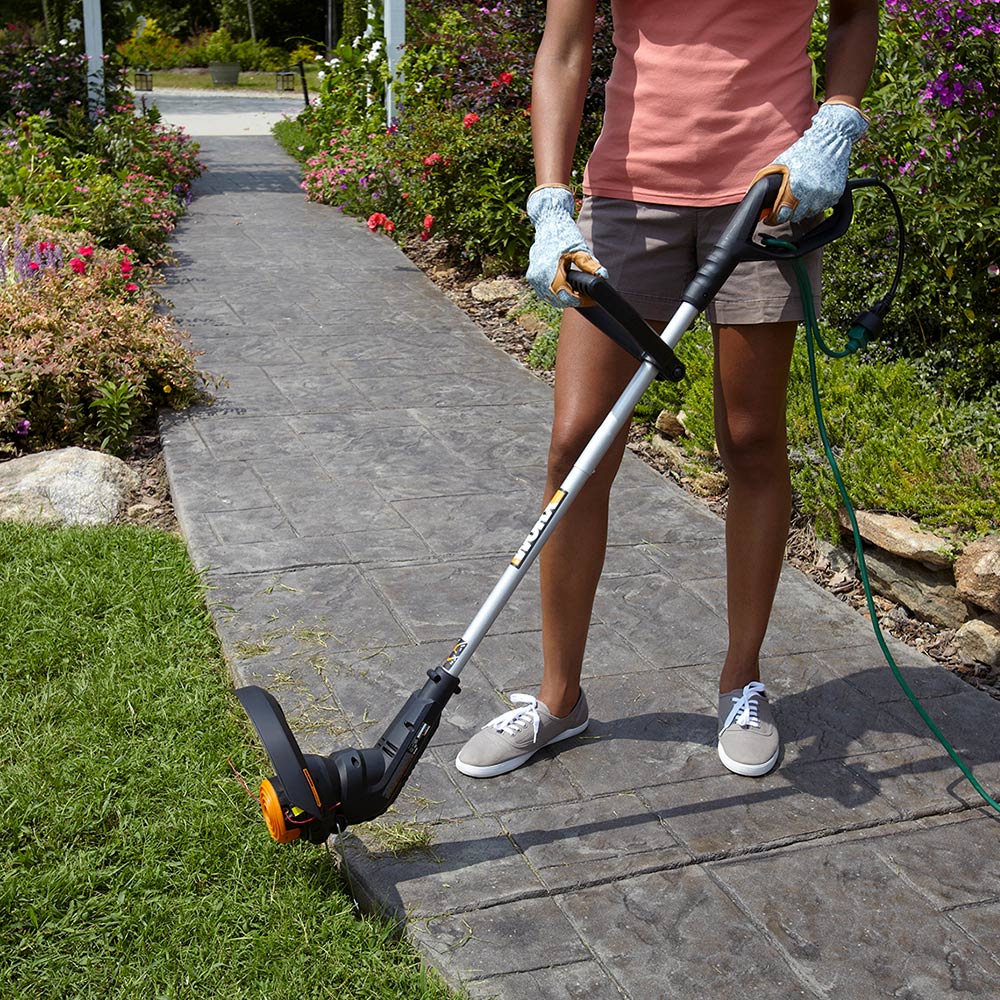
How Do You Use a Grass Trimmer?
A grass trimmer keeps lawn edges neat and tidy. Learning how do you use a grass trimmer starts with its parts. The head, string, handle and shield all matter. Each part plays a role in safe trimming. This guide walks through each step clearly. Edges stay neat and tidy. Parts come first in line. Each part has a role. Safe trimming comes first. Each step sits in order.
Gas, electric and battery trimmers all work in unlike ways. Gas models suit large yards and heavy weeds. Electric models stay light and easy to handle. Battery models give freedom with no cord. Choose the type that fits your yard. Three types work in unlike ways. Gas suits large yards. Electric stays light. Battery frees you from cords. Fit the type to your yard.
Later parts set out safety, setup and technique. Care, types and fault checks come after them. Short answers close the guide at the end. Careful work keeps lawns neat for years. Small routines give clean edges each time. Safety comes early on. Short answers close it. Careful work lasts years. Types come after care. Clean edges come from routines.
Quick answer: Read the manual and wear gloves, goggles and sturdy shoes. Check the string length and fuel or battery first. Hold the trimmer level and sweep side to side. Angle it slightly for crisp edges along paths. Clean it after use and store it dry.
- How Do You Use a Grass Trimmer? Five Steps at a Glance
- Step 2: Safety Precautions
- Step 3: Trimmer Setup
- Step 4: Trimming Techniques for a Neat Lawn
- Step 5: After-Use Maintenance
- Different Types of Grass Trimmers
- Common Grass Trimmer Problems and Troubleshooting
- Tips and Tricks for Efficient Use
- Frequently Asked Questions
- Conclusion: How Do You Use a Grass Trimmer?
How Do You Use a Grass Trimmer? Five Steps at a Glance
Five steps cover parts, safety, setup, technique and care. Work through them slowly in the order shown. Later parts set out each stage in more depth. Rushing invites uneven cuts and loose parts later. Five steps cover the job. Work through them slowly. Later parts add depth. Rushing invites loose parts. Order matters here.
| Step | What to Do |
|---|---|
| 1. Understand your tool | Read the manual and learn each part |
| 2. Stay safe | Wear gloves, goggles and sturdy shoes |
| 3. Set up | Check string, fuel or battery, adjust handle |
| 4. Trim | Sweep level, edge vertical, take passes |
| 5. Maintain | Clean, inspect and store dry |
Step 2: Safety Precautions
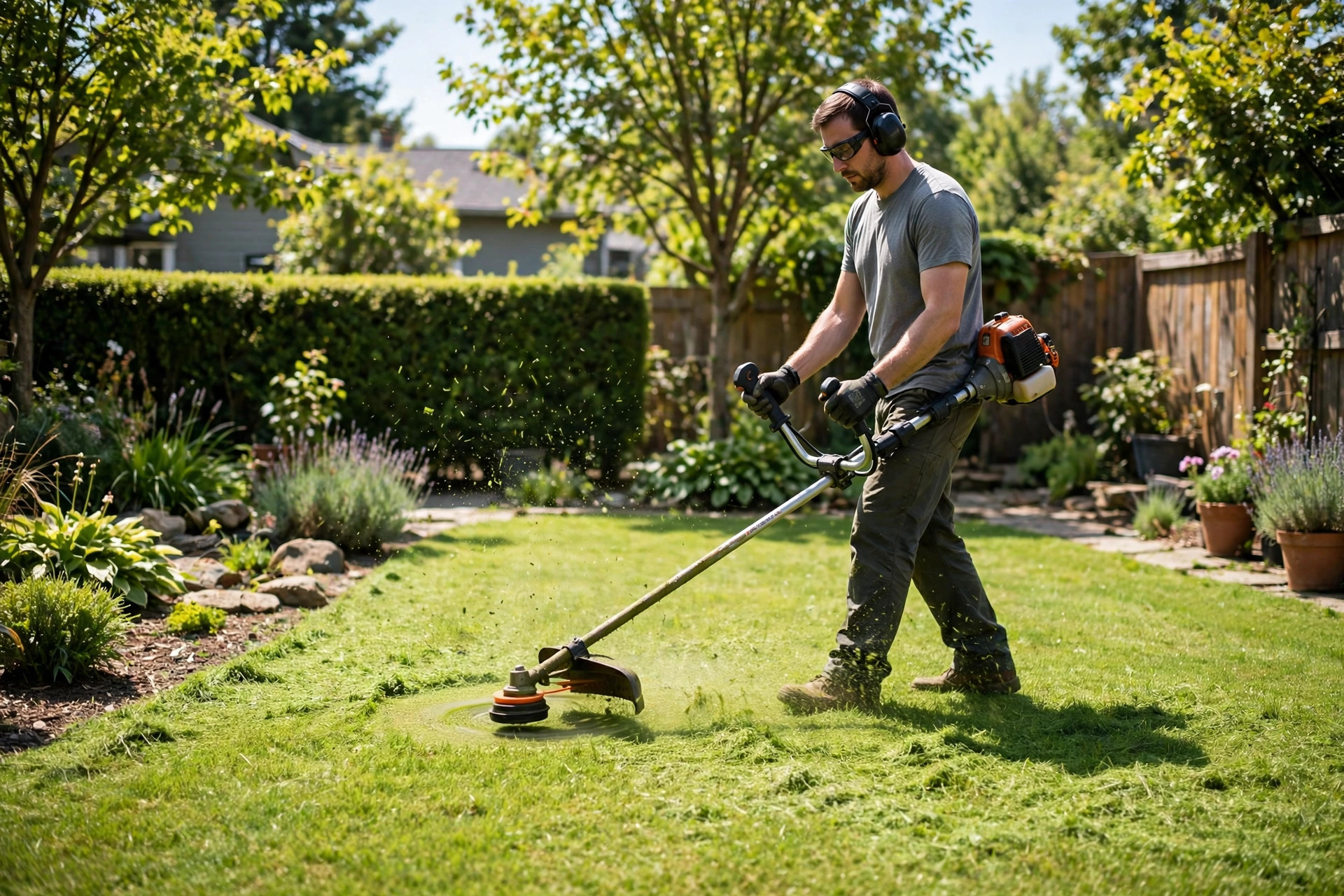
Always wear gloves, safety goggles and sturdy shoes. Snug clothes keep fabric away from the line. Ear guards help with loud gas-powered models. Check for damage or loose parts before use. Keep people and pets at a safe distance. Gloves guard your hands. Goggles guard your eyes. Sturdy shoes guard feet. Check parts before use. Keep pets at a distance.

Trim only in good weather and dry ground. Wet grass turns slippery and hard to control. Clear rocks, sticks and toys from the area. Flying debris can injure people standing nearby. Hold the trimmer firmly with both hands. Dry ground trims best. Wet grass turns slippery. Clear rocks and sticks first. Debris can injure people. Hold it with both hands.
Step 3: Trimmer Setup
Put the parts together as the manual shows. Secure the handle and fit the safety shield. Gas models need the right fuel mix. Electric models need charging or a power outlet. Check that each part fits tightly first. Follow the manual closely. Fit the shield with care. Gas needs the right mix. Electric needs power first. Tight parts work safest.
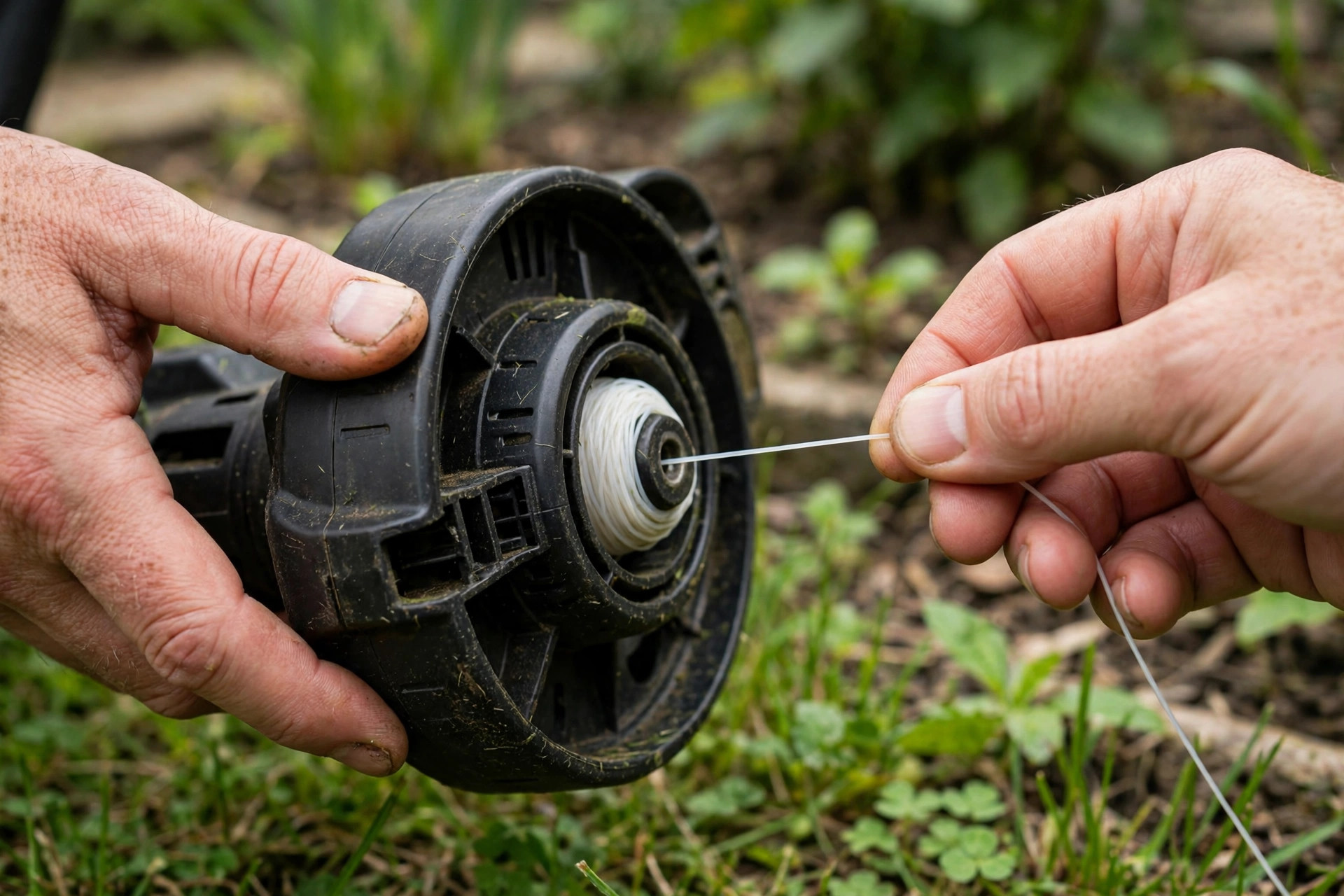
Check the string type and length for your model. Measure and cut the line to the right length. Feed it through the head exactly as directed. Wrong line size causes poor cuts and tangles. Our string size guide explains the right choice for your model. Line size matters a lot. Cut line to right length. Feed it as directed. Wrong size tangles fast. One guide covers sizes.
Adjust the handle and strap for your height. A balanced trimmer feels easier to control. Turn it on and listen for strange sounds. Odd shaking means something needs checking first. Fix small issues before you start the job. Fit handle to your height. Balance aids control. Listen for strange sounds. Fix small issues first. Odd shaking warns you.
Step 4: Trimming Techniques for a Neat Lawn
Hold the trimmer level with the ground at all times. Sweep it side to side in smooth motions. This covers more ground and keeps cuts even. Tilt it slightly near flower beds and trees. Light touches protect nearby plants from damage. Hold it level always. Sweep side to side. Even cuts cover more ground. Tilt near flower beds. Light touches guard plants.
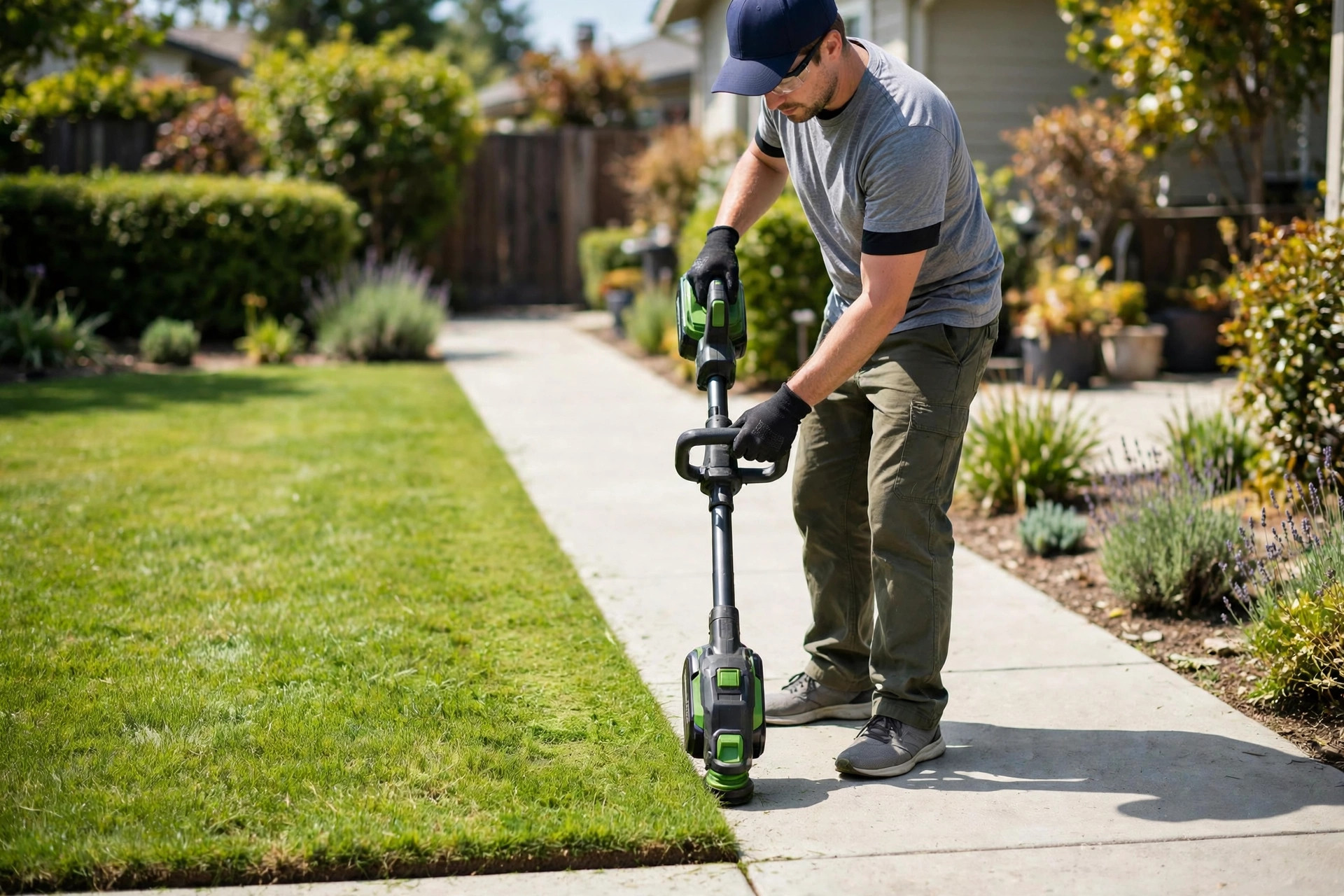
Turn the trimmer vertical for crisp path edges. This makes clean lines along walks and driveways. Tall grass needs several passes, not force. Start high, then lower the head bit by bit. Forcing it through thick weeds clogs the head. Vertical gives crisp edges. Clean lines line the walks. Tall grass needs passes. Start high, then lower. Force clogs the head.
Slopes need slow, short and controlled motions. Adjust your grip and footing for balance. Short bursts keep you steady on uneven ground. Watch the line length as you work. Stop and reset it when it shortens. Slopes need slow motions. Footing keeps you balanced. Short bursts keep you steady. Watch line length closely. Reset short line at once.
Step 5: After-Use Maintenance
Clean the trimmer after each use. Wipe the body and head with a damp cloth. Remove grass clippings that clog the head. Check the line and replace it when worn. Tighten loose screws and check for damage. Clean it after each use. Wipe the head with cloth. Clippings clog the head. Worn line must go. Tighten loose screws.
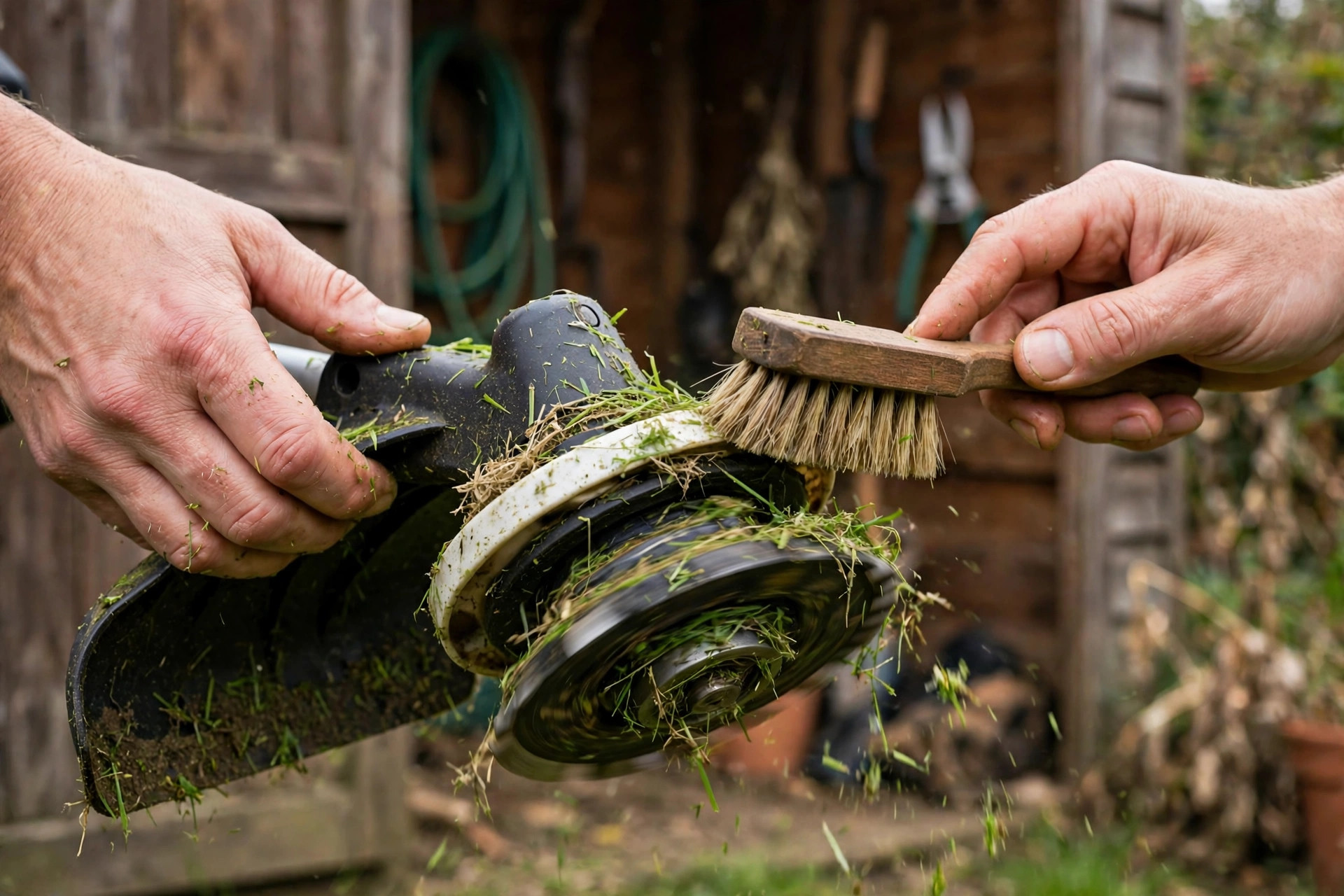
Gas models need the fuel tank emptied first. Old fuel goes stale and can damage the engine. Disconnect the spark plug for added safety. Battery models need the battery removed after use. Store the trimmer dry, cool and out of sunlight. Empty gas tanks first. Old fuel harms engines. The spark plug stays off for safety. Batteries come out after use. Store it dry and cool.
Schedule regular checks for lasting performance every month. Lubricate moving parts to reduce friction and wear. Replace the air filter and spark plug periodically. Our oiling guide explains blade lubrication fully. Set checks aid long life. Oil cuts wear down. Filters need swaps in time. Plugs need swaps too. One guide covers oiling.
Different Types of Grass Trimmers
Electric trimmers suit small to mid-size yards well. They stay light, quiet and easy to handle. Corded models give steady power but limit movement. Battery models move freely yet need recharging. Gas models suit large yards and heavy work. Electric suits small yards. They stay light and quiet. Corded gives steady power. Battery moves freely. Gas suits heavy work.
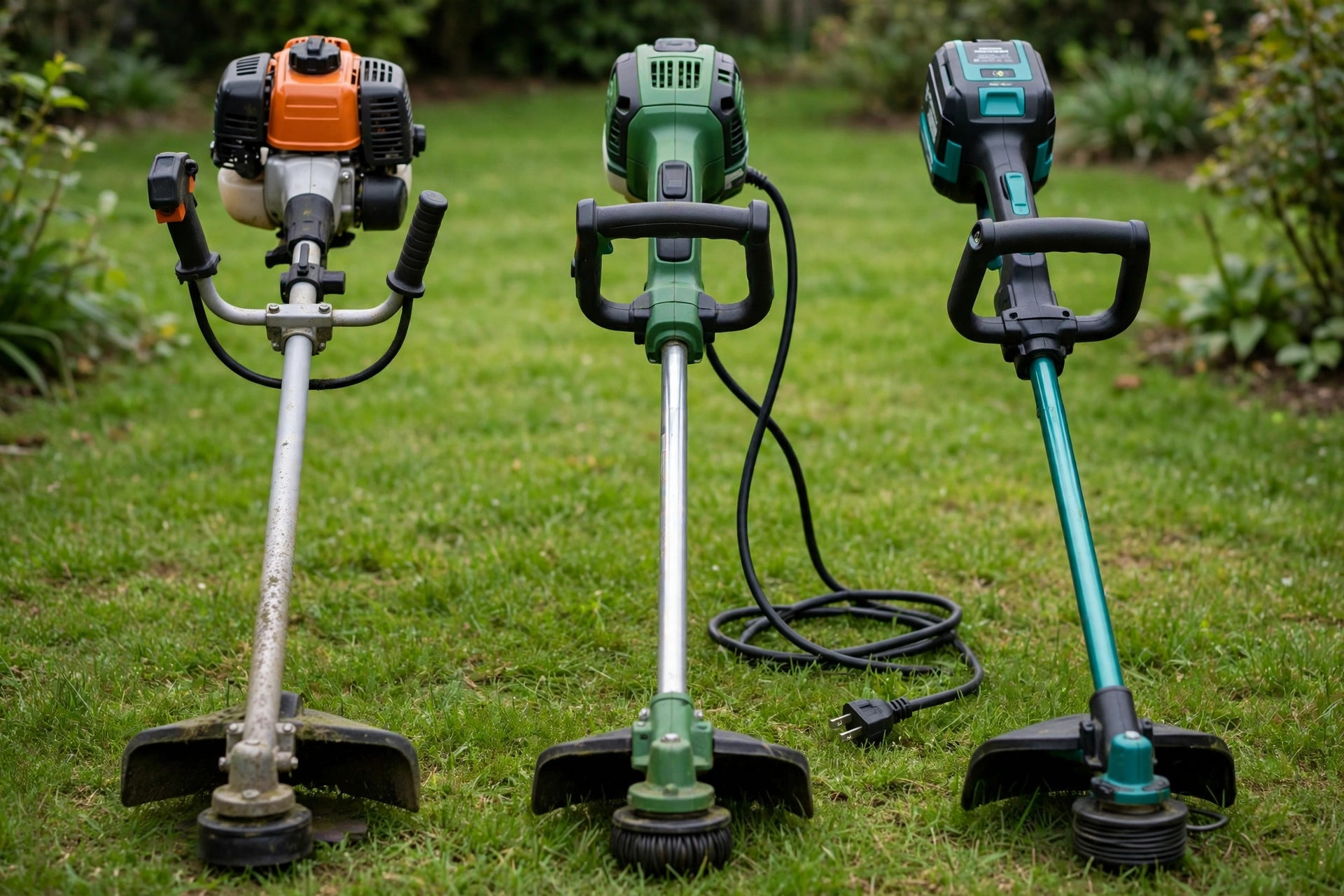
Gas trimmers bring power but add weight and noise. Their engines need set care and fuel. Curved shafts steer well around standard lawns. Straight shafts reach under shrubs and fences. Choose the type that fits your garden size. Gas brings raw power. Weight and noise come too. Curved shafts steer well. Straight shafts reach far. Fit type to garden size.
| Type | Ideal For | Pros | Cons |
|---|---|---|---|
| Electric | Small to medium yards | Lightweight, easy to use | Corded models limit mobility |
| Battery-Operated | Medium yards | Mobile, less noise | Needs regular recharging |
| Gas-Powered | Large yards, heavy-duty tasks | Powerful, reliable | Heavy, noisy, needs maintenance |
Some models add edging and adjustable cutting angles. Extra features turn one tool into many. Our lifespan guide explains how long trimmers last. Some types add edging. Extra traits add uses. One guide covers lifespan. Angles adjust on some. One tool can do many jobs.
Common Grass Trimmer Problems and Troubleshooting
A trimmer that will not start needs checks first. Gas models may lack fuel or a clean plug. Electric models may have a bad cord or battery. Check power, fuel and plugs before you worry. Most start faults clear with plain checks. Start faults need checks. Gas may lack fuel. Plugs must stay clean. Plain checks clear most. Check power sources first.
Line that breaks often usually hits hard surfaces. Wrong line type also causes frequent breaks. Thicker line helps with tough weeds and edges. Trim at the right angle to avoid sidewalks. Check the line often for wear and tear. Hard surfaces break line. Wrong type breaks too. Thicker line suits weeds. Avoid sidewalks at angle. Check line for wear often.
Uneven cuts often mean a tangled trimmer head. Clean the head and re-spool the line correctly. Overheating comes from long use or blocked vents. Rest the trimmer and clear debris from vents. Our repair guide covers faults beyond simple assembly. Tangled heads cut uneven. Re-spool the line with care. Blocked vents build heat. Rest it when hot. One guide covers repairs.
Vibrations usually point to loose parts or uneven line. Tighten screws and spread the line evenly. Regular checks keep control and comfort high. Our head changing guide shows correct fitting order too. Loose parts cause shaking. Tighten screws with care. Even line cuts shaking. Set checks aid comfort. One guide covers head swaps.
Tips and Tricks for Efficient Use
Start with a full tank or charged battery. Steady power keeps each cut even and neat. Use the right line type for your model. Check the manual before you choose any line. The right line choice prevents breaks and clogs. Start with full power. Steady power evens cuts. Right line type matters. Manuals guide line choice. Right line stops clogs.
Trim in dry weather on clear ground. Clear debris from the area before starting the engine. Take short breaks to prevent overheating issues. Clean the head and replace worn parts often. Our cleaning guide covers careful cleaning routines. Trim in dry weather. Clear debris first of all. Short breaks stop heat. Clean the head often. One guide covers cleaning.
Adjust the handle and straps for comfort. A well-balanced trimmer gives better control always. Store it dry and hang it up safely. Proper storage keeps it ready for next time. Our sharpening guide explains safe edge restoration fully. Fit straps for comfort. Balance gives control. Hang it up safely. Dry storage readies it. One guide covers sharpening.
Frequently Asked Questions
These answers repeat this guide’s own points only. They follow the same steps explained above closely. Short answers close the guide at the end. Maker pages like STIHL publish official trimmer guidance. These answers track the guide. The steps above come first. Short answers close it out. Maker pages help too. Each point comes from here.
What safety gear should I wear when using a grass trimmer?
Wear safety goggles and gloves for every job. Goggles shield eyes from flying debris always. Gloves protect hands and improve grip too. Add ear protection for loud gas-powered models. Sturdy shoes and long pants protect legs and feet. Goggles guard your eyes. Gloves guard your hands. Ear guards suit loud gas types. Sturdy shoes guard feet. Long pants guard legs.
How do I choose the right trimmer line?
Match the line to your trimmer model first. Thicker lines cut tough weeds but need more power. Thinner lines suit light grass and edging. Check your manual for recommended thickness and type. The right line improves efficiency and lifespan greatly. Match line to your model. Thick lines cut tough weeds. Thin lines suit light grass. Manuals list the right type. Right line aids long life.
What maintenance does a grass trimmer need?
Clean the head after every trimming session. Remove dirt and debris from the cutting head. Check the air filter on gas-powered models. Inspect the spark plug and replace it when worn. Charge batteries properly and store them cool. Clean the head each session. Dirt must come off. Filters need checks on gas types. Worn plugs must go. Store batteries cool.
Can I use my grass trimmer on wet grass?
No, avoid trimming wet grass whenever possible. Wet grass turns slippery and hard to control. Slips can cause uneven cuts or injuries. Moisture also clogs the cutting head quickly. Wait until the ground dries before trimming. Avoid wet grass. Wet grass turns slippery. Slips can cause injuries. Wet clogs the head fast. Wait for dry ground.
How do I prevent my string from breaking so often?
If your string breaks often, check the spool loading first. Hitting hard objects like concrete also breaks string quickly. Use a thicker line for tough jobs and keep speed steady. Trim at the right angle to avoid hard surfaces. Regular inspection keeps breakage low over time. Check spool loading first. Concrete breaks string fast. Thick line suits tough jobs. Keep speed steady. Set checks cut breakage.
Conclusion: How Do You Use a Grass Trimmer?
So, how do you use a grass trimmer with confidence? Learn the parts, stay safe and set up with care. Sweep level, edge vertical and take slow passes. Clean, check and store the trimmer after use. Good technique prevents most problems before they start. Learn the parts first. Stay safe at all times. Slow passes work best. Store it after each use. Good form stops most faults.
Set care keeps cutting sharp and safe at all times. Clean, oil and check parts on schedule. Store the trimmer dry and replace worn parts. Your trimmer then serves well for seasons. Plain habits give smooth trimming each time. Set care keeps it sharp. Clean and oil on schedule. Store it dry always. Worn parts must go. Plain habits work best.

I’m Patricia D. Johnson, an affiliate marketer and blogger specializing in trimmers and grooming tools. I create honest reviews, buying guides, and practical tips to help readers choose the right trimmer for their needs. With a focus on quality, performance, and value, I simplify the decision-making process so consumers can make confident purchases.