How to Use Lubricating Oil for Trimmer
Trimmer work often fades slowly over time. This guide shows how to use lubricating oil for trimmer care. Missed oiling causes most of that decline. Steady oiling extends life and keeps cuts strong. Trims feel smoother and more pleasant too. Care keeps cuts smooth.
Oil keeps moving blade parts running well. The same rule holds for big machines too. A set oil plan guards precision and results. Oiled blades give top results each time. Oil guards each part.
First learn why oiling matters so much. Then choose oil and apply it the right way. Safe habits protect you and the tool. Short answers at the end cover common questions. Your manual gives model details all through. Safe steps come first.
Quick answer: Turn the trimmer off and unplug it first. Clean the blades well to remove all debris. Apply a few drops along the blade edges. Run the trimmer briefly to distribute the oil. Wipe the excess oil away to prevent buildup.
- How to Use Lubricating Oil for Trimmer: Quick Steps
- Why Lubrication Matters So Much
- Choose the Right Lubricating Oil
- Apply the Oil the Right Way
- How Often to Oil Your Trimmer
- Safety and Storage Precautions
- Other Maintenance That Extends Trimmer Life
- Frequently Asked Questions
- Conclusion: How to Use Lubricating Oil for Trimmer
How to Use Lubricating Oil for Trimmer: Quick Steps
Five quick steps cover the whole oil plan. Work through them in the order shown here. Later parts explain each stage in full. The plan takes only a few minutes. Five steps, a few minutes.
| Step | What to Do |
|---|---|
| 1. Switch off | Turn off and unplug the trimmer first |
| 2. Clean the blades | Remove debris so oil sticks well |
| 3. Apply the oil | A few drops along the blade edges |
| 4. Run it briefly | Few seconds spreads oil across moving parts |
| 5. Wipe the excess | Wiping stops dirt buildup on blades |
Why Lubrication Matters So Much
Oil cuts friction between moving blades. Less friction means smoother, sharper cutting. Blades stay precise instead of turning dull. Steady oiling keeps work strong over time. Oiled blades cut clean.
Good oiling extends the trimmer’s lifespan too. Less wear means fewer swaps and repairs. The right oil stops rust and corrosion. Your trimmer stays in prime shape longer. Plain oiling guards the money you put in. Less wear, less cost.
Oiled blades make trimming safer too. Smooth blades are less likely to stick. Stuck blades can heat the motor too much. Smooth blades stay safe.
Dry blades grind with loud, grating noise. Oil lets blades glide smooth and quiet. Our pulling hair guide shows dry blade signs.
Choose the Right Lubricating Oil
Not all oils suit a tool well. Wrong oils can damage the tool slowly. Some oils are simply too thick. Others give blades too little cover. Maker-recommended oils ensure compatibility. Right oil, right fit.
| Feature | Why It Matters |
|---|---|
| Anti-rust | Guards blades from rust and moisture harm |
| Non-sticky mix | Keeps dirt off the blade edges |
| High heat strength | Holds up in long, hard trimming sessions |
| Low viscosity | Flows with ease between tight moving parts |

Synthetic oils are the most common choice. They give strong oiling and lasting protection. They are made for high-end machines. Special trimmer oils sell in hardware stores. The right oil saves money long term. Right oil saves cash.
Never use household oils like vegetable oil. Motor oil harms trimmer blades badly too. They lack what blades need most. Wrong oils harm blades.
They can lead to clogging or rusting. Wrong oils can void your warranty too. Maker pages like STIHL USA publish care guidance for owners. Wrong oils risk the warranty.
Apply the Oil the Right Way
Start with the trimmer off and unplugged. Check this step twice before you start work. Work where air flows well if you can. A clean workspace keeps dirt out of the oil. Keep a cloth near for spills. Start safe, stay safe.
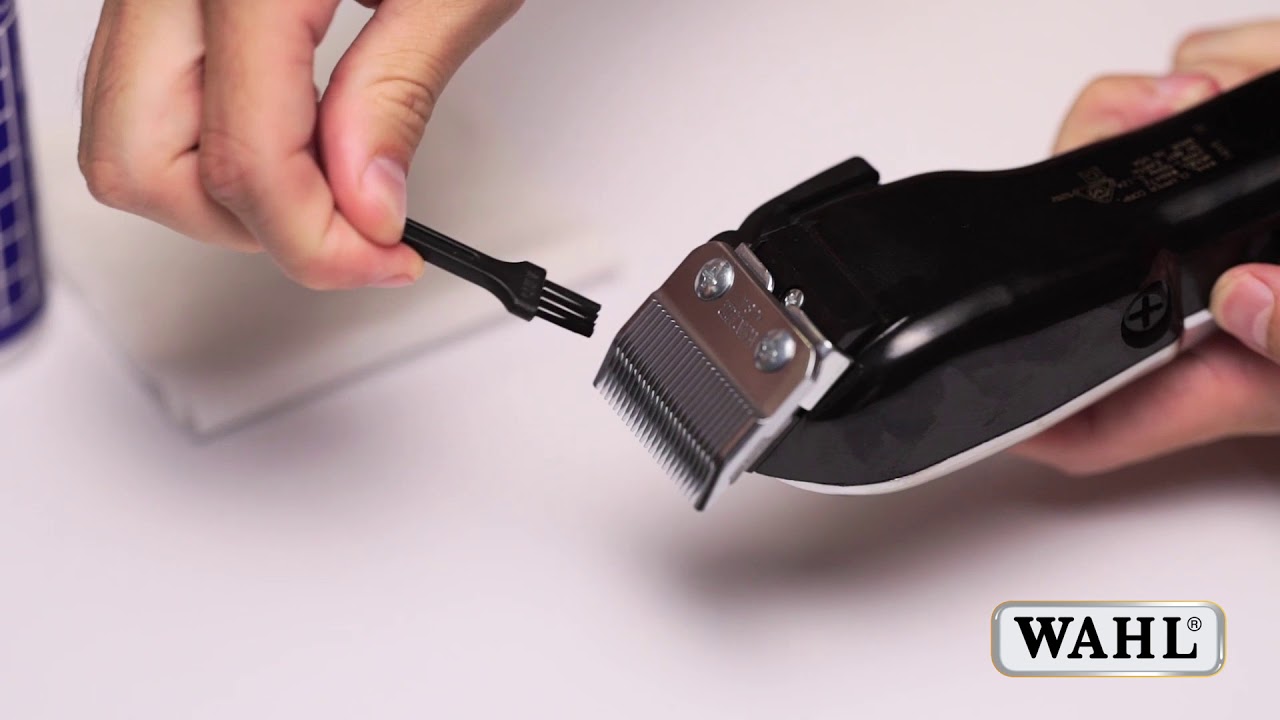
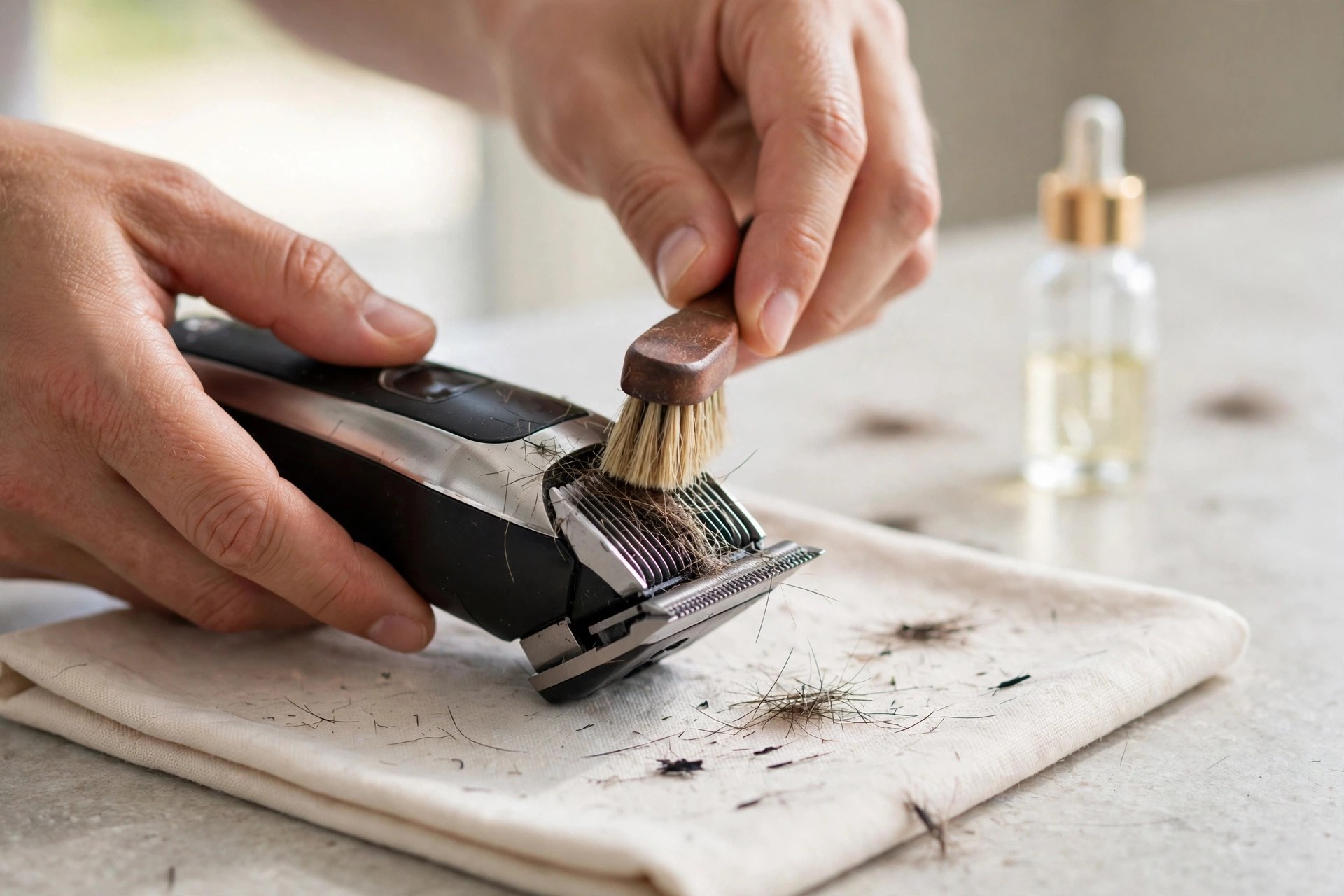
Clean the blades, then apply oil. Remove hair, grit and dirt in full. A small brush or cloth works well. Clean first, oil next.
Clean blades let oil stick well. Dirt makes friction worse, not better. Our cleaning guide covers full routines step by step. Clean blades take oil best.
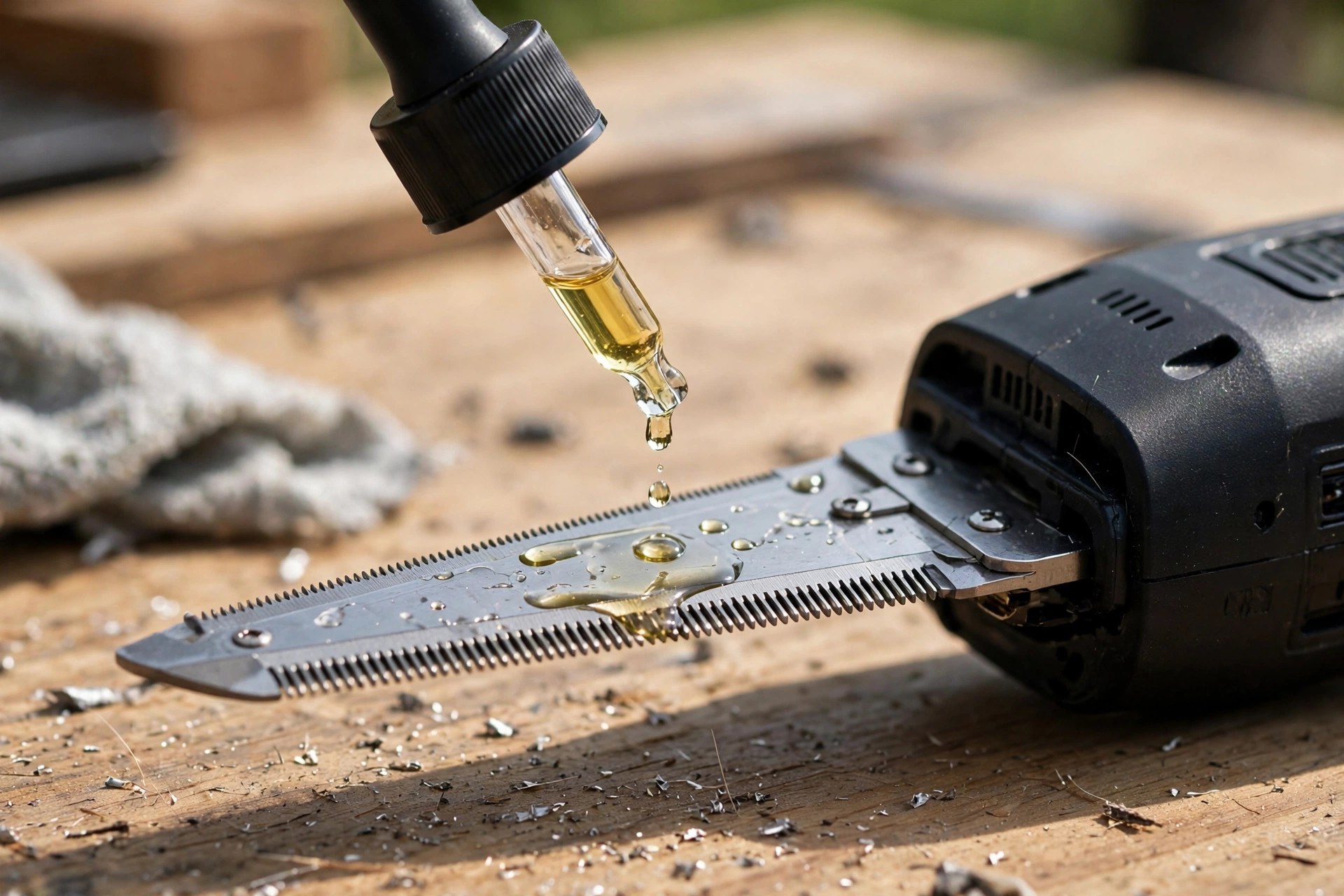
Hold the tool with blades up. Apply a few drops along the blade length. Spread the oil in an even coat. Too much oil attracts more dirt. A few drops are always enough here. A few drops will do.
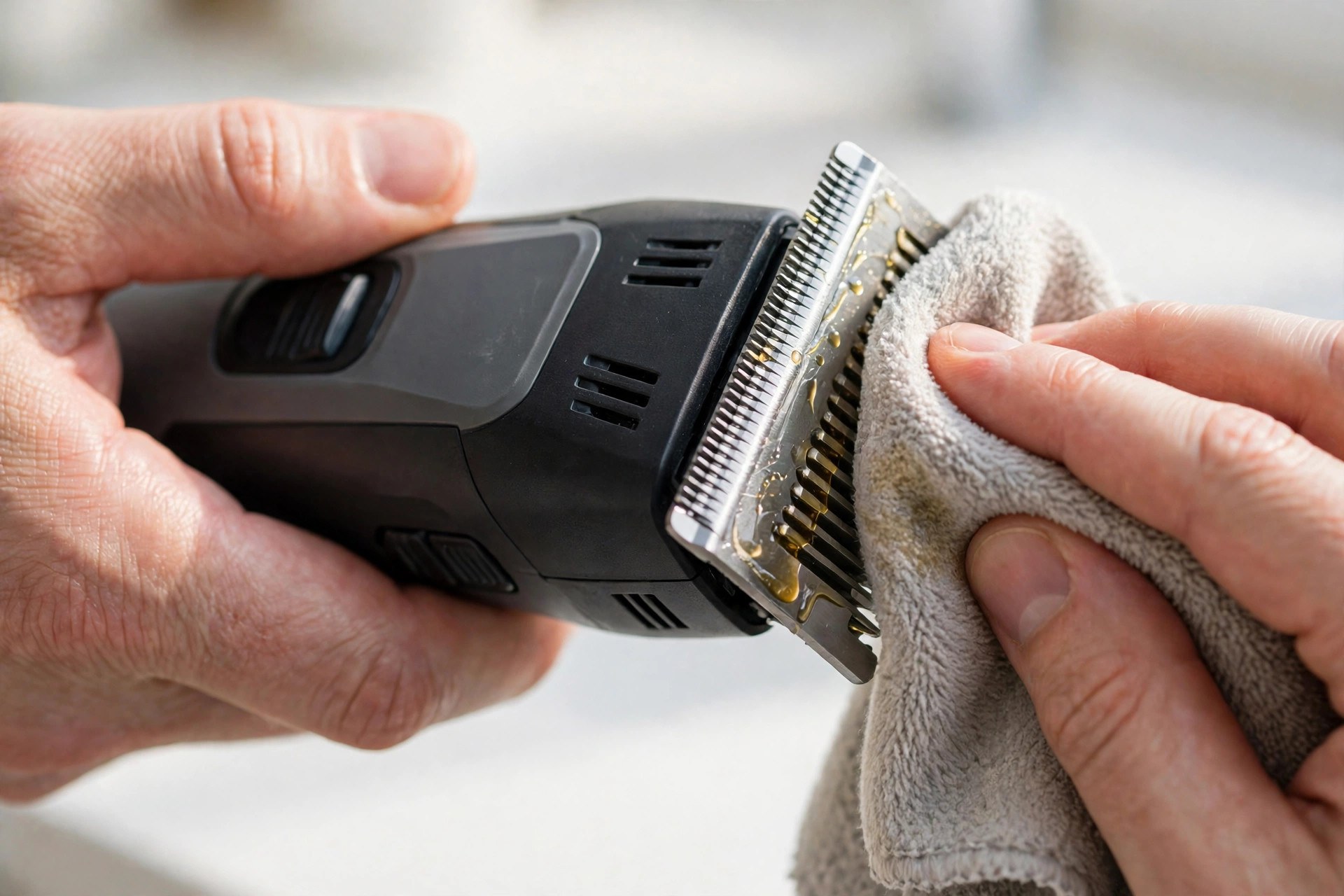
Run the tool for a few seconds. The run spreads oil across the moving parts. Wipe off any excess oil with care. Wiping prevents dirt buildup on the blades. Our blade cleaning guide covers deeper blade care steps. Wipe off the rest.
How Often to Oil Your Trimmer
How often you oil depends on how often you trim. Daily users should oil every few uses. That plan keeps work at its best. Those who trim now and then may oil weekly instead. The manual may give rules too. Steady oil keeps work strong.
Please note: This guide gives several different oiling schedules. Its steps suggest oiling every few uses. Its tables suggest monthly or quarterly intervals instead. Follow your manual and the heavier schedule. Oiling too often harms far less overall.
Seasons can shift oiling needs as well. Summer trimming happens more often. Oil more often during heavy use. Winter months may need only monthly oiling. Heavy work strains blades much more though. Heat and work raise needs.
Thick hedges and long grass strain blades. Oil before and after such hard jobs. Watch for signs the blades run dry. Dry blades need oil.
Extra noise means dry blades. Weak cuts are another clear sign. Our one blade guide shows like care routines. Noise means dry blades.
Set a reminder so oiling never slips. A calendar note or phone alert works. Steady habits keep work strong over the years. A few minutes of care prevent bigger problems. Small care stops big faults.
Safety and Storage Precautions
Safety comes first in each oil session. Off and unplugged stops starts by chance. Work in a bright, well-lit, dry spot. Avoid damp or cluttered work spaces. Gloves and safety glasses protect you well. Safe hands, safe work.
Gloves help grip the tool too. Glasses shield eyes from droplets and debris. Never over-oil the blades. Excess oil can drip into the motor. Motor harm and slip risks can follow. Too much oil harms too.
Store oil and trimmer the right way after use. Keep the oil bottle sealed tight. Store oil away from children at home. Sealed oil stays fresh.
Keep the trimmer dry after oiling. Dry storage prevents rust and power faults. Our water cleaning guide shows moisture risks in full. Dry storage stops rust.

Clean any oil spill up at once. Spilled oil makes floors slick and unsafe. Use a rag or paper towel fast. Dispose of oily rags the safe way. Oily rags can pose fire risks. Wipe spills at once.
Other Maintenance That Extends Trimmer Life
Cleaning matters with regular oiling each week. Remove debris and plant matter after use. Buildup left behind drags work down quickly. A brush or cloth cleans blades in full. Steady cleaning keeps smooth work each time. Clean blades last longer.
| Practice | Guide’s Rhythm |
|---|---|
| Clean blades | After each use, without exception |
| Sharpen blades | At least a couple times yearly |
| Inspect parts | Monthly checks for loose or damage |
| Storage | Dry, cool place with a cover |
| Guidelines | Follow the manufacturer’s manual throughout |
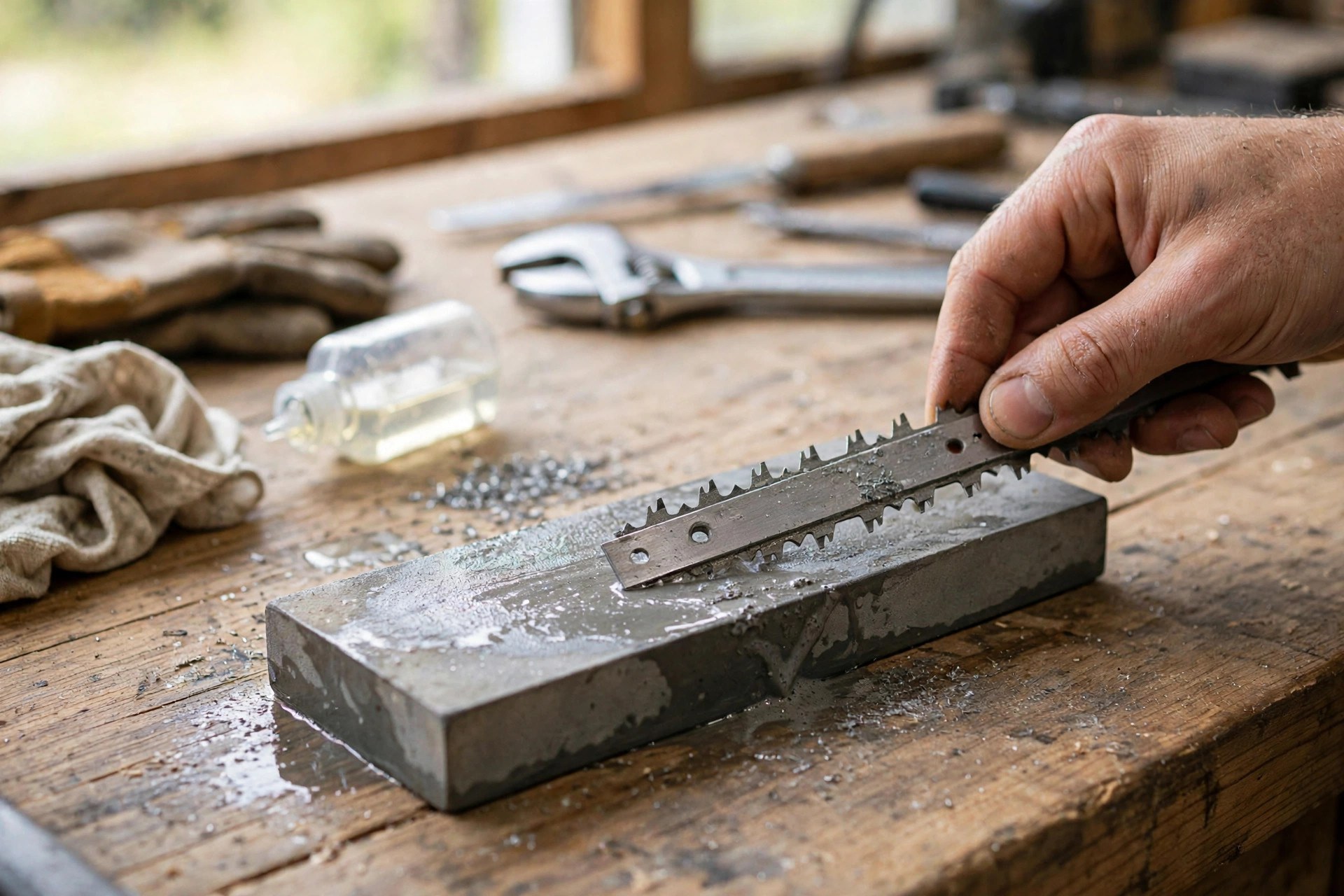
Sharpen blades at set times to protect cut quality. Dull blades strain the motor over time. Sharpen at least twice a year. Use a sharpener or visit a pro. Our sharpening guide covers blade edge care basics. Sharp blades guard the motor.
Check for loose or damaged parts often. Tighten screws and bolts to stay secure. Replace worn parts at once to prevent harm. Tight parts stay safe.
Store the tool dry, cool and covered. Sunlight and moisture both shorten its life. Our lifespan guide shows long term trimmer care. Dry storage adds years.
Frequently Asked Questions
These answers repeat this guide’s own points only. They follow the same steps set out above. Short answers close the guide at the end. Short answers, same facts.
Why is lubricating my trimmer important?
Oil cuts friction between the moving blades. Smooth work prevents wear and tear each day. It extends the trimmer’s working lifespan a lot. Dry blades rust and dull very quickly. An oiled trimmer runs quieter too. Oiled blades run quiet.
What type of oil should I use for my trimmer?
Use the oil your maker recommends. Special synthetic or clipper oils work best. They give high protection and efficiency. Avoid vegetable and motor oils at home. Approved oil ensures compatibility and longer life. Maker oils fit best.
How often should I lubricate my trimmer?
It depends on how much you trim. Daily users oil after every few uses. Those who trim now and then may oil weekly or monthly. Your manual gives rules for your model. Follow those model rules most closely. Your manual knows best.
Can using too much lubricating oil damage my trimmer?
Yes, too much oil can damage the trimmer. Extra oil draws dirt and debris fast. Buildup clogs the blades and motor inside. Work drops and wear grows over time. Apply a few drops and wipe excess off. Less oil, less dirt.
How does temperature affect lubricating oil usage?
Temperature changes alter the oil’s viscosity a lot. Cold thickens oil and slows blades. Warmth may thin oil too much. Heat thins oil fast.
Thin oil gives poor protection in heat. Use oils made for the season when makers say so. Store oils the right way to keep them working well. Store oil with care.
Conclusion: How to Use Lubricating Oil for Trimmer
So, how to use lubricating oil for trimmer care? Choose the right oil for your model. Clean first, apply drops and run briefly. Wipe the excess and store all dry. Steady oiling prevents most costly repairs. Small steps save big costs.
Steady oiling keeps blades sharp and quiet. Rust protection and long life follow. Stick to the set rules and schedules. Your tool stays in peak shape longer. Care pays off in years.

I’m Patricia D. Johnson, an affiliate marketer and blogger specializing in trimmers and grooming tools. I create honest reviews, buying guides, and practical tips to help readers choose the right trimmer for their needs. With a focus on quality, performance, and value, I simplify the decision-making process so consumers can make confident purchases.