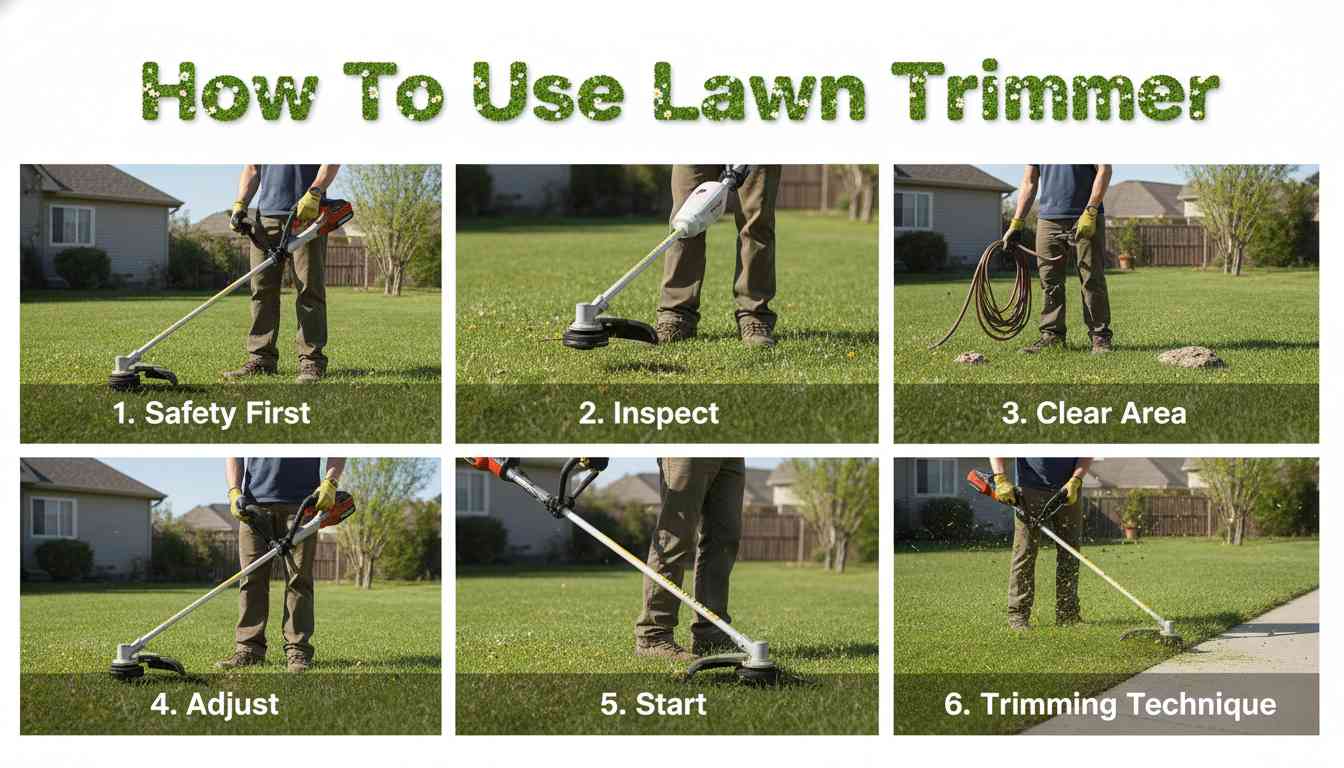
How to Use Lawn Trimmer
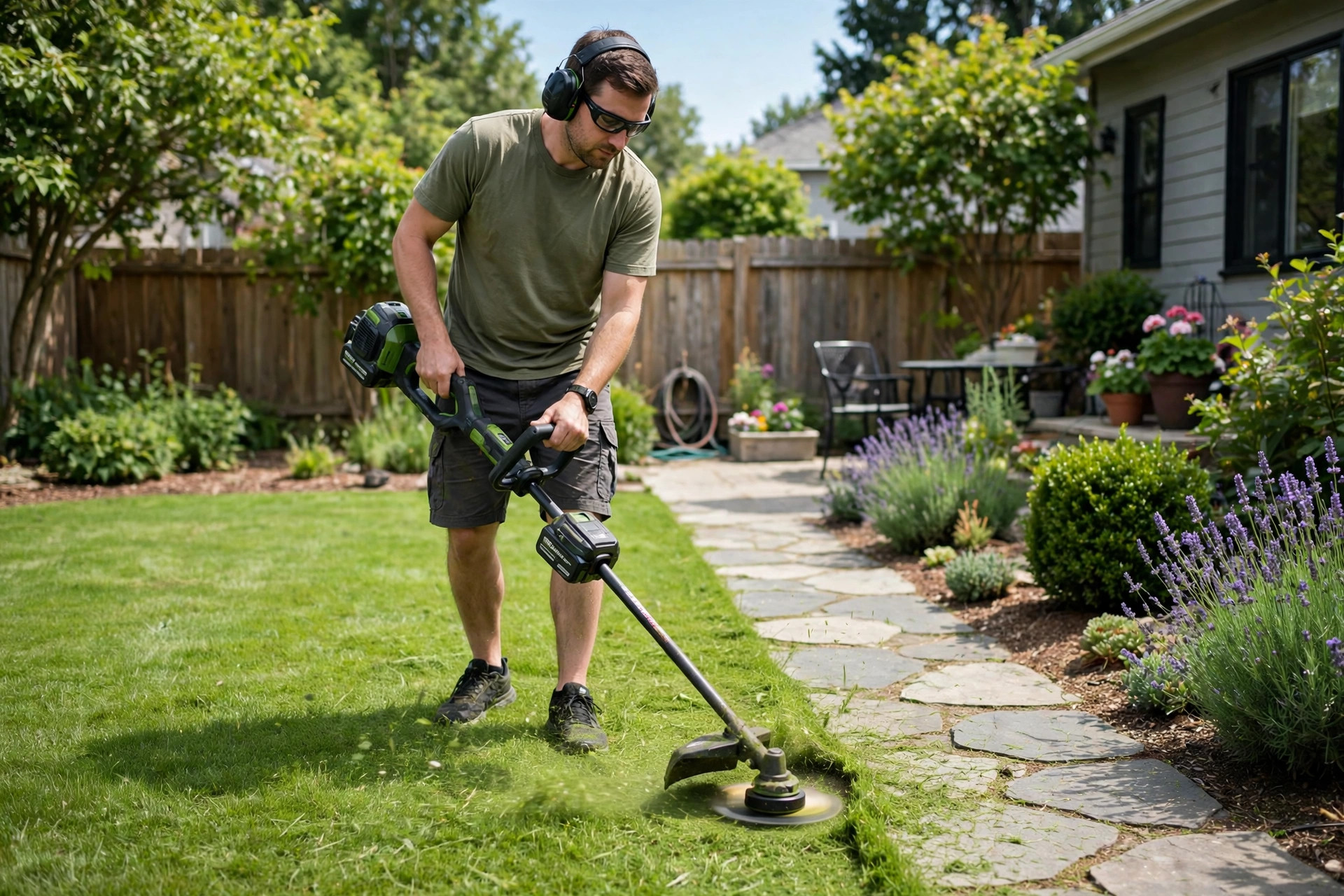
Picture your lawn neat and green, with crisp edges like a postcard scene. A lawn trimmer turns that picture into reality with very little effort. Have you ever wondered how to operate this handy garden tool?
Lawn trimmers first appeared in the early 1970s and quickly caught on. Since then, they have shaped neat lawns in yards around the world. Learning how to use a lawn trimmer is simple with the right steps. You switch it on, guide the head along the grass edge, and watch it cut.
This guide walks you through each step in plain, simple language. You will learn how to prep your yard, start the trimmer, and edge with care. By the end, you will feel ready to trim your own lawn with confidence.
Quick answer: Inspect your trimmer, put on safety gear, and clear the yard first. Start the engine, hold the head level, and sweep it away from your body. Cut tall grass from the top down, and never take more than one-third at once. Switch the trimmer off, clean the head, and store it in a dry place.
- I start by inspecting my lawn trimmer for any noticeable defects.
- Next, I ensure its strings are well attached and they have the required length.
- Putting on my protective gear, I power on the lawn trimmer.
- I then hold it parallel to the ground and start trimming away from my body.
- Lastly, I power it down and clean it well for next use.
- How to Use Lawn Trimmer: Beginner-Friendly Guide for Perfect Edges
- Know Your Tool Before You Trim
- Prep Your Yard and Gear Up
- Start the Trimmer the Right Way
- Trim the Edges With a Steady Hand
- Maintain and Clean Your Trimmer
- Edge a Lawn With a String Trimmer Like a Pro
- Frequently Asked Questions
- More Questions About Using a Lawn Trimmer
- Lawn Trimmer Care Questions
- Conclusion: How to Use Lawn Trimmer With Confidence
How to Use Lawn Trimmer: Beginner-Friendly Guide for Perfect Edges
Learning how to use a lawn trimmer brings real pride in a tidy yard. This guide suits beginners and also helps skilled users sharpen their technique. Follow each step, and you will soon cut crisp edges and clean lines.
Know Your Tool Before You Trim
Step-1: Familiarize with your tool
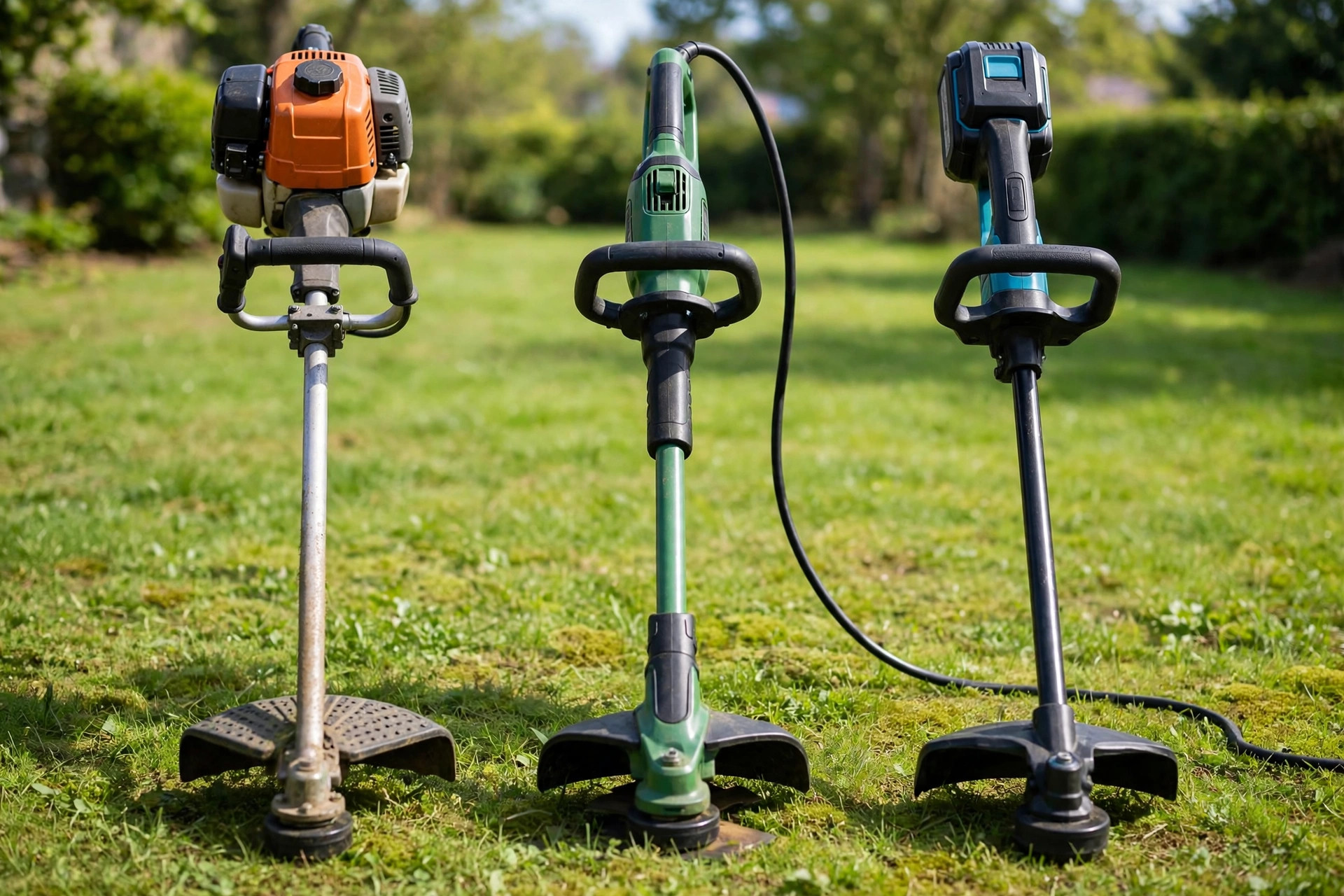
The first step is to get to know your own trimmer well. Modern trimmers come in various types, such as gas-powered, electric, and battery-operated. Gas models pack strong power and cover wide yards with ease. They are also lighter and produce less noise, making them suitable for residential areas.
| Trimmer Type | Best For | Keep in Mind |
|---|---|---|
| Gas-powered | Large yards and thick grass | Heavier, louder, needs fuel mix |
| Corded electric | Small yards near a power outlet | Cord limits your reach |
| Battery-powered | Quick jobs and quiet trimming | Charge the battery first |
Read the owner’s manual before you use your trimmer for the first time. It lists the safety rules and the steps for setup and use. It also covers the features that are unique to your model.
Learn your trimmer’s weight and the type of line it takes. Lines come in round, square, and multi-sided shapes for different jobs. Check the line thickness your model needs before you buy spares. Know the throttle, line spool, and cutting guard so you stay safe. Read our guide to the best lawn trimmer if you still need a model.
Prep Your Yard and Gear Up
Step-2: Prepping for the task
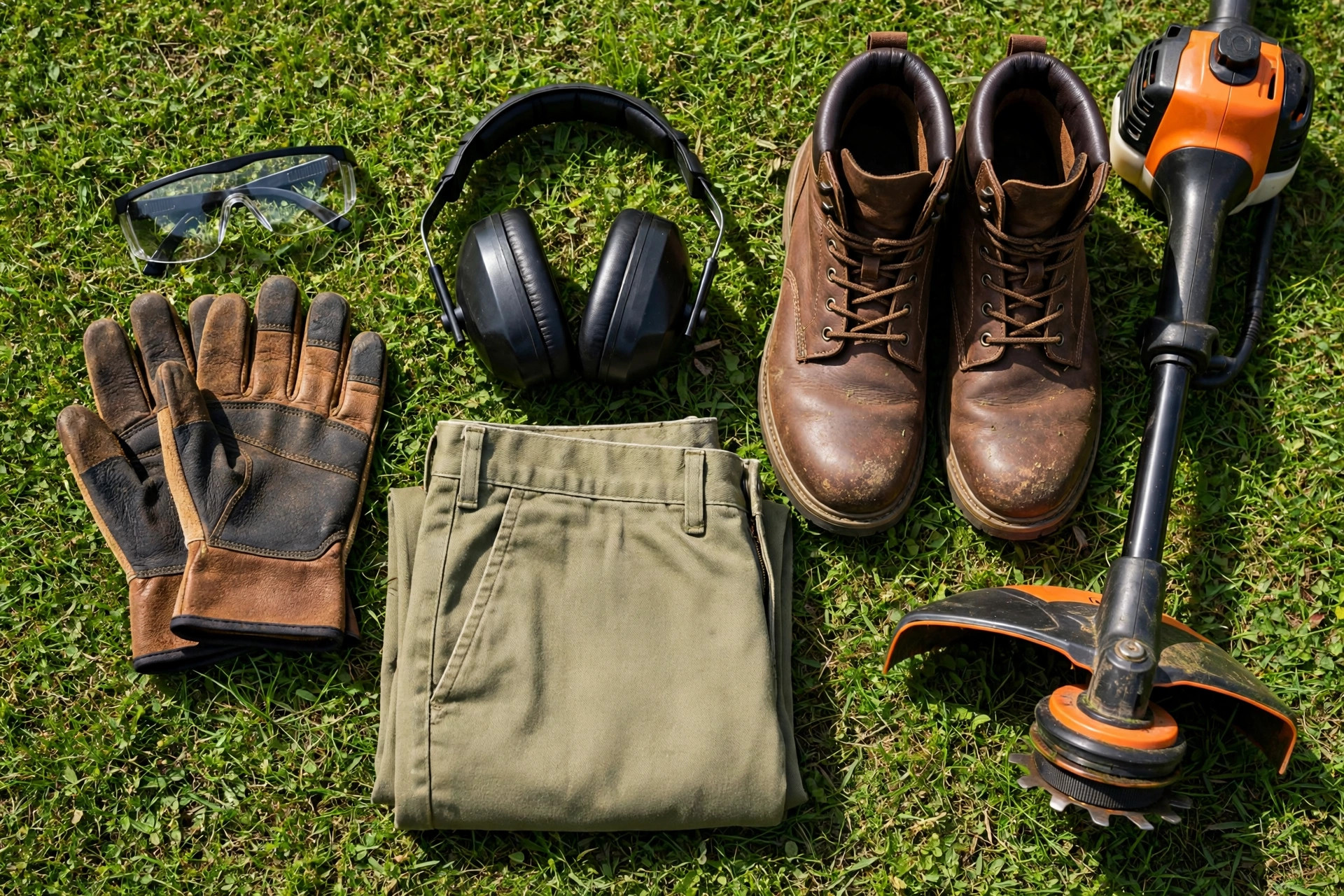
Clear stones, sticks, and large debris from the lawn before you start. Tightly fasten your extension cord if you’re using an electric trimmer. For safety measures, you should wear long pants, closed-toe shoes, and safety glasses. Gloves give you a firm grip, and ear protection helps with loud gas models. For more yard care tips, see the EPA lawn and garden guide.
Store the trimmer in a safe, dry place after each use. A dry spot shields it from rain, damp air, and rust. Good storage also keeps the tool ready for your next job.
Also, consider chalk marking or mentally planning your path before trimming. This prep helps you hold a steady trimming height across the lawn. It also stops you from cutting too short and stressing the grass.
Start the Trimmer the Right Way
Step-3: Starting the Trimmer
Starting the trimmer right is part of learning this skill. If you’re using a gas trimmer, ensure it’s filled with the right fuel mix. Set the choke to on before you pull the starter cord. Press the primer button a few times until you see fuel inside.
Set the trimmer on the ground and hold it steady with your foot. Pull the starter cord until the engine starts, then switch the choke off. For an electric trimmer, plug it into a power socket first. Switch it on, and it is ready for use. Our guide on how to start a lawn trimmer covers each model in detail.
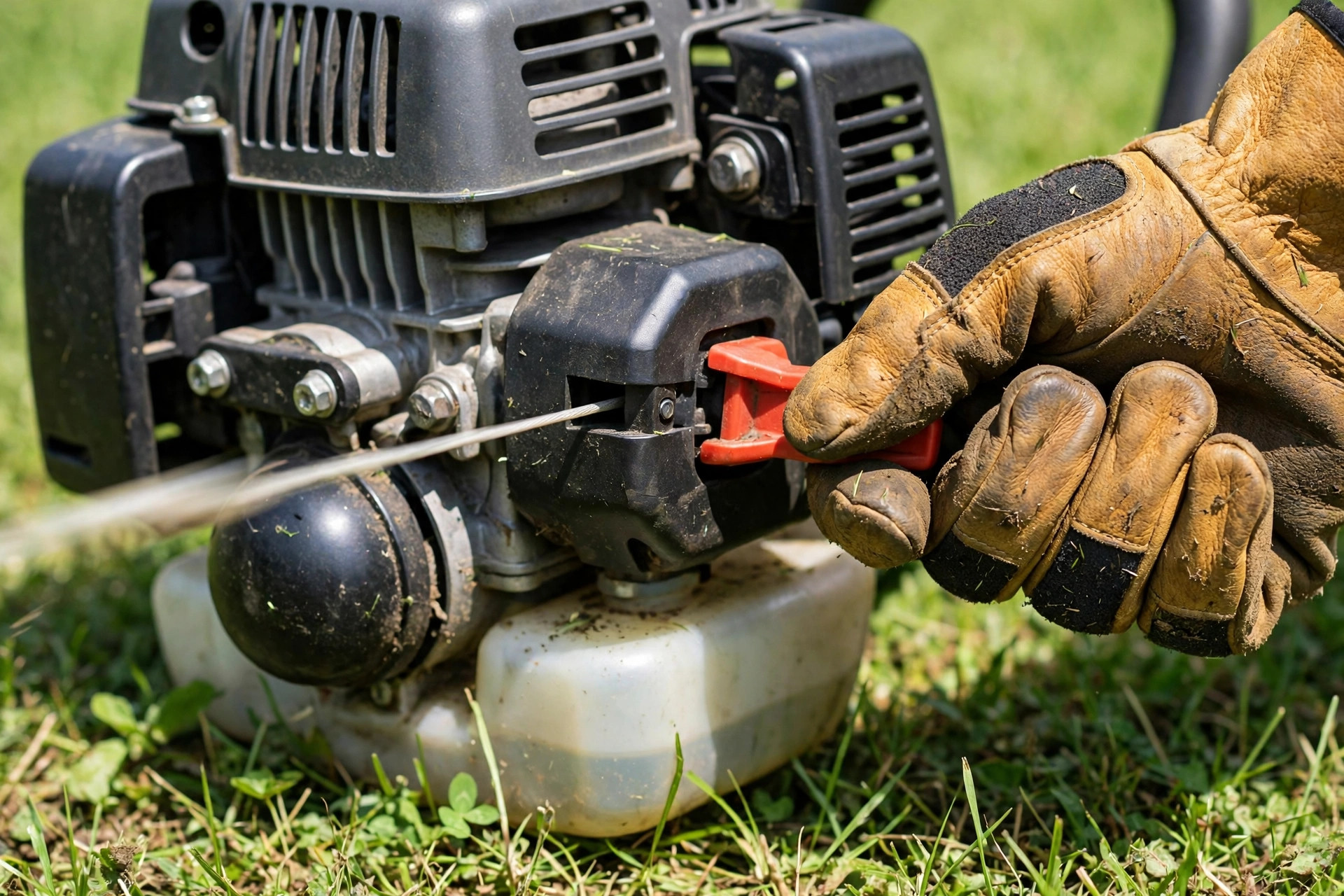
Hold the trimmer with both hands so you keep full control. Start the trimmer, letting it reach full speed before you begin trimming. Test your trimmer on a small patch before you tackle the whole lawn. A short trial run helps you learn how the tool feels in your hands.
Trim the Edges With a Steady Hand
Step-4: Trimming the Edges
A trimmer cuts the grass your mower cannot reach near fences and trees. It also cleans up the turf that grows along hard edges. When grass is tall or thick, cut from the top down first. This stops the line from binding and tangling in thick growth.
Along walkways and driveways, flip down the edge guard first. The guard keeps the line from wearing down too fast on concrete. The edge guard also protects from flying debris.
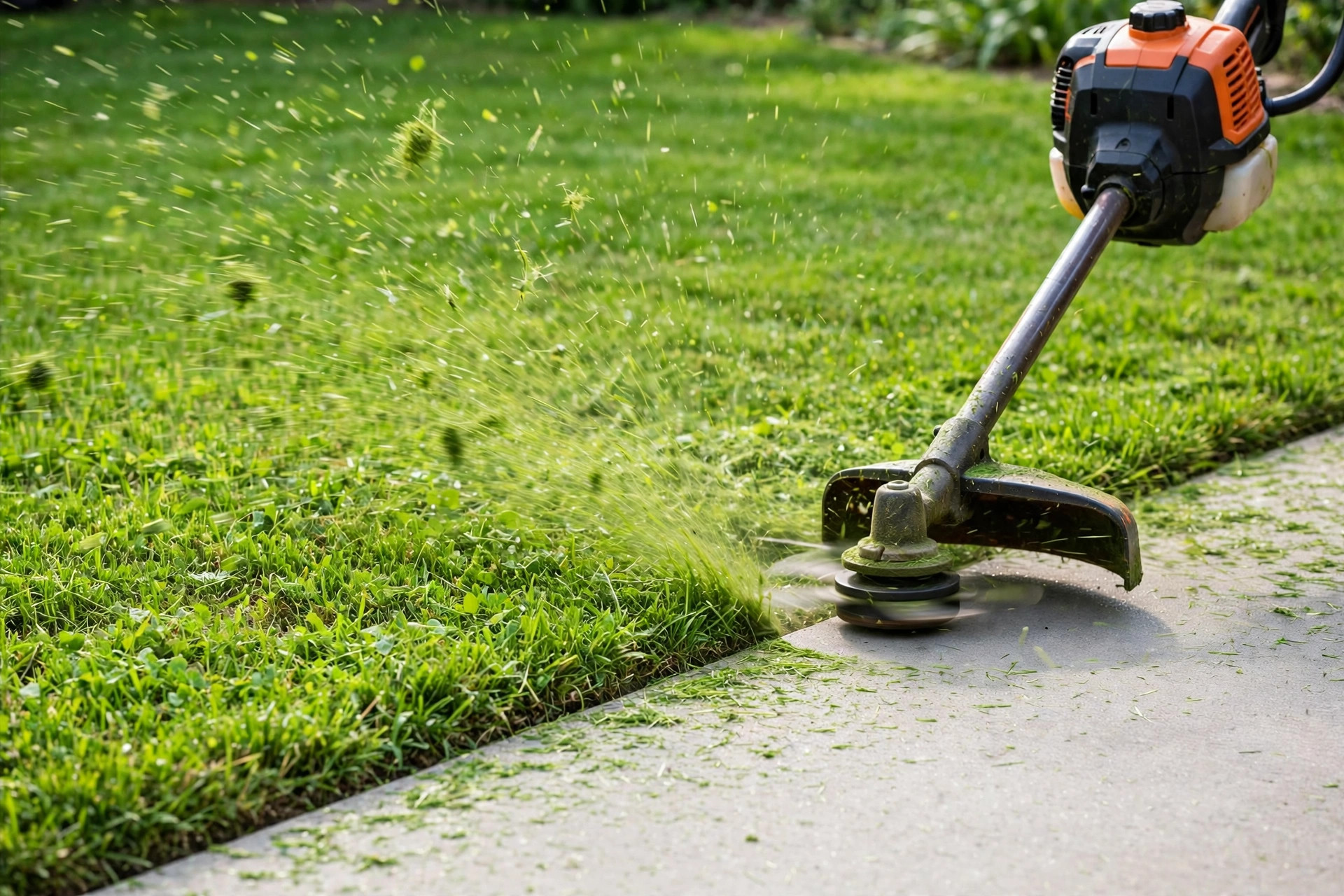
Sweep the trimmer head away from you in smooth, even strokes. This motion throws the cut grass away from your body. This method also gives you better control over your cutting path. Ryobi owners can read our guide to using a Ryobi lawn edger.
Ensure you maintain a consistent height to achieve a uniform look. Never cut more than one-third of the grass height at once. A deep cut can shock the grass and harm your lawn. If you own no trimmer, see how to trim a lawn without a trimmer.
Maintain and Clean Your Trimmer
Step-5: Maintenance and Cleanup
Maintaining your lawn trimmer will prolong its life and performance. Regularly check the trimmer line and replace it if worn or broken. Clear grass buildup from the cutting guard after each use. Keep all vents and filters free of dust and debris.
For a gas trimmer, check the spark plug and air filter often. Your manual shows how to swap lines and clean or change filters. After using the trimmer, clean up the trimmed clippings from your lawn and pathways. The cut grass can be composted, used as mulch, or disposed of as garden waste. When the line wears out, read our guide to restringing a lawn trimmer.
| Task | When to Do It | Why It Matters |
|---|---|---|
| Check the trimmer line | Before each use | A worn line cuts poorly |
| Clean the cutting guard | After each use | Built-up grass slows the head |
| Check the spark plug and filter | On gas models, each season | Clean parts keep the engine strong |
| Store in a dry place | After every job | Dry storage stops rust and damage |
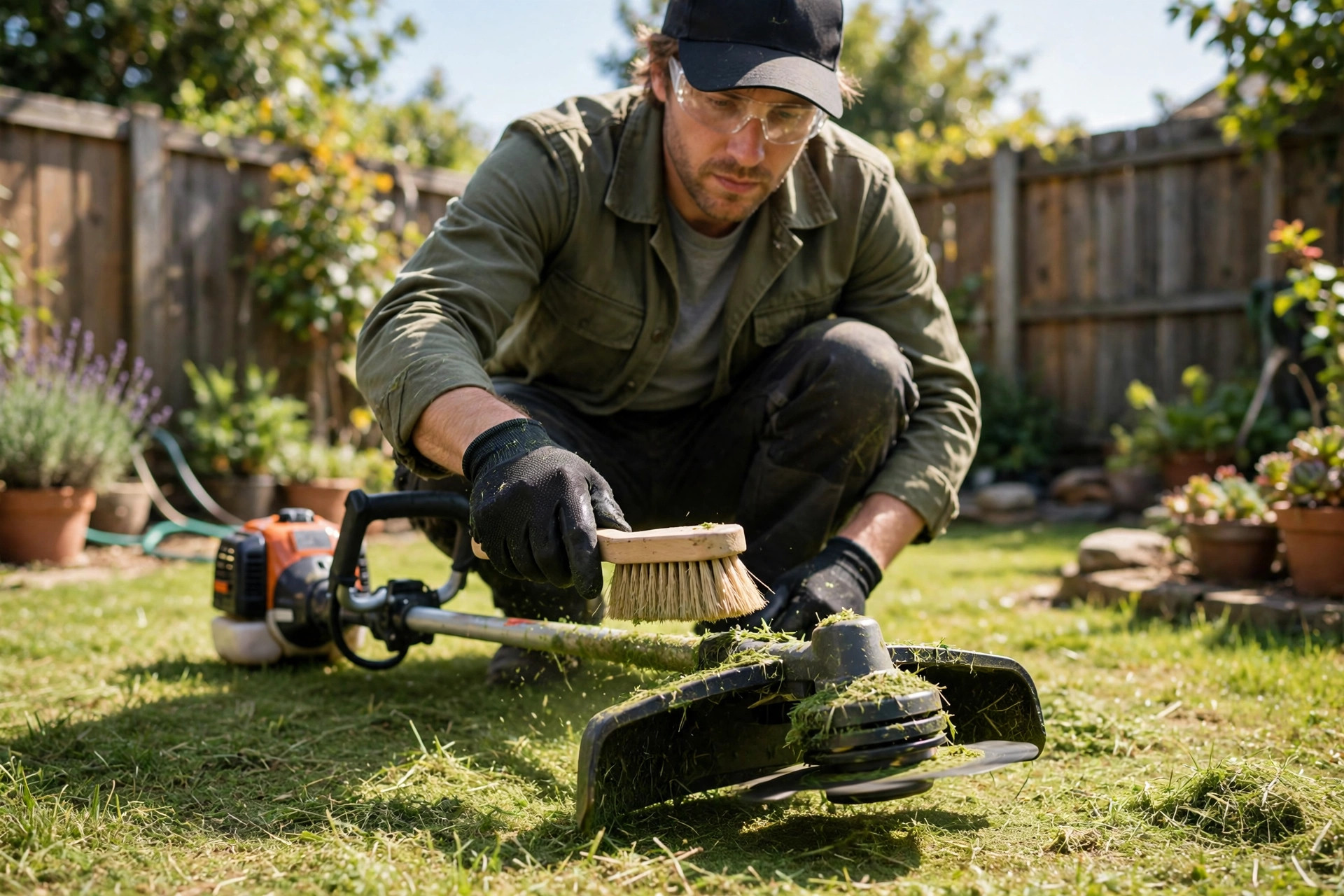
Always disconnect the trimmer from its power source before storing it. Keep the trimmer in a dry and secure location. Use a good cover to shield your trimmer from dust and moisture.
Learning how to use a lawn trimmer the right way lifts your whole lawn. Safe habits, neat edges, and steady care all shape the result. Good prep and regular practice make each job feel easier. This know-how, plus regular upkeep, keeps your trimmer running for years.
Edge a Lawn With a String Trimmer Like a Pro
Flip the edge guard down before you trim beside hard surfaces. Walk slowly and sweep the head away from your body. Cut tall grass from the top down so the line stays free. Hold a steady height, and your lawn edge will look sharp. A light cordless model makes long edging jobs far less tiring.
Frequently Asked Questions
Trimmers can be a handy tool to keep your lawn neat and trim. Still, you must use a lawn trimmer the right way for the best results. Here are some common questions, along with the answers, regarding lawn trimmer usage.
1. What safety measures should I take when using a lawn trimmer?
Safety comes first with any tool, and a lawn trimmer is no exception. Always wear your safety gear before you start the trimmer. That means safety glasses, long trousers, sturdy shoes, and gloves. Check the line and guard, and keep the spinning line away from people and pets.
2. How should I start a lawn trimmer?
Starting a lawn trimmer can feel scary the first time you try it. Still, the steps stay simple once you know the order. First, set the switch to off, then fuel a gas model or charge the battery. Set it on flat ground, then prime the engine and pull the cord. For an electric model, just flick the switch on and go.
More Questions About Using a Lawn Trimmer
3. What is the correct way to hold and operate a lawn trimmer?
A good grip makes grass cutting far easier and more exact. Hold the trimmer with both hands and grip the handles firmly. Right-handed users keep the right hand on the throttle control. Left-handed users do the reverse with the left hand. Stand straight and walk so clippings land on the grass you already cut.
4. How often should the spool line be refilled in a lawn trimmer?
Spool line life depends on how often and how hard you trim. If the trimmer cuts poorly or the line stops feeding, refill the spool. Your manual gives clear steps for each line change. Most owners refill the line every couple of months in the growing season.
Lawn Trimmer Care Questions
5. How should I maintain my lawn trimmer?
Good care makes your trimmer last longer and work better. For gas models, check the fuel, spark plug, and air filter often. Clear the carburetor and exhaust outlets from time to time. For electric models, check the cord for damage and store the battery right. Clean the head and spool, oil moving parts, and swap worn parts on time.
Conclusion: How to Use Lawn Trimmer With Confidence
You now know the key steps for safe, neat trimming. Wear your gear, hold the trimmer at the right angle, and check it often. Clear trapped grass from the head so each cut stays clean. These habits will keep your lawn looking its best all season.
Still, trimming is only one part of good lawn care. Water, feed, and mow on a steady plan to keep grass green. With steady care, your yard can stand out on the whole street. For model help, the STIHL website lists guides for gas and battery trimmers.

I’m Patricia D. Johnson, an affiliate marketer and blogger specializing in trimmers and grooming tools. I create honest reviews, buying guides, and practical tips to help readers choose the right trimmer for their needs. With a focus on quality, performance, and value, I simplify the decision-making process so consumers can make confident purchases.