How Deep Does a Lawn Edger Cut?
Gardeners often ask how deep does a lawn edger cut. This guide gives a typical two to three inches. That depth creates a clean and defined edge. It separates the lawn from beds and walkways.
Edging keeps a lawn looking manicured and polished. It stops grass from creeping onto other surfaces. The right depth protects turf and soil alike. Too deep creates mess, too shallow misses roots.
This guide covers factors, depths and technique below. Our edger uses guide explains the tool’s main jobs. Landscape features also change the safest depth choice. Short answers at the end settle common questions.
Quick answer: Most edgers cut two to three inches deep. This guide recommends about one inch below soil. Grass type changes the ideal depth setting greatly. Blade, power and adjustment features matter too here. Landscape features also shape the safest working depth.
How Deep Does a Lawn Edger Cut? The Short Answer
A lawn edger typically cuts two to three inches. That depth creates a clean, defined lawn edge. It separates lawn from beds and walkways neatly. Edging also stops grass creeping onto hard surfaces.
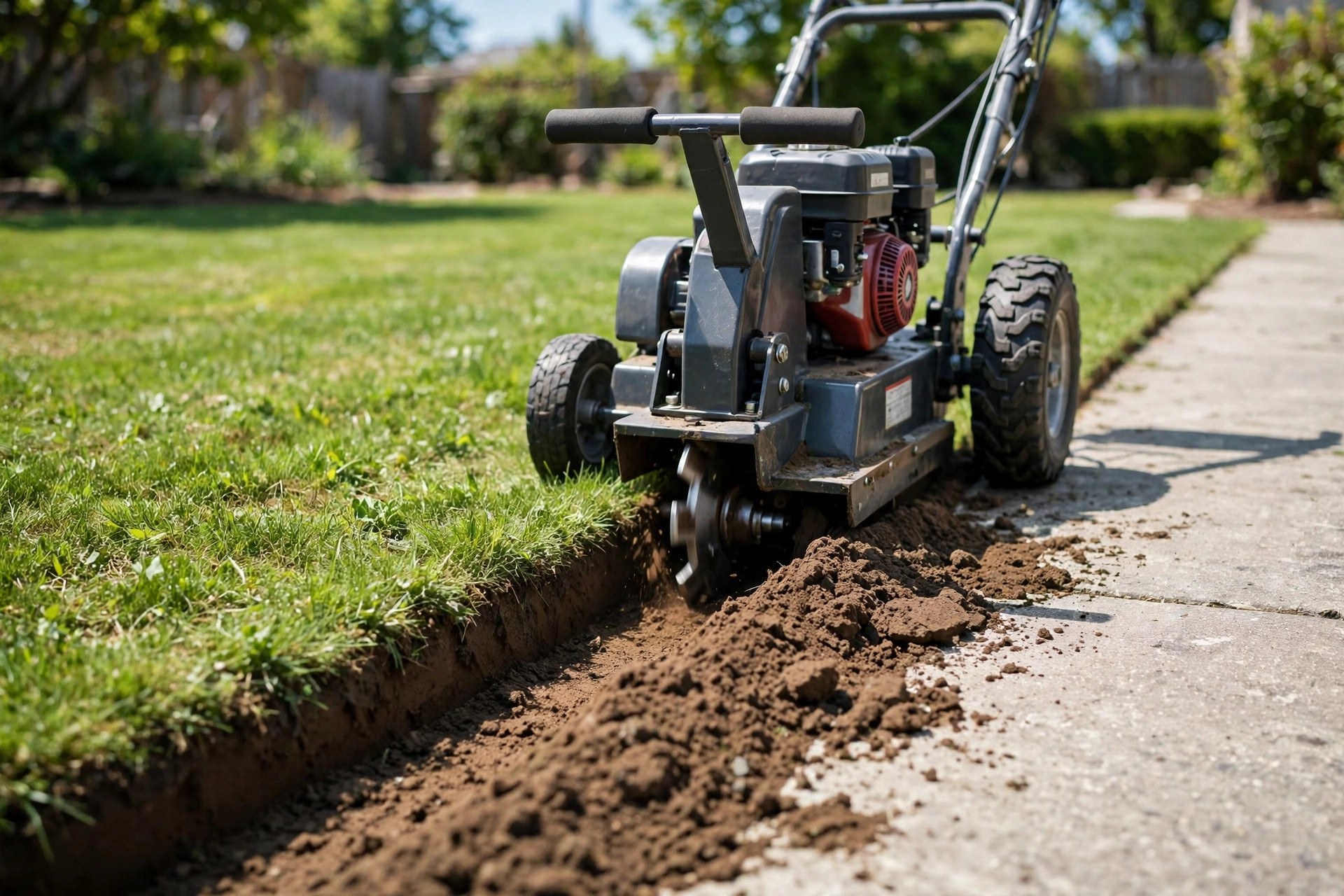
The blade spins vertically into grass and soil. A metal or plastic wheel guides some models. The cut runs straight down beside the pavement. Our trimmer edging guide compares tool choices here.
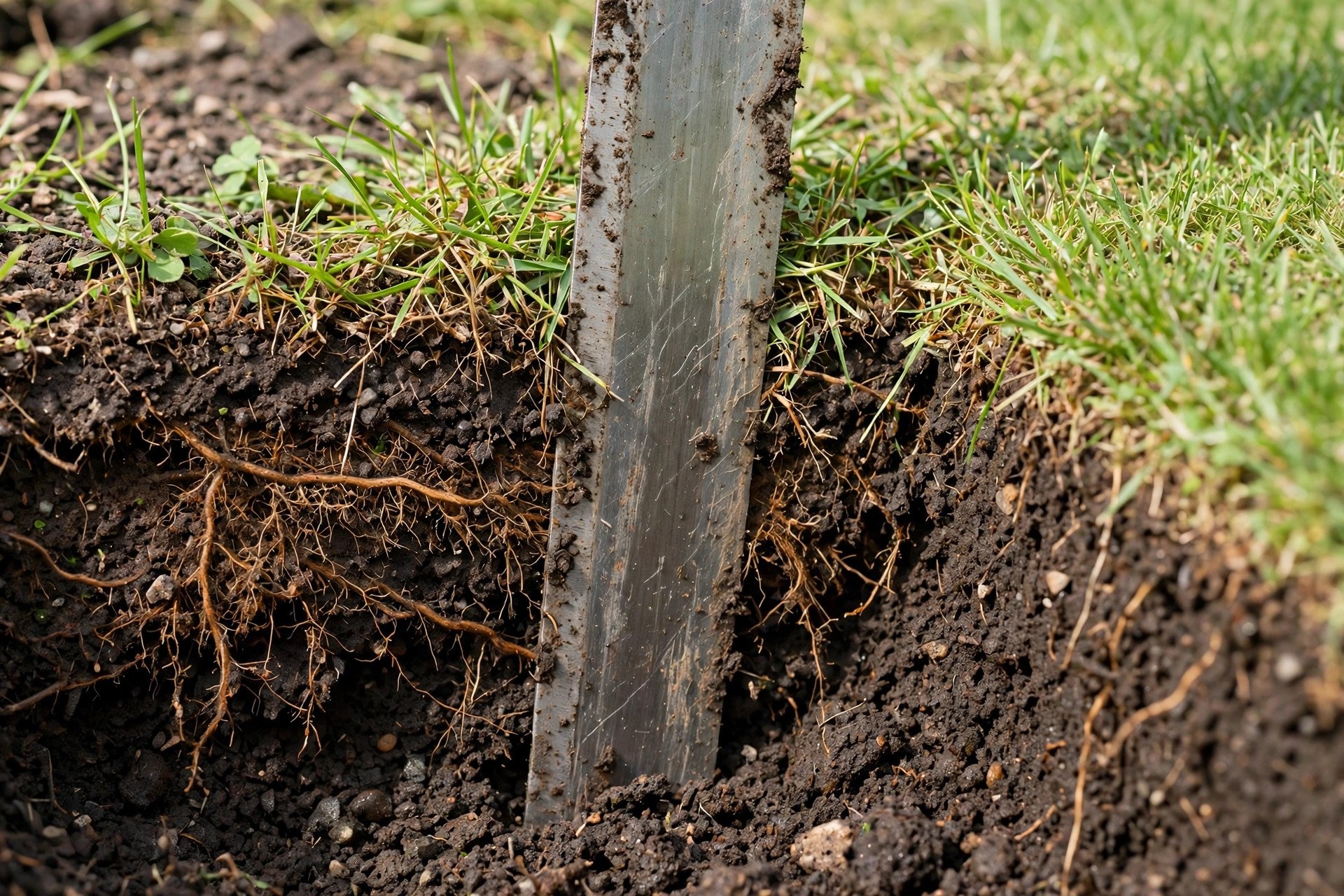
Most guidance targets an inch below soil level. That passes through grass and the thatch layer. Going deeper usually creates unnecessary mess instead. Our edging technique guide shows the motion involved.
What Decides the Cutting Depth
Blade size and shape strongly influence cutting depth. Different blade designs suit different target depths best. Power source changes cutting strength and consistency too. Adjustment features let users customize depth precisely.
| Factor | Guide’s Point |
|---|---|
| Blade size and shape | Blade design directly sets achievable cutting depth |
| Power source | Electric and gas models cut deeper, cleaner |
| Adjustable depth | Most modern edgers offer adjustable depth settings |
Electric and gas edgers offer more cutting power. Manual and battery models usually cut shallower overall. A steady power source keeps depth consistent throughout. Our buying guide compares edger types before purchase.
Maker pages like STIHL USA publish edger depth guidance. Always follow your own model manual first though. Settings differ between brands and blade designs sold.
Recommended Depths by Grass Type
Grass type changes the recommended depth setting noticeably. Root structure and growth habit drive the differences. The table below repeats this guide’s own figures.
| Grass Type | Optimal Cutting Depth |
|---|---|
| Bermuda Grass | 1-1.5 inches |
| St. Augustine Grass | 1-2 inches |
| Zoysia Grass | 0.5-1 inch |
| Fescue Grass | 2-3 inches |
| Kentucky Bluegrass | 1.5-2 inches |
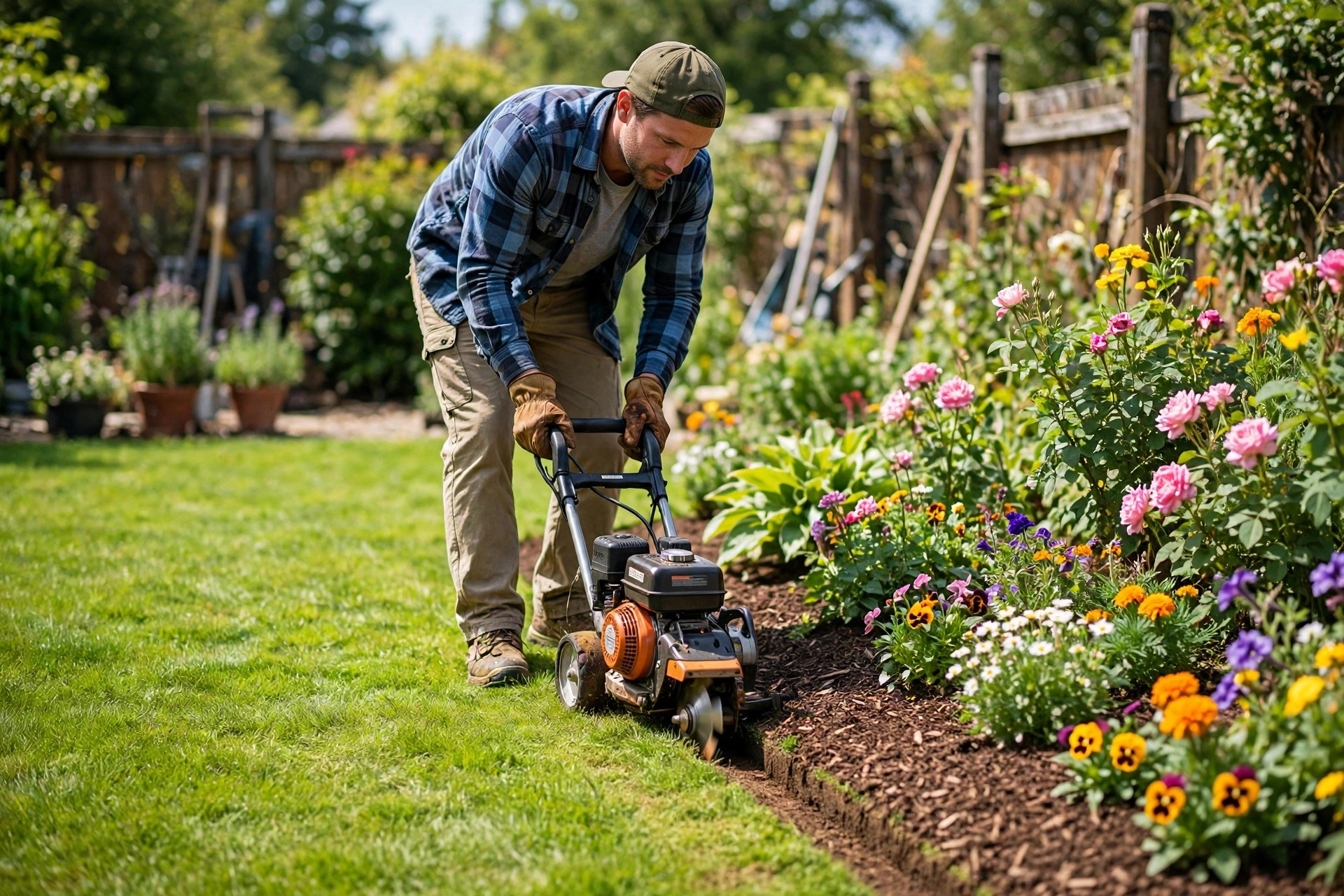
Slopes and uneven ground call for shallower cuts. Tree roots and rocks demand careful depth reductions. Flower beds nearby also favor a shallower setting. Shallower cuts reduce scalping and blade damage risks.
Please note: This guide gives two depth figures overall. Its opening says typically two to three inches. Its advice sections repeat about one inch instead. Both figures stay printed in this guide unchanged. Follow the one inch guidance for everyday edging.
Tips for Holding the Right Depth
Mow the grass shorter than usual before edging. Clear sticks and rocks from the work area. Mark the edge with string or marking tools. A marked line keeps cutting depth consistent everywhere. Store the edger somewhere dry and secure.
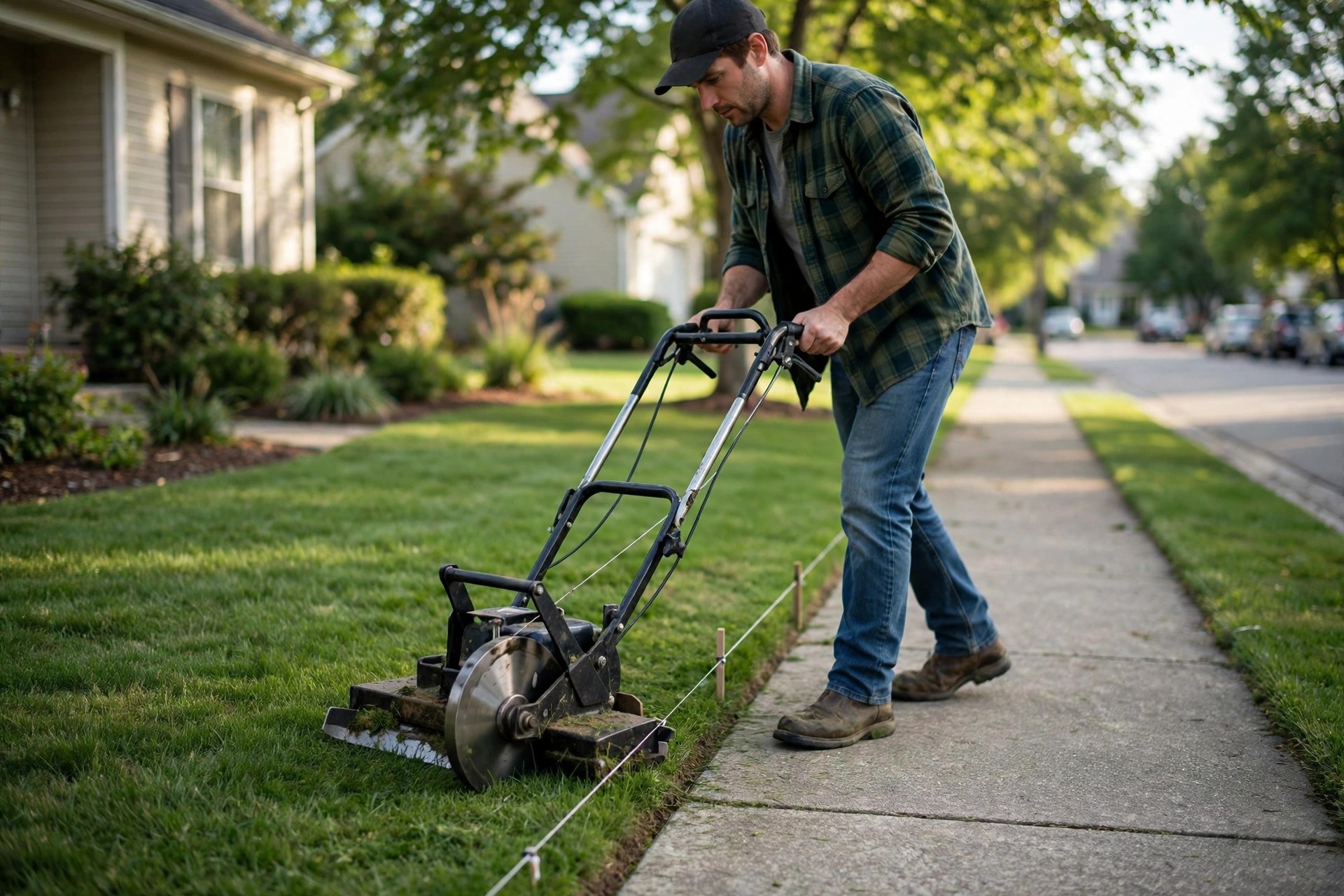
Stand with feet apart and grip it firmly. Keep your elbows slightly bent for better control. Start at a slight angle towards the lawn. Push forward smoothly and walk at steady pace. Overlap each cut slightly with the previous one.
Sharpen the blade regularly to maintain cutting performance. Check the depth adjustment mechanism works properly always. Clean dirt and debris after every use carefully. Lubricate moving parts to prevent rust forming later. Our sharpening guide explains safe blade sharpening fully.


Frequently Asked Questions
These answers repeat this guide’s own figures only. They follow the same guidance explained above closely. Short answers close the guide at the end.
How deep should the edge of a lawn be?
About one inch below the soil top works. That depth cuts grass and thatch layer cleanly. It avoids creating a mess along the edge.
How deep does edging need to be to stop grass?
Set the edge about an inch below surface. The blade cuts grass and thatch layer effectively. Going deeper may create unnecessary mess instead overall.
How do you adjust edger depth?
Locate the depth adjustment knob or lever first. Turn or move it to your desired setting. Test the edger on a small area next. Adjust further until the depth looks correct everywhere. Tighten the knob or lever to lock it.
What is the best height for lawn edging?
About an inch below the soil top again. That depth passes through grass and thatch cleanly. It avoids making a mess of the edge.
Conclusion: How Deep Does a Lawn Edger Cut
So, how deep does a lawn edger cut typically? Most guidance settles near an inch below soil. Headline figures reach two to three inches instead. Blade sharpness and edger type shift results slightly. Personal preference also plays a real part here.
Set the depth before you start each session. Test a small patch before committing fully outside. Keep the blade sharp and the mechanism clean. Consistent depth keeps edges crisp all season long. Our blade care guide keeps the blade ready.