Can You Use a Hedge Trimmer in the Rain? Safety Guide
Rain can catch you mid-trim with wet hedges all around. You may ask, can you use a hedge trimmer in the rain safely? The short answer is no, so put the tool down. This guide shows the risks and the safer plan instead.
Wet leaves and slick ground make trimming hard and risky. Electric trimmers add a shock risk when water meets power. Battery models also suffer when rain soaks the motor and pack. The tables below show each risk and its safe fix.
Waiting for dry weather gives the cleanest and safest trim. You will learn the dangers, the tool damage, and the myths. The guide also covers dry-day plans and pro help options. Read on to keep your hedges neat and yourself safe.
Quick answer: No, never trim hedges in the rain. Wait for a dry day with dry leaves and firm ground. Wet hedges raise the shock risk and blur your view. Rain also clogs blades and strains the motor and battery. Clean and dry the trimmer after each use for long life.
- Can You Use a Hedge Trimmer in the Rain? Key Points
- The Dangers of Using a Hedge Trimmer in the Rain
- Damage to the Tool and Your Hedges
- Safety Tips for Wet Weather
- Safer Alternatives for Wet Hedges
- Myths About Hedge Trimmers and Rain
- Frequently Asked Questions
- Conclusion: Can You Use a Hedge Trimmer in the Rain?
Can You Use a Hedge Trimmer in the Rain? Key Points
Rain showers can catch you off guard while you trim hedges. Wet leaves and a slick surface make the job hard to control. Power tools and water form a risky mix for any user. Wait for dry weather to trim with care and ease.
The Short Answer
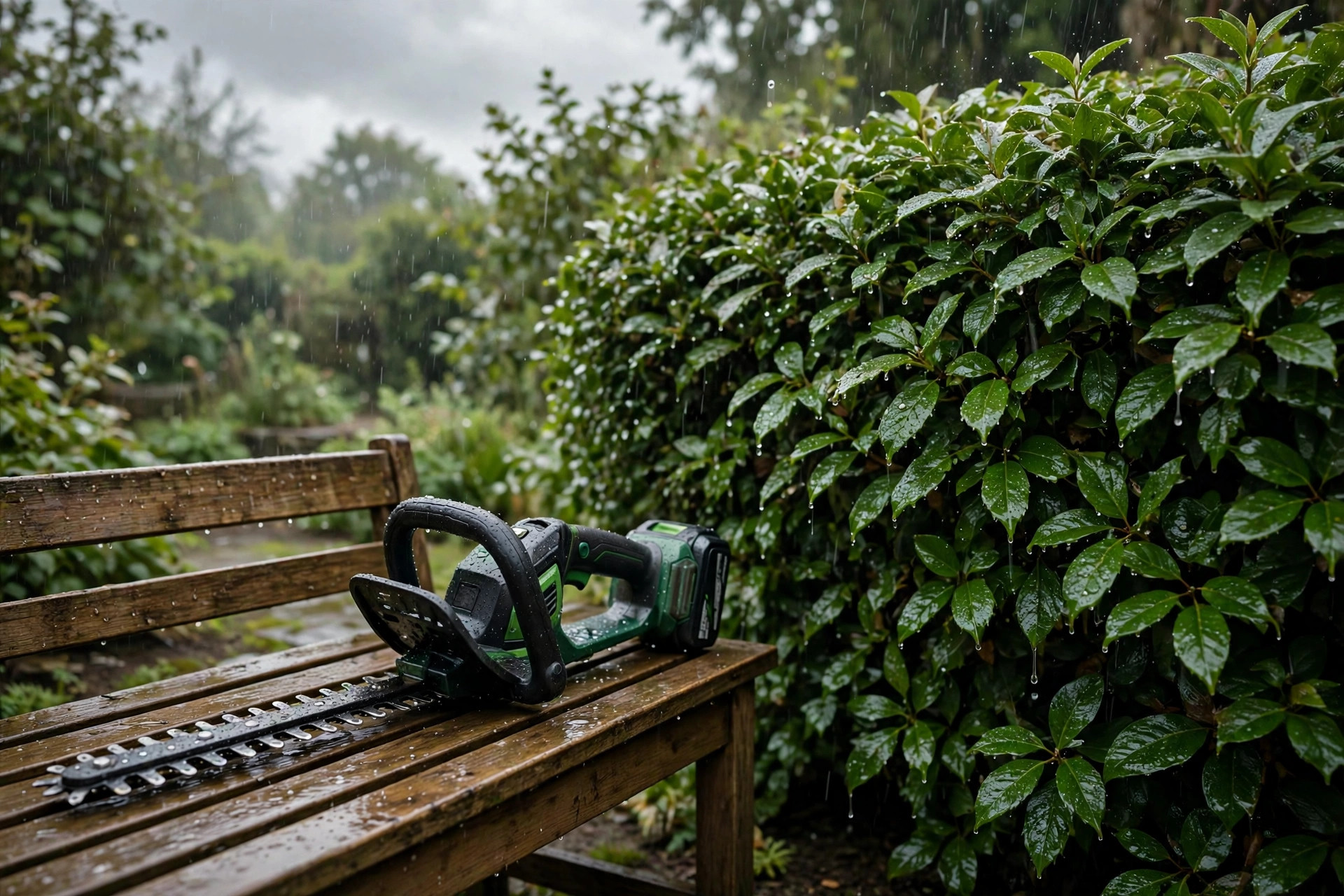
No, do not use a hedge trimmer in the rain at all. Wet ground raises the shock risk for electric models fast. Rain also blurs your view and makes cuts uneven and rough. Our guide to what a hedge trimmer is covers the tool basics.
The Dangers of Using a Hedge Trimmer in the Rain
Rain brings two big dangers that every trimmer user must know. The table below lists each risk and what it does to you. Both risks grow worse the longer you work in wet weather. Stop and wait for dry skies before you trim again.
| Risk | What Happens |
|---|---|
| Electric shock | Water lifts current flow and can shock the user |
| Slips and falls | Wet ground steals grip and balance fast |
| Poor control | Rain blurs sight and makes cuts uneven |
| Heavy wet leaves | Wet growth strains the motor and your arms |
Risk of Electric Shock
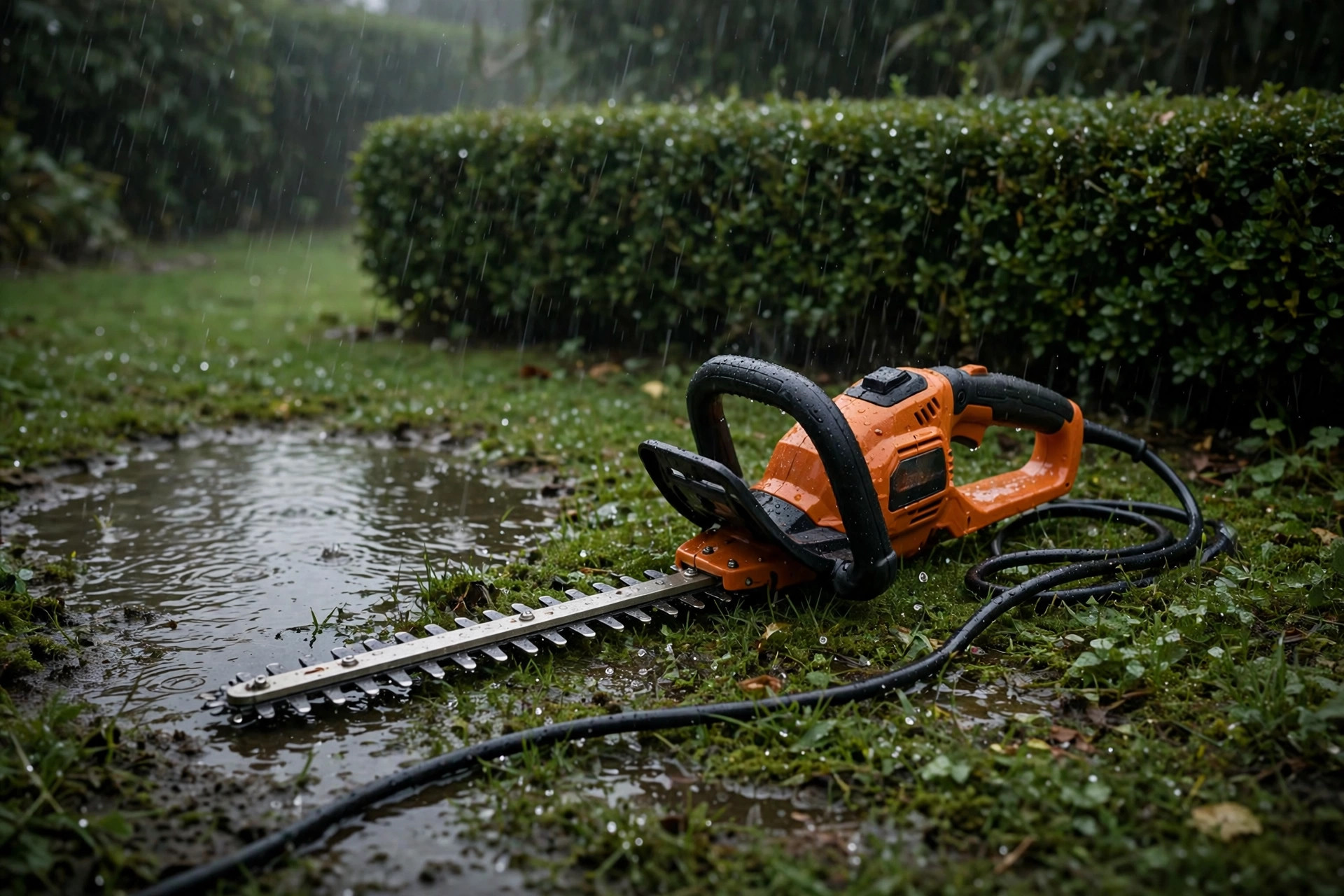
Electric hedge trimmers pose a grave shock risk in rain. Wet ground lifts the flow of current through your body fast. One bad contact can cause severe harm or even death. Never run a corded trimmer in rain or on wet ground.
Decreased Visibility and Control
Rainwater can blur your sight and hide the branch lines. You may cut uneven lines or harm the hedge by mistake. Wet ground also steals your grip and your balance fast. Our cordless trimmer guide shows safe use for these tools.
Damage to the Tool and Your Hedges
Rain can harm both the trimmer and the hedge you shape. The table below shows which parts take the worst hit. Wet cuts also leave a messy hedge that needs more work. Dry weather saves the tool and gives a neater trim.
| Part | Rain Effect |
|---|---|
| Motor | Water seeps in and can cause faults or full failure |
| Battery | Damp cuts charge life and can cause short circuits |
| Blades | Wet leaves clog teeth and leave uneven cuts |
| Hedge | Wet cuts tear stems and can spread disease |
Impact on Motor and Battery
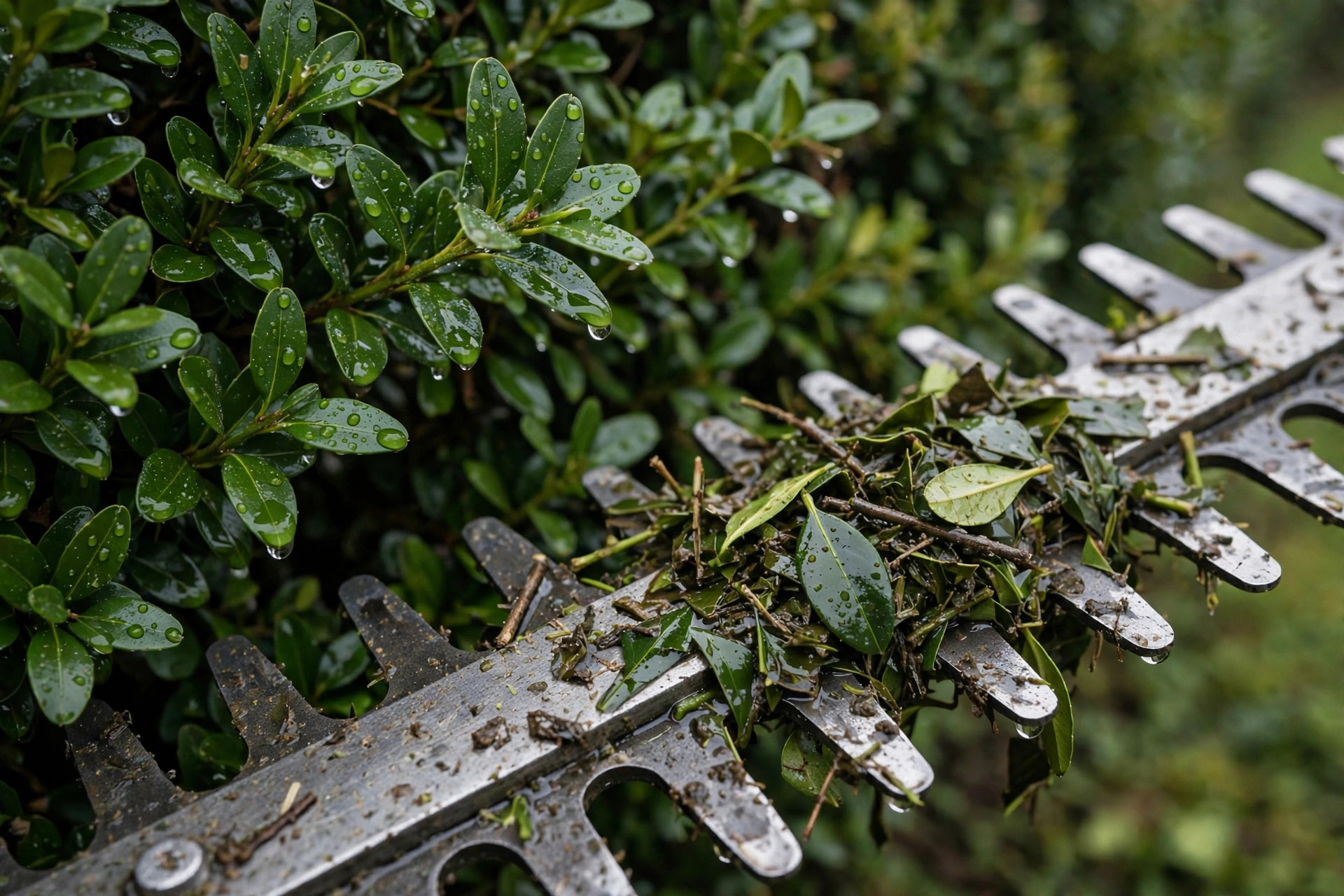
Rainwater can seep into the motor housing with ease. Damp parts can fail, lose power, or stop for good. Wet cells also lose charge fast and may short out. Our cordless trimmer not working guide covers battery faults.
Risks of Wet Hedge Cutting
Wet leaves clog the blades and slow each cut down. Clogged teeth leave ragged edges on your hedge lines. Slick ground also lifts the chance of slips and falls. Wait till the hedge and the ground feel fully dry.
Safety Tips for Wet Weather
The best safety rule is simple: do not trim in rain. Check the forecast and plan your trim for a dry day. Keep pets and kids far from the work zone at all times. The steps below keep you and your tool safe each time.
| Step | What to Do |
|---|---|
| Check forecast | Plan trims for dry days with no rain ahead |
| Wait for dry ground | Trim only when leaves and soil feel dry |
| Inspect the tool | Check cord, blades, and grips before each use |
| Store it dry | Clean the trimmer and store it in a dry place |

Avoiding Wet Conditions
Skip trimming during rain and right after heavy showers. Wet leaves and slick ground make the job unsafe fast. A dry day gives a firm grip and a clear view. Our guide on trimmers that keep cutting out covers more faults.
Proper Equipment Maintenance
Check the cord, blades, and grips before each use. Fix any wear or harm at once to stay safe. Clean and dry the trimmer after each use as well. Our oiling guide shows how to keep blades in top shape.
Safer Alternatives for Wet Hedges
Wet hedges still need care, but the trimmer must wait. Two safe paths cover your hedges till the sun returns. Patience gives a neater trim and a safer work day. Pick the path that fits your yard and your time.
Wait for Dry Weather
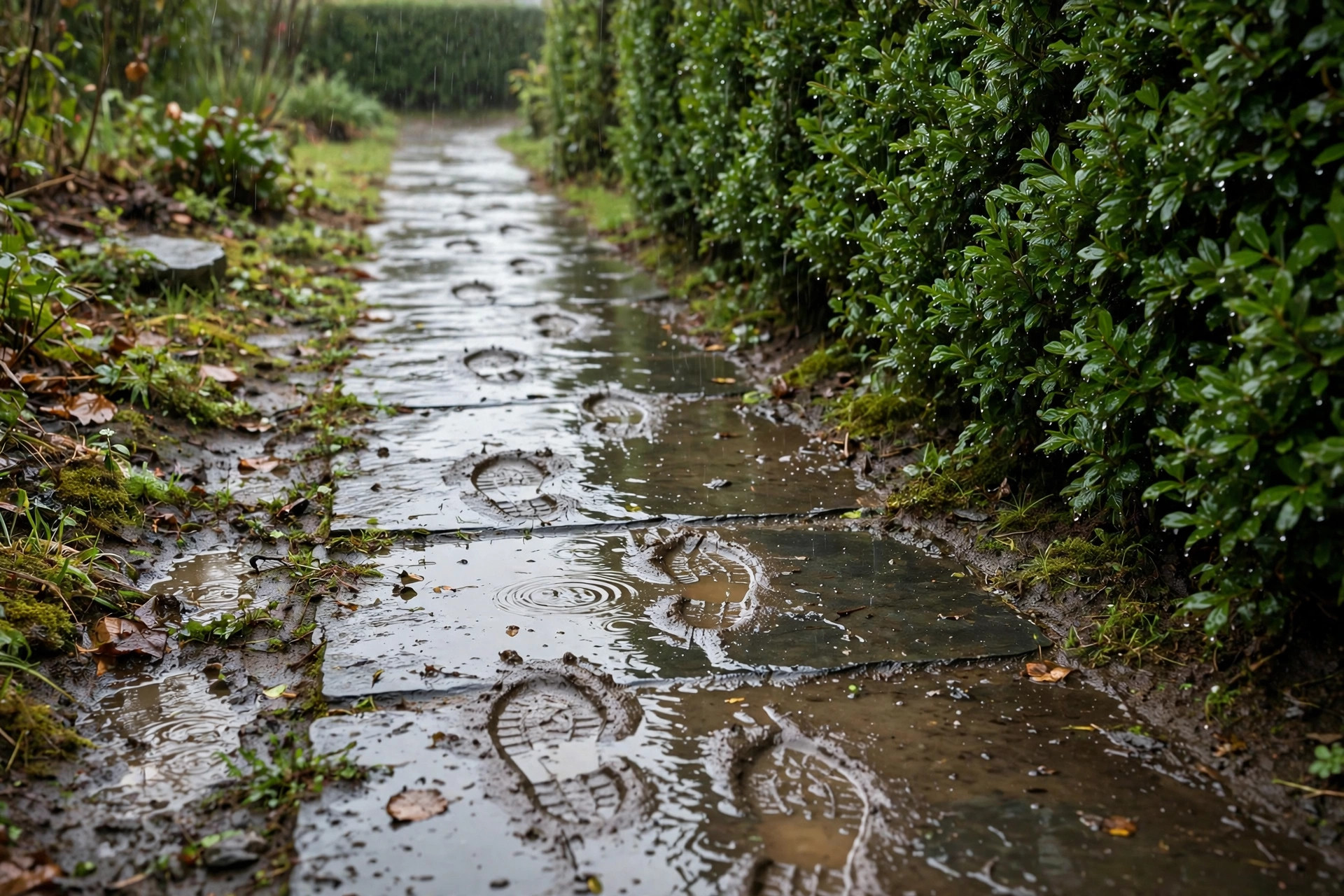
Waiting for dry weather is the wisest choice by far. Dry leaves cut clean and the ground stays firm below. Check the forecast and plan your trim for a dry slot. A short wait beats a risky trim in the rain.
Consider Professional Services
Pros can handle wet hedges with the right gear and skill. Hire a pro when rain drags on for days at a time. Their tools and know-how keep the job safe and neat. Our repair guide covers more care for hedge trimmer parts.
Myths About Hedge Trimmers and Rain
Many myths claim rain trimming is safe or even smart. The facts below clear up the most common false claims. Safety must win over speed on every wet day. Share these facts with friends who trim in rain.
Addressing Misconceptions
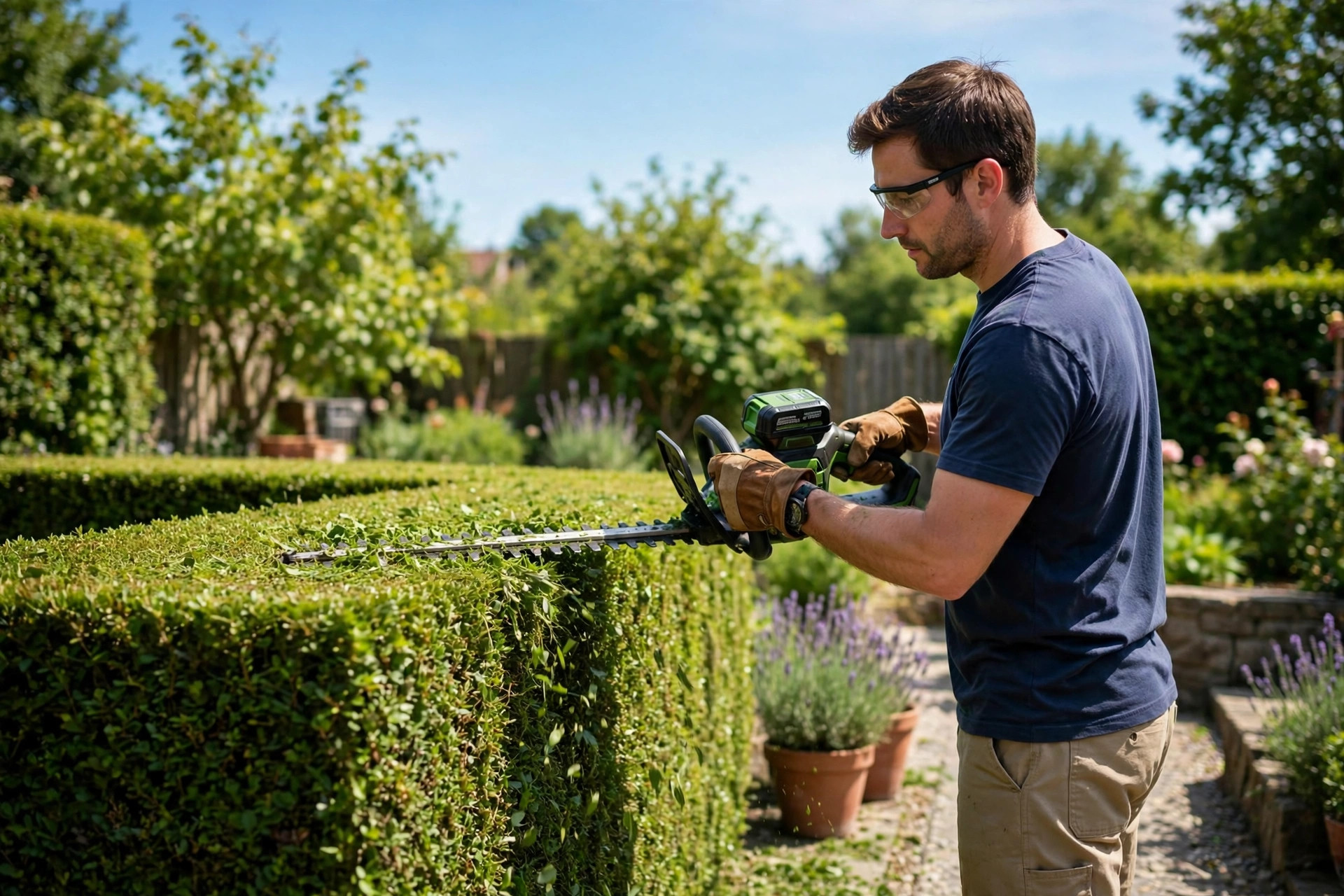
Some folks think battery trimmers are safe in rain. Battery packs still suffer when rain soaks the tool. Wet leaves also add weight and strain the motor hard. No trimmer type is safe to run in the rain.
Clarifying Safety Concerns
Wet growth can make blades clog and motors overheat fast. Electric models add a shock risk on top of the rest. For urgent jobs in rain, hire pros with proper gear. Our cable fix guide shows more care for trimmer parts. The Wikipedia page on hedge trimmers explains how these tools work.
Frequently Asked Questions
Can you use hedge trimmers on wet hedges?
No, avoid hedge trimmers on wet hedges for safety reasons. Wet leaves and slick ground make the job hard to control. Wait for a dry day to trim your hedges with care. Dry cuts stay neat and keep you safe as well.
Is it OK to trim hedges when they are wet?
No, wait for dry weather before you trim your hedges. Wet leaves and slick ground pose risks with heavy tools. Dry hedges cut clean and keep the trimmer safe too. Plan your trim for a dry slot in the week.
When should you not use a hedge trimmer?
Avoid a hedge trimmer in wet or damp weather at all times. Wet leaves and slick ground make the job hard to control. Wait for a dry day for safe and neat trimming work. Check the forecast before you plan your trim.
Can you use a battery strimmer in the rain?
No, avoid a battery strimmer in the rain as well. Wet weather strains the motor and shortens its life fast. Wait for a dry day to use your garden tools safely. Dry work keeps the pack and motor in good shape.
What should I do if my trimmer gets wet?
Wipe the trimmer dry with a clean cloth at once. Clean the blades and check the cord for harm too. Store the tool in a dry place till next use. Oil the blades lightly to stop rust from forming.
Conclusion: Can You Use a Hedge Trimmer in the Rain?
So, can you use a hedge trimmer in the rain at all? No, wet hedges and power tools mix badly for all users. Rain lifts the shock risk and blurs your view fast. It also clogs blades and strains the motor and pack.
Wait for a dry day to trim with care and ease. Clean and dry the tool after each use as well. Hire a pro when rain drags on for days at a time. Your hedges will stay neat and tidy all season long.
