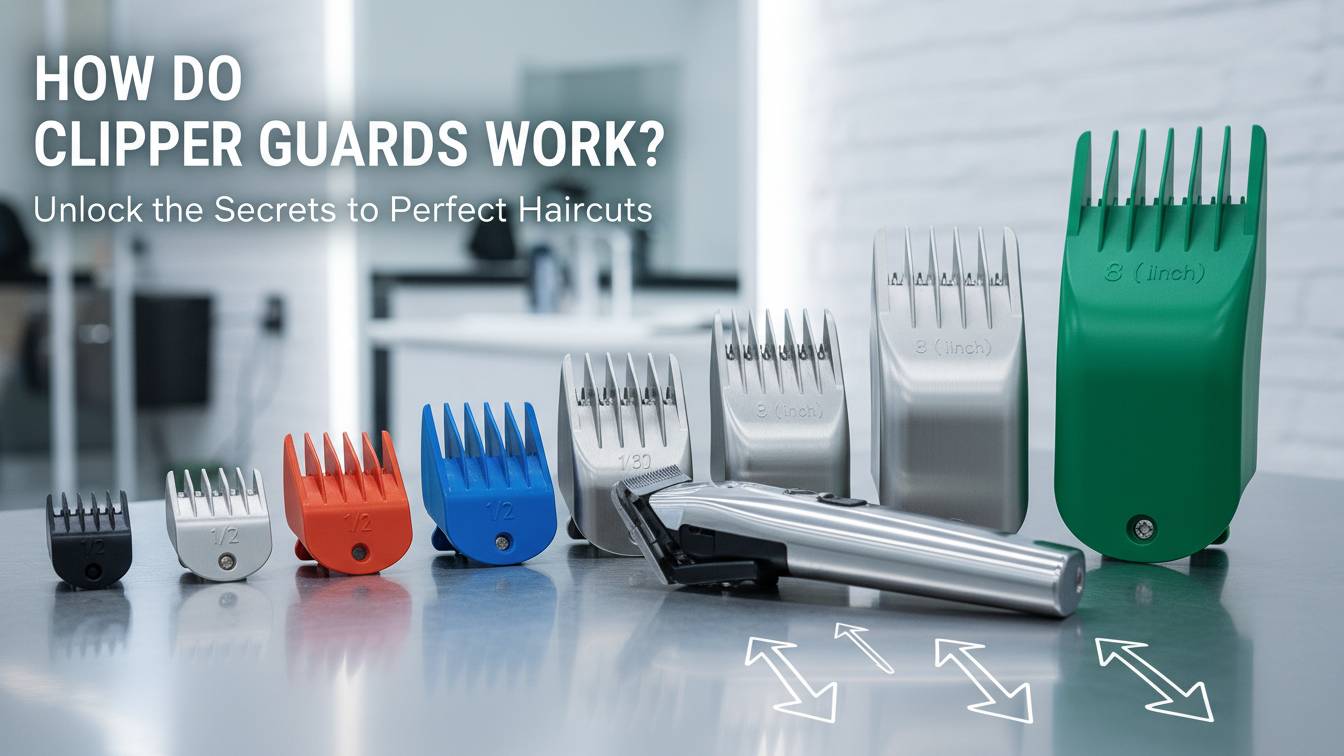

Have you ever looked at a pair of hair clippers and wondered about those plastic pieces? Those are called clipper guards. If you want to cut your own hair or someone else’s, you need to know how do clipper guards work to get the job done right.
In simple terms, a clipper guard is like a shield. It sits between the sharp moving blades and your head. Without a guard, the clipper would cut the hair right down to the skin. With a guard, you can choose exactly how much hair stays on your head.
Learning the basics of these tools will help you feel more confident. You won’t have to worry about making a big mistake or cutting your hair too short. Let’s look at the simple science behind these handy tools.
The Simple Science: How Do Clipper Guards Work?

To understand how do clipper guards work, think of them as a measuring tool. When you snap a guard onto your clippers, you are creating a physical gap. The guard has “teeth” or “combs” that stick out. These teeth hold the hair upright.
The guard also keeps the metal blade a specific distance away from the scalp. If you use a long guard, the blade stays far away. This leaves a lot of hair behind. If you use a short guard, the blade gets much closer. This leaves very little hair.
It is very much like using a ruler. If you want one inch of hair, you use a guard that is one inch thick. The clipper blade can only cut what reaches it. Since the guard blocks the blade from getting too close, you get an even cut every single time.
This is why guards are so helpful for beginners. They take away the guesswork. You don’t have to have a steady hand like a pro barber to get an even length. The plastic does the hard work for you.
Why Understanding How Do Clipper Guards Work Matters for You

You might think you can just wing it, but knowing how do clipper guards work is the secret to a good look. If you don’t understand the distance the guard creates, you might end up with patches. Or worse, you might accidentally shave a bald spot.
Safety is another big reason. Clipper blades move very fast. They are made of metal and can get warm. The guard acts as a buffer. It protects your skin from the heat and the sharp edges.
Using guards also saves you money. When you know how they work, you can do “touch-ups” at home. You can keep your hair looking fresh between visits to the barber. It gives you control over your own style. You become the boss of your hair.
How Do Clipper Guards Work with Different Hair Types?
Not all hair is the same. Some people have thick, curly hair. Others have thin, straight hair. The way a guard works is slightly different for each.
If you have thick hair, you might need to move the clippers slower. The guard needs time to feed the hair into the blades. If you go too fast, the guard might push the hair down instead of cutting it.
For thin hair, the guard works very quickly. However, you have to be careful not to press too hard. If you press the guard into the skin, it can change the length of the cut.
The Numbers Game: Which Guard Should You Choose?

Most clipper guards have a number on them. Usually, these go from #0 or #1 up to #8. These numbers are a universal language for barbers.
A #1 guard is very short. It usually leaves about 1/8 of an inch of hair. As the numbers go up, the hair gets longer. A #4 guard leaves about half an inch. A #8 guard leaves a full inch.
Here is a quick list to help you remember:
- #1 Guard: 1/8 inch (Very short, scalp shows through)
- #2 Guard: 1/4 inch (Short, but covers the scalp)
- #3 Guard: 3/8 inch (A classic short look)
- #4 Guard: 1/2 inch (Medium length)
- #8 Guard: 1 inch (Longest common guard)
When you are starting out, always pick a higher number than you think you need. You can always go shorter later. You cannot put hair back once it is cut!
How to Attach Your Guards Correctly

To make sure you understand how do clipper guards work, you have to know how to put them on. If a guard is loose, it can fall off while you are cutting. This is a nightmare scenario because the bare blade will hit your hair.
Most guards “snap” into place. You slide the bottom of the guard over the blade and press down until you hear a click. Give it a little wiggle. It should stay firm.
Some guards use magnets. These are very easy to use but you must make sure the magnet is clean. If there is old hair stuck to the magnet, it won’t hold tight.
Always check your guard before you touch it to your head. A quick check saves a lot of stress. Make sure it is straight and fully seated on the metal teeth of the clipper.
The Role of the Taper Lever

Many clippers have a little lever on the side. This is called the taper lever. It works with the guard to give you even more choices.
When the lever is “closed” (pushed up), the blades are close together. This cuts the hair at the exact length of the guard. When the lever is “open” (pushed down), it adds a tiny bit of extra length.
This is very helpful for “fading” hair. Fading is when the hair goes from short to long smoothly. By moving the lever, you can blend the lines between a #1 guard and a #2 guard. It makes the haircut look professional instead of choppy.
Think of the lever as a “fine-tune” button. It lets you make very small changes without changing the whole guard.
Materials and Durability: Plastic vs. Metal

Most guards you see are made of plastic. Plastic is light and cheap. However, not all plastic is the same. Some cheap guards are soft. If you press too hard, the teeth bend. This can cause an uneven haircut.
High-quality guards often have metal clips on the back. These are much stronger. They stay on the clipper better and the teeth don’t bend as easily. If you plan on cutting your hair often, it is worth buying a set of “premium” guards.
There are also some guards made entirely of metal, but these are rare. They are mostly used by professional barbers who use them all day long. For most people, a good set of hard plastic guards with metal clips is the best choice.
Common Mistakes to Avoid

Even when you know how do clipper guards work, mistakes can happen. The most common mistake is moving too fast. If you “zip” the clipper through your hair, the guard can’t grab every strand. This leaves long hairs sticking out.
Another mistake is the angle of the clipper. You should keep the flat part of the guard against your skin. If you tilt it up on its toes, you will cut the hair shorter than you planned.
Also, never use a guard on wet hair. Wet hair clumps together. The guard won’t be able to lift the hair into the blades properly. Always dry your hair completely before you start.
Finally, don’t forget to comb your hair between passes. This helps the guard find the hairs that haven’t been cut yet.
Cleaning Your Guards for a Better Cut

If you want your tools to last, you have to clean them. Hair, oil, and skin cells can build up between the teeth of the guard. If the guard is dirty, it won’t glide through your hair smoothly. It might pull or snag.
After every haircut, take the guard off. Use a small brush to get all the hair out. You can also wash them with warm soapy water. Just make sure they are completely dry before you put them back on the metal clippers.
Rust is the enemy of clippers. If you put a wet guard on your blades, they might rust. A clean guard makes the whole process faster and more comfortable.
Storing Your Guards
Don’t just throw your guards into a drawer. The teeth can bend or break. If a tooth is bent, it will leave a line in your hair. Try to keep them in a small bag or an organizer tray. This keeps them safe and makes it easy to find the number you need.
Conclusion
So, how do clipper guards work? They work by creating a safe space between the blade and your hair. They use simple math and physics to make sure every hair is cut to the same length. Whether you are using a #1 or a #8, these plastic tools are the key to a great haircut.
Remember to take your time. Choose the right number. Keep the guard flat against your head. If you follow these simple steps, you will look like you just walked out of a barber shop. You have the power to style your hair exactly how you want.
FAQs
1. Can I use any guard on any clipper?
No. Most brands have their own guards. A Wahl guard might not fit an Andis clipper. Always check if the guard matches your specific model.
2. What happens if I use clippers without a guard?
Without a guard, the clipper will cut very close to the skin. This is used for “balding” or cleaning up the hair on the back of the neck. Be careful, as the blades are sharp!
3. Why does my guard keep popping off?
It might be broken, or it might not be the right size for your clippers. Also, check for hair buildup. Sometimes a lot of hair gets stuck and stops the guard from clicking into place.
4. How often should I replace my clipper guards?
If the teeth are bent, cracked, or if the guard feels loose, replace it right away. A damaged guard can lead to a very bad haircut. For most people, a good set will last for many years.

I’m Patricia D. Johnson, an affiliate marketer and blogger specializing in trimmers and grooming tools. I create honest reviews, buying guides, and practical tips to help readers choose the right trimmer for their needs. With a focus on quality, performance, and value, I simplify the decision-making process so consumers can make confident purchases.