Step 4: Reassembling the String Trimmer
Now that your spool is appropriately wound, it’s time to install it back into your trimmer. Insert the line end that’s sticking out of the notch in the spool into the corresponding hole in the trimmer head.
Let the spool settle into the trimmer head. Remember to release the line from the notch on the spool, then gently pull the line through the trimmer head to make sure it’s feeding through properly.
At this point, secure the spool inside the trimmer head – this process can differ from model to model, much like removing the spool. In any case, ensure that it’s firm and well-placed, but not overly tight.
Lastly, inspect everything. Make sure that the trimmer line feeds out of the spool and through the trimmer head. It should not be too tight or too loose. If it’s too loose, it can tangle up during usage, and if it’s too tight, it can strain or break the trimmer. The line should pull out smoothly, meaning you did everything right.
Step 5: Testing the Refilled String Trimmer
You reassembled the trimmer. Now it’s time to give it a test run. Safely start your trimmer, following the manufacturer’s instructions. If it’s a bump-feed trimmer, bump it lightly on the ground to see if the line advances as it should.
If the line is advancing correctly, then congratulations! You’ve successfully learned how to refill your string trimmer. On the other hand, if the line doesn’t advance, or if it advances too much, you’ll need to disassemble the head and rewind the line.
It’s important to remember that learning how to refill a string trimmer takes practice. Don’t be put off if you don’t get it right on the first try. Refill it again until you get the hang of it. The more often you do it, the better you will get at it.
Finally, always remember safety first! Ensure the trimmer is off and unplugged (or, if a gas trimmer, that it’s cooled off) before starting the process, and wear protective gloves to prevent any accidental injuries.
Refilling your string trimmer can seem like a daunting task initially, but once you understand the steps and get some practice, it becomes easier and less time-consuming. It’s an essential skill for anyone looking to maintain a neat and tidy lawn. With this guide, you’re now equipped to keep your string trimmer operating effectively. Happy trimming!
EASIEST WAY TO STRING YOUR WEED EATER
Frequently Asked Questions
If you own a string trimmer, it can be a great tool to help keep your garden space neat and tidy. Nevertheless, to keep it functioning smoothly, there will occasionally be the need to refill the string trimmer line. The following frequently asked questions are designed to give you a good understanding of what it needs.
1. What type of line should I use to refill my string trimmer?
The type of string trimmer line varies depending on the trimmer model and the type of cutting you want to do. If you’re doing light work such as trimming grass around a domestic garden, a lighter and thinner line would be suitable. This type of line will cut less aggressively, reducing the risk of damaging plants and garden features.
If you are dealing with denser foliage or weeds, consider using a thicker line that can take the strain. Make sure that the line you choose is compatible with your specific trimmer model. If you are unsure about the type of line to use, always refer to the manufacturer’s instructions or consult with a professional.
2. How do I prepare my string trimmer for a refill?
Before refilling your string trimmer, it is important to prepare it properly. Firstly, disconnect it from any power source to ensure safety while refilling. Secondly, remove the spool from the trimmer head by pressing in the tabs or unscrewing the bump knob, depending on the model of your trimmer.
Clean any debris or grass clippings from the trimmer head and spool. It is also a good practice to inspect the trimmer head and spool for any wear or damage at this time. If there’s significant wear or damage, consider replacing these parts to maintain optimal performance.
3. Is there a specific winding technique that should be followed when refilling?
Yes, the winding technique plays a crucial role in how well your trimmer performs. You need to ensure that the line is loaded properly onto the spool to prevent tangling and jamming. Start by threading the line through the anchor hole on the spool, then wind the line in the direction indicated on the spool. Make sure the winding is neat and tight.
For trimmers with a dual-line, wind one section on one half of the spool and the other on the opposite side, both in the same direction. Some newer trimmer models come with easy wind features that eliminate the guesswork but always make sure to keep the line taut when winding.
4. How do I know when my string trimmer needs a refill?
You will know it’s time to refill your string trimmer when the cut isn’t as efficient as it used to be. Trimmers with an automatic feed system will start making a clicking sound as they try to feed the line and fail due to insufficient line. For trimmers with manual or bump feed systems, you will need to rely more on visual inspection.
A reduction in the cutting swath can also indicate that the trimmer line is getting short. The condition of the cut vegetation can also show you it’s time to replace the line. A trimmer with a fresh line will leave a clean cut, while a dull or short line can leave plants looking torn or battered.
5. Can I reuse the same string trimmer line?
Reuse of trimmer line depends on the condition of the line after use. If the line is worn thin, brittle, frayed, or broken, it’s best to discard it and start with a fresh line. A worn-out line will not offer a clean cut and can even cause the trimmer to work harder, leading to potential motor damage.
If the line is intact but dirty, it can be cleaned and reused. Be sure to inspect the line closely for any signs of wear before deciding to reuse it. Remember, the quality of your line can affect the efficiency and life of your trimmer.
How to Change the Line | Weed Eater String | Replace Weed Wacker [2021]
Conclusion
I’m glad we had this discussion on how to refill a string trimmer. Just remember, it’s a simple process. First, fetch your new trimmer line and ensure it matches the thickness as recommended in the user’s manual. Then, take off the spool from the trimmer head and wind the new line around the spool as per the arrow direction. Avoid overfilling the spool, giving enough space for the line to freely move.
Lastly, carefully replace the spool back into the trimmer head, making sure the line feeds into the eyelet. And voila, you’re ready to carry on with your gardening duties. Just keep in mind to always wear the necessary protective gear when working with any gardening tools. Here’s to tidy gardens with neatly trimmed edges!
Step 3: Winding the Trimmer Line
Now that your trimmer is safely prepped, the next step is to wind the new trimmer line onto the spool. Start by cutting the new line to the proper length according to your spool’s capacity. If you bought a pre-cut length, you could skip this step.
When winding, hold the spool steady with one hand while using your other to wind the line onto the spool. Be sure to wind the line in the direction indicated on the spool. This detail might seem trivial, but it’s essential for the trimmer to operate correctly.
It’s important to keep the line tight and wind it evenly across the spool; this way, it doesn’t become jammed or tangled once in use. Continue to wind until you have about 6 inches of line left. Most spools have notches that you can temporarily secure this end into to prevent it from unwinding before you’ve installed it back into the trimmer.
Remember, do not overload the spool. If the line isn’t fitting well on the spool, it’s a clear sign that you have too much line. If this happens, simply unravel some and cut it off to maintain the correct length.
Step 4: Reassembling the String Trimmer
Now that your spool is appropriately wound, it’s time to install it back into your trimmer. Insert the line end that’s sticking out of the notch in the spool into the corresponding hole in the trimmer head.
Let the spool settle into the trimmer head. Remember to release the line from the notch on the spool, then gently pull the line through the trimmer head to make sure it’s feeding through properly.
At this point, secure the spool inside the trimmer head – this process can differ from model to model, much like removing the spool. In any case, ensure that it’s firm and well-placed, but not overly tight.
Lastly, inspect everything. Make sure that the trimmer line feeds out of the spool and through the trimmer head. It should not be too tight or too loose. If it’s too loose, it can tangle up during usage, and if it’s too tight, it can strain or break the trimmer. The line should pull out smoothly, meaning you did everything right.
Step 5: Testing the Refilled String Trimmer
You reassembled the trimmer. Now it’s time to give it a test run. Safely start your trimmer, following the manufacturer’s instructions. If it’s a bump-feed trimmer, bump it lightly on the ground to see if the line advances as it should.
If the line is advancing correctly, then congratulations! You’ve successfully learned how to refill your string trimmer. On the other hand, if the line doesn’t advance, or if it advances too much, you’ll need to disassemble the head and rewind the line.
It’s important to remember that learning how to refill a string trimmer takes practice. Don’t be put off if you don’t get it right on the first try. Refill it again until you get the hang of it. The more often you do it, the better you will get at it.
Finally, always remember safety first! Ensure the trimmer is off and unplugged (or, if a gas trimmer, that it’s cooled off) before starting the process, and wear protective gloves to prevent any accidental injuries.
Refilling your string trimmer can seem like a daunting task initially, but once you understand the steps and get some practice, it becomes easier and less time-consuming. It’s an essential skill for anyone looking to maintain a neat and tidy lawn. With this guide, you’re now equipped to keep your string trimmer operating effectively. Happy trimming!
EASIEST WAY TO STRING YOUR WEED EATER
Frequently Asked Questions
If you own a string trimmer, it can be a great tool to help keep your garden space neat and tidy. Nevertheless, to keep it functioning smoothly, there will occasionally be the need to refill the string trimmer line. The following frequently asked questions are designed to give you a good understanding of what it needs.
1. What type of line should I use to refill my string trimmer?
The type of string trimmer line varies depending on the trimmer model and the type of cutting you want to do. If you’re doing light work such as trimming grass around a domestic garden, a lighter and thinner line would be suitable. This type of line will cut less aggressively, reducing the risk of damaging plants and garden features.
If you are dealing with denser foliage or weeds, consider using a thicker line that can take the strain. Make sure that the line you choose is compatible with your specific trimmer model. If you are unsure about the type of line to use, always refer to the manufacturer’s instructions or consult with a professional.
2. How do I prepare my string trimmer for a refill?
Before refilling your string trimmer, it is important to prepare it properly. Firstly, disconnect it from any power source to ensure safety while refilling. Secondly, remove the spool from the trimmer head by pressing in the tabs or unscrewing the bump knob, depending on the model of your trimmer.
Clean any debris or grass clippings from the trimmer head and spool. It is also a good practice to inspect the trimmer head and spool for any wear or damage at this time. If there’s significant wear or damage, consider replacing these parts to maintain optimal performance.
3. Is there a specific winding technique that should be followed when refilling?
Yes, the winding technique plays a crucial role in how well your trimmer performs. You need to ensure that the line is loaded properly onto the spool to prevent tangling and jamming. Start by threading the line through the anchor hole on the spool, then wind the line in the direction indicated on the spool. Make sure the winding is neat and tight.
For trimmers with a dual-line, wind one section on one half of the spool and the other on the opposite side, both in the same direction. Some newer trimmer models come with easy wind features that eliminate the guesswork but always make sure to keep the line taut when winding.
4. How do I know when my string trimmer needs a refill?
You will know it’s time to refill your string trimmer when the cut isn’t as efficient as it used to be. Trimmers with an automatic feed system will start making a clicking sound as they try to feed the line and fail due to insufficient line. For trimmers with manual or bump feed systems, you will need to rely more on visual inspection.
A reduction in the cutting swath can also indicate that the trimmer line is getting short. The condition of the cut vegetation can also show you it’s time to replace the line. A trimmer with a fresh line will leave a clean cut, while a dull or short line can leave plants looking torn or battered.
5. Can I reuse the same string trimmer line?
Reuse of trimmer line depends on the condition of the line after use. If the line is worn thin, brittle, frayed, or broken, it’s best to discard it and start with a fresh line. A worn-out line will not offer a clean cut and can even cause the trimmer to work harder, leading to potential motor damage.
If the line is intact but dirty, it can be cleaned and reused. Be sure to inspect the line closely for any signs of wear before deciding to reuse it. Remember, the quality of your line can affect the efficiency and life of your trimmer.
How to Change the Line | Weed Eater String | Replace Weed Wacker [2021]
Conclusion
I’m glad we had this discussion on how to refill a string trimmer. Just remember, it’s a simple process. First, fetch your new trimmer line and ensure it matches the thickness as recommended in the user’s manual. Then, take off the spool from the trimmer head and wind the new line around the spool as per the arrow direction. Avoid overfilling the spool, giving enough space for the line to freely move.
Lastly, carefully replace the spool back into the trimmer head, making sure the line feeds into the eyelet. And voila, you’re ready to carry on with your gardening duties. Just keep in mind to always wear the necessary protective gear when working with any gardening tools. Here’s to tidy gardens with neatly trimmed edges!
- First, I disconnect the trimmer head from the trimmer.
- Then, I remove the old string from the head.
- Next, I measure and cut a new piece of string.
- After ensuring it’s the correct length, I thread the string through the head.
- Finally, we reconnect the head to the trimmer, ready for use.
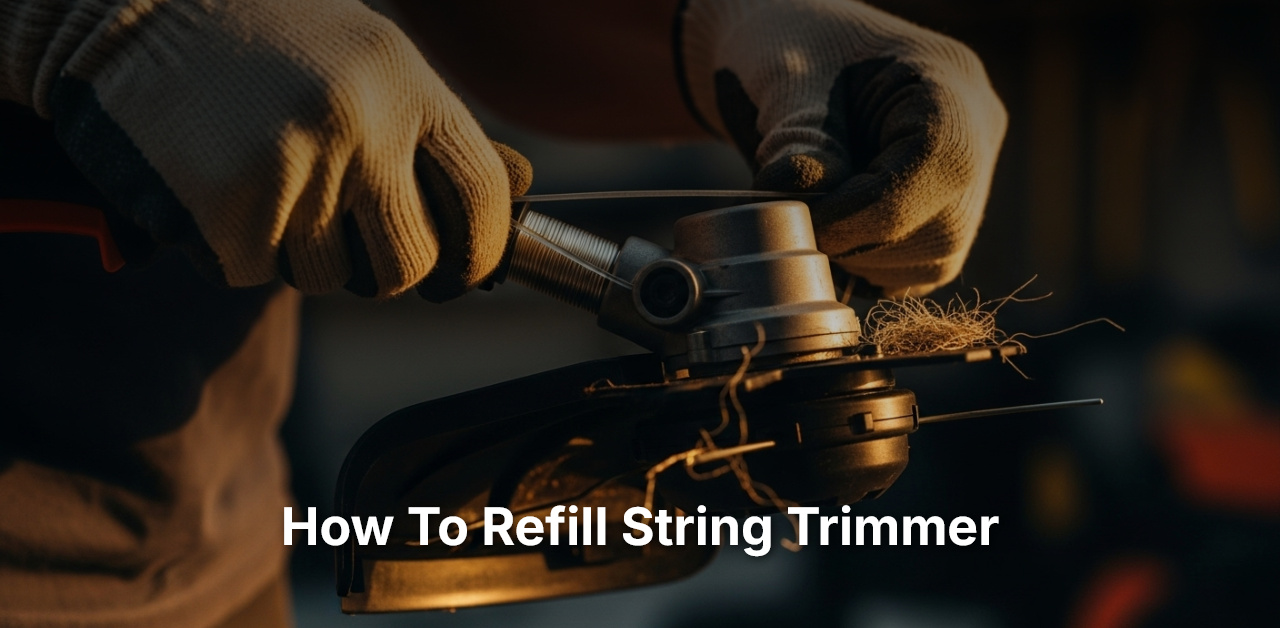
Ever found yourself midway through yard work, only to discover that your string trimmer is out of line? It happens to the best of us. But, believe it or not, refilling your string trimmer doesn’t require a professional touch; it’s something you can do on your own.
Historically, the string trimmer, also known as a weed whacker or a weed eater, has been a useful tool in maintaining gardens and landscapes since the 1970s. Refilling a string trimmer involves winding new string onto the spool. Interestingly, a study showed that people who maintain their string trimmers properly can extend the life of the tool by 25%, which is a handy saving.
 Source:
How to Refill a String Trimmer: Step-by-Step Guide for Quick & Easy Reloading
Among the essential tools for maintaining a beautifully manicured lawn is a string trimmer. While it’s an invaluable asset for home gardeners, it becomes useless when it runs out of line. That’s when you need to know how to refill your string trimmer.
Step 1: Understand Your String Trimmer Specifications
The first step in understanding how to refill your string trimmer is identifying your trimmer’s specifications – It’s not a universal process. By looking at the user manual or perhaps the markings on the trimmer itself, you should find the trimmer line diameter and spool capacity.
The trimmer line diameter is essential as using the wrong size could cause the trimmer to perform poorly or even damage the machine. Similarly, you must know your spool’s precise capacity to avoid mistakenly overloading it with string.
It’s also significant to consider the type of line for your trimmer. Round lines are the most common and work great for light, residential trimming. On the other hand, multi-sided lines can handle heavier, more professional-grade jobs.
Once you have all these details figured out, it’s time to purchase the required trimmer line. You can usually find it at a local home improvement store or online. Stay true to the specifications listed in your owner manual.
Step 2: Safely Prep the Trimmer
The next step on how to refill your string trimmer is preparing the trimmer itself. Please turn off the trimmer and unplug it from its power source if it’s electric. If it’s a gas trimmer, make sure it is cooled off from use – hot engines can result in burns when touched.
The safety of this operation can’t be understated. Beyond just unplugging and cooling the trimmer, you should also consider wearing protective gloves. Trimmer line can sometimes snap back or become unspooled violently, so it’s best to be safe.
To prepare the trimmer, locate and remove the spool from inside the trimmer head. The process for doing this can vary from machine to machine, so look to your owner’s manual for specifics if you’re unsure. Some trimmers have tabs that you press in while others require you to unscrew a knob on the head of the trimmer.
Remove any leftover trimmer line and clean out any debris from the spool and the trimmer head. It’s also a good practice to review the overall condition of the spool and the trimmer head during this time – look out for any severely worn out or damaged areas that need to be replaced.
Step 3: Winding the Trimmer Line
Now that your trimmer is safely prepped, the next step is to wind the new trimmer line onto the spool. Start by cutting the new line to the proper length according to your spool’s capacity. If you bought a pre-cut length, you could skip this step.
When winding, hold the spool steady with one hand while using your other to wind the line onto the spool. Be sure to wind the line in the direction indicated on the spool. This detail might seem trivial, but it’s essential for the trimmer to operate correctly.
It’s important to keep the line tight and wind it evenly across the spool; this way, it doesn’t become jammed or tangled once in use. Continue to wind until you have about 6 inches of line left. Most spools have notches that you can temporarily secure this end into to prevent it from unwinding before you’ve installed it back into the trimmer.
Remember, do not overload the spool. If the line isn’t fitting well on the spool, it’s a clear sign that you have too much line. If this happens, simply unravel some and cut it off to maintain the correct length.
Step 4: Reassembling the String Trimmer
Now that your spool is appropriately wound, it’s time to install it back into your trimmer. Insert the line end that’s sticking out of the notch in the spool into the corresponding hole in the trimmer head.
Let the spool settle into the trimmer head. Remember to release the line from the notch on the spool, then gently pull the line through the trimmer head to make sure it’s feeding through properly.
At this point, secure the spool inside the trimmer head – this process can differ from model to model, much like removing the spool. In any case, ensure that it’s firm and well-placed, but not overly tight.
Lastly, inspect everything. Make sure that the trimmer line feeds out of the spool and through the trimmer head. It should not be too tight or too loose. If it’s too loose, it can tangle up during usage, and if it’s too tight, it can strain or break the trimmer. The line should pull out smoothly, meaning you did everything right.
Step 5: Testing the Refilled String Trimmer
You reassembled the trimmer. Now it’s time to give it a test run. Safely start your trimmer, following the manufacturer’s instructions. If it’s a bump-feed trimmer, bump it lightly on the ground to see if the line advances as it should.
If the line is advancing correctly, then congratulations! You’ve successfully learned how to refill your string trimmer. On the other hand, if the line doesn’t advance, or if it advances too much, you’ll need to disassemble the head and rewind the line.
It’s important to remember that learning how to refill a string trimmer takes practice. Don’t be put off if you don’t get it right on the first try. Refill it again until you get the hang of it. The more often you do it, the better you will get at it.
Finally, always remember safety first! Ensure the trimmer is off and unplugged (or, if a gas trimmer, that it’s cooled off) before starting the process, and wear protective gloves to prevent any accidental injuries.
Refilling your string trimmer can seem like a daunting task initially, but once you understand the steps and get some practice, it becomes easier and less time-consuming. It’s an essential skill for anyone looking to maintain a neat and tidy lawn. With this guide, you’re now equipped to keep your string trimmer operating effectively. Happy trimming!
EASIEST WAY TO STRING YOUR WEED EATER
Frequently Asked Questions
If you own a string trimmer, it can be a great tool to help keep your garden space neat and tidy. Nevertheless, to keep it functioning smoothly, there will occasionally be the need to refill the string trimmer line. The following frequently asked questions are designed to give you a good understanding of what it needs.
1. What type of line should I use to refill my string trimmer?
The type of string trimmer line varies depending on the trimmer model and the type of cutting you want to do. If you’re doing light work such as trimming grass around a domestic garden, a lighter and thinner line would be suitable. This type of line will cut less aggressively, reducing the risk of damaging plants and garden features.
If you are dealing with denser foliage or weeds, consider using a thicker line that can take the strain. Make sure that the line you choose is compatible with your specific trimmer model. If you are unsure about the type of line to use, always refer to the manufacturer’s instructions or consult with a professional.
2. How do I prepare my string trimmer for a refill?
Before refilling your string trimmer, it is important to prepare it properly. Firstly, disconnect it from any power source to ensure safety while refilling. Secondly, remove the spool from the trimmer head by pressing in the tabs or unscrewing the bump knob, depending on the model of your trimmer.
Clean any debris or grass clippings from the trimmer head and spool. It is also a good practice to inspect the trimmer head and spool for any wear or damage at this time. If there’s significant wear or damage, consider replacing these parts to maintain optimal performance.
3. Is there a specific winding technique that should be followed when refilling?
Yes, the winding technique plays a crucial role in how well your trimmer performs. You need to ensure that the line is loaded properly onto the spool to prevent tangling and jamming. Start by threading the line through the anchor hole on the spool, then wind the line in the direction indicated on the spool. Make sure the winding is neat and tight.
For trimmers with a dual-line, wind one section on one half of the spool and the other on the opposite side, both in the same direction. Some newer trimmer models come with easy wind features that eliminate the guesswork but always make sure to keep the line taut when winding.
4. How do I know when my string trimmer needs a refill?
You will know it’s time to refill your string trimmer when the cut isn’t as efficient as it used to be. Trimmers with an automatic feed system will start making a clicking sound as they try to feed the line and fail due to insufficient line. For trimmers with manual or bump feed systems, you will need to rely more on visual inspection.
A reduction in the cutting swath can also indicate that the trimmer line is getting short. The condition of the cut vegetation can also show you it’s time to replace the line. A trimmer with a fresh line will leave a clean cut, while a dull or short line can leave plants looking torn or battered.
5. Can I reuse the same string trimmer line?
Reuse of trimmer line depends on the condition of the line after use. If the line is worn thin, brittle, frayed, or broken, it’s best to discard it and start with a fresh line. A worn-out line will not offer a clean cut and can even cause the trimmer to work harder, leading to potential motor damage.
If the line is intact but dirty, it can be cleaned and reused. Be sure to inspect the line closely for any signs of wear before deciding to reuse it. Remember, the quality of your line can affect the efficiency and life of your trimmer.
How to Change the Line | Weed Eater String | Replace Weed Wacker [2021]
Conclusion
I’m glad we had this discussion on how to refill a string trimmer. Just remember, it’s a simple process. First, fetch your new trimmer line and ensure it matches the thickness as recommended in the user’s manual. Then, take off the spool from the trimmer head and wind the new line around the spool as per the arrow direction. Avoid overfilling the spool, giving enough space for the line to freely move.
Lastly, carefully replace the spool back into the trimmer head, making sure the line feeds into the eyelet. And voila, you’re ready to carry on with your gardening duties. Just keep in mind to always wear the necessary protective gear when working with any gardening tools. Here’s to tidy gardens with neatly trimmed edges!

I’m Patricia D. Johnson, an affiliate marketer and blogger specializing in trimmers and grooming tools. I create honest reviews, buying guides, and practical tips to help readers choose the right trimmer for their needs. With a focus on quality, performance, and value, I simplify the decision-making process so consumers can make confident purchases.