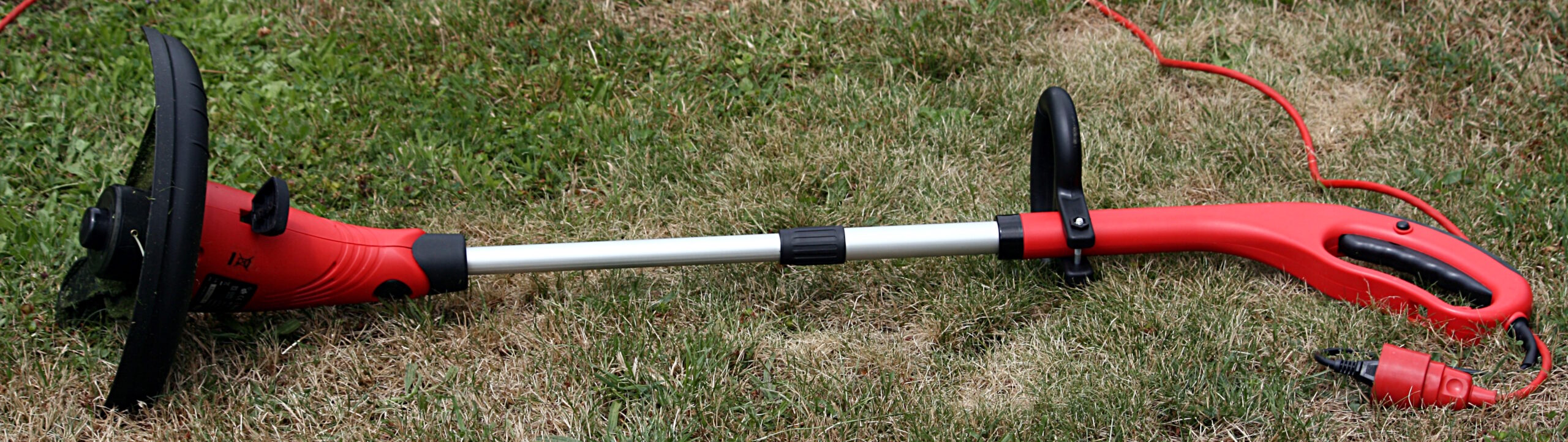
How to Convert String Trimmer to Brush Cutter
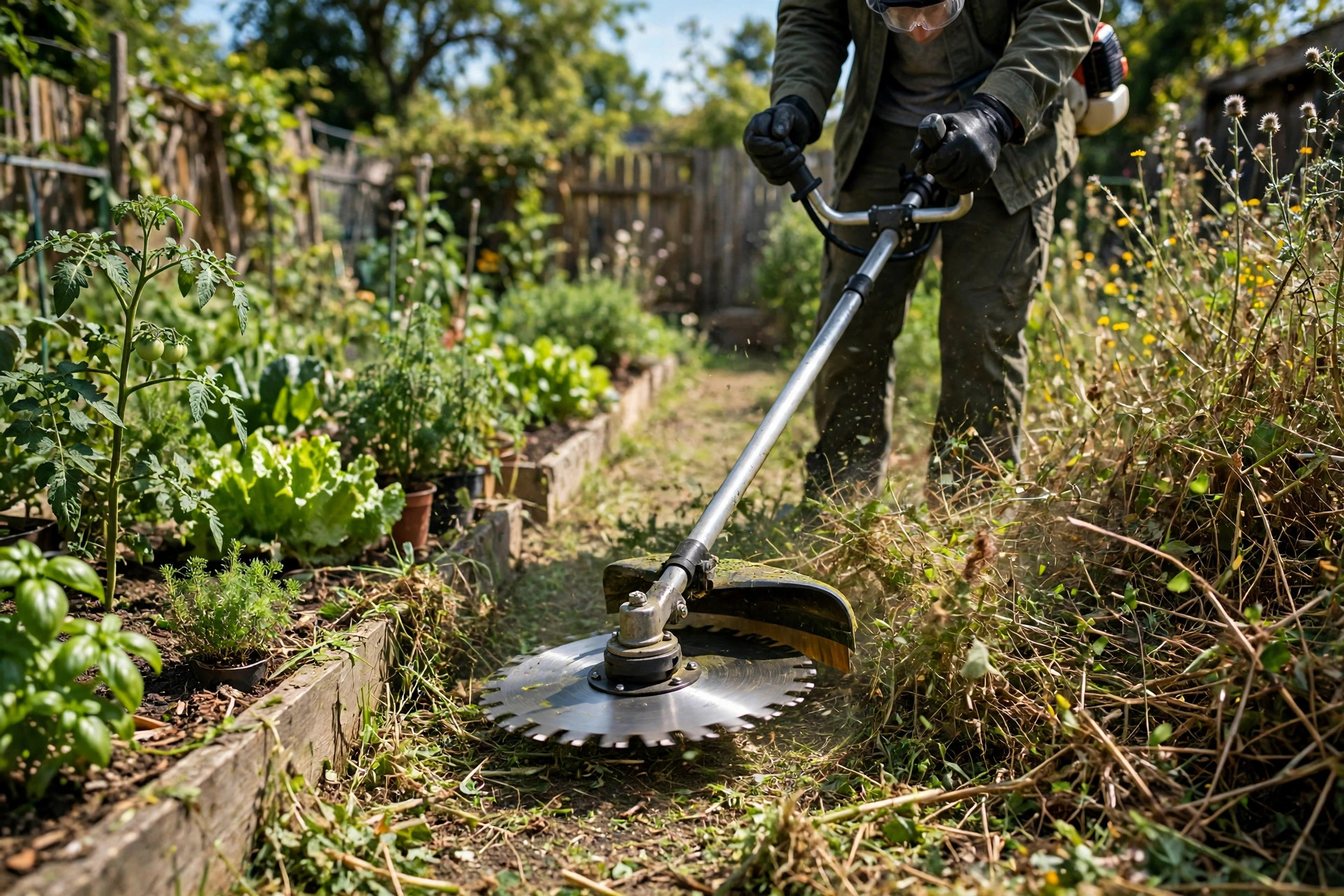
Ever wondered about the versatility of your gardening tools? With a few tweaks, your string trimmer can change form. It can morph into a vigorous brush cutter. That swap extends its use across your yard.
A brush cutter tackles stubborn weeds and thick brush. String line alone often struggles with that growth. This guide shows how to convert string trimmer to brush cutter safely. Each step below keeps the swap simple.
The first string trimmers were designed to cut grass. Makers later added attachments for tougher vegetation. A blade kit is one such attachment. It turns one tool into two yard tools.
- Ensure the string trimmer is turned off and unplugged.
- Remove the string reel by unscrewing or unlatching it.
- Attach the brush cutter blade in place of the reel, securing it tightly.
- Replace any guards or covers.
- Make sure everything is secure before powering up.
Quick answer: Swap the string head for a brush cutter blade. Check that your trimmer can handle a blade first. Fit the blade and guard with care. Tighten every screw before you power up. Test the tool away from people and pets.
- How to Convert String Trimmer to Brush Cutter
- Safety Check before Conversion
- Remove the String Trimmer Head
- Assemble the Brush Cutter Blade
- Reattach the Trimmer Guard
- Perform a Function Check
- Frequently Asked Questions
- Blades and Maintenance
- Safety Measures
- Conclusion: How to Convert String Trimmer to Brush Cutter
How to Convert String Trimmer to Brush Cutter
Getting creative unlocks the full potential of your tools. Seasoned gardeners often transform their string trimmers into brush cutters. The swap is about maximizing utility at home.
It also brings professional-level landscaping within reach. This step-by-step guide explores each stage of the conversion. Your trimmer will soon tackle tougher vegetation. Start with our how to use a trimmer guide for the basics.
| Step | What you do | Key tip |
|---|---|---|
| 1 | Run a full safety check | Spark plug disconnected first |
| 2 | Remove the string trimmer head | Twist and lift it free |
| 3 | Assemble the brush cutter blade | Check the trimmer can cope |
| 4 | Reattach the trimmer guard | Guard clear of the blade |
| 5 | Perform a function check | Test outdoors, people clear |
Safety Check before Conversion
Step 1: Safety Check before Conversion
The first principle before conversion is tending to safety. Always disconnect the spark plug to avoid any unexpected startups while working on your trimmer. It’s a simple but critical step that many tend to skip.
Work in a well-ventilated, clean workspace for safety. Wear gloves and eye protection throughout the job. Keep children and pets away from the bench.

Remove the String Trimmer Head
Step 2: Remove the String Trimmer Head
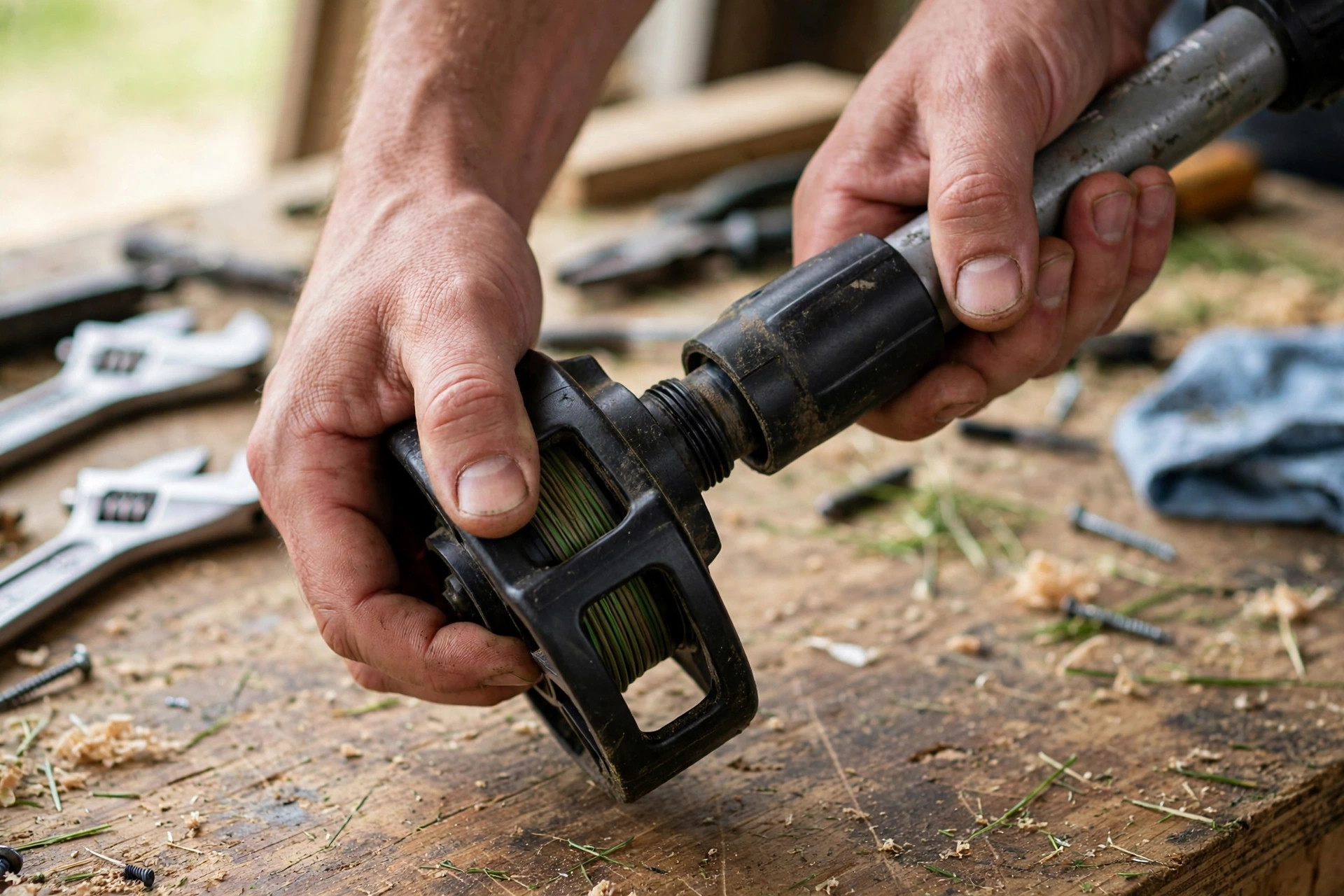
Next, you remove the string trimmer head. Most models necessitate you to push it down and rotate counterclockwise to unlock and remove. It’s essential to consult your manufacturer’s manual as the procedure can vary in different trimmers.
If it sticks, jostle it a bit first. Avoid pressure that can damage the unit. Our how to change string trimmer head guide shows the removal in full.
Assemble the Brush Cutter Blade
Step 3: Assemble the Brush Cutter Blade
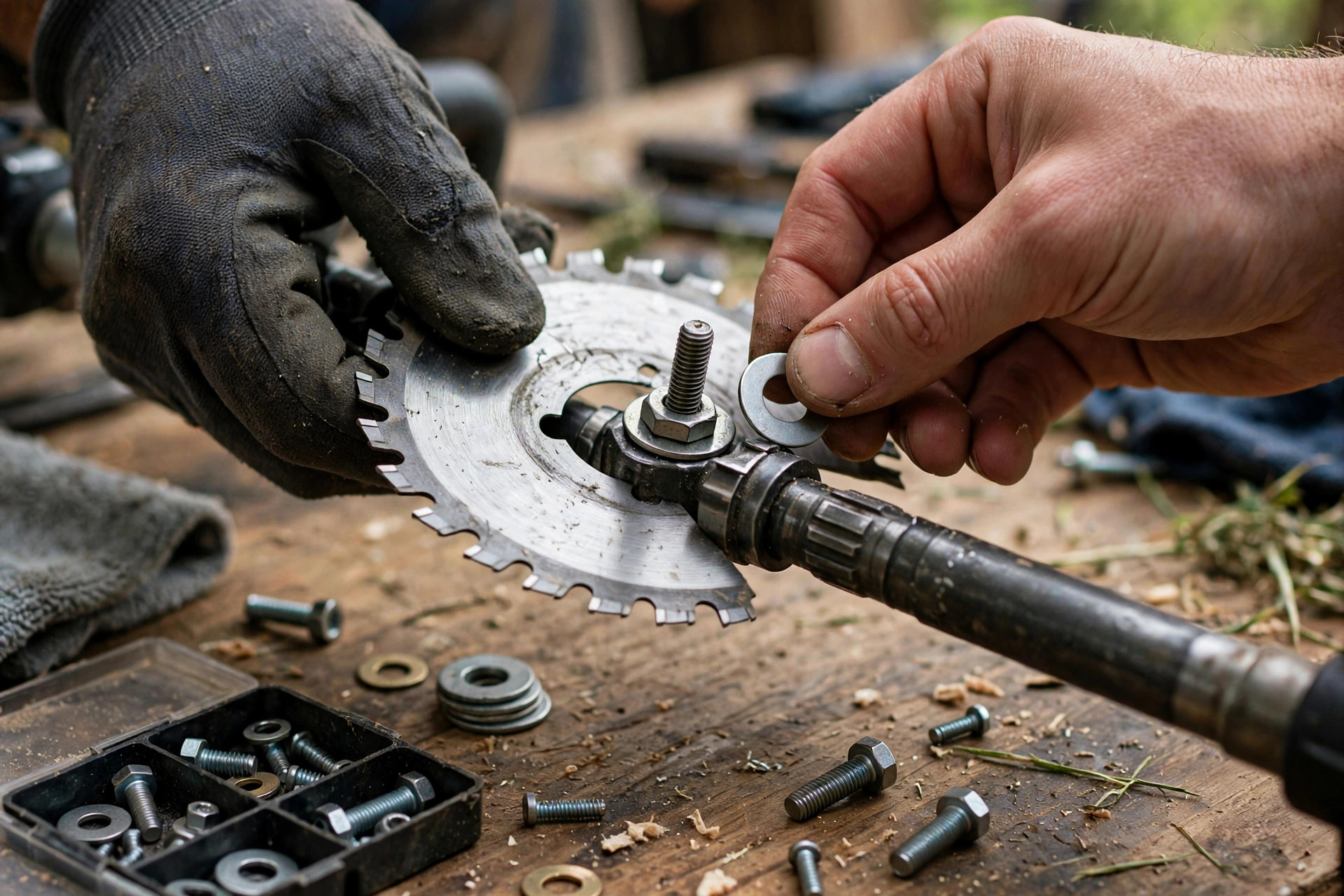
The third step is assembling the brush cutter blade. It’s crucial to note that not all string trimmers can handle a blade. Make sure your trimmer is compatible to avoid burning out the engine.
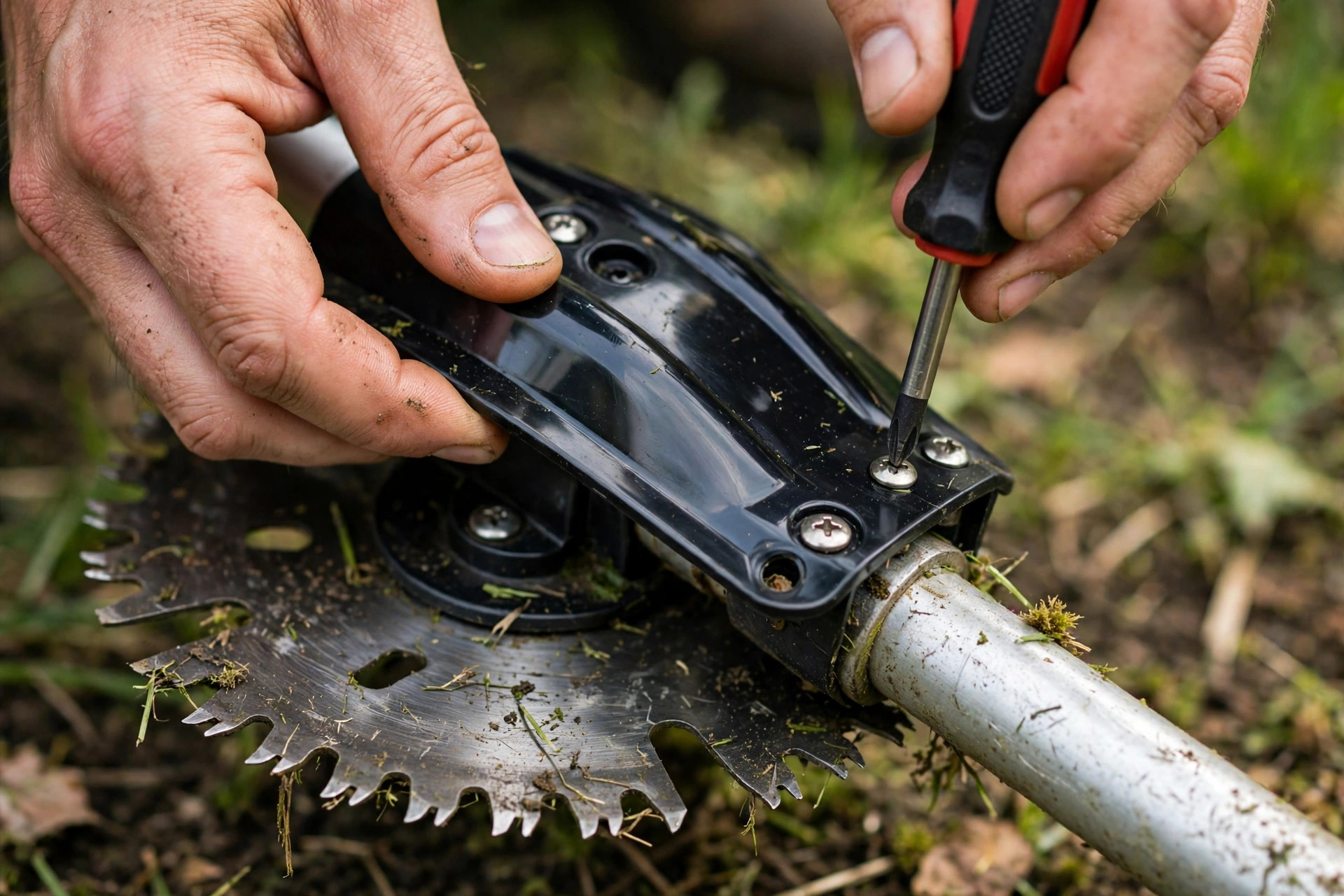
Fix the blade on the trimmer shaft with screws. Use the washers provided with your blade kit. Ensure the blade is tightly secured, and there are no loose parts.
| Blade type | Best for | Note |
|---|---|---|
| Chopper blade | Dense grass and lighter vegetation | Light and easy to handle |
| Circular saw blade | Heavy brush and small trees | Needs a strong engine |
Reattach the Trimmer Guard
Step 4: Reattach the Trimmer Guard
With the blade in place, the fourth step involves reattaching the trimmer guard. Do not overlook this step at all. The guard protects you from flying debris during operation.
It also helps maintain the blade alignment. Attach the guard securely, and ensure it does not interfere with the blade’s movement. Check the guard again before every use.
Perform a Function Check
Step 5: Perform a Function Check
The final step is performing a function check. Start the trimmer and let it run briefly. Check that the blade stays secured and functions correctly.
Keep a safe distance while you test it. Test outdoors, far away from people and pets. The STIHL site shares trimmer safety tips.
That wraps up this basic conversion guide for you. This transformation broadens the capabilities of your trimmer. It lets you take landscaping tasks up a notch.
With newfound versatility in your hands, you are ready. You can bring a professional touch to your garden. See how to cut grass with a string trimmer for grass trimming basics.
Frequently Asked Questions
You may seek more detail on this conversion job. Many owners ask the same questions first. Find the answers to the most asked questions on this topic below.
Is it possible to convert a string trimmer into a brush cutter?
Yes, converting a string trimmer to a brush cutter is definitely possible. Most string trimmers are designed with versatility in mind. They can accommodate attachments like a brush cutter blade.
Ensure the motor is potent enough for the attachment. A brush blade often requires more power. Check the user manual or consult the manufacturer before proceeding. Our what is a string trimmer guide explains the tool itself.
What equipment will I need to do the conversion?
You need the brush cutter attachment for the conversion. It includes a blade for thick vegetation and saplings. However, the specific attachments can vary depending on the model of your string trimmer. Our how to buy a string trimmer guide helps you pick parts.
You might also need a wrench for the job. That depends on the design of your trimmer. Prioritize safety by wearing gloves during the work. Protective goggles guard your eyes from debris.
Blades and Maintenance
Are there different types of brush cutter blades suitable for different tasks?
Yes, there are several types of brush cutter blades, each suitable for different tasks. The two main types of blades are the chopper blade and the circular saw blade. The chopper blade is perfect for cutting through dense grass and lighter vegetation.
The circular saw blade is far more powerful. It can cut through heavy brush and small trees. It’s important to choose a blade depending on what you’re planning to cut.
How do I maintain a brush cutter once the conversion is completed?
After the conversion, maintain your new tool with care. Proper care keeps the tool efficient for years. Clean it regularly to avoid debris buildup. Buildup can affect its performance over time.
You’ll also need to sharpen the blade regularly to ensure effective cutting. Store the brush cutter in a cool, dry place. Dry storage prevents rusting of the blade. Proper maintenance can prolong the lifespan of your brush cutter and ensure it remains efficient. See how to store a string trimmer for dry storage tips.
Safety Measures
What are the safety measures I should take when using the brush cutter?
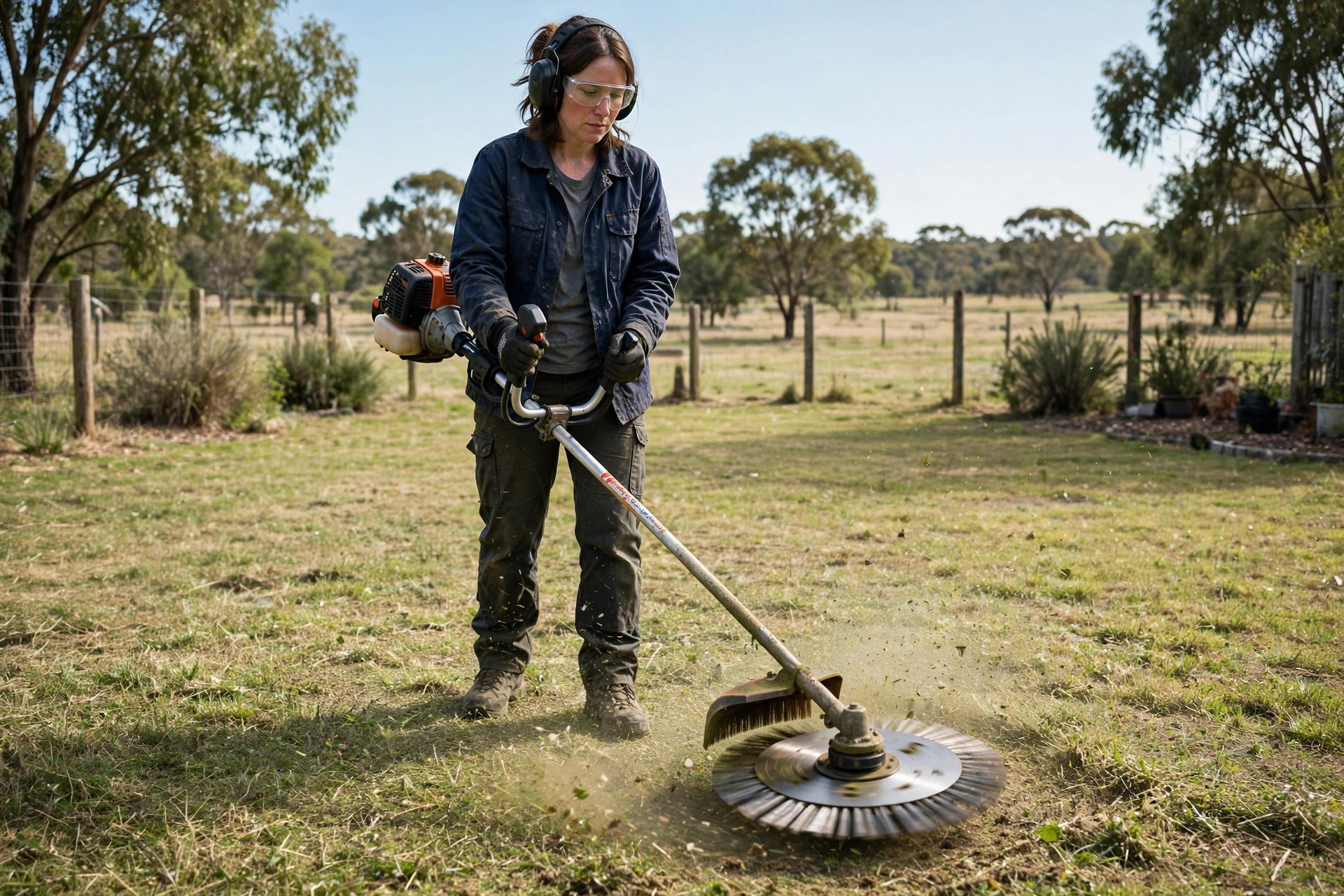
Safety should always be a top priority when using a brush cutter. Always wear personal protective equipment, such as safety goggles, gloves, sturdy boots, and long pants. Keep other people and pets at a safe distance.
That distance matters while the machine runs. Be mindful of your surroundings during every cut. Avoid gravel or rocks near the blade path. The blade can throw these materials and cause injury.
Conclusion: How to Convert String Trimmer to Brush Cutter
You can convert a string trimmer into a brush cutter. The task needs a few specific tools and steps. You now know how to convert string trimmer to brush cutter safely. Safety stays the key throughout the whole job.
Wear your protective gear during the modification process. Finding the right brush cutter blade also matters. A blade that fits your tool makes a difference. The EPA lawn and garden page lists safe yard work tips. Go slow, follow the procedure, and start cutting.

I’m Patricia D. Johnson, an affiliate marketer and blogger specializing in trimmers and grooming tools. I create honest reviews, buying guides, and practical tips to help readers choose the right trimmer for their needs. With a focus on quality, performance, and value, I simplify the decision-making process so consumers can make confident purchases.