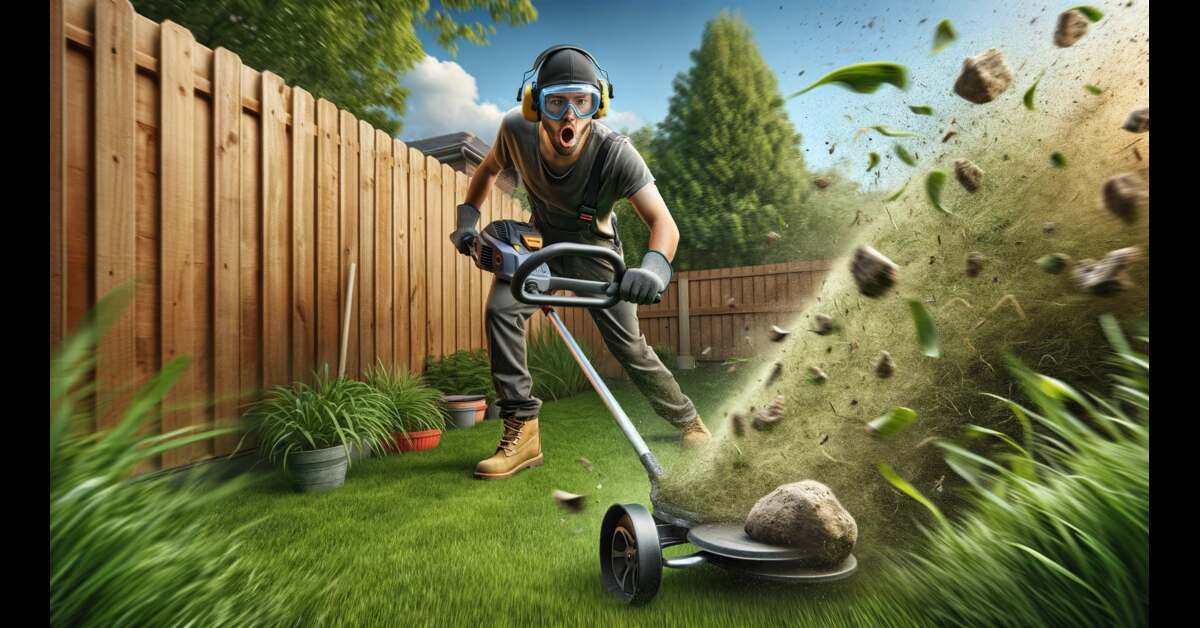
Your trimmer may be throwing rocks at you because the cutting head is being taken too close to objects like garden stones, paving edges, or walls, causing the cutting line to snap. To prevent this, allow the cutting line to rotate freely and use the correct diameter and type of line.
Have you ever experienced the dreaded moment when your trusty trimmer decides to launch a rock right at you? It’s not only surprising, but it can also be quite dangerous. As someone who has had their fair share of close encounters with flying debris, I understand the frustration and confusion that comes along with this phenomenon. But fear not! In this blog post, we will dive deep into the world of trimmers and unveil the surprising reasons why they sometimes have a mind of their own.
So buckle up, grab your safety goggles, and let’s uncover the truth behind why your trimmer might just want to throw rocks at you!
Understanding The Phenomenon
Have you ever experienced your trimmer throwing rocks at you while you’re working on your lawn? It can be a frustrating and sometimes dangerous situation. In this blog post, we will delve into the mystery of why trimmers have the tendency to throw rocks and explore the possible reasons behind it.
Many people have complained about their trimmers throwing rocks unexpectedly, posing a threat to their safety and causing damage to nearby objects. Let’s take a closer look at some of the common complaints and experiences shared by users:
- Rock Ejection: Trimmers throwing rocks with brute force, potentially causing injury to the user or those around.
- Damaged Property: Reports of trimmers damaging nearby cars, windows, and other fragile objects due to rock ejection.
- Unpredictable Behavior: Trimmers launching rocks in seemingly random directions, making it difficult for users to anticipate and protect themselves.
- Poor Guard Design: Some users believe that certain trimmer models have inadequate guard design, allowing rocks to be ejected with ease.
If you’ve experienced any of these issues while using your trimmer, you’re not alone. The phenomenon of trimmers throwing rocks is a widely discussed topic among lawn care enthusiasts and professionals alike.
Possible reasons behind your trimmer throwing rocks at you
Let’s explore some potential reasons behind why trimmers have the tendency to throw rocks.
| Possible Explanation | Details |
|---|---|
| Poor Trimmer Guard Design | Trimmers with inadequate guard design may allow rocks to be easily ejected. The guard plays a crucial role in preventing debris from being propelled outward, so any flaws in its design can contribute to rock throwing incidents. |
| Encounters with Hard Objects | If your trimmer comes into contact with hard objects such as rocks or pavement edges, it can cause the trimmer line to snap forcefully. This sudden release of tension can result in rocks being thrown in unexpected directions. |
| Improper Line Usage | Using an incorrect diameter or type of trimmer line can affect its durability and contribute to breakage. When the line breaks, it can lead to the ejection of rocks or debris. |
| User Technique | Incorrect usage of the trimmer, such as holding it at the wrong angle or applying too much pressure, can increase the chances of rocks being thrown. Proper technique and caution are essential when operating a trimmer to minimize the risk of rock ejection. |
While these are some possible explanations for why trimmers throw rocks, it’s important to note that the actual cause may vary depending on the specific trimmer model and individual circumstances.
However, understanding the phenomenon of trimmers throwing rocks is crucial for safe and efficient lawn care. By being aware of the potential reasons behind this behavior, users can take necessary precautions and adopt proper techniques to minimize the risk of rock ejection.
Mechanical Factors
If your trimmer keeps throwing rocks at you, it may be due to mechanical factors such as the cutting head being too close to objects like garden stones or paving edges. Make sure to use the correct diameter and type of line and allow it to rotate freely to prevent this issue.
Trimmer Design And Construction
One of the key factors that can lead to a trimmer throwing rocks at you is its design and construction. The design of a trimmer plays a significant role in its overall performance and safety. A poorly designed or constructed trimmer may have inadequate safety features or may not be properly balanced, increasing the risk of rocks and debris being thrown towards the operator.
When choosing a trimmer, it is important to consider the design and construction aspects. Look for trimmers that have a well-built construction with durable materials to ensure they can withstand the demands of trimming tasks. Additionally, select trimmers that have a balanced weight distribution to minimize vibration and maximize control during operation.
Role Of Guard And Its Impact
The guard of a trimmer plays a vital role in preventing rocks from being thrown at the operator. The guard acts as a barrier between the spinning trimmer line and the surrounding environment, blocking rocks, debris, and other objects from being propelled towards the operator’s face.
It is crucial to keep the guard intact and in good condition to ensure optimal safety. While some professionals may opt to remove the guard for better visibility, it is important to note that this increases the risk of rocks and debris being thrown towards the operator. Therefore, it is recommended to always use the trimmer with its guard properly installed and maintained.
Blade Speed And Rotation Direction
The speed at which the trimmer’s blades rotate and their direction of rotation can also impact the likelihood of rocks being thrown at the operator. A trimmer with a higher blade speed and a rotation direction that is towards the operator is more likely to propel rocks in their direction.
The blade speed and rotation direction are determined by the trimmer’s design and can vary between different models. It is important to be aware of the blade speed and rotation direction of your trimmer to take appropriate precautions during operation.
If your trimmer has a high blade speed or a rotation direction towards the operator, make sure to wear adequate personal protective equipment such as safety glasses, a face shield, and sturdy clothing to minimize the risk of injury from thrown rocks.
Environmental Factors
When it comes to figuring out why your trimmer throws rocks at you, it’s important to consider the environmental factors that can contribute to this issue. These factors include the effect of different terrains, types of debris, and weather conditions.
Understanding how these factors influence your trimmer’s behavior can help you take appropriate measures to prevent rock projectiles and ensure a safer and more efficient trimming experience.
Effect Of Different Terrains
The terrain on which you are using your trimmer can significantly affect its tendency to throw rocks. Some terrains, such as rocky or gravelly areas, provide more opportunities for debris to be picked up and launched by the trimmer’s spinning head.
On the other hand, grassy terrains may have less loose debris that could be ejected. It’s important to note that rough terrains with irregular surfaces can also disrupt the trimmer’s cutting line, increasing the risk of rock throwing incidents. Therefore, it’s crucial to consider the terrain and adjust your trimming techniques accordingly.
Types Of Debris And Their Impact
The types of debris present in your trimming area can also influence the likelihood of your trimmer throwing rocks. Different types of debris, such as pebbles, sticks, or larger rocks, can get caught in the spinning head of the trimmer. These debris items can then be propelled at high speeds, posing a potential safety hazard.
Additionally, the size and weight of debris can determine how far they are thrown by the trimmer. It’s important to regularly inspect and clear the trimming area of any potential projectiles to minimize the risk of injury or property damage.
Weather Conditions And Their Influence
Weather conditions play a significant role in the behavior of your trimmer and its tendency to throw rocks. Wet or damp grass can cause the trimmer’s cutting line to become less effective, leading to increased debris buildup and potential ejection.
Windy conditions can exacerbate the issue, allowing debris to be caught and thrown farther distances. Extreme temperatures, such as heat waves or freezing cold, can also impact the trimmer’s performance and increase the likelihood of rock throwing incidents.
Therefore, it’s crucial to consider the weather conditions before using your trimmer and take appropriate precautions to minimize the associated risks.
User Habits And Techniques
Discover techniques to prevent your trimmer from throwing rocks at you while landscaping. Learn how to properly use a string trimmer without breaking the line and avoid potential hazards.
When it comes to using a trimmer, understanding user habits and techniques can play a crucial role in preventing rocks from being thrown. Improper handling, incorrect trimming angles, and overreliance on trimmer power are common factors that contribute to this issue.
Improper Trimmer Handling
One of the main reasons why trimmers throw rocks at users is due to improper handling. Users often fail to maintain a steady grip on the trimmer, causing it to wobble or jerk. This instability can lead to the trimmer coming into contact with objects, such as rocks, and subsequently throwing them towards the user.
To avoid this, it is important to maintain a firm grip on the trimmer and ensure that it remains stable throughout the trimming process. This can be achieved by using both hands to hold the trimmer firmly, with one hand on the handle and the other on the shaft.
Incorrect Trimming Angles
The angle at which the trimmer is held while cutting grass can also contribute to rocks being thrown. When the trimmer is held too low to the ground or at an incorrect angle, there is a higher chance of the cutting line coming into contact with rocks or other debris and propelling them towards the user.
To prevent this, it is important to maintain a proper trimming angle. The trimmer should be held parallel to the ground, with the cutting line positioned slightly above the grass. This will ensure that the line is cutting through the grass effectively without making contact with any potential obstacles.
Overreliance On Trimmer Power
Another factor that can cause a trimmer to throw rocks is overreliance on its power. Some users may be tempted to push the trimmer faster or use excessive force, thinking it will result in a cleaner cut. However, this can backfire and cause the trimmer to kick up rocks and debris towards the user.
To avoid this issue, it is important to let the trimmer do the work. Applying excessive force or speeding up the trimming process can put unnecessary strain on the trimmer and increase the likelihood of rocks being thrown. Instead, maintain a steady and consistent speed, allowing the trimmer to cut through the grass without any excessive force.
In conclusion, user habits and techniques play a crucial role in preventing rocks from being thrown by trimmers. Proper handling, correct trimming angles, and avoiding overreliance on trimmer power are essential to have a safe and efficient trimming experience.
Safety Measures And Preventive Actions
When it comes to using a trimmer, ensuring safety should always be a top priority. Taking appropriate safety measures and following preventive actions not only protect you from potential accidents but also help prolong the lifespan of your trimmer.
In this section, we will discuss the Importance of Personal Protective Equipment (PPE), Proper Trimmer Operation Techniques, and Regular Maintenance for Optimal Performance.
Importance Of Personal Protective Equipment (ppe)
Wearing the right personal protective equipment (PPE) is crucial when operating a trimmer to protect yourself from flying debris and other hazards. Here are some essential PPE items to consider:
- Eye Protection: Use safety goggles or a face shield to shield your eyes from debris or projectiles that may be thrown by the trimmer’s cutting head.
- Hearing Protection: Consider wearing earplugs or earmuffs to reduce the noise levels emitted by the trimmer, which could potentially damage your hearing over time.
- Protective Clothing: Wear long pants, a long-sleeved shirt, and sturdy closed-toe shoes to safeguard your body from scratches, cuts, or injuries caused by debris.
Proper Trimmer Operation Techniques
To ensure safe and efficient trimming, it’s important to follow proper trimmer operation techniques. Here are some key tips to keep in mind:
- Always Start with a Visual Inspection: Before using the trimmer, inspect the cutting head, guard, and handle for any signs of damage or wear. If any issues are found, repair or replace the damaged components before use.
- Maintain a Secure Grip: Firmly grasp the trimmer’s handle with both hands to maintain control and stability while trimming.
- Be Aware of Your Surroundings: Stay vigilant and keep an eye out for potential obstacles such as rocks, branches, or uneven terrain. Trimmers have a tendency to throw rocks or debris, so it’s essential to keep a safe distance from others.
- Follow Proper Cutting Techniques: Hold the trimmer parallel to the ground and carefully guide it along the target area, moving from right to left in a smooth, sweeping motion.
Regular Maintenance For Optimal Performance
Regular maintenance is crucial to ensure your trimmer’s optimal performance and longevity. Here are a few maintenance tasks to include in your routine:
- Clean the Trimmer: After each use, remove any grass, debris, or dirt buildup from the cutting head and other parts of the trimmer. This will prevent clogging and maintain the trimmer’s efficiency.
- Inspect and Replace the Cutting Line: Regularly check the trimmer’s cutting line for wear and tear. Replace it when necessary to maintain effective cutting performance.
- Check and Tighten Fasteners: Ensure that all screws, bolts, and fasteners are tightened properly. Loose fasteners can affect the trimmer’s stability and compromise its performance.
- Keep the Trimmer Sharp: Sharpen the trimmer’s cutting blades regularly to maintain a clean and precise cut. Dull blades can lead to inefficient trimming and cause the trimmer to throw rocks or debris.
By following these safety measures and preventive actions, you can ensure a safer and more efficient trimming experience while minimizing the risk of accidents. Remember, prioritizing safety and regular maintenance not only protects you but also helps keep your trimmer in excellent working condition for longer.

Credit: www.thetimes.co.uk
Exploring alternative trimmer options to reduce rock throwing
If you find that rock throwing is a persistent issue with your current trimmer, it may be worth exploring alternative options that can minimize this problem. Consider the following alternatives:
-
Trimmers with a debris shield: Some trimmers come with built-in debris shields or deflectors that help prevent rocks and other debris from being thrown towards the operator. These shields provide an additional layer of protection and can significantly reduce the risk of rock throwing incidents.
-
Trimmers with a blade attachment: Instead of using a string trimmer, you may opt for a trimmer with a blade attachment. Blades are less likely to pick up debris and throw rocks, making them a suitable alternative for those concerned about rock throwing incidents.
Frequently Asked Questions Of Why My Trimmer Throw Rock At Me
Why Does Strimmer Keep Snapping?
The strimmer keeps snapping because the cutting head is being brought too close to objects like stones or walls. Make sure the cutting line rotates freely and use the correct diameter and type of line. Flymo suggests checking their website for what to do if your trimmer line breaks.
Landscapers sometimes remove guards for better visibility while edging. The size of trimmer line does matter, and it should be the appropriate gauge. If the strimmer wire is too long, don’t worry, as the trimmer is designed to cut any excess cord that overreaches.
Why Do Landscapers Take The Guard Off Trimmers?
Landscapers remove the guard from trimmers to improve visibility and access tight spaces. They can see the string better while edging without a guard, making their work more efficient. However, it is important to use the correct size trimmer line and be cautious around objects to prevent accidents.
Does It Matter What Size Trimmer Line You Use?
The size of the trimmer line does matter. The correct diameter and type of line should be used to prevent it from snapping and to ensure it rotates freely.
What If Strimmer Wire Is Too Long?
If the strimmer wire is too long, don’t worry. Grass trimmers have sharp metal edges that are designed to cut any excess cord that overreaches. This ensures that the nylon cord is always at the optimum length and cuts as much grass as possible.
So, keep the nylon cord long and let the trimmer do its job.
Conclusion: Taking control of your trimmer and preventing rock throwing incidents
In conclusion, the phenomenon of trimmers throwing rocks can be frustrating and potentially hazardous. By understanding the reasons behind this issue and following the tips and tricks provided in this article, you can take control of your trimmer and minimize the chances of rock throwing incidents.
Remember to choose the right string, maintain a safe distance, practice proper trimming techniques, and regularly maintain your trimmer.
If problems persist, don’t hesitate to seek professional help or explore alternative trimmer options that can reduce the occurrence of rock throwing. Happy trimming!