
How to Clean Trimmer Blades
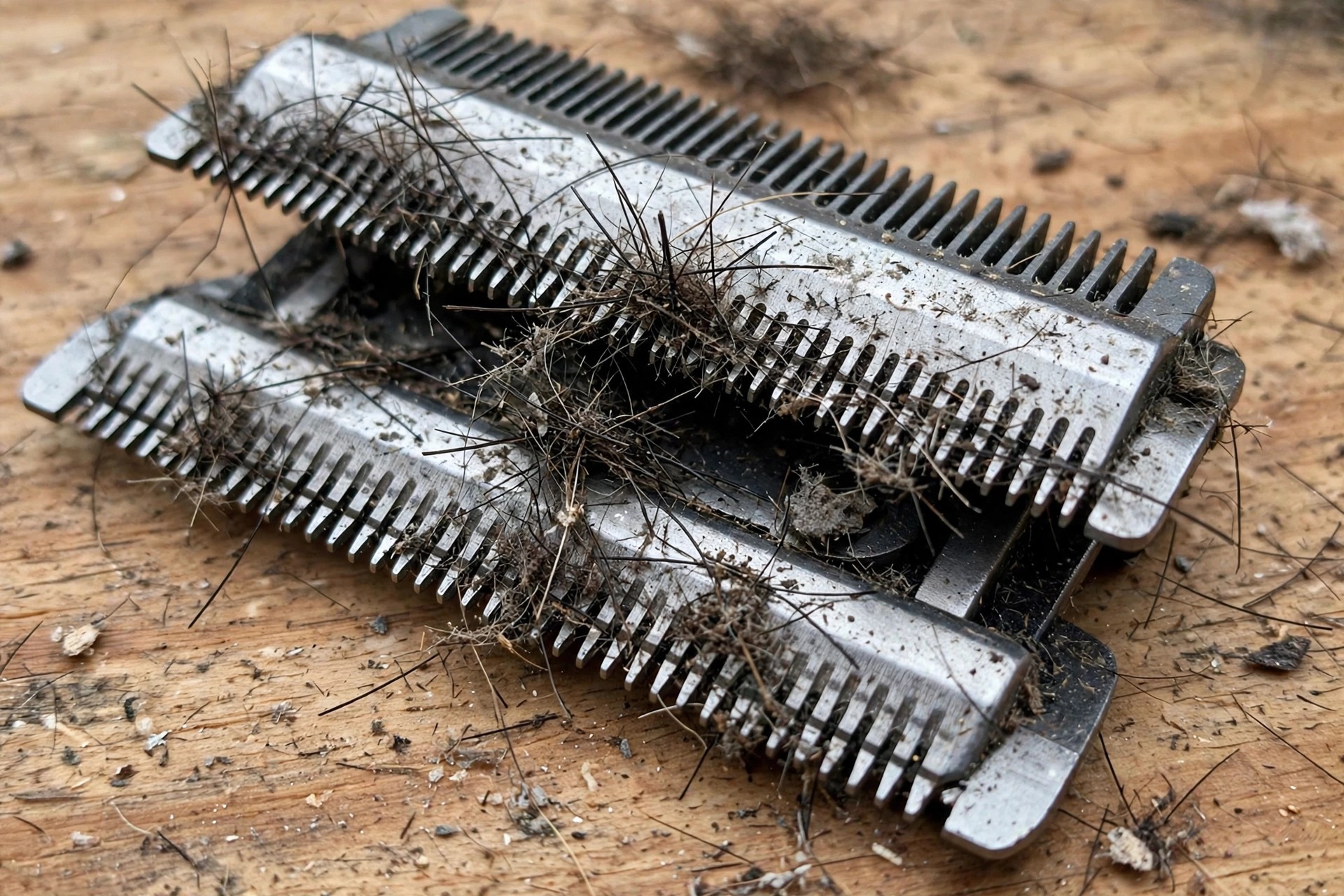
Dirty blades cut poorly and wear fast. Buildup dulls edges and strains the motor. Regular cleaning restores sharp, smooth cutting performance. It also protects blades from rust damage. Clean blades also support healthier skin contact.
Owners regularly ask how to clean trimmer blades safely. The routine needs only simple household supplies. A brush, alcohol, towel and oil suffice. Careful hands matter more than fancy products. Most cleaning sessions take minutes only overall.
This guide starts with the quick method. Seven detailed steps then follow in order. Products, frequency and upkeep tips come next. Common mistakes and honest answers close it.
Quick answer: Start by unplugging the trimmer for safety. Brush debris away first, then wipe blades with alcohol. A warm soapy soak loosens stubborn residue gently afterwards. Rinse, dry completely, then oil the blades. Clean blades simply cut better and last much longer.
How to Clean Trimmer Blades: The Quick Method
The quick method suits routine home cleaning. It uses alcohol instead of soaking first. Four simple supplies handle the whole job. Keep liquid away from the electrical compartment.
| Supply | What the Post Says |
|---|---|
| Cleaning brush | Removes hair and loose debris first |
| Isopropyl alcohol | Or blade wash for sanitizing blades |
| Soft towel | Wipes blades and dries them fully |
| Lubricating oil | Finishes the routine, prevents rust |
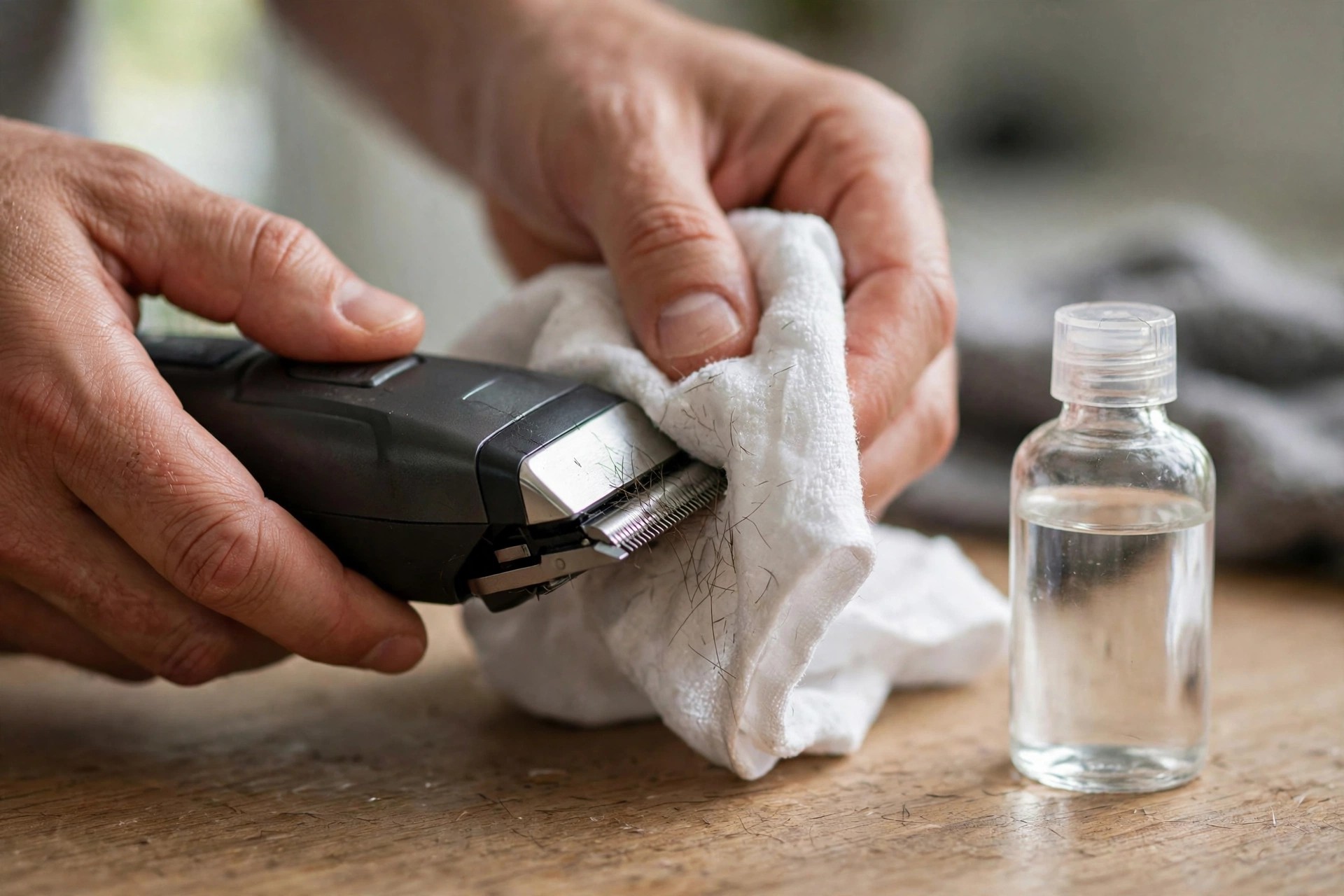
Brush against the cutting motion for best results. That direction clears buildup from the teeth. Wipe blades with the alcohol soaked towel. Sanitizing removes residue that brushing missed earlier.
The Wikipedia isopropyl alcohol page explains this common cleaning solvent. The Wikipedia hair clipper page covers clipper types and care. Our trimmer head cleaning guide covers detachable garden heads. Our clipper cleaning guide covers salon clipper routines.
Clean the Blades in Seven Careful Steps
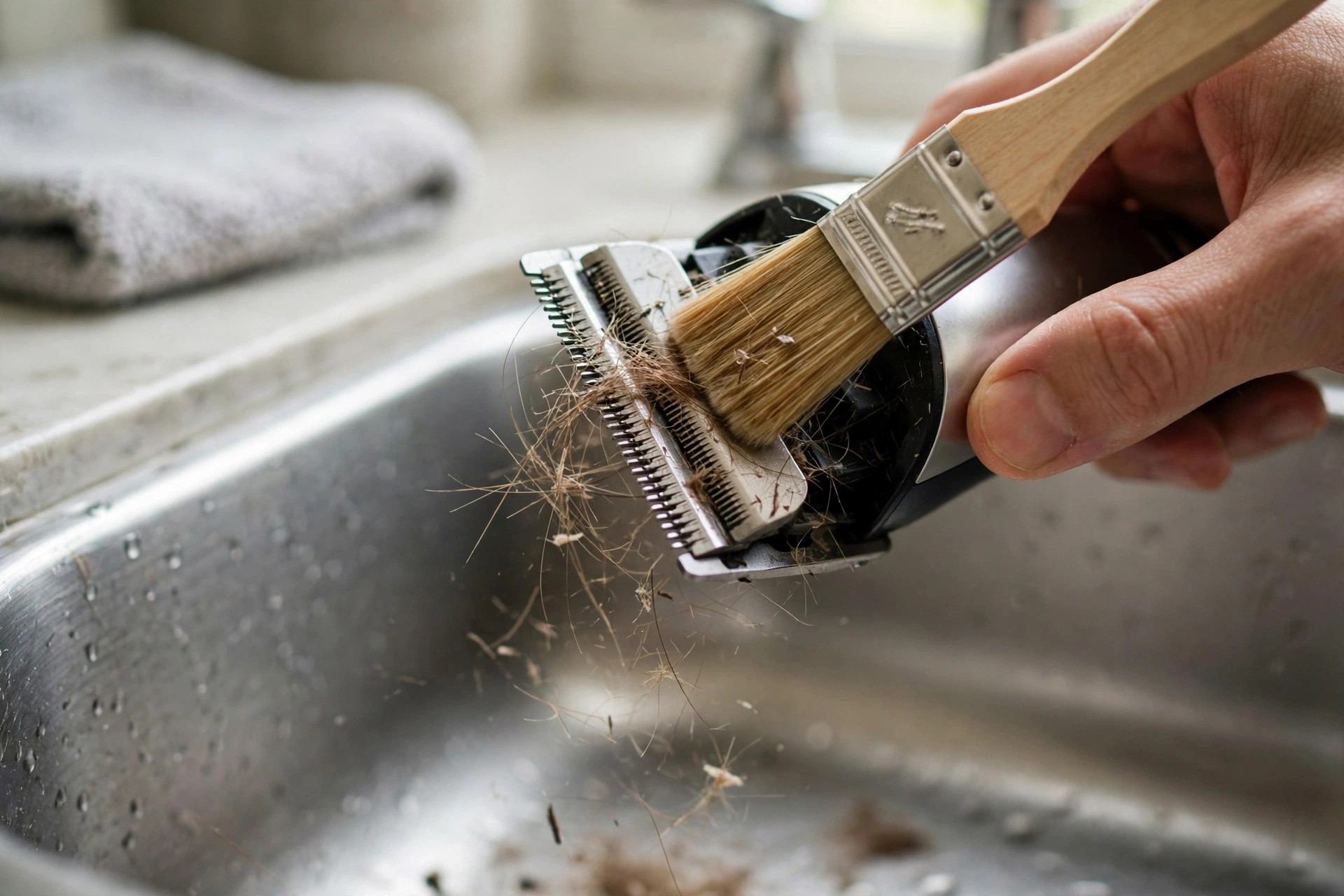
Safety comes first in this detailed routine. Turn the trimmer off and unplug it. Remove visible dirt with brush or air. Compressed air reaches stubborn buildup in gaps.
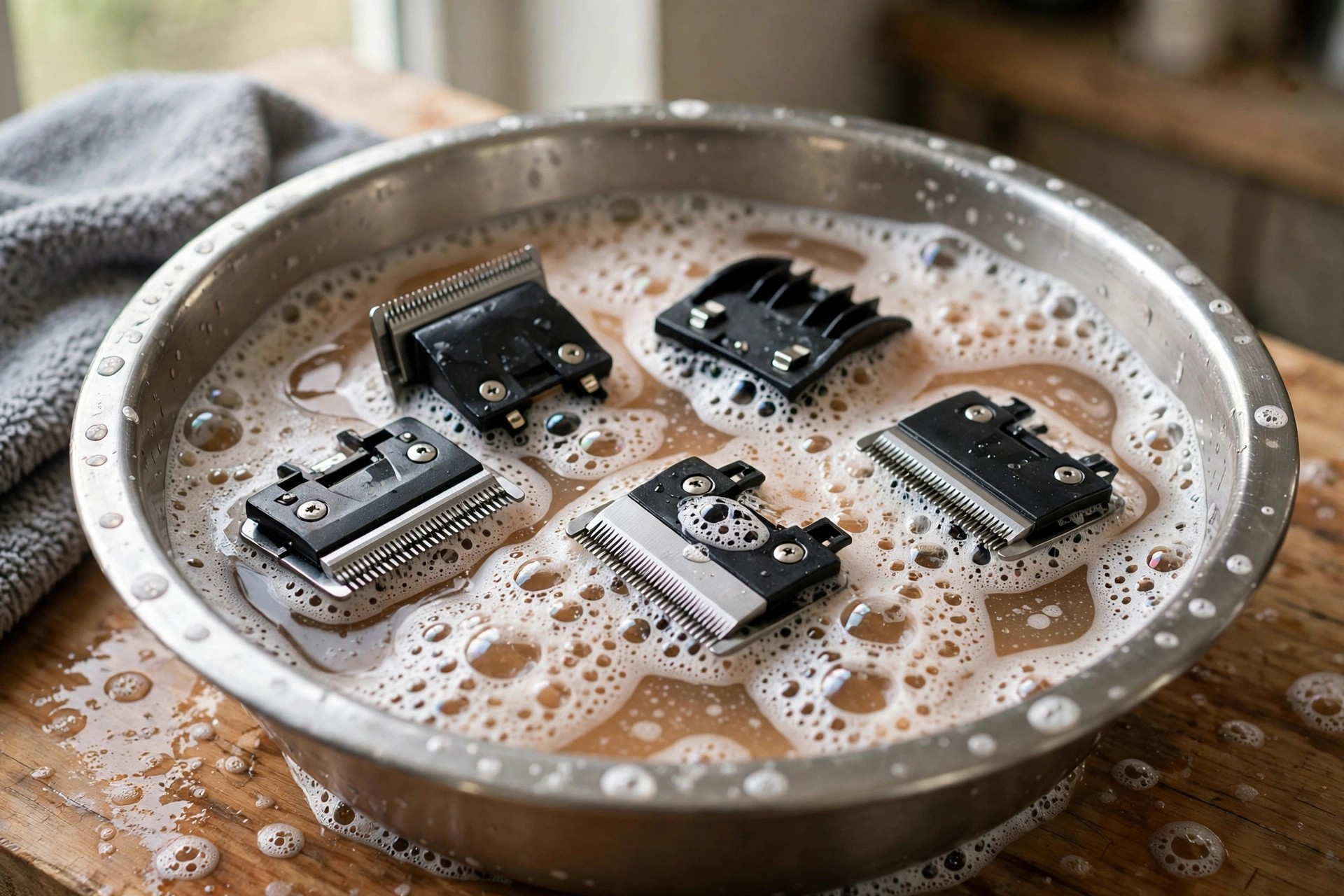
Disassemble the blade assembly if yours allows. Follow the manufacturer instructions for your model. Soak blades in warm soapy water afterwards. Several minutes loosen the stubborn residue well.
Scrub both sides gently with soft brush. A toothbrush works for smaller blade teeth. Avoid excessive force near cutting edges always. Rinse under running water until suds vanish.
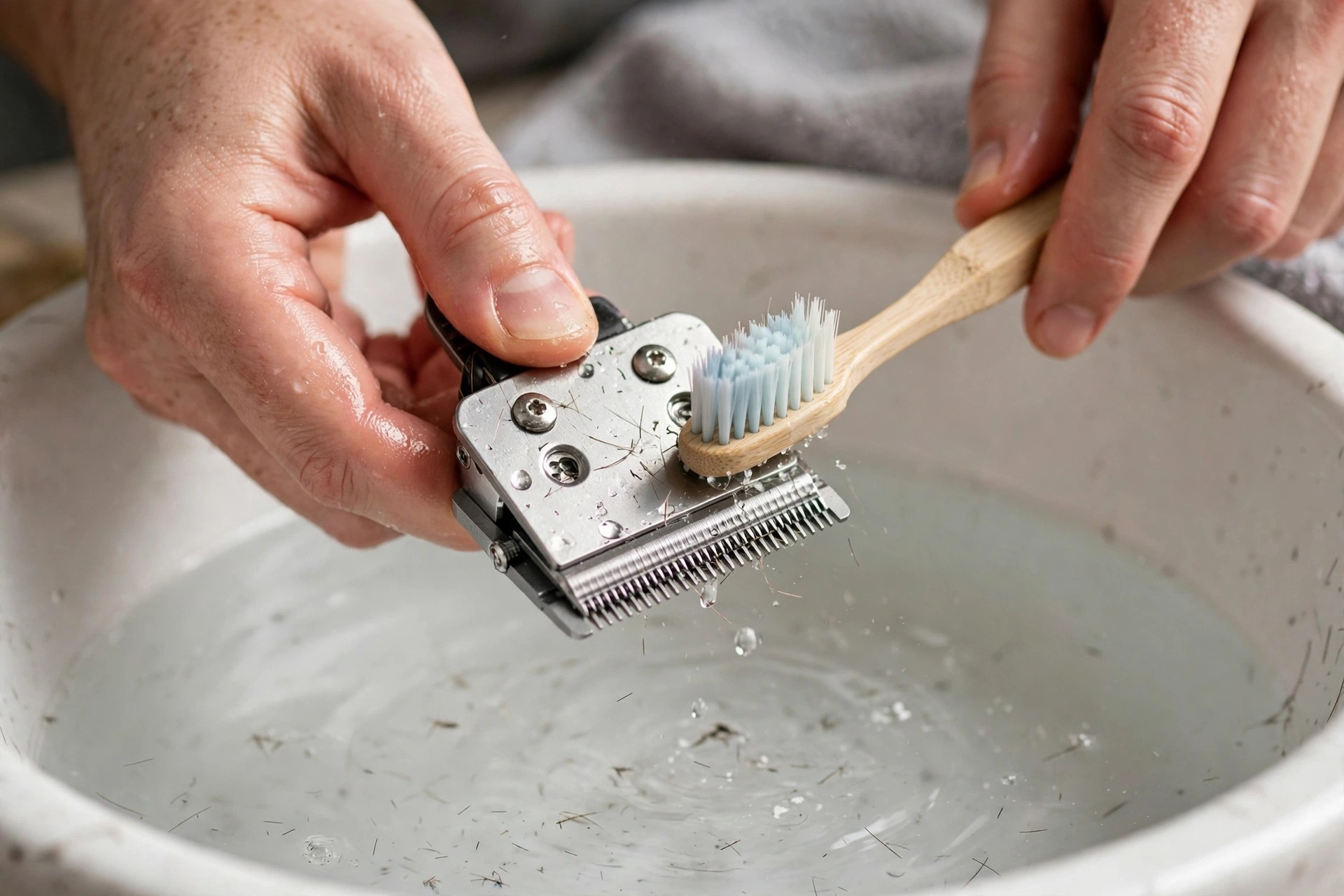
Dry every blade completely before reassembly begins. Wipe excess moisture with a clean cloth. Air dry in a ventilated area afterwards. Our Panasonic trimmer cleaning guide covers one brand fully.
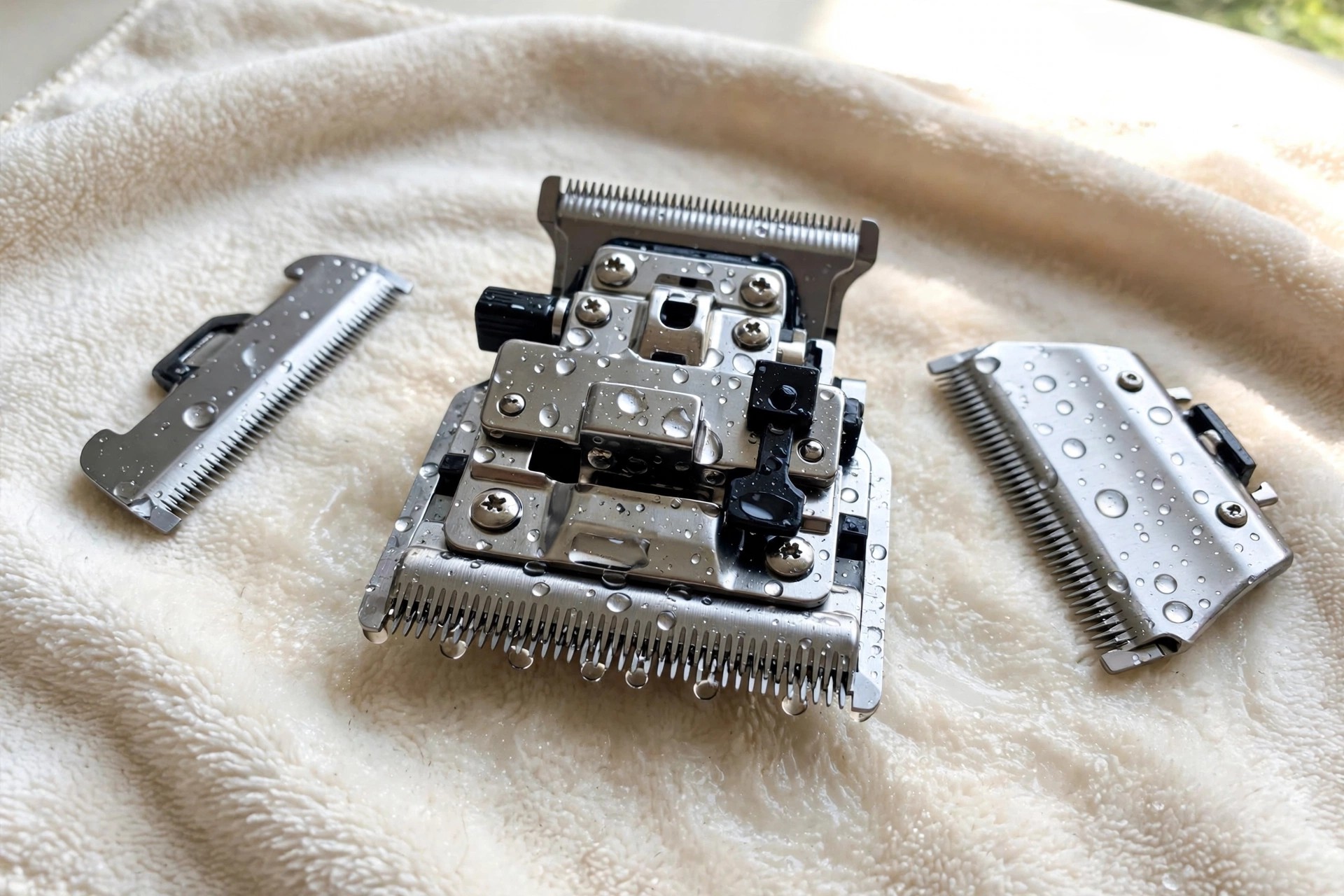
Please note: The post gives conflicting guidance about water here. The steps soak blades in soapy water. One answer allows washing blades with water. Two answers warn water causes rust instead. Dry blades thoroughly whichever method you choose.
Products and Cleaning Frequency
Four named products anchor the recommendations here. Wahl Total Care Hair Clipper Blade Wash leads. Andis Cool Care Plus cools and disinfects. Oster Blade Lube Oil and Wahl Clipper Oil follow.
| Product | What the Post Says |
|---|---|
| Wahl Total Care Blade Wash | Removes dirt, grime and residue effectively |
| Andis Cool Care Plus | Cools, disinfects and lubricates the blades |
| Oster Blade Lube Oil | Long-lasting lubrication, reduces friction and wear |
| Wahl Clipper Oil | Reduces friction and heat, keeps condition |
Clean blades after each regular use ideally. Seasonal tools need a thorough end-of-season cleaning. Wet or sticky material demands immediate cleaning. Dull blades signal cleaning and sharpening time. Regular inspection catches chips and bends early.
Keep Blades Sharp With Regular Upkeep
Oil blade teeth and pivot points regularly. Lubrication reduces friction and prevents rust forming. Sharpen dull blades or visit a professional. Check blade alignment periodically for best performance.
Blade cleaner solutions dissolve dirt during soaking. Vinegar or rubbing alcohol also break residue. Lemon juice removes gunk with citric acid. Compressed air handles quick touch-ups between cleanings.
Excessive scrubbing force damages delicate blade edges. It can bend blades out of alignment. Skipping lubrication after cleaning invites rust quickly. Our blade oiling guide explains correct oiling fully. Our eyebrow trimmer cleaning guide covers smaller tools.
Frequently Asked Questions
How do you clean trimmer blades at home?
Start by unplugging the trimmer completely first. Remove any attachments from the trimmer head. Brush away loose hair from the blades. Pour isopropyl alcohol over the blades carefully. Wipe them dry and avoid using water.
What can I use to clean my clipper blades?
Hold the clipper over a sink carefully. Pour isopropyl alcohol over the teeth slowly. Keep it out of the electrical compartment. Wipe the blades dry with soft towel. Avoid water because it causes rusting problems.
Can I use rubbing alcohol to clean my trimmer?
Yes, rubbing alcohol cleans trimmer blades well. Unplug and brush the trimmer first beforehand. Pour a small amount over the teeth. Keep it outside the electrical compartment always. Wipe the blades dry before using them.
Can I wash my trimmer blade with water?
Yes, you can wash it with water. Add hand or body soap for cleaning. Gently brush the teeth under warm water. This disinfects the trimmer and removes bacteria. Dry the blade thoroughly to prevent rusting.
How often should you clean trimmer blades?
Clean them after each use ideally always. Seasonal users clean thoroughly at season end. Wet or sticky material needs immediate cleaning. Dull blades also signal cleaning time clearly. Regular inspection catches damage before it worsens.
Store the trimmer in clean, dry places. Moisture invites rust on stored blades quickly. Our Manscaped trimmer cleaning guide covers another grooming tool. Our Venus bikini trimmer cleaning guide handles delicate area tools.
Conclusion: How to Clean Trimmer Blades
So, mastering how to clean trimmer blades matters. Regular cleaning keeps blades sharp and ready. Neglect causes poorer performance and even possible breakage. Dirty blades risk spreading disease and pests. Small effort pays off in lasting efficiency.
Clean after each use or regularly anyway. Lubricate the blades regularly with suitable oil afterwards. Store the trimmer dry, away from moisture. Stick to manufacturer recommended methods whenever possible. Years of hassle-free trimming sessions reward this simple habit.