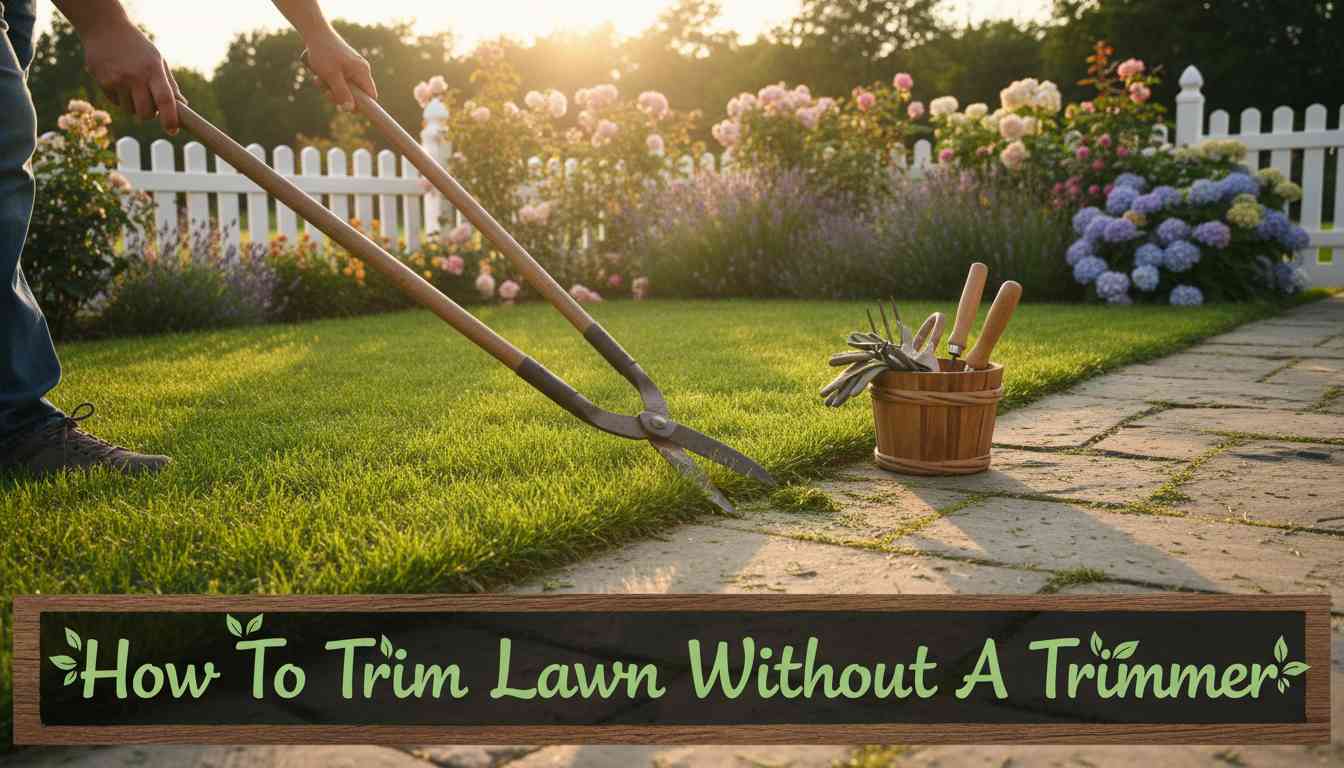
Gardening enthusiast or not, we’ve all experienced the need to maintain a neat and tidy lawn at some point or the other. However, what happens when you find yourself without a trimmer? Not a circumstance many of us have contemplated, yet it’s quite possible to achieve a well-kept lawn, even without this key tool at our disposal.
In historical times, long before the invention of modern gardening tools, people employed simple yet effective methods to keep their lawns in check. The trusted hands-on approach was to manually pluck out unwanted grass or use sharp-edged tools. Based on data shared by the Garden History Society, it was revealed that majority of gardens in 18th century England were maintained this way. Thus, this ancient methodology could serve as a credible alternative to trim your grass, even today.
- Begin by raking the lawn to separate the grass blades.
- Next, put on your garden gloves and grab your hand shears.
- Proceed to cut the lawn’s grass manually, ensuring you’re consistent with height across the lawn.
- Finally, rake again to collect the loose grass clippings.
This is a simple, efficient method to keep your lawn neat when you don’t have a trimmer readily available. The process might take a bit more time and effort compared to using a trimmer, but it delivers satisfactory results nonetheless.
 Source: staticflickr.com
How to Trim a Lawn Without a Trimmer: Easy DIY Methods for a Clean Cut
A neat and well-kept lawn not only enhances the aesthetics of a home but also contributes to its value. The traditional method of maintaining a lawn involves a lawn trimmer. But what if you don’t have one? This article will explore the exciting journey of how to trim lawn without a trimmer, teaching you to maintain a flawless lawn using basic gardening tools and techniques. Let’s dive in.
Step 1: Gather Required Tools
The very first step in trimming your lawn without a trimmer is to assemble all the necessary tools. Traditional lawn care tools have been used for centuries, long before the invention of modern equipment like lawn trimmers. Some of the essential tools you’ll require to maintain your lawn perfectly are hand shears, garden scissors, and a manual lawn mover.
For larger areas, consider using a scythe. Scythes were used historically for mowing grass, cutting crops, or weeding on farms. Although they’re old-fashioned, they make large jobs easier and are relatively easy to use with a little practice. They are especially practical when caring for a lawn without a trimmer.
A lawn edger becomes necessary when dealing with awkward corners or edges that a lawn mower or scythe can’t reach. For a professional finish, you might also need a hard broom and a garden rake for tidying up the lawn after trimming.
Finally, some non-traditional tools can also come in handy for specific trimming tasks. For instance, a sturdy pair of gardening gloves can protect your hands, and kneepads can provide comfort during long hours of gardening work.
Step 2: Get Rid of Weeds and Obstructions
Before starting to trim, ensure you have cleared your lawn of any obstructions and undesirable plant growth, such as weeds. Weeds compete with your plants for water, sunlight, and nutrients, diminishing the beauty and health of your lawn.
Dig out the weed using a gardening knife or a weed puller. Make sure to get the roots as well, so it doesn’t grow back. Large weeds may require you to use a spade or a fork.
Walk around your lawn and remove any noticeable leaves, branches, stones, or debris. A landscaper’s rake is ideal for this task and can also be used to level your soil in preparation for mowing or trimming.
Once you have a clear, debris-free surface, it’s time to start trimming the lawn. Remember, the key to understanding how to trim lawn without a trimmer lies in doing the groundwork properly before you start cutting.
Step 3: Trim the Lawn
Now begins the most satisfying part of lawn maintenance: cutting the grass. For small to medium-sized lawns, garden shears or a manual lawn mower works excellently for true trimming precision. Set a proper height for your lawn mower to ensure even cutting.
If you’re using hand shears or garden scissors, start cutting the grass blade by blade. Make sure to cut in a straight line, and maintain the uniformity of the cut height throughout the lawn. This might seem time-consuming but remember the goal is to produce an aesthetically pleasing lawn without using a trimmer. Patience is key.
For larger lawns, a scythe can be employed. Make sure you have a good grip and maintain a steady rhythm while using a scythe to avoid inconsistencies in the grass length.
Remember to handle the cutting tools carefully to prevent any accidents. Also, take regular breaks to prevent fatigue.
Step 4: Shape and Edge Your Lawn
After trimming the lawn, use a lawn edger or normal hand-held shears to create clean borders around the edges. Beautiful edges give an organized and professional look to your garden. When edging, ensure you create a ‘moat’ that is wide enough to prevent grass from creeping into the flowerbeds.
Also, remember to trim around the obstacles like trees, flower beds, and garden ornaments where mowers can’t reach. Handheld grass shears are perfect for this task.
Use yardsticks or garden hoses to create accurate shapes, curves, or lines. Measure twice and cut once to avoid any mistakes.
Edging and shaping your lawn are tasks that require attention to detail. These are the finishing touches that can make a huge difference in the overall look of your garden. Keep your movements steady and aim for a clean, straight finish.
Step 5: Clean Up
After all that hard work, it’s time to clean up. Use a garden rake or a broom to collect the piles of grass clippings. These clippings can be added to your compost pile or used as mulch. Make sure not to leave any grass clippings on the lawn as they can smother the grass underneath, causing brown patches.
Always clean your tools after each use to keep them in good condition. Sharpen the blades of your tools regularly to maintain their efficiency.
Last but not least, don’t forget to water the lawn after trimming. Watering will help to strengthen the roots after their recent trim, promoting a healthier lawn.
Following these steps on how to trim lawn without a trimmer can help you maintain a beautiful and healthy lawn. Remember, the key is patience, dedication, and the right tools and techniques.
Even without a trimmer, you can create a stunning, healthy lawn that is the envy of your neighborhood. It’s all about consistency, attention to detail, creativity, and loving what you do. After all, gardening is therapeutic, and the effort you put into your lawn maintenance can be a rewarding hobby that offers endless satisfaction and relaxation. So, replace that lawn trimmer with some elbow grease and thrive in the beauty of your trimmed, happy lawn!
 Source: trustedreviews.com
Frequently Asked Questions
If you have ever been caught without a lawn trimmer and still need to maintain your lawn, you’d know it can be quite a challenge. However, alternative trimming methods do exist. And, we have compiled a list of the most frequently asked questions about them here.
1. Is it possible to maintain a lawn without a trimmer?
Definitely, it’s possible to maintain a lawn without a trimmer. Although it may be more time-consuming and strenuous, several methods can be used to keep your lawn neat without the use of a trimmer. These methods primarily involve physical labour and instruments you may already have around your home.
For instance, traditional garden tools like shears, pruning scissors, or even a sharp knife can enable you to trim your lawn. Additionally, you could also consider ecological options like using animals such as sheep and goats for lawn maintenance.
2. Can I use a lawnmower in place of a trimmer?
Yes, a lawnmower can function as an effective tool for lawn maintenance, although it wouldn’t provide the same level of precision as a trimmer. Lawnmowers are excellent at cutting grass at a uniform height. However, since they’re primarily designed for larger, open spaces, they might not reach certain areas such as corners, edges, or around trees, which a trimmer is designed to handle.
Despite this, you can still achieve a decent job by carefully maneuvering your lawnmower to reach as many areas as possible. Be conscious about landscaping features and obstructions to avoid causing damages.
3. What are the best alternatives to a lawn trimmer?
There are various equipment options you can use for lawn maintenance as alternatives to a lawn trimmer. The most common include shears, pruning scissors, or a sharp knife. Shears, in particular, are beneficial for cutting longer grass blades. They’re efficient and can quickly handle large swathes of grass.
Alternatively, a hand-powered sickle could be used to cut grass, especially in tricky areas where a lawnmower can’t reach. However, this method is quite labor-intensive, and care should be taken to handle the sharp blade safely.
4. How can I trim my lawn without tools?
Trimming a lawn without tools is certainly a challenge but not impossible. One method you could consider is the old-fashioned way of pulling out the excessive grass blades with your hands. This method works particularly well for smaller lawns. It’s, however, quite laborious and time-consuming.
Another idea for maintaining a lawn without tools could be through the exploitation of livestock. Animals such as sheep and goats naturally graze on grass and can therefore maintain a lawn for you. Bear in mind this alternative depends on the type of your lawn and your location’s regulations on the use of livestock for residential lawn maintenance.
5. Could regularly watering and fertilizing my lawn minimize the need for trimming?
While it’s true that regular watering and fertilizing can promote healthier, lusher grass, these actions wouldn’t directly minimize the need for trimming. On the contrary, providing your lawn with plenty of water and nutrients often encourages thicker and faster growth. Consequently, without regular trimming, your lawn could quickly become unruly.
That said, you might be able to slow down grass growth somewhat by reducing the frequency of watering and fertilizing. This approach could help you lengthen the periods between trims, but remember the health of your lawn should not be compromised. An undernourished and dehydrated lawn can lead to more significant problems such as disease, weeds, or bald patches.
Secret to Edging like a pro| Without a Edger | How To
Conclusion
From our discussion, it’s evident that lawn care doesn’t always require expensive power tools. Utilising gardening shears for small patches or a scythe for larger surface areas gives us satisfactory results. The key is to maintain a regular trimming schedule, use sharp tools and mow the lawn in a pattern that fosters healthy growth.
Above all, it’s fundamental to understand your lawn’s specific needs. Mowing height varies with the type of grass, season, and location. Remember to leave the clippings on the lawn as they break down and return essential nutrients back to the soil. The takeaway here is, with patience, planning and some elbow grease, we can maintain a pristine lawn even without a lawn trimmer.

I’m Patricia D. Johnson, an affiliate marketer and blogger specializing in trimmers and grooming tools. I create honest reviews, buying guides, and practical tips to help readers choose the right trimmer for their needs. With a focus on quality, performance, and value, I simplify the decision-making process so consumers can make confident purchases.