
Should You Oil Hedge Trimmer Blades? Benefits and How-To
Oiled blades cut smooth and last far longer than dry ones. You may ask, should you oil hedge trimmer blades at all? The short answer is yes, and the job takes just minutes. This guide shows the benefits, the oil, and the steps.
Oil cuts friction, stops rust, and keeps blades sharp longer. A thin coat shields the steel from damp, sap, and dirt. You will learn when to oil and which oil to pick. The tables below show each benefit and step side by side.
Oiling suits any homeowner with a hedge trimmer at home. Work with the trimmer off and the battery taken out. A few drops of oil go a long way on steel blades. Read on to keep your blades in top shape for years.
Quick answer: Yes, oil the blades before and after each use. Use a lightweight machine oil for most hedge trimmer models. Never oil the blades while the trimmer runs or stays plugged in. Oil cuts friction, stops rust, and helps blades last longer. Some models need a heavier-duty oil, so check your manual first.
Should You Oil Hedge Trimmer Blades? Key Points
Yes, oil your hedge trimmer blades before and after each use. A light machine oil keeps the blades smooth and free of rust. Never oil the blades while the trimmer runs or stays on charge. Some models need a stronger oil, so check your manual first. Our guide to what a hedge trimmer is covers the tool basics.
The Short Answer
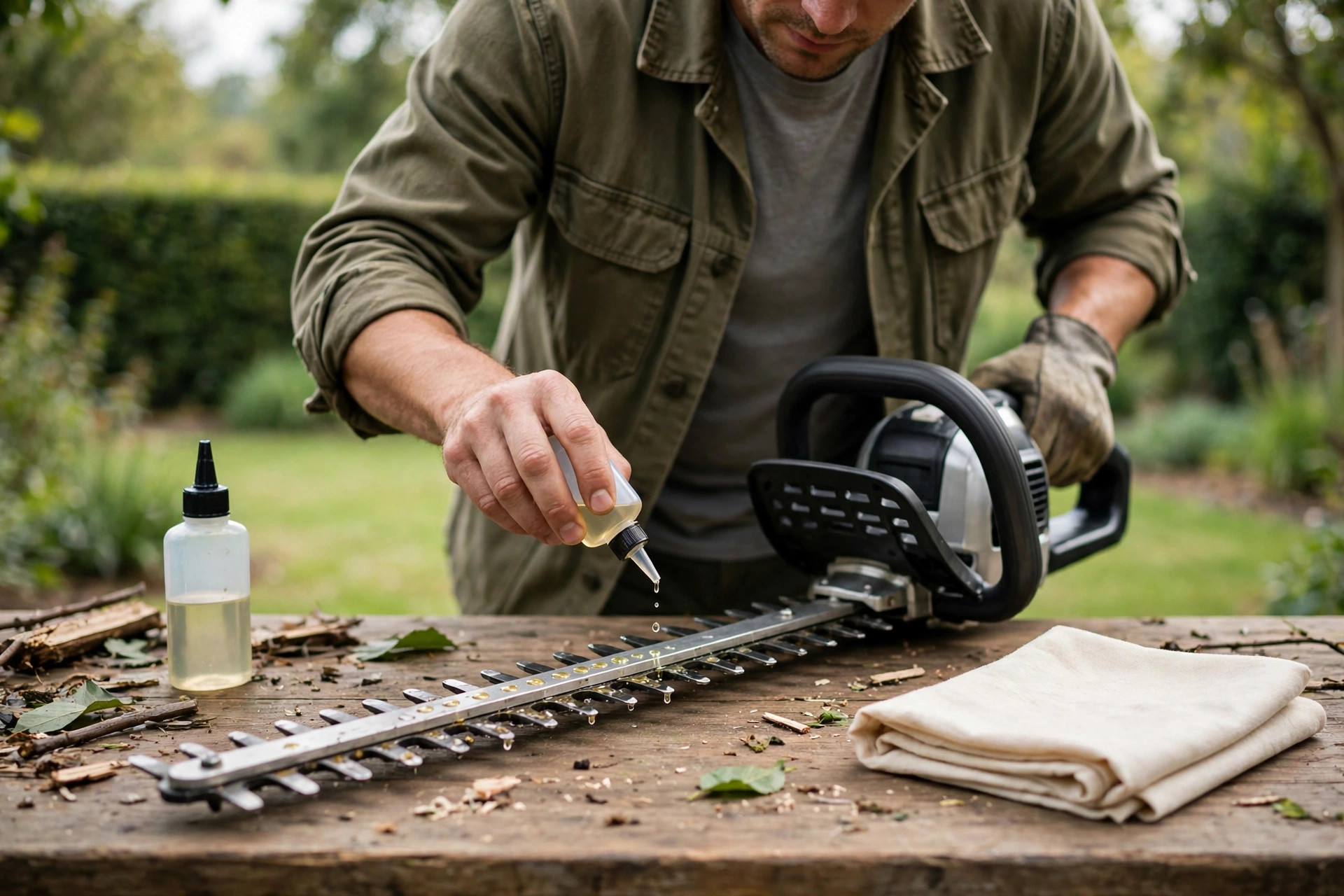
Oil the blades with light machine oil before and after use. A thin coat stops rust and keeps the cut clean and smooth. Wipe off extra oil so it will not catch dirt and dust. Our oiling guide shows the full steps for trimmer care.
Benefits of Oiling Hedge Trimmer Blades
Oiling gives your trimmer three clear gains for little effort. The table below lists each gain and what it does for you. Together, these gains keep your trimmer sharp and safe to use. A well-oiled trimmer also costs less to run over the years.
| Benefit | What It Does |
|---|---|
| Enhanced performance | Smooth glide, clean cuts, less motor strain |
| Rust and corrosion prevention | Barrier against damp, sap, and debris |
| Extended lifespan | Less wear, fewer replacements, fewer faults |
Enhanced Performance
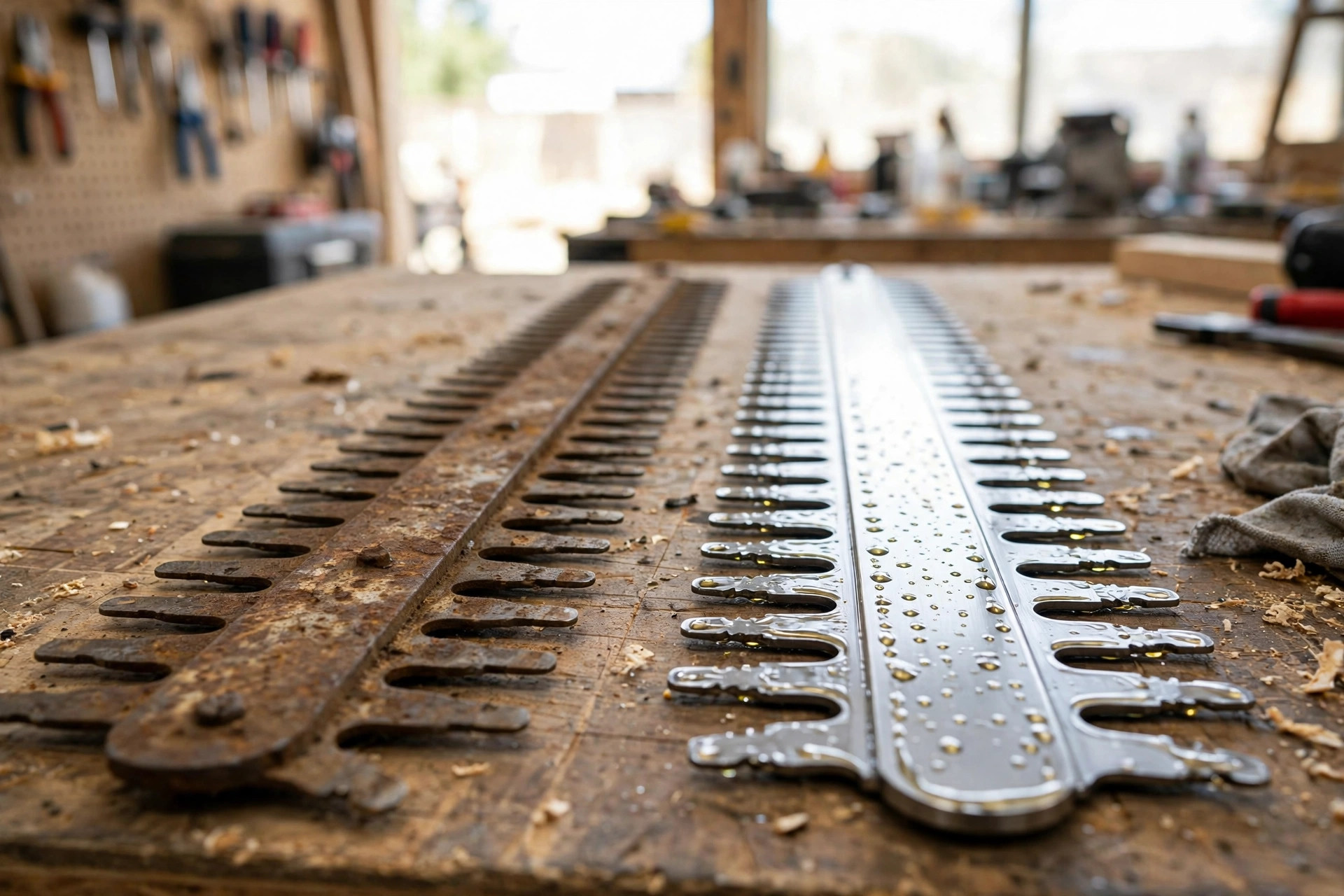
Oiled blades glide through stems and leaves with great ease. Less friction means a cleaner cut and a happier motor. Smooth blades also make trimming faster and less tiring work. Your hedges will look neater with each pass you make.
Prevention of Rust and Corrosion
Blades face damp, sap, and dirt each time you trim. Oil forms a shield that keeps damp off the steel surface. The shield also keeps sap and dirt from sticking to blades. Clean blades stay sharp and cut well for far longer.
Extended Lifespan
Oil cuts wear between the blades and slows dulling down. Sharp blades last longer and need fewer swaps over time. A cared-for trimmer breaks down less and runs for years. Our blade life guide tells you when trimmer parts wear out. Our blade sharpening guide covers safe care for your blades.
How to Oil Hedge Trimmer Blades
Oil the blades before and after each use with light machine oil. Never oil the blades while the trimmer runs or stays plugged in. Some models need a heavier-duty oil for the best results. The table below lists the six steps in short form.
| Step | What to Do |
|---|---|
| 1 Turn off and unplug | Switch off, remove the battery |
| 2 Inspect blades | Clear debris with a brush or cloth |
| 3 Apply oil | Small amount, both sides, even coat |
| 4 Move blades | Slide back and forth to spread oil |
| 5 Wipe excess | Clean cloth, too much oil catches dirt |
| 6 Run briefly | Switch on a few seconds to spread oil |
Choosing the Right Lubricant
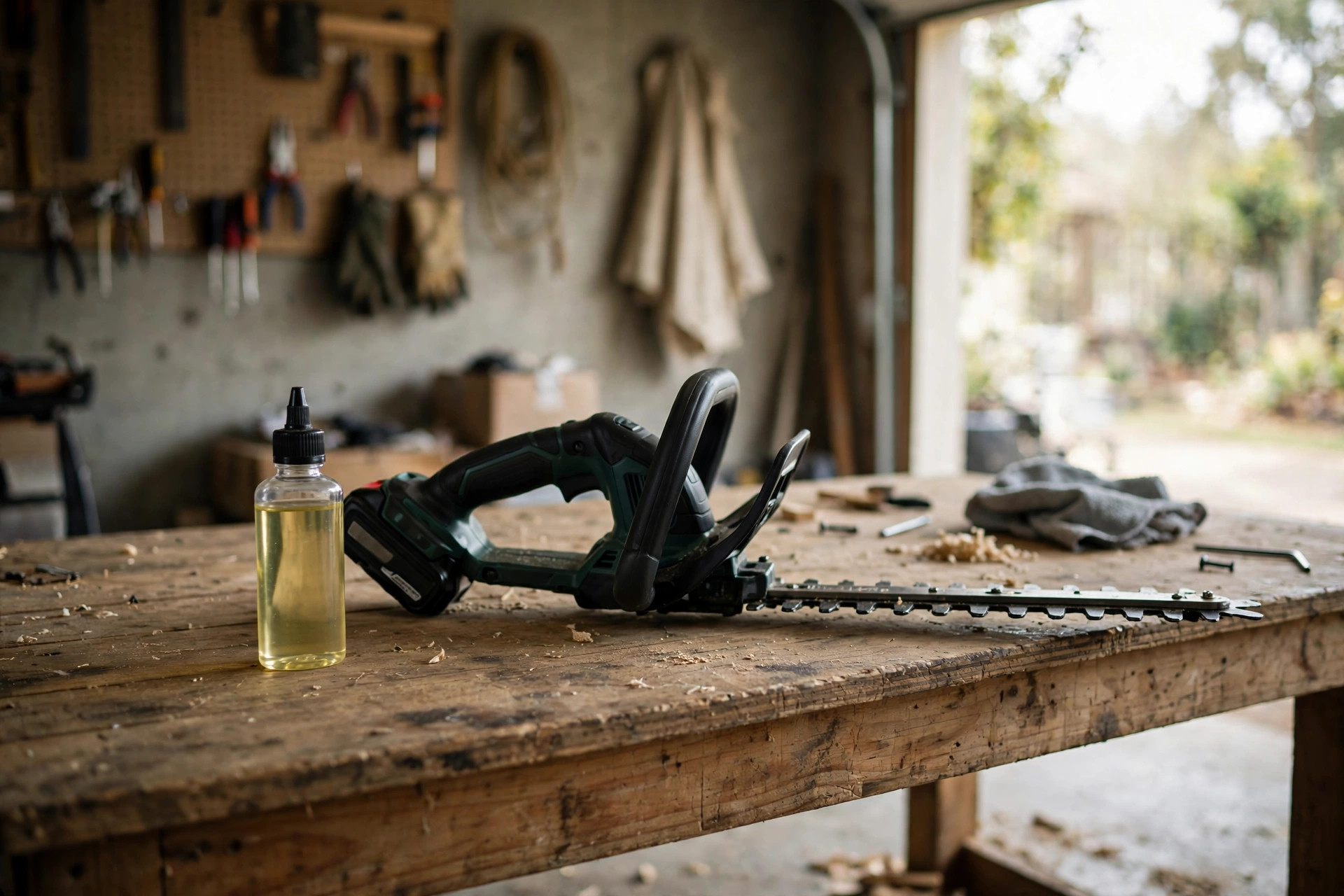
Light machine oil suits most hedge trimmers very well. It coats the blades without causing harm or sticky buildup. Avoid heavy oils or greases, since they add friction and drag. Look for oils made for hedge trimmer blades when you shop.
Step-by-Step Guide
Switch the trimmer off and take the battery out first. Clear debris from the blades with a brush or soft cloth. Put a small amount of oil on both sides of the blades. Move the blades back and forth to spread the oil well.
After You Oil
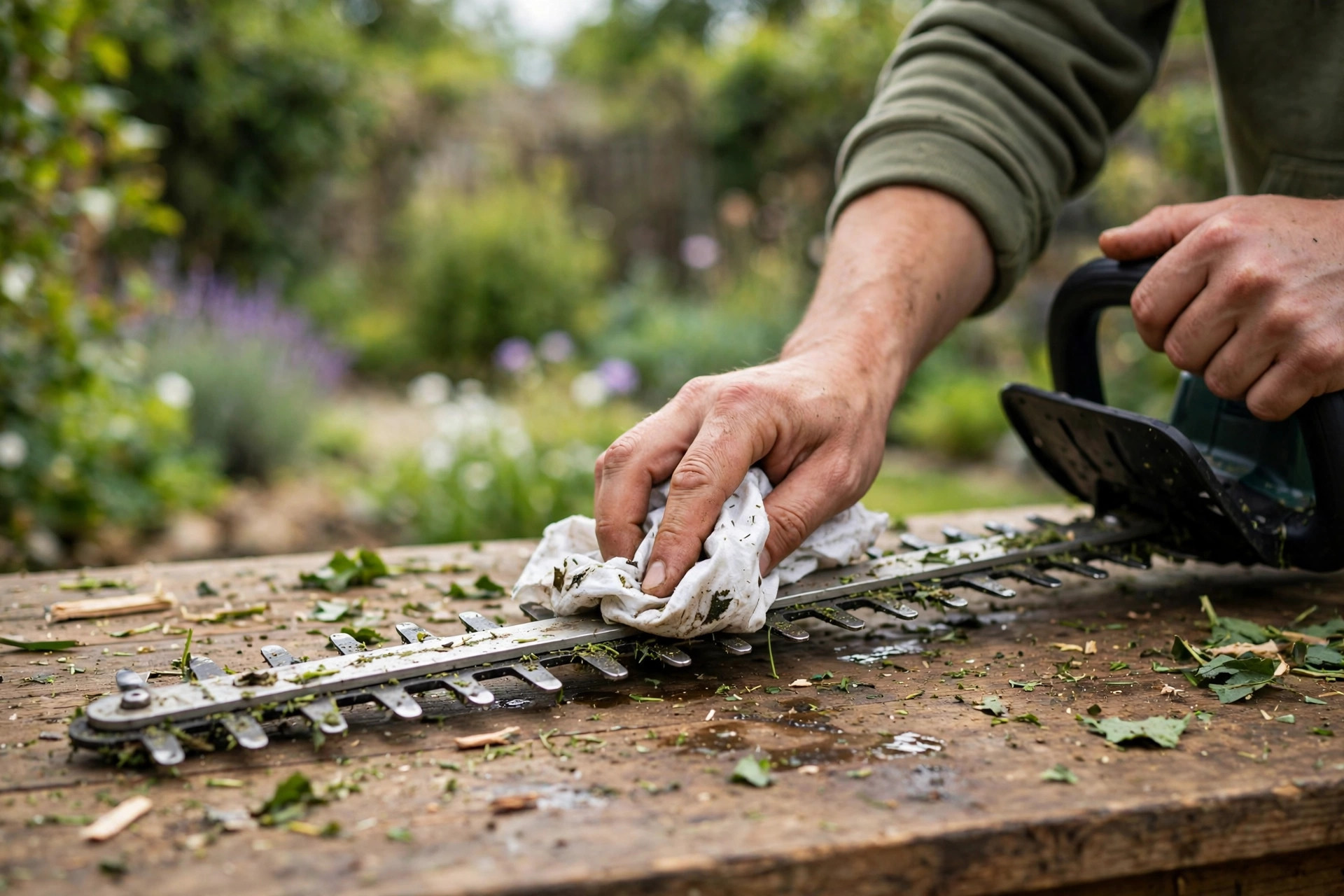
Wipe off extra oil with a clean cloth right away. Too much oil can catch dirt and slow the trimmer down. Run the trimmer a few seconds to spread the oil further. Oil the blades before and after each use for best care.
Frequency of Blade Lubrication
Oil the blades before and after each use for best results. Some models need a heavier-duty oil for hard, long jobs. Never oil the blades while the trimmer runs or stays on charge. Check your manual for the schedule your model needs most.
Before and After Use
A few drops before use cut friction and shield the steel. A light coat after use drives damp off and keeps edges sharp. This habit stops rust and keeps wear down over time. Your blades will stay keen and ready for each trim.
Special Considerations for Different Models
Each model may need its own type of oil or grease. Check the maker guide for the oil your model needs. Hard jobs may call for a harder-working oil than light ones. Our sharpening guide for Echo blades covers one known model.
Factors to Consider Before Oiling
Never oil the blades while the trimmer runs or stays plugged in. Some models need a harder-working oil for peak blade life. Two factors shape your choice: blade type and maker advice. Our pole hedge trimmer guide explains the long-reach tool type.
Blade Material and Coating
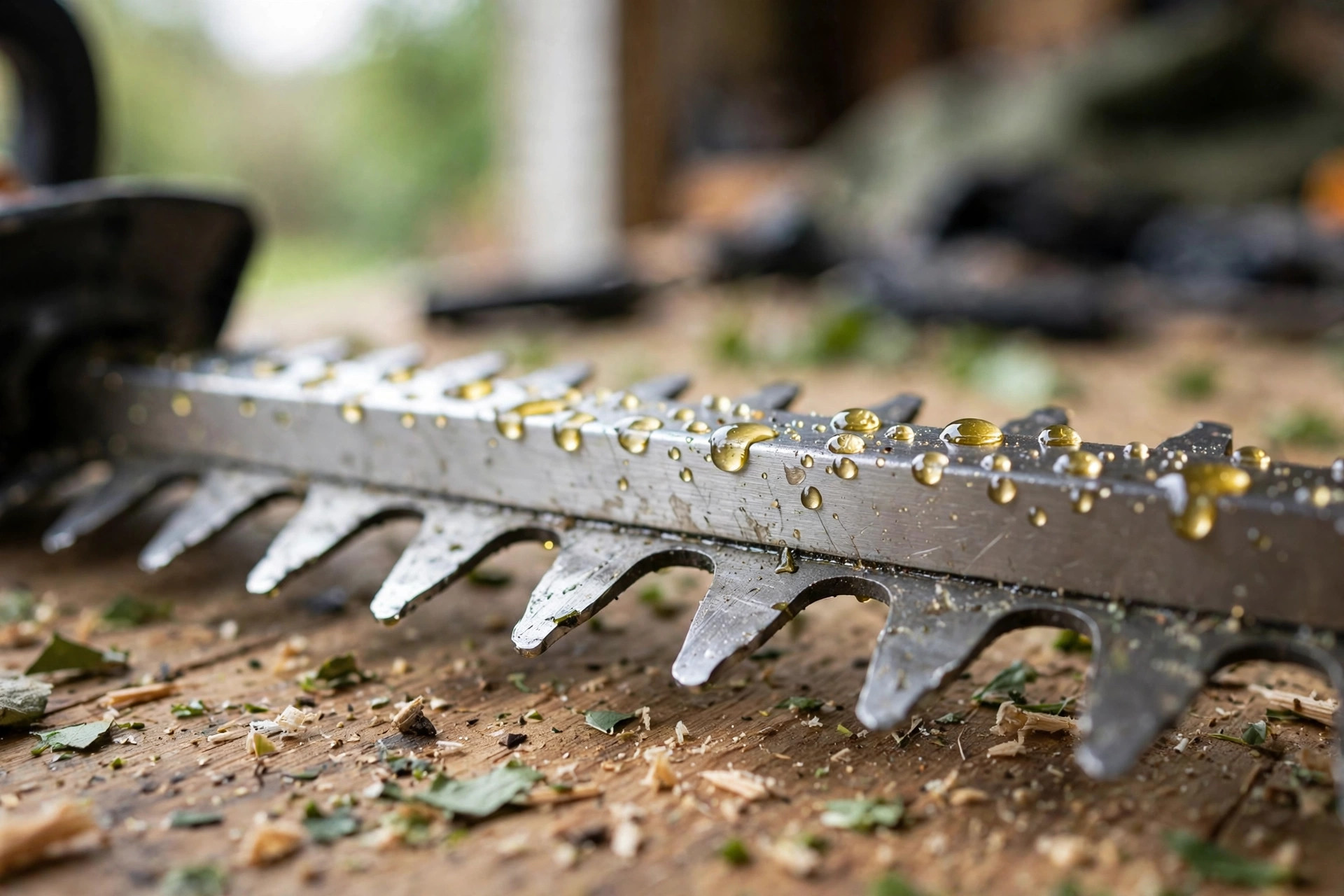
Blade steel and coating shape which oil you should use. Steel and titanium blades may need different oils. Teflon or chrome coats may need special oils to stay safe. Check your manual for the oil your blade type needs most.
Manufacturer’s Recommendations
Maker advice is the best guide for oiling your own model. Makers test their tools and know which oil works best. Follow their notes on oil type and upkeep steps. Our repair guide covers more care for hedge trimmer parts.
Best Lubricants for Different Models
Each model may need its own oil, so check the table. Use the oil the maker names for your own model first. The right oil keeps the blades smooth and free of rust. Visit the STIHL USA site for their hedge trimmer oils.
| Model | Recommended Lubricant |
|---|---|
| Stihl Hedge Trimmer | STIHL Hedge Trimmer Lubricant |
| Ego Hedge Trimmer | Ego Hedge Trimmer Blade Replacement |
| DeWALT Hedge Trimmer | DeWALT Hedge Trimmer Lubricant Spray |
Please note: the table lists a blade replacement as a lubricant. A replacement part is not an oil for blades. The table stays as the live post wrote it for accuracy. Use light machine oil for Ego blades unless the manual says so.
Alternative Methods and Products
Light machine oil is the common choice for most trimmers. Pick a light oil to avoid buildup and keep blades smooth. Some owners use Crisco Oil, which is cheap and easy to find. Follow the maker guide no matter which oil you choose.
Frequently Asked Questions
Can I use WD-40 on hedge trimmer blades?
Use a light machine oil before and after each use instead. Never oil the blades while the trimmer runs or stays plugged in. Some models need a stronger oil for the best blade care. Check your manual for the oil your own model needs.
What is the best lubricant for hedge trimmer blades?
Use a light machine oil before and after each use. Never oil the blades while the trimmer runs or stays plugged in. Some models need a heavier-duty oil for peak blade life. Pick the oil your maker names for your own model.
What spray to use on hedge trimmer blades?
Use a light machine oil before and after each use. Never oil the blades while the trimmer runs or stays plugged in. Some models need a harder-working oil for the best results. A spray made for hedge trimmers coats the blades with ease.
How often should you grease a hedge trimmer?
Oil the blades with light machine oil before and after use. Never oil the blades while the trimmer runs or stays plugged in. Some models need a heavier-duty oil for the best results. Grease the gearbox on the schedule your manual states.
Can I use Crisco Oil on hedge trimmer blades?
Some owners use Crisco Oil, which is cheap and easy to find. It can work as a stopgap when no proper oil sits handy. Light machine oil suits blades best for regular care, though. Follow the maker guide no matter which oil you choose.
Conclusion: Should You Oil Hedge Trimmer Blades
So, should you oil hedge trimmer blades before and after use? Yes, a light machine oil keeps blades smooth and free of rust. Oil only when the trimmer is off and the battery is out. Some models need a stronger oil, so check your manual first.
Proper care keeps your trimmer at its best for years. Oil the blades, wipe off extra oil, and store it dry. A well-kept trimmer cuts clean and lasts far longer. Your hedges will thank you with neat, tidy lines.
