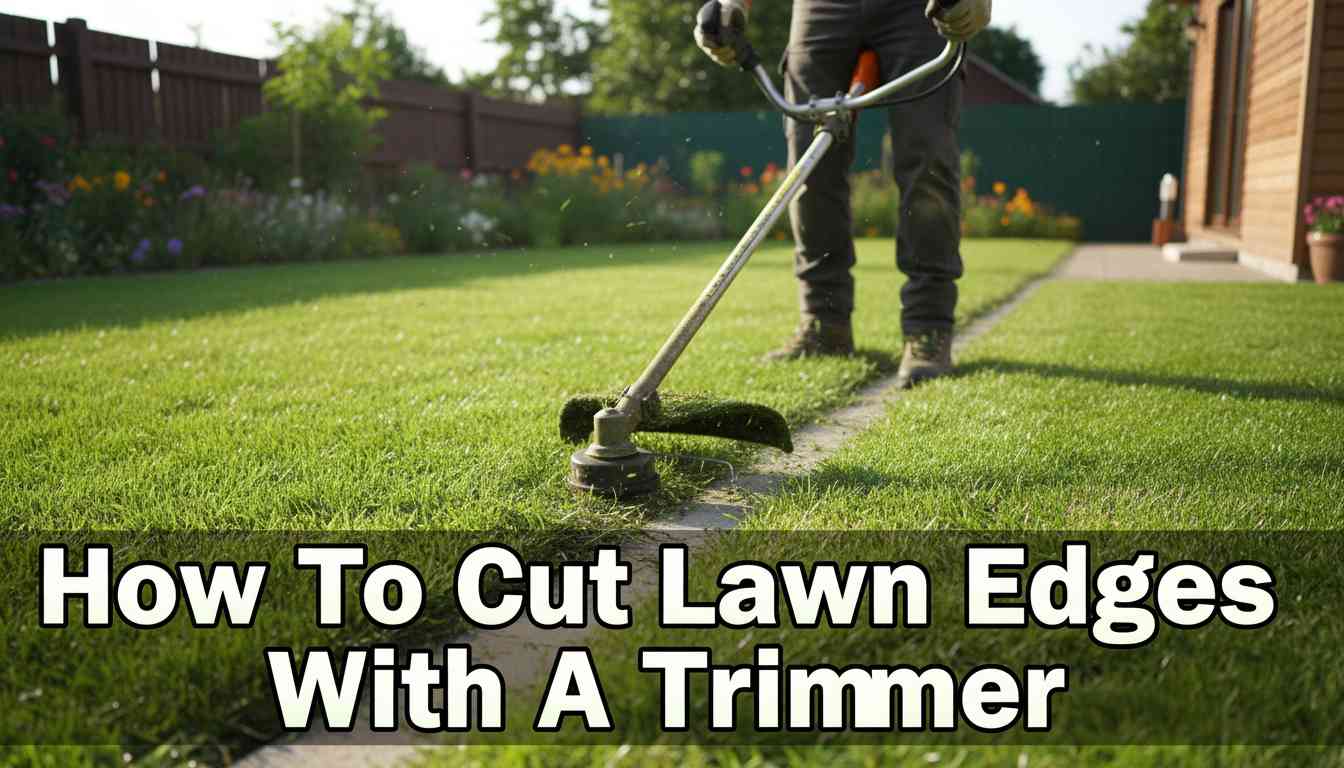
- Firstly, adjust the trimmer’s cutting angle to handle edging easily.
- Keep the trimmer’s wire or blade perpendicularly to the edge of the lawn.
- Start at one point and slowly make your way along the edge avoiding any large rocks or obstructions.
- Keep a neat and uniform cut, and move back and forth over thicker patches.
- Ensure safety by wearing suitable clothing and protective glasses.
Isn’t gardening a form of art, requiring intricate skills and patience? One of my favorite aspects of this art is maintaining the edges of my lawn. Learning to cut edges with precision using a trimmer was somewhat akin to mastering the stroke of a paintbrush.
Starting from the early 1900s when lawns became popular in the United States, trimmers have always been a gardener’s best friend. The result of efficient edging with a trimmer has always fascinated me. It’s interesting to note that a well-maintained lawn can increase a home’s value by up to 20%, making this skill an invaluable asset!
 Source: vectorstock.com
How to Cut Lawn Edges with a Trimmer: Easy Guide for Clean, Sharp Borders
With a few simple tips and the right tools, you can give your lawn a clean, well-manicured look by learning how to cut lawn edges with a trimmer. This article provides you with a step-by-step guide on creating professional-looking lawn edges using a trimmer.
Step 1: Get Your Equipment Ready
Before starting the process of lawn edging, it’s crucial to get your equipment ready. Your weed trimmer will provide you with the flexibility and precision needed to create clean edges on your lawn. Ensure it’s in good shape by cleaning air filters, refilling gasoline/oil, and ensuring your cutting lines are ready to slice through the grass.
If possible, opt for a trimmer with a pivoting head. It allows you to adjust the angle of the trimmer, making it easier to handle and better at achieving accurate cuts. It’s highly recommended to wear safety goggles, durable gloves, and sturdy shoes while operating the trimmer to ensure your safety.
Alongside this, ensure you mark your lines with a garden hose or string to create a guide before you start cutting. This will help in maintaining a straight edge while trimming your lawn.
Lastly, look for a trimmer with an adjustable handle. This feature will ensure further comfort and precision in cutting your lawn edges.
Step 2: Cutting the Edges
With your trimmer ready and safety measures in place, it’s time to start cutting your lawn edges. Hold the trimmer in a vertical position and edge along your marked line. Use a steady motion and try to make as few stops as possible to maintain consistency. Ensure you’re cutting at a depth of about 1 inch below the soil surface.
Remember to hold the equipment with both hands to ensure accuracy and minimize strain. Also, maintain a constant pace and motion while moving the trimmer along the edge of the lawn.
Edging requires a bit of finesse. It might feel a little unnatural at first, but with practice, you’ll get the hang of it. Avoid rushing, and remember the goal is to create a clean, straight line.
Avoid cutting into beds or paths. This will not only damage the trimmer blade but also make the edges of your lawn appear untidy. Always aim for a clean, simple line for the neatest finish.
Step 3: Clean Up the Edges
After you’ve trimmed the edges, you’ll likely have leftover grass and dirt. Sweep away or vacuum up this debris to keep your freshly cut edges looking clean and sharp. You can use a broom, rake, or lawn vacuum to tidy up the area.
The clean-up step is vital; it not only cleans your garden but also makes the sharpness of your cuts visually evident. If you spot any uneven areas during your clean-up, you can go back and correct them with the trimmer.
After cleaning, consider adding mulch or decorative stones to further enhance the appeal of your newly edged lawn. These add texture, suppress weeds around the edges, and deliver an impressive manicured look.
Other than its aesthetic feature, a well-cleaned edge acts as a boundary, preventing the grass from growing into your flower beds or path areas.
Step 4: Maintain Your Lawn Edges
Regular maintenance is the key to keeping your lawn edges looking sharp and designed. Depending on the growth rate of your grass, consider edging your lawn once or twice a month during the growing season.
Regular maintenance reduces the risk of grass creeping into flower beds or onto paths. It also reduces the amount of time you spend correcting these issues,
Remember to clean your trimmer after each use. It not only prolongs the life of your trimmer but also keeps it ready for the next use. A clean trimmer delivers cleaner cuts, enhancing the overall appearance of your lawn.
Apply the “less is more” rule when it comes to lawn edging, especially as a beginner. It is better to go slow and steady, ensuring straight, even lines rather than rushing and ending up with ragged, uneven edges.
Mowing and cutting lawn edges are two integral parts to maintain a manicured lawn. The seamless combination of a neatly mowed lawn and precisely cut edges will surely boost the curb appeal of your outdoor space. Learning how to cut lawn edges with a trimmer is a useful gardening skill. With practice and persistence, you can keep your lawns beautifully manicured and looking their very best all season long.
 Source: trustedreviews.com
Frequently Asked Questions
The process of cutting lawn edges with a trimmer can be complicated for beginners. Here are a few commonly asked questions to provide additional guidance and clarity.
1. What type of trimmer is best for cutting lawn edges?
In my experience, a line or string trimmer is an excellent choice for effectively cutting lawn edges. The lightweight design and flexible head allow for easy maneuverability along the edges. Cordless versions provide the most convenience as they can reach any part of the garden without restriction, however corded versions can also be effective, as long as you’re careful to avoid the cord.
Additionally, the thickness of the line plays a crucial part in the machine’s performance. A thinner line can perfectly shape small to medium-sized lawns, while a thicker line is ideal for larger lawns with tougher grass.
2. How often should I trim the edges of my lawn?
This is often dependent on how quickly your grass grows, the season, and your personal preference for lawn aesthetics. Generally, we suggest trimming the edges of your lawn once a week during the growth season (spring and summer). This consistent maintenance encourages a healthier lawn and a more polished appearance.
In contrast, during the dormant season (fall and winter), you can reduce your trimming schedule to once every two to three weeks, or as needed. Properly maintaining the edges of your lawn can really enhance your home’s landscaping and overall curb appeal.
3. What safety precautions should I take when cutting lawn edges with a trimmer?
While using a trimmer, your safety should always be your highest priority. Always wear protective gear, including thick gloves, safety glasses, sturdy shoes, and long pants. These accessories can help prevent any accidental injuries caused by flying debris or accidental contact with the trimmer line or blade.
Additionally, make sure the trimming area is clear of other people, pets, and obstacles that could interfere with your cutting. If your trimmer is electric, ensure you’re using an earth leakage circuit breaker to prevent any potential electric shocks. Always follow the manufacturer’s instructions for safe use.
4. How can I achieve straight edges when trimming?
Achieving straight edges while trimming can be a challenge at first. However, practicing your technique over time can significantly improve your skills. I’ve found it helpful to imagine a straight line and consistently follow that line as I’m cutting. Keep in mind, the goal isn’t perfection but rather to create a neat and polished appearance.
Another useful tip is to consider using a lawn edging tool or a plank of wood as a guide for the trimmer. This method can help ensure straight lines and uniform trimming along your lawn’s edges. Experiment with different techniques to see what works best for you. Remember, practice makes perfect!
5. What can I do to avoid damaging plants and flowers when trimming lawn edges?
When trimming around delicate plants or flowers, be extra cautious to avoid inadvertently damaging them. I’ve found that using a trimmer guard can be extremely beneficial, allowing you to trim close to your plants without fear of harming them. A guard acts as a protective barrier between the trimmer blades or line and your cherished plants.
Another useful tip is to trim slowly and carefully when you’re near plants or flowers. If you’re finding it difficult to cut around them with the trimmer, consider using handheld pruning shears or a manual edging tool for more precise control. This way, you can maintain a beautiful, neat lawn without compromising your landscape’s other elements.
#1 EASIEST Way To Edge A Sidewalk (How The Pros Do It)
Conclusion
So there you have it, we’ve walked through the procedure on how to use a trimmer to make your lawn edges neat and presentable. Remember, safety is key, so always wear protective gear, and ensure the trimmer is in good condition before each use.
Angle your trimmer correctly to avoid scalping the lawn or digging up the soil, and always control your trimmer’s speed according to the thickness of the grass or weed being cut. Clean up after trimming to prevent buildup on the trimmer and potential damage to the trimmer or your garden.
With a little bit of patience and careful trimming, you can improve the overall look of your lawn. The task of cutting your lawn edges does not have to be a daunting chore. With the right methods and regular practice, you’ll be a pro at this in no time. Happy trimming!

I’m Patricia D. Johnson, an affiliate marketer and blogger specializing in trimmers and grooming tools. I create honest reviews, buying guides, and practical tips to help readers choose the right trimmer for their needs. With a focus on quality, performance, and value, I simplify the decision-making process so consumers can make confident purchases.