How to Store String Trimmer in Garage: Safe Steps
Good storage keeps a trimmer ready for years. You may ask, how to store string trimmer in garage safely? The answer starts with cleaning and drying well. Five simple steps protect the machine all season.
Leaning the trimmer against a wall shortens its life. Hanging it vertically reduces unnecessary strain on the engine. A cited study suggests correct storage makes trimmers last 42% longer. The change also tidies the whole garage noticeably.
This guide walks through every storage step carefully. You will clean, dry, position, and cover it. Regular checks keep it ready between uses too. Winter storage and helpful accessories come last here.
Quick answer: Clean it, dry it, and hang it vertically. First remove grass, mud, and debris from every part. Hang it head-down on sturdy hooks, then cover it loosely. Drain fuel from gas models before any long storage. Check it regularly for rust, wear, and damage.
How to Store String Trimmer in Garage? The Short Answer
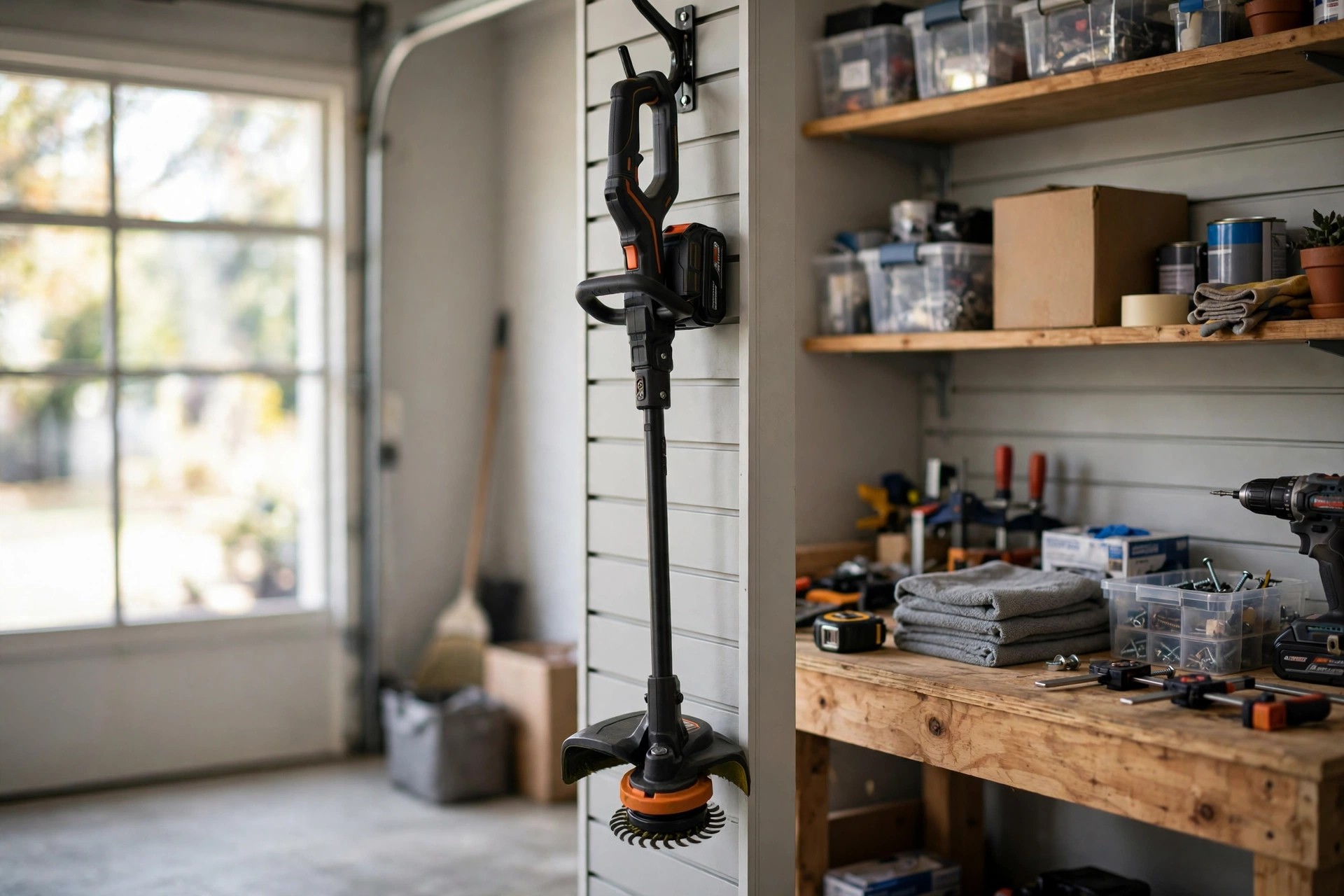
Start by cleaning your string trimmer of debris. Ensure it is completely dry before storage time. Hang it vertically on sturdy garage wall hooks. The head sits lower than the handle then.
Why Position Matters for Fuel and Oil
Keeping the head lower holds fuel down low. Oil also stays toward the bottom that way. Our vertical hanging guide covers the engine strain angle. Cover it with cloth to block dust afterward.
The Wikipedia string trimmer page outlines the tool basics. Storage is one part of owning it well. Our weed trimmer use guide covers safe handling basics. The next steps handle cleaning and drying first.
Clean It and Dry It Before Storage
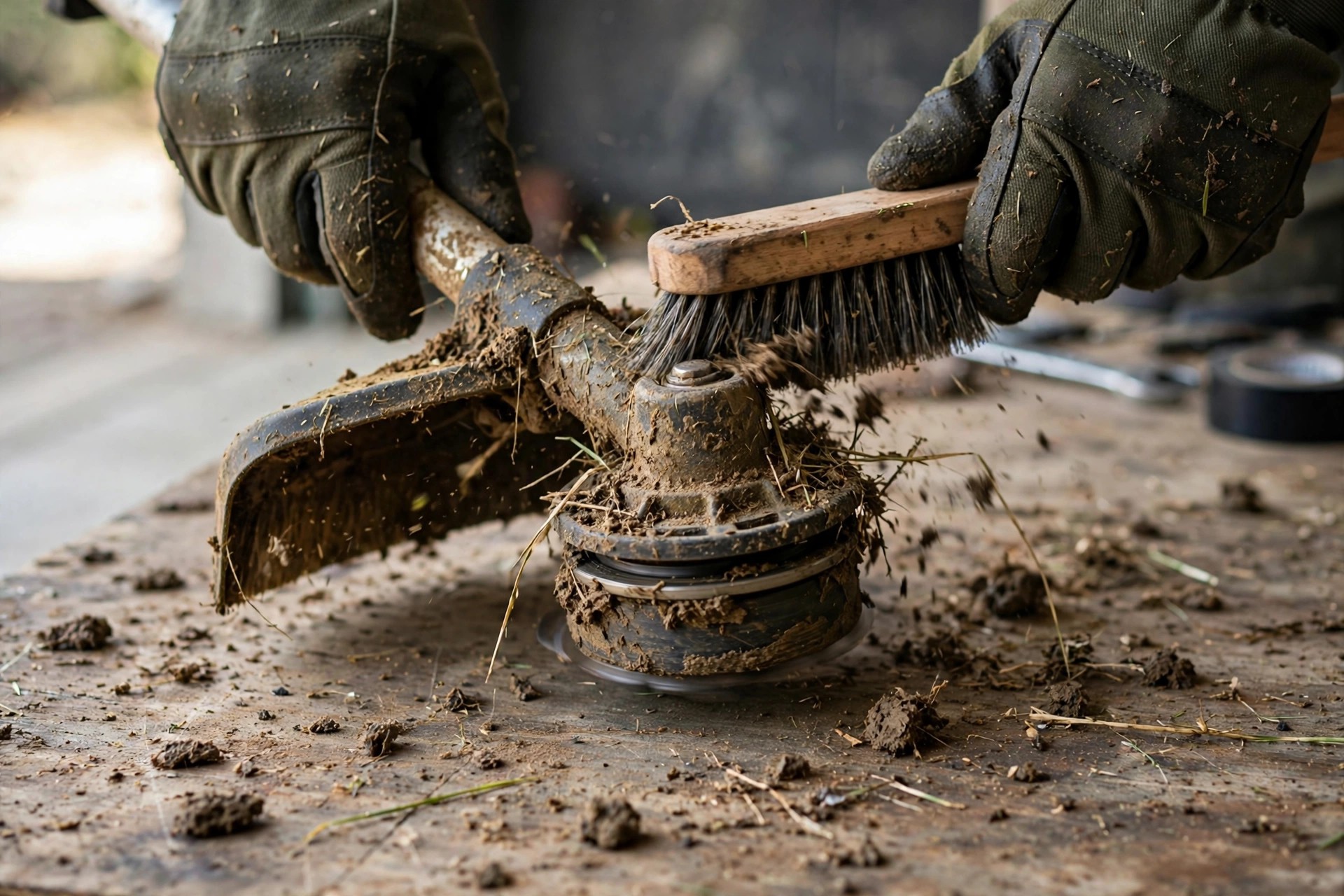
Cleaning comes first before any storage step begins. Remove grass, mud, and debris stuck anywhere. Debris can invite rust or component damage later. Bugs and pests also nest in dirty tools.
Work With a Brush, Cloth, and Gloves
A stiff brush scrapes off dried mud well. A damp cloth lifts the stubborn debris away. Wear gloves to protect your hands while cleaning. Clean tools store safer and last longer overall.
Empty Fuel or Remove Batteries First
Gas models need the fuel tank emptied first. Stored fuel degrades and leads to malfunctions later. Electric models need their batteries removed before cleaning. That step prevents short-circuits and battery drain issues. Our cordless trimmer guide compares battery models worth storing.
Dry It Fully and Check Every Part
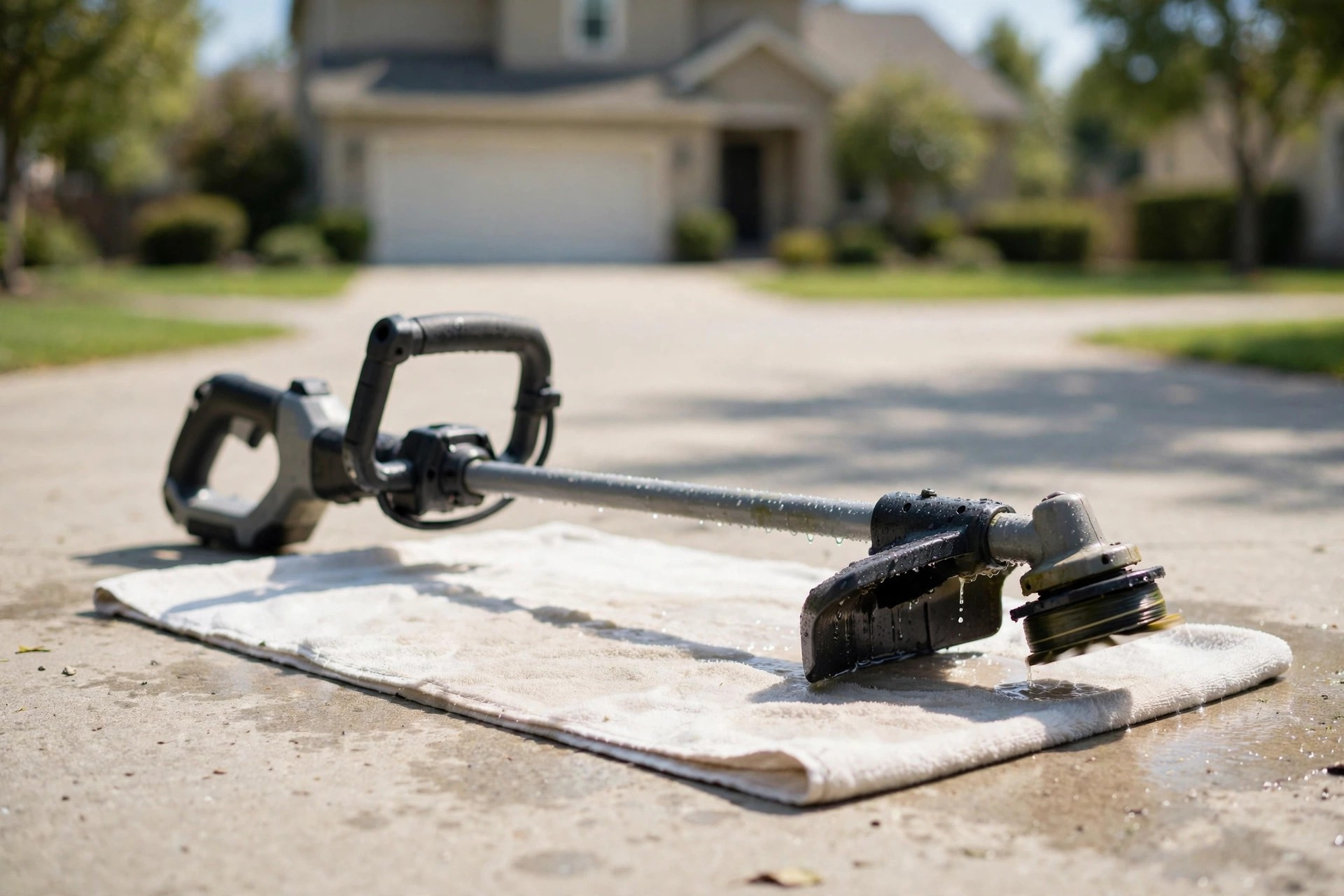
Dry the trimmer completely before storing it away. Residual moisture causes rust or corrosion over time. Use a towel or let sunlight dry it. Check for loose or missing parts while drying. Coil and secure any cords before storage too.
| Storage Step | What to Do |
|---|---|
| Clean | Remove grass, mud, and debris with a brush and cloth |
| Dry | Towel dry it or air dry it fully in sunlight |
| Choose the spot | Easy access, moisture-free, away from sharp or heavy items |
| Cover | Use a loose cloth or a fitted trimmer cover |
| Check regularly | Watch for rust, wear, and battery drain in storage |
Choose the Right Spot and Position
The storage spot changes how long tools last. Pick somewhere easy to access in the garage. Keep it free of moisture at all times. Avoid sharp objects and heavy falling items nearby.
Hang It on the Wall, Head Down
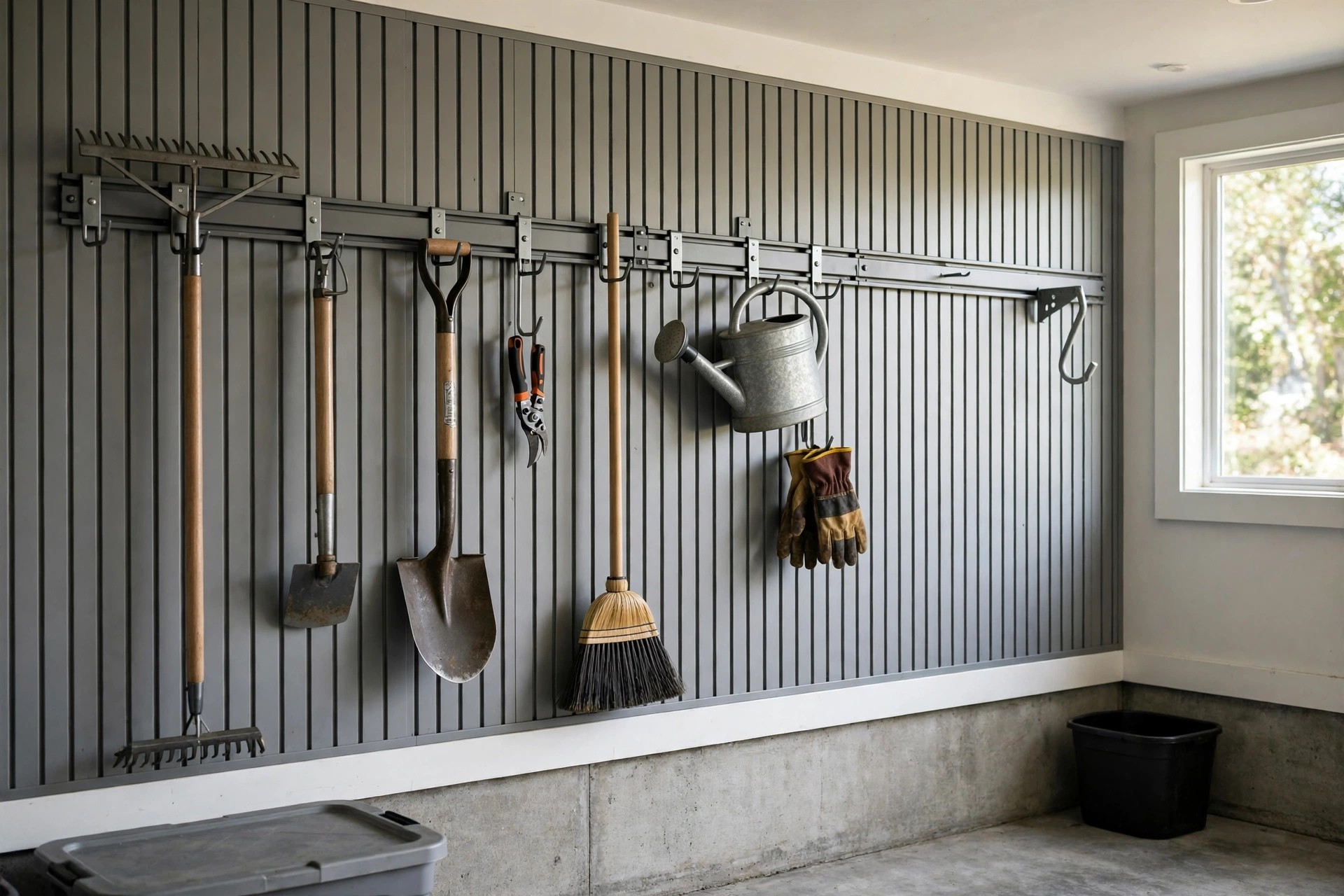
Many people hang trimmers on the wall instead. Wall storage keeps floor space clear for walking. It also protects the trimmer from accidental damage. Mount the hook securely to bear the weight.
Or Stand It Upright on the Floor
A storage stand keeps the trimmer upright safely. It prevents the tool from tipping over accidentally. Choose a spot away from heavy traffic areas. Nobody should stumble over the stored trimmer there.
| Position | Post Notes |
|---|---|
| Wall hanging, head down | Frees floor space; keeps fuel and oil toward the bottom |
| Floor storage stand | Keeps the trimmer upright and prevents tipping over |
| Horizontal | Possible, but fuel-powered models may leak in storage |
Our guide to trimmer lifespan explains why storage matters. The string trimmer basics guide covers the tool itself. Good spots stay reachable but low traffic always.
Cover It and Check It Regularly
Covering the trimmer comes after choosing the spot. A cover blocks dust from settling on it. It also shields against garage mishaps and spills. Use old cloth or a fitted trimmer cover.

Keep the cover loose for airflow inside it. A tight cover traps condensation against the tool. Condensation can lead to rusting over time again. The cover itself must stay clean and dry.
Check It While It Sits Stored
Storage does not end the maintenance work completely. Check the stored trimmer for rust or wear. Fix problems before the next use arrives again. Battery models need periodic charging during storage too.
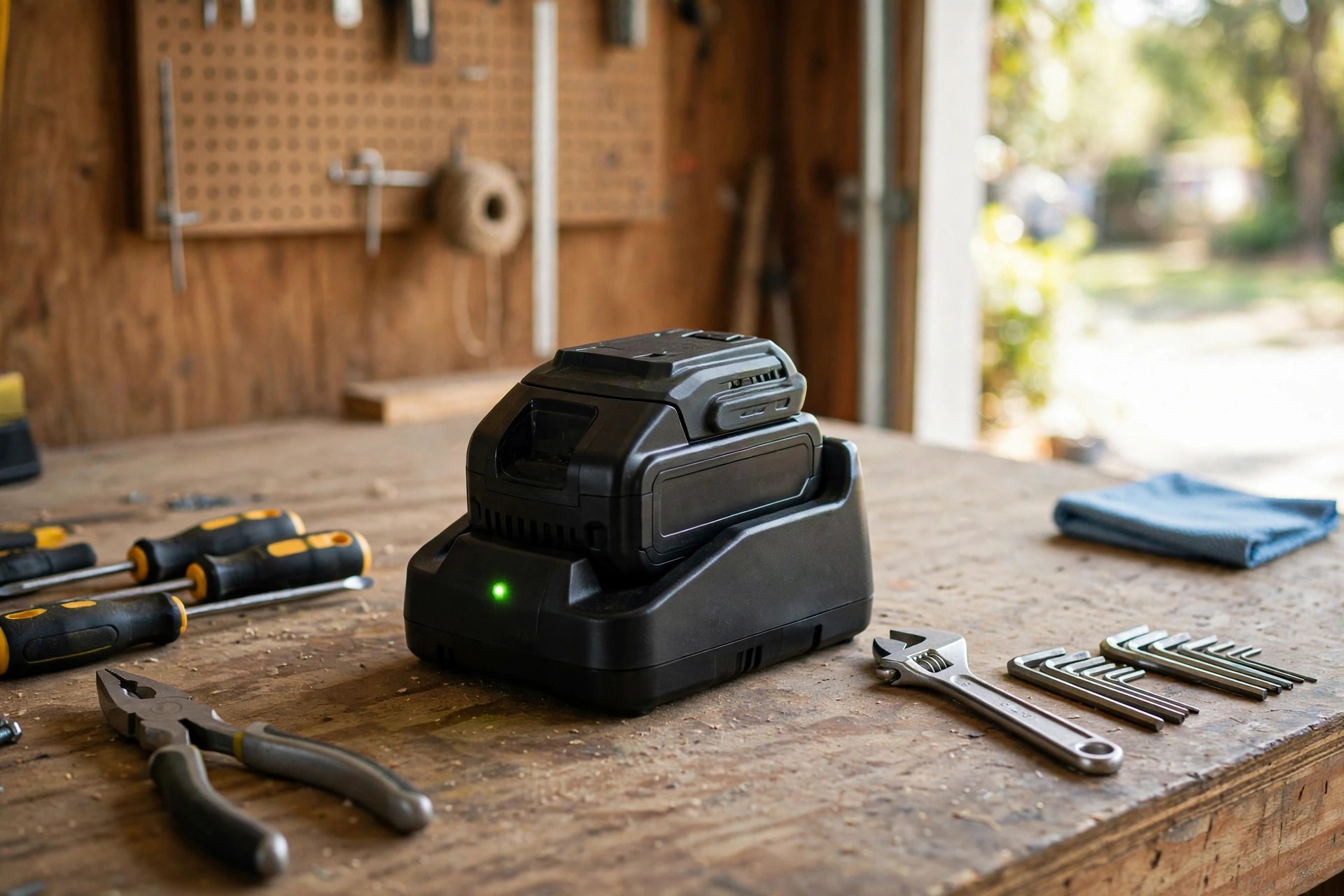
Long storage drains battery power over time slowly. A drained battery hurts tool performance later on. Our battery life guide explains charge habits further. Hanging weight can crack handles or bodies sometimes. Inspect the handle and body during checks too.
Winter Storage and Helpful Accessories
Winter storage needs a few extra precautions taken. Electric trimmers need a moisture-free location for winter. Moisture can damage the electrical components inside them. Fuel models need every drop drained before winter.
Freezing temperatures thicken fuel left inside tanks. Thick fuel creates gummy deposits over time there. Those deposits can impair the carburetor from working. Winterizing the machine adds significantly to its longevity. Detach the spark plug before prolonged storage periods.
Accessories and Final Safety Habits
Wall mounts and hooks secure trimmers on walls. A trimmer rack helps when storing several tools. Covers protect against dust and other garage damage. Choose sturdy, well-constructed accessories every single time. Our buying guide helps compare mounts and racks.
Frequently Asked Questions
What precautions should I take before storing my string trimmer in the garage?
Clean it to remove grass and debris first. Lodged debris can jam the moving parts later. Disengage the cutting head for safety purposes too. Drain fuel from fuel-powered trimmers before storage begins.
Which position is best for storing my string trimmer?
Trimmers can be stored horizontally or vertically both. Vertical storage is the most space-efficient option available. It suits smaller garages especially well every time. Mount it securely so it cannot fall down. Fuel models stored horizontally might leak fuel sometimes.
How can I maximize my garage space while storing the string trimmer?
Wall mounts or hooks hold it vertically up. That keeps it out of the way safely. Ceiling storage is another option some garages allow. Plan placement around your other stored items too. Keep frequently used items easy to reach always.
What should I keep in mind for storing string trimmers during winter?
Store electric trimmers somewhere moisture-free for winter. Moisture damages the electrical components inside the tool. Drain all fuel from fuel-powered models first. Freezing fuel thickens and forms gummy deposits inside. Those deposits can impair the carburetor from working well.
Are there any recommended accessories for storing string trimmers?
Wall mounts or hooks secure it on walls. A trimmer rack suits garages with multiple tools. Trimmer covers protect against dust and damage too. Always choose sturdy and well-constructed accessories here. Weak accessories risk accidents and tool damage later.
Conclusion: How to Store String Trimmer in Garage
So, how to store string trimmer in garage properly? Clean it thoroughly and let it cool first. Dry it fully before you store it away. Keep it off the ground on walls. Follow the five steps in order every time.
A pegboard or rack makes a handy solution. The trimmer stays ready for immediate use next season. Your garage stays orderly and safe all winter. Good habits protect the tool for years ahead. Small effort now prevents costly repairs later on.