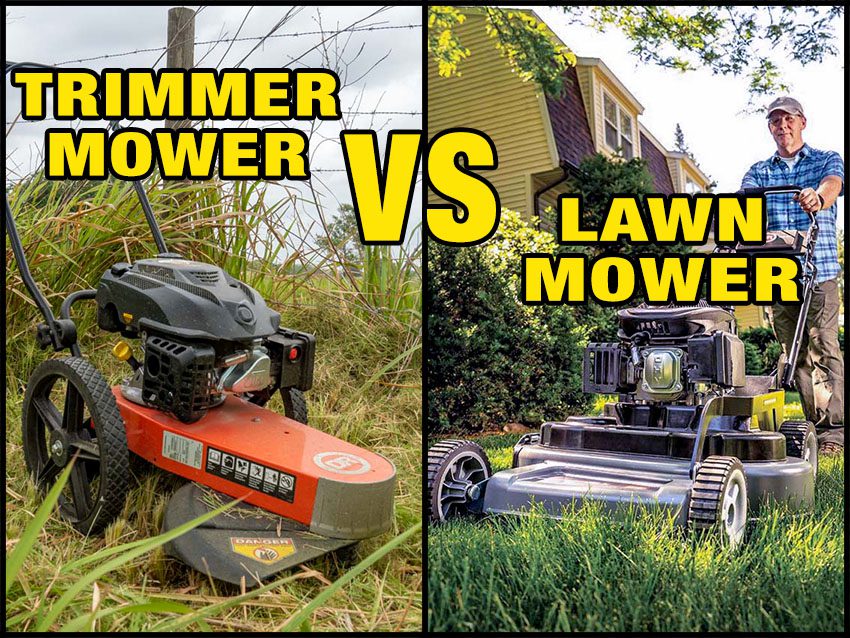
Are you trying to decide between a trimmer and a mower for your outdoor lawn care needs? Well, you’ve come to the right place! In this article, we’ll explore the key differences between trimmers and mowers, helping you make an informed choice. Whether you’re a beginner or an experienced gardener, understanding the pros and cons of each tool is essential for achieving a well-maintained lawn.
First things first, let’s talk about trimmers. Trimmers, also known as weed eaters or string trimmers, are versatile tools that specialize in tackling those hard-to-reach areas. They are perfect for edging along fences, getting rid of overgrown grass, or trimming near trees and flower beds. With their long, slender bodies and rotating strings, trimmers offer precision and flexibility, allowing you to achieve a neat and tidy look.
On the other hand, we have mowers, the heavy-duty champions of lawn care. Mowers are designed for larger areas and are excellent at cutting grass to a consistent height. These machines come in various types, including gas-powered, electric, or even manual push mowers. They are ideal for maintaining larger lawns and can make quick work of large areas, ensuring an even and neatly trimmed appearance.
Now that we’ve covered the basics, let’s dive deeper into the specifics of trimmers vs. mowers. Whether you’re dealing with tight spaces or vast expanses of grass, understanding the strengths of each tool will guide you in making the right choice. So, let’s trim the confusion and mow through the options to find the perfect fit for your lawn care needs!
Compare key features: Trimmer Vs Mower
Choosing between a trimmer and a mower? Let’s compare their key features:
| Trimmer | Mower |
|---|---|
| 1. Ideal for trimming hard-to-reach areas | 1. Great for cutting large lawns quickly |
| 2. Lighter and more portable | 2. Offers more cutting power and efficiency |
| 3. Perfect for maintaining small, intricate spaces | 3. Provides a cleaner, more uniform cut |
| 4. Versatile in handling various grass heights | 4. Covers larger areas in less time |
| 5. Less expensive and easier to maintain | 5. Capable of handling tougher terrain and thick grass |
Consider these features to determine which tool best suits your needs and lawn size.
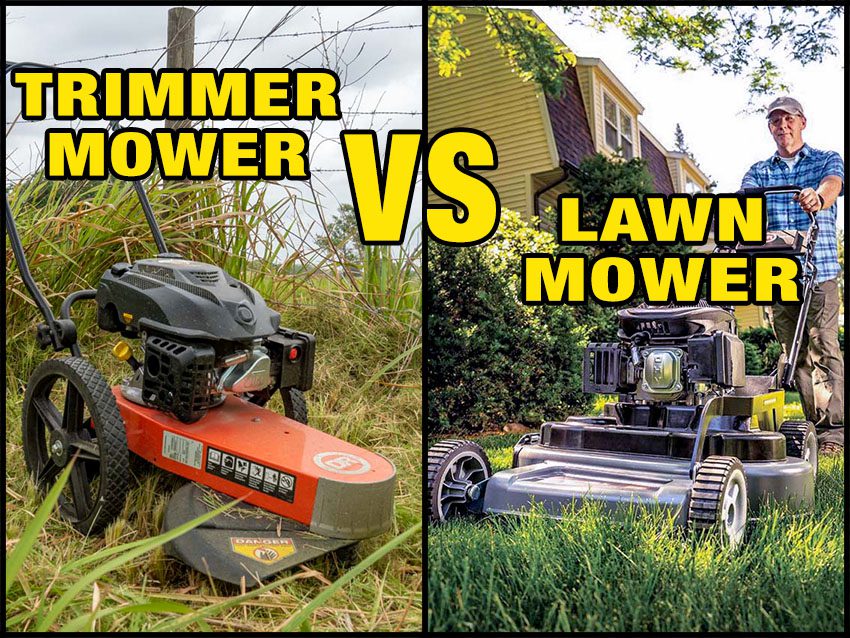
Source: protoolreviews.com
Key Takeaways: Trimmer vs Mower
- A trimmer is used for cutting grass or weeds in hard-to-reach areas.
- A mower is used for cutting larger areas of grass or lawns.
- Trimmers use a rotating string or blade to trim grass or weeds.
- Mowers have a cutting blade that rotates horizontally to cut grass evenly.
- Mowers are more suitable for larger areas, while trimmers are ideal for precision trimming.
Comparing Trimmer vs. Mower: Which Is Better?
Overview of Trimmer
A trimmer is a handheld gardening tool used to cut grass and weeds in areas that are difficult to reach with a mower. It is typically lightweight and maneuverable, making it ideal for precise trimming around flower beds, trees, and edges. Trimmers are powered by electricity, battery, or gas, offering different levels of convenience and power. They come with a rotating cutting head that utilizes a nylon line or plastic blades to trim vegetation.
Trimmers are perfect for maintaining small yards or areas with tight spaces. They are easy to handle and allow for precise control, enabling users to trim grass and weeds in hard-to-reach areas like corners and along fences. Trimmers are also quieter and emit fewer emissions compared to mowers, making them more environmentally friendly options for lawn care.
Some popular trimmer brands include Black+Decker, STIHL, and Worx. Trimmers can range in price from $50 to $300, depending on the brand and features.
Pros and Cons of Trimmers:
Pros:
- Perfect for precise trimming in tight spaces
- Lightweight and maneuverable
- Environmentally friendly with lower emissions
Cons:
- May require more time and effort for larger areas
- Less suitable for cutting taller, dense grass
- Limited cutting width
Overview of Mower
A mower, on the other hand, is a larger, more powerful machine used to cut grass over larger areas. It can be push-operated or self-propelled, with the latter being more common for larger lawns. Mowers come in various types, including gas-powered, electric, and battery-powered. They feature cutting blades that rotate to cut grass evenly at a desired height.
Mowers are designed to cover extensive areas quickly and efficiently. They are perfect for maintaining larger lawns, parks, or sports fields. Mowers offer adjustable cutting heights, allowing users to achieve the desired grass length. While they may not provide the same level of precision as trimmers in tight spaces, mowers are excellent for covering large areas in a time-efficient manner.
Popular mower brands include Husqvarna, Honda, and Toro. Mower prices can range from $150 for basic models to over $1000 for high-end, professional-grade mowers.
Pros and Cons of Mowers:
Pros:
- Cover large areas quickly and efficiently
- Offer adjustable cutting heights
- Various power options to suit user preferences
Cons:
- Less maneuverable in tight spaces
- Larger and heavier, requiring more storage space
- Potentially louder and higher emissions
Key Features Compared
When comparing trimmers and mowers, several key features come into play:
1. Power Source
Trimmers are available in gas-powered, electric, and battery-powered options. Gas trimmers offer more power but require regular maintenance and fuel refills. Electric trimmers provide consistent power but require a nearby power source or extension cord. Battery-powered trimmers offer portability but have limited battery life.
Mowers also come in gas-powered, electric, and battery-powered options. Gas mowers offer the most power for large areas but require regular refueling and maintenance. Electric mowers are easy to start and operate, but they have limited range due to cord length. Battery-powered mowers are convenient and eco-friendly, but they may have limited battery life.
2. Cutting Width
Trimmers generally have a smaller cutting width, usually around 10-14 inches. This narrow cutting width allows for precision trimming in tight areas.
Mowers have a wider cutting width, ranging from 20 to 60 inches or more. The broader cutting width allows for faster cutting over larger areas.
3. Maneuverability
Trimmers are designed for precise, intricate trimming in hard-to-reach areas. They are lightweight and easy to maneuver around obstacles like trees and flower beds.
Mowers are more substantial and may require more effort to maneuver around obstacles. However, self-propelled mowers offer easier operation, as they propel themselves forward.
4. Cutting Height Adjustment
Trimmers usually have adjustable cutting head angles to reach different areas. Some trimmers also offer adjustable cutting line lengths to achieve various grass heights.
Mowers typically have adjustable cutting heights, allowing users to choose the desired grass length. They often have multiple height settings for different lawn conditions.
5. Noise Level
Trimmers are generally quieter than mowers due to their smaller motor size. This makes them more suitable for early morning or late evening use without disturbing neighbors.
Mowers tend to be louder, especially gas-powered models. Using mowers early in the morning or late at night may disturb others in the vicinity.
User Experience
The user experience for trimmers and mowers can vary depending on individual preferences and the specific task at hand.
Users who prioritize precision trimming in tight spaces would find trimmers more enjoyable to use. Trimmers allow for detailed work around edges, flower beds, and fences, enhancing the overall aesthetic of the lawn. They also offer greater control and maneuverability, making them suitable for users who prefer a hands-on approach to lawn care.
On the other hand, users with larger lawns or areas to maintain would appreciate the efficiency and coverage provided by mowers. Mowers can quickly cut large areas of grass, reducing overall mowing time. They are also suitable for users who value convenience and prefer a faster approach to lawn care.
Ultimately, the user experience for trimmers and mowers depends on the specific needs and preferences of the user.
Price Comparison
Trimmers and mowers vary in price depending on the brand, features, and power source.
Trimmers can range in price from $50 to $300, offering options for different budgets and needs. Higher-end trimmers often come with more advanced features and increased power.
Mowers, being larger and more powerful machines, have a wider price range. Basic push mowers can start at around $150, while high-end, professional-grade mowers can exceed $1000.
Comparison Table
| Feature | Trimmer | Mower |
|---|---|---|
| Power Source | Gas, electric, battery | Gas, electric, battery |
| Cutting Width | 10-14 inches | 20-60 inches+ |
| Maneuverability | High | Medium |
| Cutting Height Adjustment | Angled cutting head, adjustable line length | Adjustable cutting heights |
| Noise Level | Low | High |
Which Is Better – Trimmer vs. Mower?
The choice between a trimmer and a mower ultimately depends on the specific needs and preferences of the user. Both tools have their strengths and weaknesses, making them suitable for different situations.
If you have a small yard or need precise trimming around flower beds and edges, a trimmer would be the better option for you. Trimmers offer maneuverability, precision, and lightweight design, making them ideal for intricately maintaining smaller areas.
On the other hand, if you have a large lawn or need to cover extensive areas quickly, a mower would be the more suitable choice. Mowers offer wider cutting widths, adjustable cutting heights, and faster operation, making them efficient tools for maintaining larger areas.
In conclusion, there is no definitive answer to which is better – trimmer vs. mower. It depends on your specific needs, the size of your lawn, and the level of precision required. It’s recommended to assess your requirements, consider the pros and cons, and choose the tool that best suits your lawn care needs.
3 Reasons to Choose a Trimmer:
Precision Trimming in Tight Spaces:
A trimmer is designed to reach those hard-to-get areas, ensuring every edge and corner is neatly handled. Whether it’s around garden obstacles or intricate landscaping designs, a trimmer ensures precision every time.
Lightweight and Maneuverable Design:
Gone are the days of bulky garden tools. Modern trimmers are lightweight, making them easy to carry and move around. Their ergonomic design ensures minimal strain on the user, allowing for longer usage and better control.
Environmentally Friendly Option with Lower Emissions:
In today’s eco-conscious world, choosing a trimmer is not just about lawn care; it’s about Earth care. Trimmers typically produce fewer emissions compared to larger garden equipment, making them a more sustainable choice for your garden and the environment.
Frequently Asked Questions
Welcome to our frequently asked questions section where we will address some common questions about trimmers and mowers. Whether you’re a seasoned gardener or just starting out, we hope to provide you with valuable insights to help you make the right choice for your lawn care needs.
What is the main difference between a trimmer and a mower?
A trimmer, also known as a string trimmer or weed eater, is a handheld tool used for cutting grass and weeds in hard-to-reach areas, like around fences or trees. It uses a thin nylon line that spins rapidly to trim grass and weeds. On the other hand, a mower is a larger, motorized machine with spinning blades that cuts grass evenly and at a consistent height.
In essence, the main difference between a trimmer and a mower is their size and purpose. A trimmer is ideal for precision work in small or tight spaces, while a mower is designed for larger areas and is more efficient for cutting grass quickly and evenly.
Which one is better for maintaining a small lawn – a trimmer or a mower?
For maintaining a small lawn, a trimmer would be a more practical choice. Trimmers are lightweight and easy to maneuver around tight corners or delicate areas. They allow you to get closer to fences, flower beds, or other obstacles, ensuring a neat and precise cut. Additionally, trimmers are more affordable and require less maintenance compared to mowers, making them a cost-effective option for small lawns.
However, if your small lawn has relatively flat terrain and doesn’t have many obstacles, a small push mower could also be a suitable option. It provides greater coverage in less time and can still give your lawn a clean, professional look. Ultimately, the choice between a trimmer and a mower for a small lawn depends on your personal preference and specific needs.
Can a trimmer be used instead of a mower on a large lawn?
While a trimmer can be used on a large lawn, it is not the most efficient option for cutting large areas of grass. Trimmers are designed for precision work in hard-to-reach areas and are not meant to cover extensive areas quickly. Using a trimmer on a large lawn would be time-consuming and tiring.
For a large lawn, a mower is the recommended choice. Mowers are specifically designed to cut grass efficiently and evenly over large areas. They come in different types such as push mowers, self-propelled mowers, or even ride-on mowers for more extensive landscapes. Investing in a suitable mower will save you time and effort in maintaining a large lawn.
Do trimmers and mowers require different types of maintenance?
Yes, trimmers and mowers do have different maintenance requirements. Trimmers usually require minimal maintenance, such as checking and replacing the nylon line, cleaning the cutting head, and periodically lubricating the motor. It’s essential to follow the manufacturer’s instructions for proper maintenance to ensure optimal performance and longevity.
Mowers, on the other hand, have more extensive maintenance needs. This includes regular oil changes, air filter replacements, blade sharpening or replacement, and overall cleaning. It’s crucial to follow a maintenance schedule and perform routine inspections to keep your mower in good working condition and avoid any potential issues while mowing.
Can I use a trimmer and a mower interchangeably?
Although a trimmer and a mower may seem similar in some respects, they serve different purposes and are not interchangeable. Trimmers are designed for precision trimming of grass and weeds in small or hard-to-reach areas, while mowers are intended for cutting larger areas of grass evenly.
Attempting to use a trimmer for large-scale mowing or a mower for precision trimming may lead to inefficient results and potential damage to the equipment. It’s best to use each tool for its intended purpose to achieve the best outcomes in your lawn care routine.
Final Verdicts
So, let’s sum up what we’ve learned about trimmers and mowers! Trimmers are great for taking care of the edges and smaller areas of your lawn. They’re lightweight, easy to use, and perfect for tidying up around trees, fences, and flower beds. On the other hand, mowers are better for cutting larger sections of grass more quickly. They have a bigger cutting deck and work best on open spaces.
In this article, we talked about how trimmers and mowers have different purposes and how they can both be useful depending on the job at hand. We compared their features, like power sources and blade types, and discussed how they impact their performance. We also considered the convenience and maintenance of each option.
Remember, when choosing between a trimmer and a mower, think about your specific needs. Do you have a big garden with lots of open spaces? Then a mower might be the way to go. If you have lots of tight corners or smaller areas to tend to, a trimmer will be your best friend. Taking care of your lawn is important, so pick the right tool for the job and enjoy keeping your garden looking neat and tidy!