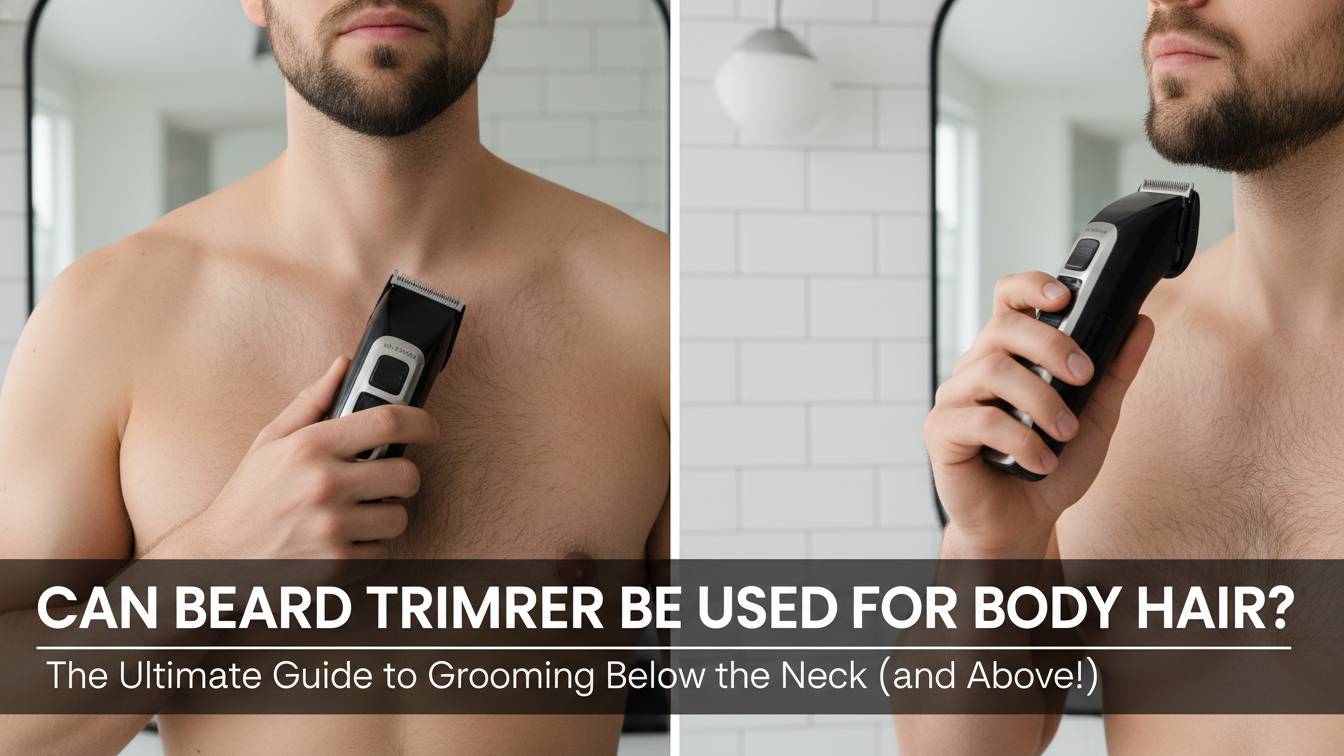
You are staring at that device in your bathroom. It works great on your chin. But can beard trimmer be used for body hair? This is a common question for many men. Most guys want to save money and space. Using one tool for everything sounds efficient. However, your face skin differs from your chest or groin. There are technical differences to consider. This guide explores whether your beard tool is up for the task. We will look at safety, hygiene, and performance. Let’s find out if you should dual-purpose your trimmer.

Understanding the Mechanics: Can Beard Trimmer Be Used for Body Hair Effectively?
Beard trimmers are designed for coarse facial hair. These hairs are thick and stiff. The blades move at high speeds to slice through them. Body hair is often finer and longer.
Blade Design and Gap
The teeth on a beard trimmer are usually closer together. This allows for precision on the jawline. Body groomers often have wider gaps. This helps them grab longer, softer body hairs without tugging.
Motor Power Differences
Beard trimmers have powerful motors. They need to handle dense stubble. This power is great for chest hair. But it can be dangerous near loose skin. You must understand how that power translates to body grooming.
Ergonomics for Reach
Beard tools are straight and short. They are meant for face-level use. Reaching your back is difficult with a short handle. Dedicated body groomers often have longer or curved handles.
Why Length Matters
Short handles lead to awkward angles. Awkward angles lead to nicks. If you use a beard trimmer, stay mindful of your grip. Use a mirror for those hard-to-reach spots.

Safety First: Preventing Nicks and Cuts on the Body
Safety is the biggest concern here. Can beard trimmer be used for body hair without causing a bloodbath? The answer is yes, but you must be careful.
Avoiding the “Bite”
Facial skin is relatively tight. Body skin, especially on the groin, is loose. Beard trimmers can easily “bite” into loose skin. This causes painful nicks and significant bleeding.
The Role of Skin Guards
Never use a naked blade on your body. Always use a guard. A 1mm or 2mm guard provides a safety buffer. This keeps the moving metal away from your skin.
Speed and Pressure
Do not rush the process. Let the blades do the work. Pressing too hard will cause irritation. Use light, sweeping strokes instead of heavy pressure.
Handling Loose Skin
If you are trimming the underarms or groin, pull the skin tight. Flat surfaces are easier to groom. Use your free hand to create a smooth canvas for the blade.

Hygiene Concerns: The Cross-Contamination Risk
This is the part most guys ignore. Using the same tool for your face and your “down there” area is risky. Bacteria thrive in different places on the body.
Bacterial Transfer
Staph bacteria live on the skin. Fecal bacteria live in the pubic region. Moving a trimmer from your groin to your lip is a recipe for infection. It can cause breakouts or worse.
Sanitization Protocols
If you must use one tool, clean it religiously. Use isopropyl alcohol after every use. Submerge the guards in soapy water. Spray the blades with a disinfectant spray.
Dedicated Guards
A better approach is using dedicated guards. Use the “red” guard for your chest. Use the “blue” guard for your face. Never mix them up. Label them if you have to.
Shared Blades
Even with dedicated guards, the blade head stays the same. The hair and skin cells get trapped inside the motor housing. Consider if the convenience is worth the potential skin issues.

Performance on Different Zones: Can Beard Trimmer Be Used for Body Hair on the Chest?
The chest is the easiest place to use a beard trimmer. The hair is often similar to beard hair. The skin is usually flat and firm.
Tackling Dense Chest Hair
If your chest is a jungle, start with a long guard. Take down the bulk first. Then move to a shorter guard for the final look. This prevents the motor from stalling.
Managing Directional Growth
Chest hair grows in many directions. Move the trimmer against the grain for a closer cut. Move with the grain for a more natural look. Observe the swirl patterns.
Avoiding the “Itch”
Trimming hair leaves sharp edges. These edges rub against your shirt. This causes the dreaded “chest itch.” Using a slightly longer guard can help prevent this.
Dealing with Nipple Hair
Be extremely careful around the nipples. The skin is sensitive and uneven. Use a high guard or small scissors for this area. A trimmer nick here is very painful.

Leg and Arm Grooming with a Beard Tool
Many athletes trim their leg and arm hair. Cyclists and swimmers do it for performance. Bodybuilders do it for muscle definition.
Efficiency on Large Areas
Legs have a lot of surface area. A beard trimmer has a narrow head. This means it will take a long time. You will need to make many passes to cover the limb.
Battery Life Considerations
Since legs take longer, watch your battery. A beard trimmer might die halfway through your second leg. Ensure it is fully charged before you start.
Handling Knee Folds
The skin around the knees is bunchy. Bend your leg to tighten the skin. Go slowly over the bone. The narrow head of a beard trimmer is actually an advantage here.
Arm Hair Nuances
Arm hair is usually very fine. Use a longer guard than you think you need. You want to thin it out, not bald it. Over-trimming arms can look unnatural.

The “Down-There” Zone: Navigating Sensitive Areas
This is the danger zone. Can beard trimmer be used for body hair in the pubic region? It is possible, but it is the highest risk area for injury.
The “Snag” Factor
Pubic hair is curly and thick. It easily clogs a standard beard trimmer. When the trimmer clogs, it stops cutting and starts pulling. This is incredibly painful.
Guard Requirements
Never, ever use a beard trimmer without a guard on your junk. Use at least a 3mm guard. This prevents the moving blades from touching the thin, sensitive skin.
Gravity and Positioning
Use a stool or the side of the tub. Get into a position where the skin is naturally taut. Use a mirror to see what you are doing. Blind trimming is a mistake.
After-Care in the Groin
This area is prone to ingrown hairs. After trimming, use a gentle, unscented moisturizer. Avoid tight underwear for a few hours. Let the skin breathe.

Comparison: Beard Trimmer vs. Dedicated Body Groomer
| Feature | Beard Trimmer | Body Groomer |
|---|---|---|
| Blade Width | Narrow for precision | Wide for coverage |
| Guard Variety | Facial length focus | Body length focus |
| Handle Length | Short / Compact | Long / Reach-focused |
| Safety Features | Minimal on blade | Foil guards / Rounded tips |
| Waterproofing | Often splash-proof | Usually fully waterproof |
| Skin Sensitivity | Designed for face | Designed for folds |
Why Use a Beard Trimmer?
It is convenient. You already own it. It saves space in your travel bag. For the chest and arms, it works perfectly fine. It is a great multi-tool.
Why Buy a Body Groomer?
Safety is the primary reason. Body groomers often feature “skin-safe” technology. They have rounded blades. They handle the contours of the body much better than a flat beard tool.
Cost vs. Benefit
A good body groomer costs about $50. A trip to the doctor for a nasty nick or infection costs more. If you groom your body weekly, buy the dedicated tool.

The Importance of Attachments and Guards
The magic is in the plastic. Guards are your shield. They determine the safety and the style of your groom.
Choosing the Right Length
Rewrite: For a “natural” look, use a 6mm guard. For a “groomed” look, go for 3mm. For a “clean” look, go for 1mm. Always start long and go shorter.
Material Quality
Cheap guards can flex. If a guard flexes, the blade can touch your skin. Ensure your guards click firmly into place. If they feel flimsy, don’t use them on your body.
Specialized Body Guards
Some high-end beard trimmers come with “body” attachments. These often have rounded tips. They are designed to glide over soft tissue better than standard facial guards.
Maintenance of Guards
Check your guards for broken teeth. A broken tooth on a guard can catch your skin. It can also cause an uneven trim. Replace damaged guards immediately.

Skin Preparation: Pre-Trimming Rituals for Success
You shouldn’t just grab the trimmer and go. Preparation makes the process smoother. It also protects your skin from irritation.
The Dry vs. Wet Debate
Most beard trimmers work best on dry hair. Wet hair clumps together. This leads to uneven cutting. Ensure your body hair is completely dry before you start.
Trimming Before the Shower
Trim your hair before you shower. This allows you to wash away the loose hairs easily. It also prevents the trimmed hair from sticking to your damp skin.
Exfoliation Basics
Use a loofah or scrub the day before. This lifts the hairs away from the skin. It removes dead skin cells. This reduces the chance of the trimmer getting gunked up.
Brushing the Hair
If you have long chest hair, brush it out. Use a small comb. This removes tangles. It ensures the trimmer can pass through without snagging.

Post-Trim Care: How to Avoid Irritation and Redness
The job isn’t done when the power is off. Your skin is now sensitive. You have microscopic abrasions that need care.
Rinse with Cool Water
Jump in the shower. Use cool water to soothe the skin. Avoid hot water, as it can increase inflammation. Wash away all the tiny hair clippings.
Avoid Harsh Soaps
Don’t use heavily scented body washes right after. These contain alcohols and fragrances. They will sting your freshly trimmed skin. Use a gentle, pH-balanced soap.
Moisturizing is Key
Apply a light, non-greasy lotion. Look for ingredients like aloe vera or tea tree oil. These soothe the skin and prevent “groomer’s itch.”
Treating Nicks
If you do get a cut, treat it. Use a styptic pencil to stop the bleeding. Apply an antiseptic cream. Keep an eye on it for signs of infection.
Maintenance: Keeping Your Trimmer in Top Shape
If you use your trimmer for your face and body, it works twice as hard. You must maintain it to keep it safe and effective.
Regular Oiling
More use means more friction. Oil your blades every two uses. This keeps them sharp. Sharp blades cut; dull blades pull. Pulling leads to skin irritation.
Deep Cleaning the Motor
Hair gets inside the housing. Use the small brush provided. Clear out the buildup. If your trimmer is waterproof, rinse the head under the tap.
Battery Care
Don’t let the battery sit at zero. Charge it regularly. A weak battery makes the motor struggle. A struggling motor is more likely to snag your hair.
Replacing the Blade Head
Blades don’t last forever. If you notice it’s taking longer to cut, the blade is dull. Replace the head every 6 to 12 months, depending on usage frequency.
When to Make the Switch to a Dedicated Body Groomer
Is it time to upgrade? While you can use a beard trimmer, it might not be the best long-term solution.
Frequency of Use
Do you trim your body every week? If so, buy a body groomer. It will save you time. It will be much more comfortable for your skin.
Sensitivity Issues
If you have sensitive skin, stop using the beard tool. Beard trimmers are too aggressive for delicate areas. Dedicated groomers are designed for your comfort.
The Convenience Factor
Having two tools means you don’t have to clean as much. You keep your face tool for your face. You keep your body tool for your body. It is more hygienic.
Final Verdict
Can beard trimmer be used for body hair? Yes. Is it the best tool? No. Use it if you are in a pinch. Use it for your chest. But invest in a body groomer for everything else.
Frequently Asked Questions
Is it safe to use a beard trimmer on my balls?
It is risky. The skin is very loose and thin. Only do it with a high guard (3mm+). Never use the bare blade. A dedicated pubic trimmer is much safer.
Will my hair grow back thicker if I use a beard trimmer?
No. This is a common myth. Trimming cuts the hair at the surface. It does not affect the follicle. The hair will feel prickly as it grows, but it isn’t thicker.
Can I use a beard trimmer in the shower?
Only if it is specifically labeled as waterproof. Many beard trimmers are only “washable” or “water-resistant.” Check your manual before taking it under the water.
Why does my skin itch after using a beard trimmer on my chest?
The trimmer leaves blunt, sharp edges on the hair. These rub against your skin and clothes. Use a moisturizer and a longer guard to minimize this sensation.
How often should I clean my trimmer if I use it for body hair?
Clean it after every single use. If you are switching from body to face, use alcohol to disinfect the blades. Hygiene is vital to avoid skin infections.
Conclusion
So, can beard trimmer be used for body hair? The answer is a cautious yes. It depends on the specific tool and your technique. Hygiene remains the biggest factor. Always use different guards for different zones. Keep your blades clean and sharp. Watch out for those sensitive areas like the groin. If you have the budget, a dedicated groomer is always better. However, a high-quality beard tool will do the job. Now you have the knowledge to groom safely. Grab your trimmer and start your transformation with confidence.

I’m Patricia D. Johnson, an affiliate marketer and blogger specializing in trimmers and grooming tools. I create honest reviews, buying guides, and practical tips to help readers choose the right trimmer for their needs. With a focus on quality, performance, and value, I simplify the decision-making process so consumers can make confident purchases.