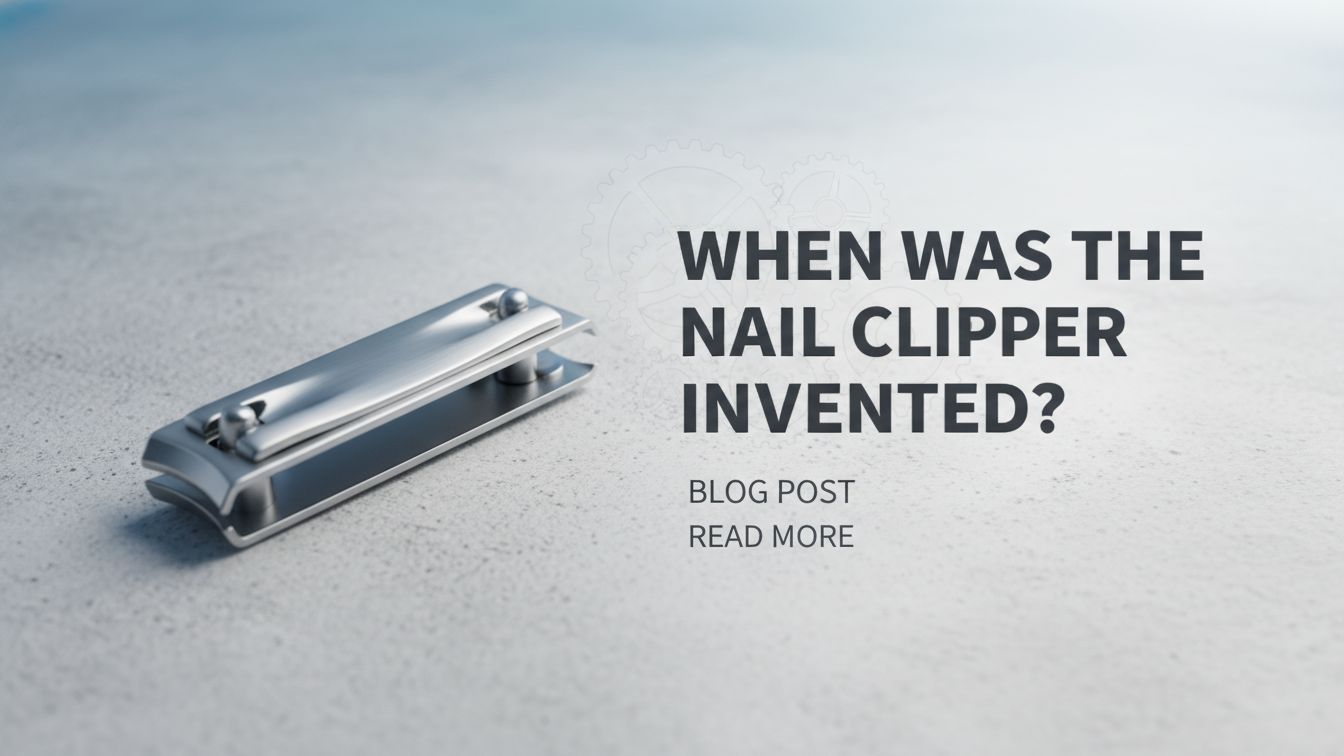
Humans have always needed to trim their claws. Before steel, people used knives, stones, or even their teeth. It sounds painful and messy. Thankfully, the late 19th century changed everything for our fingertips. The invention of the modern nail clipper revolutionized personal grooming.
It brought precision to a task that used to be dangerous. No more accidental nicks from a sharp paring knife. Today, we take these small metal levers for granted in our bathrooms. They are cheap, effective, and nearly indestructible. But where did they come from? Who decided that a lever and a fulcrum were the best way to clip a nail? This article explores the timeline of this essential tool. We will look at early patents and how the design evolved.
Get ready to learn about the history of the clipper. Understanding these roots helps us appreciate our modern daily rituals and tools.

The Origins: When Was the Nail Clipper Invented in Ancient Times?
History does not give us a single name for the first person to trim a nail. We do know that ancient civilizations used whatever was sharp.
Primitive Paring Tools
Ancient Romans used small, specialized knives called “scalpra.” These were basically tiny paring knives. They were often part of a larger vanity set.
Wealthy citizens had servants to do the work. It was a slow and delicate process. One slip meant a bleeding finger.
Literature and Hygiene
Literary references suggest that long nails were a sign of manual labor. Philosophers often wrote about the importance of clean, trimmed hands.
In some cultures, long nails were a status symbol. They proved you didn’t have to work in the fields. However, for most, short nails were a necessity.
The Middle Ages Approach
During the Middle Ages, the technology stayed stagnant. Blacksmiths made small shears. People mostly used regular knives or scissors.
Nail care was purely functional. It was not the precise art form it is today. Infection was a real risk if you cut too deep.

The First Patents and the Industrial Revolution
The real answer to when was the nail clipper invented lies in the late 1800s. This was the era of the patent explosion.
Valentine Fogerty’s 1875 Breakthrough
The first United States patent for a nail trimmer was filed by Valentine Fogerty. It was granted in 1875.
His design was more of a circular file than a clipper. You would rub your nail against a rotating sharp edge. It was better than a knife, but still clunky.
The 1881 Improvements
In 1881, innovators began to refine the idea. Names like R.W. Stewart and Chapel S. Carter appeared in patent offices.
They moved away from files. They wanted something that could “snip” the nail in one motion. This led to the jaw-style mechanism we recognize now.
The Rise of the Gem Brand
The H.C. Cook Company became a household name. They produced the “Gem” clipper around the turn of the century.
This was the first mass-produced, affordable clipper. It became so popular that “Gem” almost became a generic term for clippers.

Modern Grooming: Where Can I Buy a Hair Clipper and Other Tools?
Personal grooming expanded beyond the hands. Once people mastered the fingernail, they looked at hair.
The Expansion of the Grooming Kit
By the mid-20th century, grooming kits became standard gifts. These kits included clippers, files, and tweezers.
Today, people want total control over their look. This includes facial hair and haircuts. Many people ask, “where can i buy a hair clipper?” when they decide to groom at home.
Finding the Best Hair Tools
If you are looking to expand your kit, you have many options. Major retailers like Amazon and Walmart carry professional brands.
You can also visit specialized beauty supply stores. They offer high-torque motors and ceramic blades. Buying a hair clipper is now as easy as buying a nail trimmer.
Professional vs. Consumer Grade
Professional clippers are built for longevity. Consumer versions are cheaper and lighter.
Always check for adjustable blades. This allows for different hair lengths and styles. It is an investment in your personal routine.

The Evolution of Design: From Pincers to Levers
The design we use today is a masterpiece of physics. It uses a compound lever system to multiply force.
The Plier Style
Early clippers often looked like pliers. They were heavy and required a lot of grip strength.
These are still used today for thick toenails. They provide direct pressure. Podiatrists often prefer this sturdy design.
The Compound Lever Revolution
The fold-over lever changed everything. It made the tool compact enough to fit in a pocket.
This design uses two levers working together. It allows a small amount of finger pressure to exert massive force at the blade.
Material Science
Early clippers were made of iron or carbon steel. They rusted quickly if left in a damp bathroom.
Modern clippers use stainless steel. Some are even coated in titanium. This keeps the edge sharp for years.
Nail Clippers vs. Scissors: A Feature Comparison
Many people still debate which tool is better. It often comes down to the shape of your nail.
Choosing the Right Tool
Scissors offer more control over the curve. Clippers offer more power for thick nails.
Clippers are generally safer for children. They have a guard-like effect that prevents deep cuts.
Comparison Table
| Feature | Nail Clipper (Lever) | Nail Scissors | Plier-Style Clipper |
|---|---|---|---|
| Ease of Use | Very High | Medium | High |
| Precision | Medium | High | Very High |
| Portability | Excellent | Good | Fair |
| Best For | Daily maintenance | Shaping thin nails | Thick toenails |
| Force Required | Low | Low | Medium |
The Right Technique
Regardless of the tool, technique matters. Never cut the nail too short.
Leave a small sliver of white. This prevents painful ingrown nails and infections.
The Cultural Impact of the Nail Clipper
The nail clipper changed how we view hygiene. It moved grooming from a luxury to a basic right.
Hygiene and Health
Before clippers, jagged nails were common. These nails trapped dirt and bacteria.
This lead to infections and illness. Mass-produced clippers made cleanliness accessible to the working class.
The “Nail Habit”
Clipping nails became a weekly ritual. It is a moment of self-care.
In some cultures, clipping nails at night is considered bad luck. This shows how integrated the tool has become in our folklore.
The Travel Essential
The nail clipper is the ultimate travel tool. It is small enough for any carry-on.
It is often used for more than nails. Travelers use them to cut tags or stray threads. It is a multi-tool in disguise.
Frequently Asked Questions
1. Who is the official inventor of the nail clipper?
There is no single inventor. Valentine Fogerty received the first patent in 1875. However, Chapel Carter improved the design significantly in 1881.
2. Why are most nail clippers curved?
The curve mimics the natural shape of the human fingernail. This allows for a clean cut in fewer clips. Straight clippers are usually meant for toenails.
3. How often should I replace my nail clipper?
High-quality stainless steel clippers can last ten years. Replace them if the blades become dull or if the lever starts to slip.
4. Can I use nail clippers on my cuticles?
No, you should not. Use a dedicated cuticle nipper for that. Nail clippers are too blunt and can cause skin tears.
Final Thought
The history of the nail clipper is a story of simple engineering. It shows how humanity strives for convenience in every aspect of life. From the early patents in 1875 to the mass-produced items of today, the goal remained the same.
We wanted a safe way to maintain hygiene without the risk of infection or injury. The transition from crude knives to precision steel reflects our industrial progress. Today, these tools are found in almost every household across the globe. They are affordable, durable, and incredibly efficient at their one specific job.
Whether you prefer a lever-style or a plier-style, the convenience is undeniable. Next time you trim your nails, remember the innovators of the 19th century. Their small invention made a big difference in our daily lives. Grooming is now easier than ever for everyone. It is a legacy of true precision.

I’m Patricia D. Johnson, an affiliate marketer and blogger specializing in trimmers and grooming tools. I create honest reviews, buying guides, and practical tips to help readers choose the right trimmer for their needs. With a focus on quality, performance, and value, I simplify the decision-making process so consumers can make confident purchases.