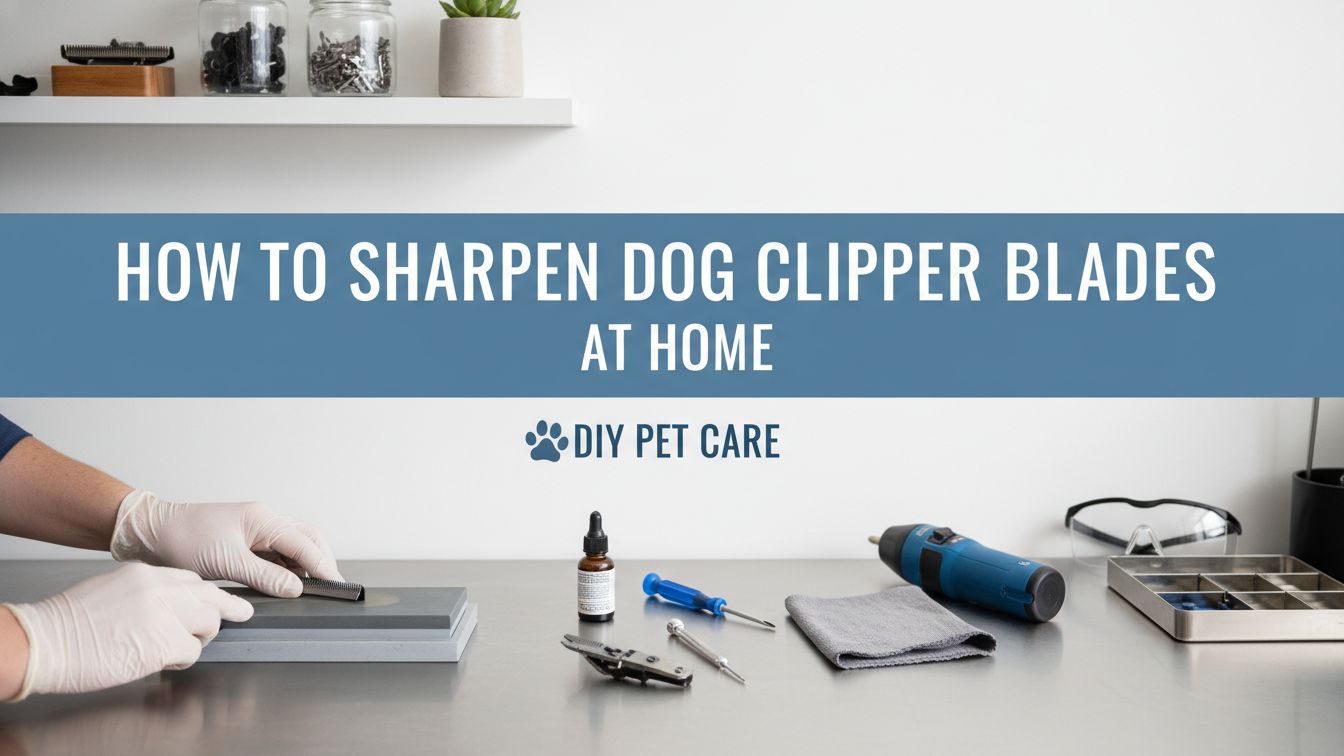
Do you love grooming your dog at home? It is a great way to bond with your pet. It also saves you a lot of money. But sometimes, your clippers stop working well. They might pull on your dog’s hair. This can hurt your furry friend. When this happens, you don’t need to throw the clippers away. You just need to learn how to sharpen dog clipper blades to make them work like new again.
Keeping your tools sharp is very important. Dull blades make the job harder. They also get hot very fast. This can burn your dog’s skin. In this guide, I will show you how to fix your blades yourself. You do not need fancy machines. You just need a few simple tools and a little bit of time. Let’s get started and make grooming fun again!

Why Knowing How to Sharpen Dog Clipper Blades Saves Money
Grooming shops charge a lot of money. Buying new blades every few months also costs a lot. A good set of blades can cost twenty or thirty dollars. If you have many dogs, this adds up fast. When you know how to sharpen dog clipper blades, you stop wasting money.
One sharpening stone lasts for years. You can use it dozens of times. This means each sharpening costs only a few cents. Plus, you don’t have to wait for a professional to do it. You can fix your blades on a Sunday afternoon and groom your dog right away. It gives you more control over your tools and your budget.

Signs It Is Time for a Sharpening
How do you know if your blades are dull? Your dog will usually tell you. If your dog jumps or cries when you clip them, the blades might be pulling the hair. This happens because the blades are not cutting cleanly. They are grabbing the hair instead.
Another sign is “tracks” in the fur. If the coat looks uneven or choppy, your blades are dull. You might also notice that the clippers feel very hot in your hand. Dull metal creates more friction. Friction creates heat. If the blades are too hot to touch, stop immediately. It is time to sharpen them.

What You Need to Get Started
Before you begin, get your tools ready. You don’t need a big workspace—just a clean table will do. Grab a small screwdriver to remove the blades. You’ll also need a cleaning solution, like blade cleaner or rubbing alcohol.
The most important tool is the sharpening stone. A 4000-grit water stone works best for dog clippers. You also need a magnet to hold the blade. This protects your fingers from getting cut. Lastly, get a clean towel and some clipper oil. Having everything ready makes the job much easier.

How to Clean Your Blades First
You cannot sharpen dirty blades. Hair, grease, and old oil get stuck between the teeth. This gunk will ruin your sharpening stone. First, use your screwdriver to remove the blades from the clipper. Keep the screws in a safe spot like a small bowl.
Dip the blades in your cleaning liquid. Use an old toothbrush to scrub away the dirt. Make sure you get all the tiny hairs out from the base of the teeth. Wipe them dry with a clean cloth. They should look shiny before you move to the next step. Cleaning alone sometimes makes blades work better!

Step-by-Step Guide on How to Sharpen Dog Clipper Blades
Now it is time for the main task. Learning how to sharpen dog clipper blades takes a steady hand. First, wet your sharpening stone if it is a water stone. If it is an oil stone, put a few drops of oil on it. Attach your blade to the magnet. The magnet acts as a handle.
Place the flat side of the blade against the stone. Move it back and forth slowly. Do not press too hard. You want the stone to do the work. Move the blade about ten to fifteen times. Make sure you cover the whole surface of the stone so it wears down evenly. You will see a little bit of dark “sludge” forming. This is normal. It means the metal is being sharpened.

Using a Sharpening Stone Properly
Using the stone the right way is a skill. You must keep the blade perfectly flat. If you tilt it, the edge will be uneven. An uneven edge will not cut hair at all. Imagine the blade is a toy car and the stone is the road. Keep all “four wheels” on the road at all times.
Count your strokes. If you do fifteen strokes for the large blade, do fifteen for the small one too. This keeps them balanced. After you finish, rinse the blades with water or wipe them with alcohol. This removes the tiny metal bits left behind. These bits can hurt your dog if you leave them on the blade.

Can You Use Sandpaper to Sharpen Blades?
If you do not have a stone, you can use sandpaper. But you must use the right kind. You need very fine sandpaper, like 600 grit and then 1500 grit. Place the sandpaper on a very flat surface. A piece of glass or a granite counter works best.
Tape the sandpaper down so it does not move. Rub the blade in a “figure-eight” pattern. This helps keep the pressure even. Sandpaper is cheaper than a stone, but it wears out fast. It is a good trick if you are in a hurry. However, for the best results, a sharpening stone is always the better choice.

How to Put Your Clippers Back Together
Once the blades are sharp and clean, you must put them back. This part can be tricky. You have the large base blade and the small moving blade. Place the small blade on top of the large one. Make sure the “teeth” line up correctly.
Slide them back onto the clipper hinge. Insert the screws. Do not tighten them all the way yet. Look at the blades from the side. The small blade should be slightly behind the big blade. If it sticks out too far, it will nick your dog’s skin. Once they are lined up, tighten the screws firmly.

The Importance of Oiling Your Blades
Oiling is the secret to long-lasting blades. After you sharpen them, they are “naked” metal. They can rust very easily. Turn your clippers on. Put two or three drops of clipper oil across the moving teeth. Let the clippers run for ten seconds.
The oil spreads across the metal. It stops the blades from rubbing too hard against each other. It also keeps them cool. You should oil your blades every time you use them. I like to oil mine every fifteen minutes during a long grooming session. It keeps the motor happy and the blades sharp.

Common Mistakes to Avoid
Many people make mistakes when learning how to sharpen dog clipper blades. The biggest mistake is moving too fast. If you go too fast, you might heat the metal or lose your grip. Another mistake is using the wrong stone. A coarse stone for garden tools will ruin your clipper blades.
Don’t forget to sharpen both parts of the blade. Some people only sharpen the big part. Both pieces work together like scissors. If one is dull, the pair won’t cut. Also, never use WD-40 as oil. It is not a lubricant for clippers. It can dry out and leave a sticky mess that pulls hair.

When to Give Up and Buy New Blades
Sometimes, sharpening cannot save a blade. If a tooth is broken, throw the blade away. A broken tooth is sharp and jagged. It will cut your dog’s skin very badly. Also, if the blade is very rusty, it might be too far gone.
If you have sharpened a blade twenty times, it might become too thin. Thin blades get hot almost instantly. If you notice the metal looks paper-thin, it is time to treat your dog to a brand-new set. Safety always comes first. A new blade is cheaper than a trip to the vet for stitches.

Pro Tips for Keeping Blades Sharp Longer
Do you want to sharpen less often? Only clip clean dogs. Dirt and sand in a dog’s coat act like sandpaper. They dull your blades in minutes. Always wash and dry your dog before you start clipping. This is the best way to protect your tools.
Store your blades in a dry place. Humidity causes rust. You can use a small padded box or a tool roll. Never drop your clippers. Even a short fall onto a tile floor can bend the teeth or knock them out of line. If you take care of your blades, they will take care of your dog.
Frequently Asked Questions
1. Can I use a kitchen knife sharpener for my clipper blades?
No, you should not use a knife sharpener. Knife sharpeners are made for different angles. They will ruin the fine teeth on your dog clipper blades. Always use a flat stone or fine sandpaper.
2. How often should I sharpen my dog’s clipper blades?
It depends on how many dogs you groom. For one dog, you might only need to sharpen them once or twice a year. If you notice pulling or heat, it is time to sharpen them regardless of how long it has been.
3. What kind of oil is best for dog clippers?
Always use “Clipper Oil.” It is a very thin, clear oil. It is made to work at high speeds. Do not use vegetable oil, motor oil, or heavy grease. These will clog the motor and smell bad when they get warm.
4. Is it hard to learn how to sharpen dog clipper blades?
It is not hard, but it takes practice. The first time might feel a bit slow. Once you do it a few times, you will get the “feel” for keeping the blade flat. It is a very useful skill for any pet owner.
5. Why are my blades still not cutting after I sharpened them?
You might not have sharpened them long enough. Or, they might be put back together incorrectly. Make sure the tension spring is tight and the blades are lined up. Also, check if there is any hair stuck between them.
Final Thoughts
Learning how to sharpen dog clipper blades is a great skill. It saves you money and keeps your dog safe. Remember to take your time and keep the blades flat on the stone. Clean them well before you start and oil them when you finish.
A sharp blade makes grooming easy and fast. Your dog will be much calmer when the clippers glide through their fur. You don’t need to be a professional to have professional results. Just follow these steps, and you will have sharp tools for years to come. Happy grooming!

I’m Patricia D. Johnson, an affiliate marketer and blogger specializing in trimmers and grooming tools. I create honest reviews, buying guides, and practical tips to help readers choose the right trimmer for their needs. With a focus on quality, performance, and value, I simplify the decision-making process so consumers can make confident purchases.