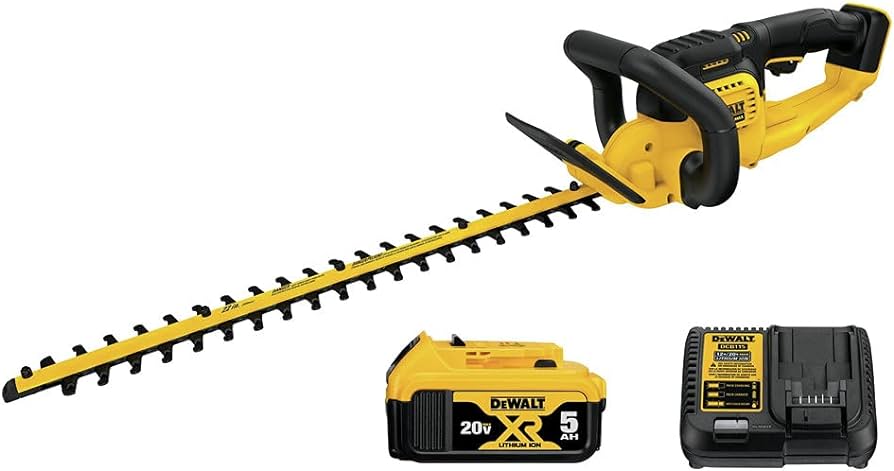
Can a Hedge Trimmer Cut Bamboo?
Bamboo looks soft but hides real strength. The ask if a hedge trimmer cuts bamboo puzzles many yard hands. The true answer hangs on thickness and age. Thin growth cuts with ease while thick culms fight back hard. Thin growth cuts with ease here. Thickness and age set the answer. Bamboo hides real strength inside.
This guide shows where trimmer blades do well. It also shows where they strain and break. Plain best habits guard both plant and tool. Stronger tools wait for the thickest stems. Thick stems need stronger tools. Plain habits guard plant and tool. Blades strain and break on thick stems.
Regrowth habits shape how you should cut too. Smart timing keeps bamboo sound and in check. Short answers at the end settle four shared asks. Safety gear counts, since bamboo fibers cut skin. Four shared asks get short answers. Smart timing keeps bamboo in check. Bamboo fibers can cut skin.
Quick answer: Yes, a hedge trimmer cuts thin and flexible bamboo growth. It shapes tips, branches, and young soft shoots well. Mature thick culms resist its blades and can break them. Use a fine-tooth pruning saw for those instead. Cut above a node and during the dormant season.
- Can a Hedge Trimmer Cut Bamboo? The Short Answer
- Why Thick Bamboo Defeats Trimmer Blades
- Best Practices for Cutting Bamboo
- The Expert Way: Saw First, Then Shape
- Better Tools for Thick Bamboo
- Will Bamboo Regrow After Cutting?
- Frequently Asked Questions
- Regrowth and Timing Questions
- Conclusion: Can a Hedge Trimmer Cut Bamboo
Can a Hedge Trimmer Cut Bamboo? The Short Answer
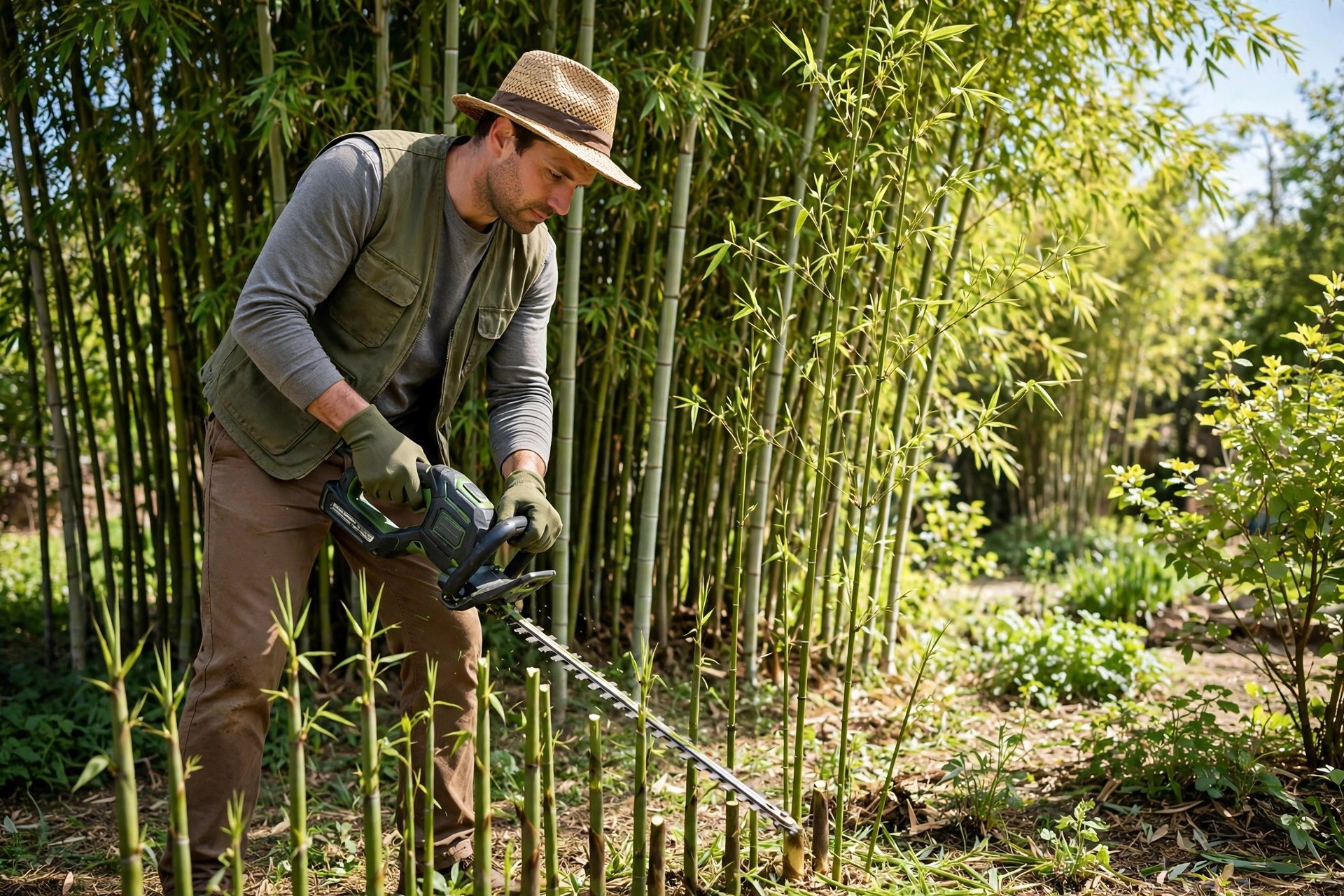
A hedge trimmer handles thin, bendy bamboo growth. It prunes and shapes tips and branches quite well. Garden types grown for looks stay thin and soft. Those small stems suit routine trimmer care. Thin stems suit routine trimmer care. Tips and branches shape up well. Garden types stay thin and soft.
| Bamboo Type | Hedge Trimmer Result |
|---|---|
| Thin Flexible Tips | Cuts and shapes them well |
| Young Soft Shoots | Handles them with sharp blades |
| Mature Thick Culms | Struggles and risks blade damage |
Hard, mature bamboo tells a far different tale. Tough fibers harden as each culm ages. Our bramble cutting guide covers just as stubborn yard growth. Judge your bamboo type before you pick a tool. Old culms harden year by year. Judge your type before tool choice. Stubborn growth kin fills that guide.
Why Thick Bamboo Defeats Trimmer Blades
Bamboo fibers harden hard as culms grow old. Those hard fibers can break a trimmer mid job. Screen and timber bamboo grow extra thick. Clean cuts get hard on such dense stems. Thick types break weak blades fast. Clean cuts get hard on dense stems. Screen and timber types grow thick.
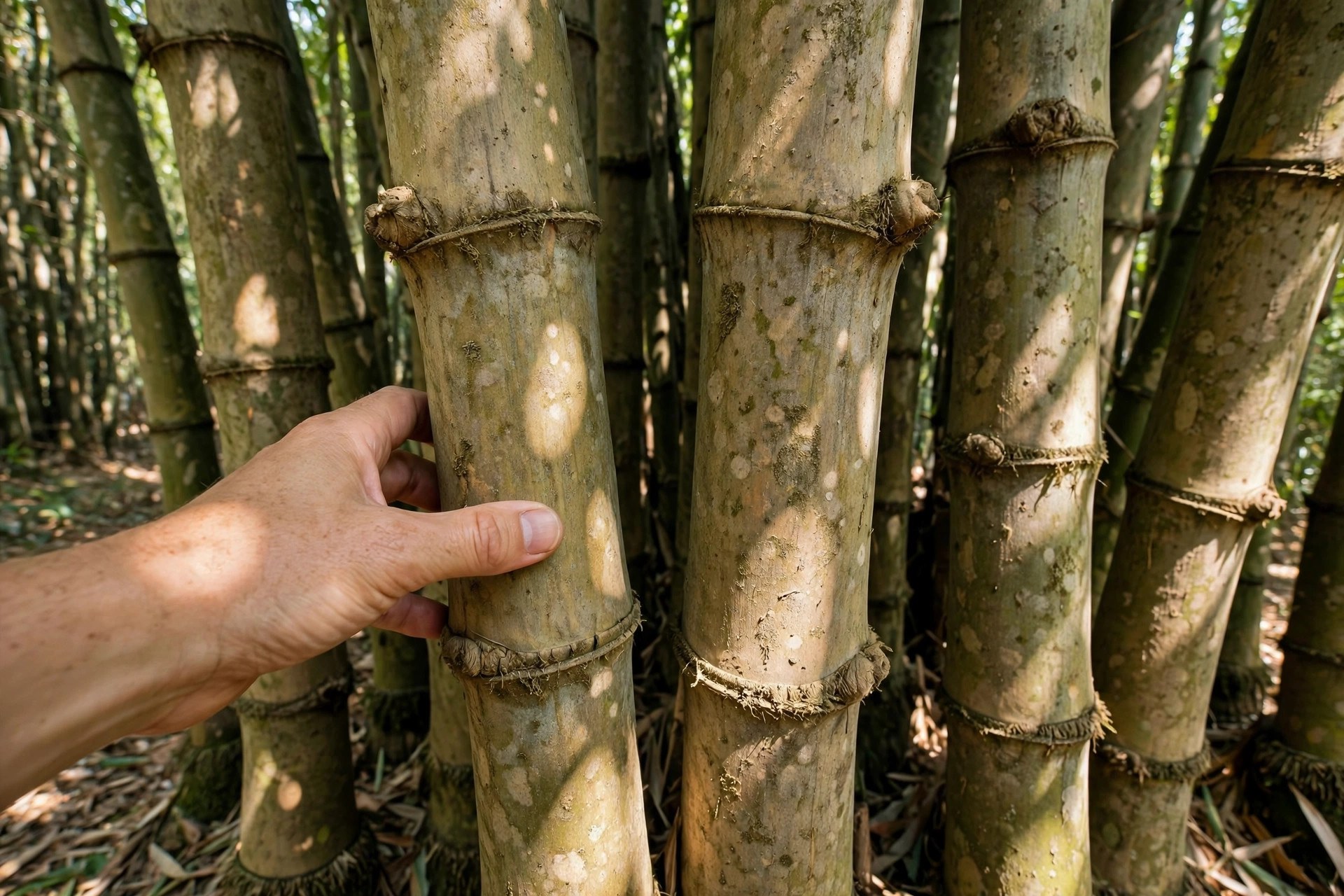
A trimmer may jam or stall on them. Forcing the tool risks bent or broken teeth. Our branch cutting guide sets out the same thickness limits. Match the tool to the stem thickness first. Match the tool to the stem first. Forced work bends trimmer teeth. Jams and stalls come first here.
Best Practices for Cutting Bamboo
Wear goggles, gloves, and long sleeves before work. Sharp bamboo fibers can cut bare skin fast. Cut in the dormant season for best results. Late winter or early spring suits most bamboo. Gear up before you start work. Late winter suits most bamboo. Sharp fibers cut bare skin fast.
| Practice | Why It Matters |
|---|---|
| Protective Gear | Shields skin from sharp bamboo fibers |
| Dormant Season Cutting | Slows regrowth and protects plant health |
| Cuts Above Nodes | Supports healthy regrowth from the plant |
| Clean Sharp Tools | Gives cleaner cuts with less damage |
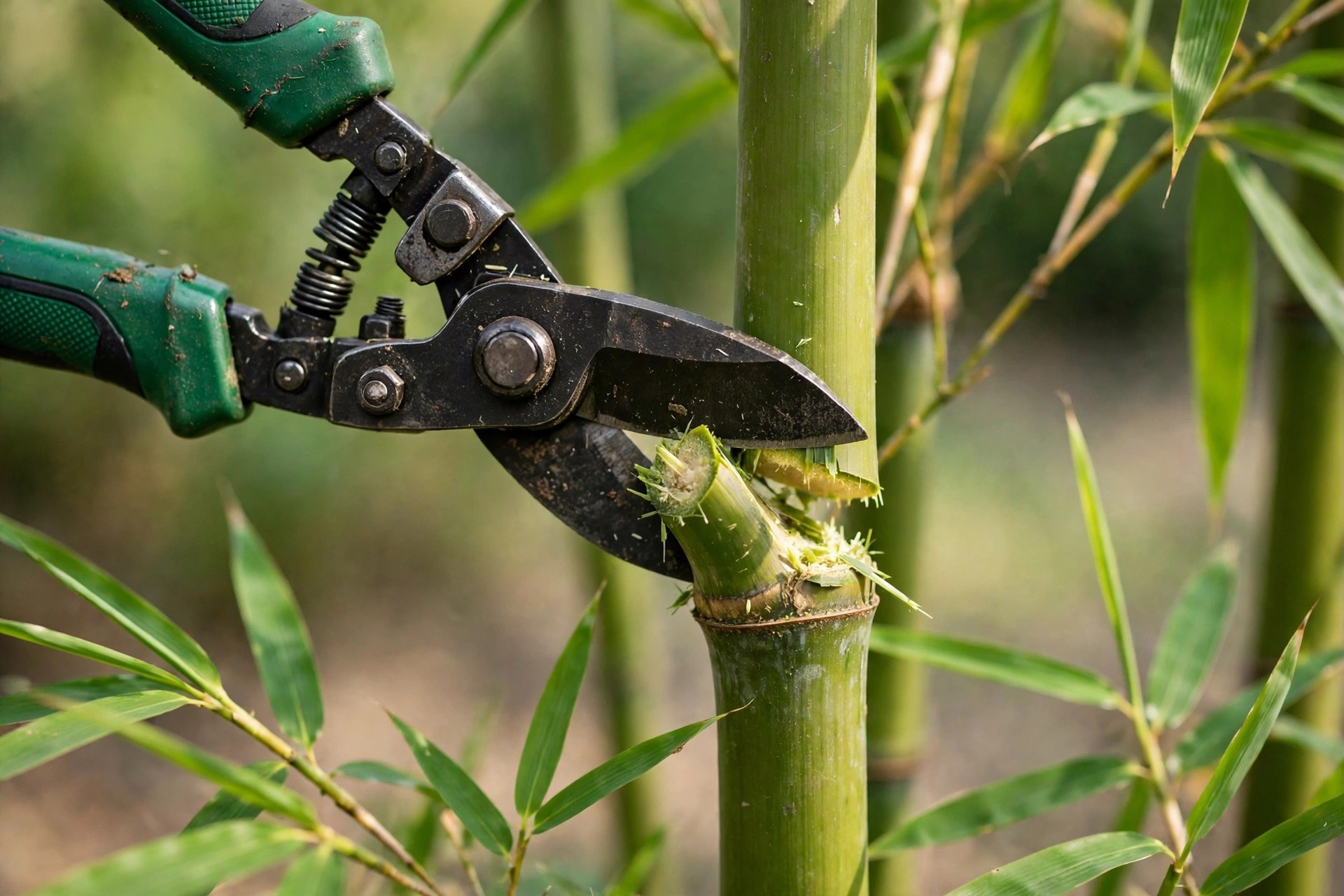
Choose mature culms that reached their full height. Always cut above a node on each culm. Nodes hold the points where leaves emerge later. Our blade adjustment guide keeps trimmer blades cutting clean. Cut above a node each time. Leaves emerge from nodes later. Full height marks mature culms.
The Expert Way: Saw First, Then Shape
Yard hands start thick culms with a saw or loppers. They finish the shaping with the hedge trimmer. That order shields blades from the hardest work. Choose a heavy-duty trimmer with a strong motor. The saw goes first on thick culms. Blades stay safe with that order. A strong motor helps a lot.
Sharp blades and a set cut length help a lot too. Our best Stihl hedge trimmer guide weighs stronger yard models. Our battery hedge trimmer roundup covers cordless shaping picks. Routine care keeps fast growing bamboo in check. Sharp blades help a lot too. Routine care keeps growth in check. Two guides weigh stronger picks.
Better Tools for Thick Bamboo
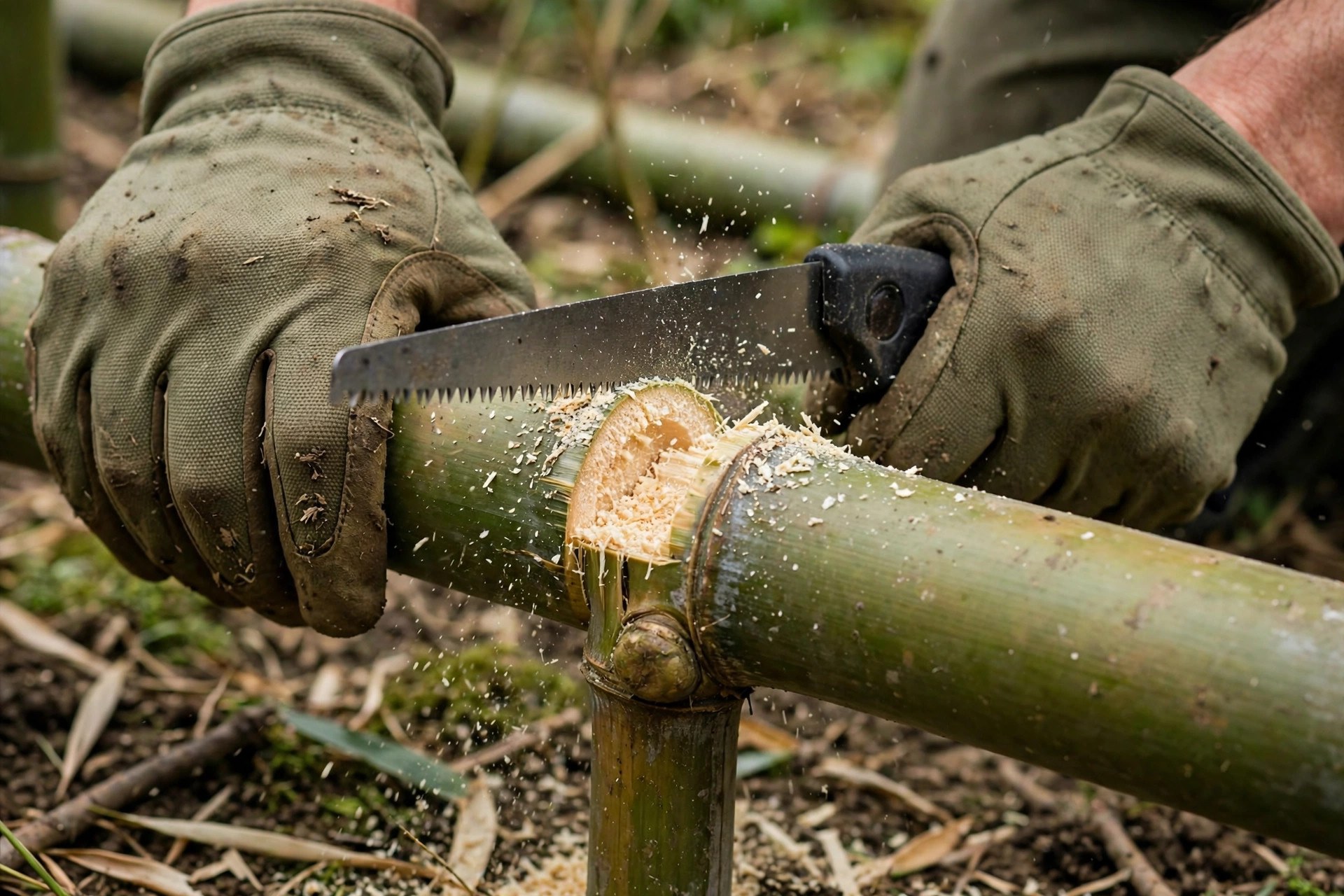
A special pruning saw suits bamboo cutting best. Its fine-tooth blade avoids catching on bamboo fibers. It cuts both raw and dry bamboo cleanly. Plain wood saws struggle with the fibrous stems. Fine teeth suit fibrous stems best. Raw and dry stems both cut clean. The fine teeth dodge fiber snags.
| Tool | Best For |
|---|---|
| Pruning Saw | Thick and dry bamboo culms |
| Machete | Dense growth needing fast clearing |
| Loppers | Smaller stalks and precise cuts |
| Chainsaw | Extensive bamboo thickets |
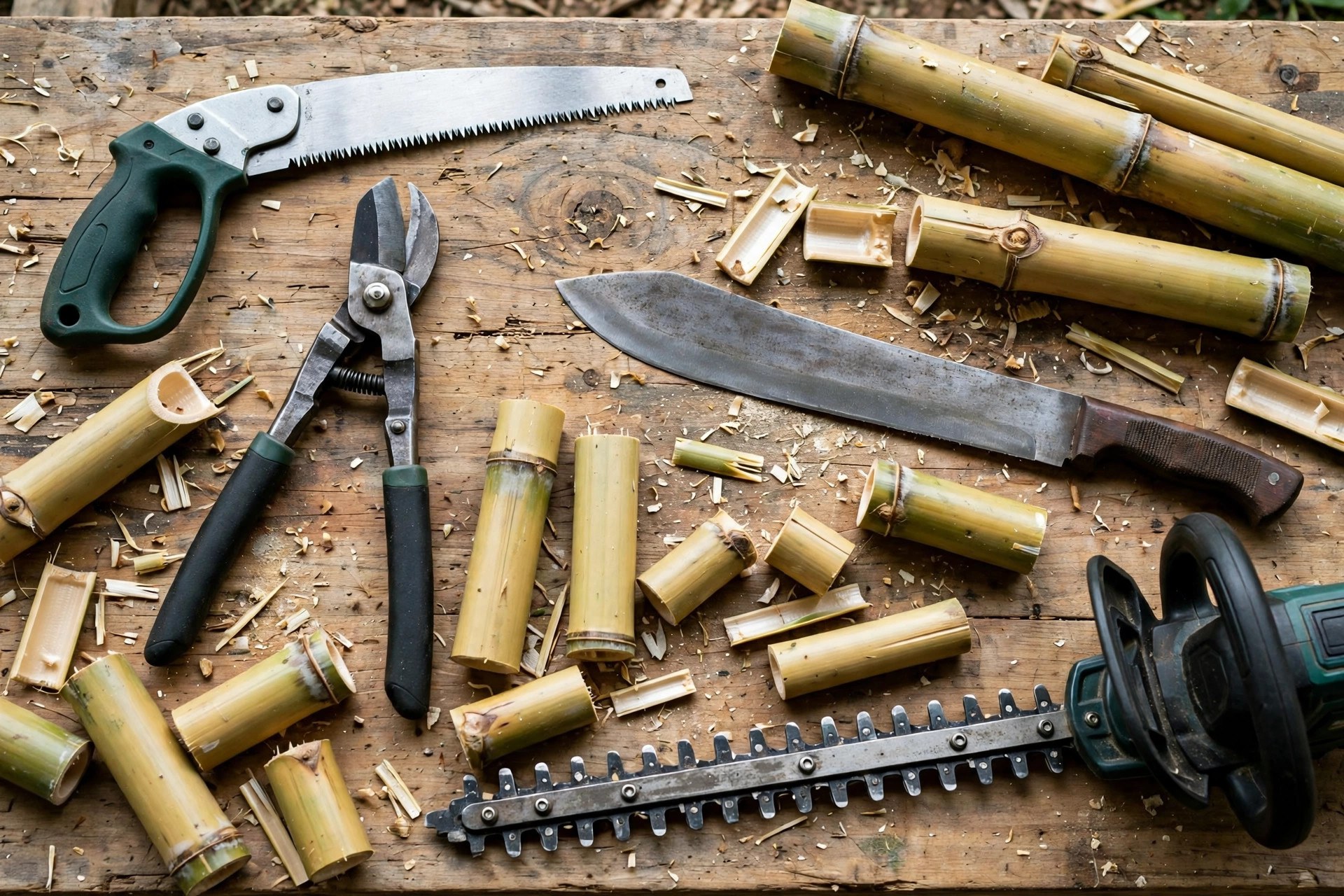
A sharp machete clears dense growth very fast. Loppers give exact cuts on smaller stalks instead. A chainsaw handles wide thickets with real power. Pick the tool by thickness and job size. Pick the tool by job size. Loppers suit smaller stalks best. A chainsaw handles wide thickets.
Will Bamboo Regrow After Cutting?
Bamboo sends new shoots from its base each year. Trimming makes the clump grow bushier with time. Cutting too short slows the fresh shoot growth. Leave enough height for sound, natural regrowth. Leave height for sound regrowth. Trimming makes the clump bushier. Short cuts slow fresh shoot growth.

The Clemson bamboo fact sheet sets out control and regrowth habits. Strong types need steady control in small yards. Check local rules before you plant running bamboo types. A tidy grove still needs yearly attention anyway. Strong types need steady control. Check rules before you plant runners. A tidy grove still needs care.
Frequently Asked Questions
These answers cover tool choice and trimmer uses. They track the same guidance set out above. Short answers close the guide at the end. Tool choice leads these answers. Short answers close the guide. The answers track the guide above.
What is the best tool for cutting bamboo?
A special pruning saw made for bamboo works best. Its fine-tooth blade cuts raw and dry bamboo. The blade passes fibers without getting caught inside. Plain wood saws do much worse on bamboo. Fine teeth pass fibers with ease. Plain wood saws do much worse. The blade stays clear of snags.
What can I cut with a hedge trimmer?
Hedge trimmers cut and shape hedgerows and bushes. They also prune perennials, grasses, and ground cover. Branches must fit between the blade teeth safely. Hard to reach bushes suit their long blades. Long blades reach far bushes well. Stems must fit the teeth safe. Ground cover and grasses prune too.
Regrowth and Timing Questions
Two final answers cover regrowth and cutting timing. Both answers stay short and practical for gardeners. Use them before planning your next bamboo session. Regrowth and timing close the guide. Plan the next session with them. Both answers stay short and plain.
Will bamboo regrow when cut?
Yes, bamboo regrows after cutting from its base. New shoots emerge each growing season from below. Trimming makes the plant grow bushier over time. Healthy regrowth needs sensible cutting height choices. New shoots come from the base. Bushier growth comes with trimming. Sound height picks aid regrowth.
When is the best time to cut bamboo?
Cut bamboo during its dormant season each year. Late winter or early spring works best generally. The plant is not actively growing then anymore. Dormant cutting also minimizes unwanted regrowth afterwards. Dormant cuts curb fresh regrowth. The plant rests in that season. Late winter or early spring works best.
Conclusion: Can a Hedge Trimmer Cut Bamboo
So, can a hedge trimmer cut bamboo after all? Yes, on thin and flexible growth it works very well. Thick mature culms demand a pruning saw instead today. Matching the tool to thickness guards both tool and plant. Thin growth is trimmer work here. Thick culms demand a saw instead. Tool match guards plant and tool.
Keep blades sharp and always follow the best practices. Our Stihl buying guide shows where local dealers sell trimmers. Cut above nodes and respect the dormant season fully. Your bamboo stays healthy, tidy, and under control yearly. Nodes and seasons guide each cut. A tidy grove needs yearly care. Sharp blades and best habits rule.

I’m Patricia D. Johnson, an affiliate marketer and blogger specializing in trimmers and grooming tools. I create honest reviews, buying guides, and practical tips to help readers choose the right trimmer for their needs. With a focus on quality, performance, and value, I simplify the decision-making process so consumers can make confident purchases.